
Musk Ox
Ovibos moschatusA tier · Elite29th of 163 mammals
Size & speed

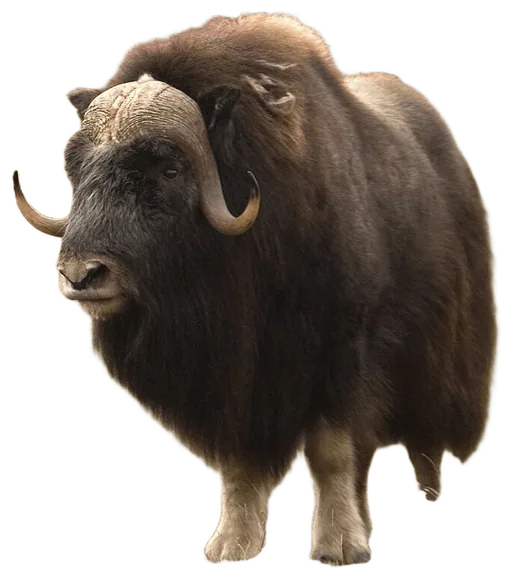
- Weight
- 320 kg705 lb
- Length
- 2.25 m7.4 ft
As heavy as 4.6 people
Heavier than 86% of animalsAbout as long as a person is tall
Bigger than 77% of animalsThe musk ox is a 320 kg Arctic bovid built to hold ground. A mature bull combines a massive horn boss, thick frontal skull, curved hooking horns and repeated collision behavior with one of the most insulating mammal coats known. It is not a pursuit athlete, but frontal attacks against it are dangerous and its cold-weather endurance is exceptional.
Detailed ratings
Research-backed ratings on one 0–100 scale for all 344 animals (updated 2026-09-27). How ratings work


Card No. 50 of 344. Every animal on Animal Battle Stats has one: its power, tier and archetype on the front; its six battle stats, abilities and signature move on the back.
Special abilities
The mature bull's fused horn bases and thick frontal skull form a specialized impact structure that allows repeated high-energy head-on clashes while delivering the animal's body mass through the collision.
Dense qiviut, long guard hair and seasonal metabolic/thermal adjustments sharply reduce heat loss and energy expenditure in severe cold.
Unique traits
Muskoxen switch between outward-facing defensive lines and circles depending on predator pressure, creating a wall of horns around vulnerable herd members.
A compact, short-legged body, heavy coat and seasonally plastic digestion conserve energy on sparse Arctic forage rather than maximizing pursuit speed.
How it fights
Weapons
- The primary weapon is a forward charge terminating in a horn-boss/head impact. Against a peer bull, the broad boss spreads and survives collision loads while the horns provide hooking leverage at close range. Against predators, pointed horn tips can hook, toss and puncture. Hooves and the animal's 300+ kg body add trampling and shoving danger.
Struggles vs
- Slow, energy-conserving baseline movement and limited sustained escape performance.
- Best armor is concentrated at the head rather than across the body.
- Dense coat creates heat-management costs in warm environments.
- Horn geometry is devastating frontally but less useful once an agile attacker controls the flank or rear.
- Social defense is much stronger than a solitary individual's defense.
- Weight
- 320 kg705 lb
- Height
- 1.2 m3.9 ft
- Length
- 2.25 m7.4 ft
- Top speed
- No reliable measurement
- Bite force
- No reliable measurement
- Lifespan
- 12 years
- Home biome
- Arctic
- Lifestyle
- Social
Rated specimen: Healthy fully mature adult bull, represented at 320.0 kg, in normal prime adult condition with a developed horn boss.
Fun facts
- Despite the name, muskoxen are grouped with goats and sheep rather than with true cattle.
- A mature bull's horn bases meet across the forehead to form a solid boss.
- NPS reports rutting bulls may repeat head-on charges roughly 20 times before one yields.
- Muskox coat surface can remain only a few degrees above ambient even around -40 C.
- Their tail is only about 5-10 cm and is largely hidden beneath the coat.
- Herds can switch from a defensive line against one threat to a circle against multiple threats.
Closest rivals by power. Tap one for the full breakdown, or pick any opponent.
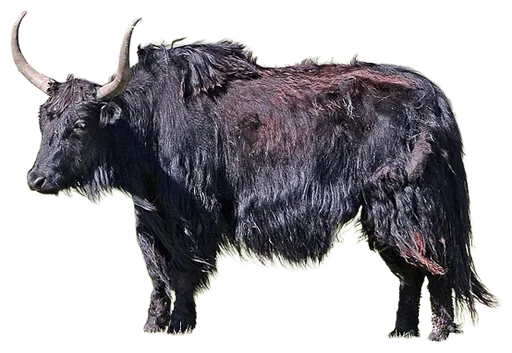
vs PronghornWins · 61% · Slight edge 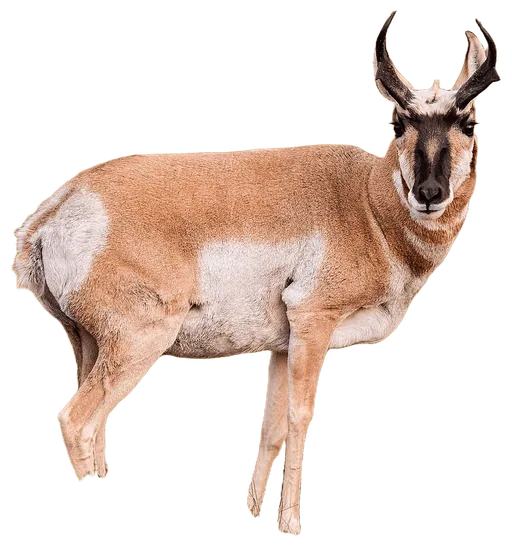 W vs YakLoses · 52% · Toss-up
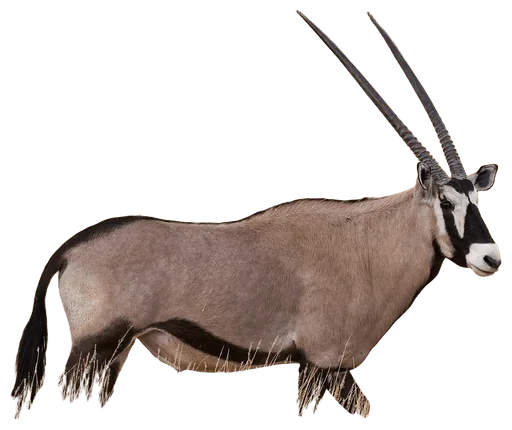
 L vs OryxWins · 51% · Toss-up
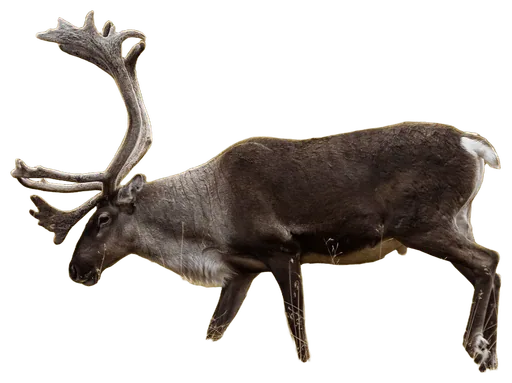
 W vs ReindeerWins · 55% · Toss-up
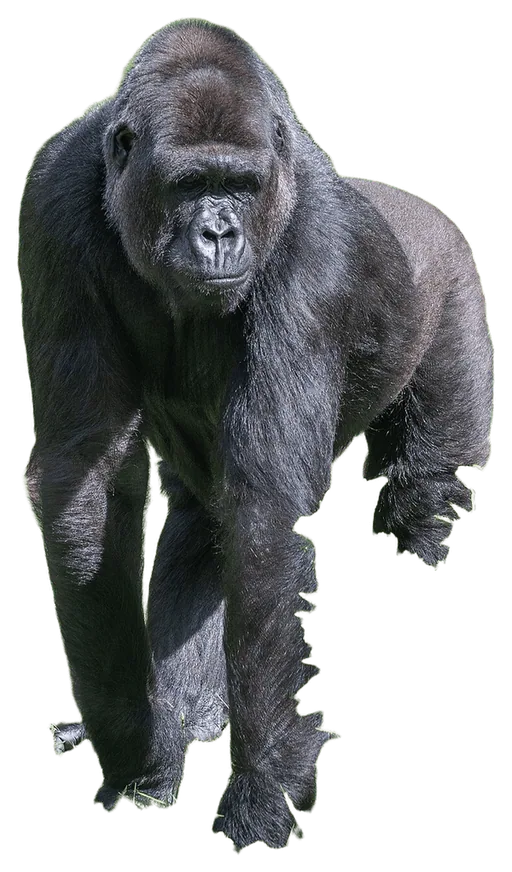
 W vs GorillaWins · 54% · Toss-up
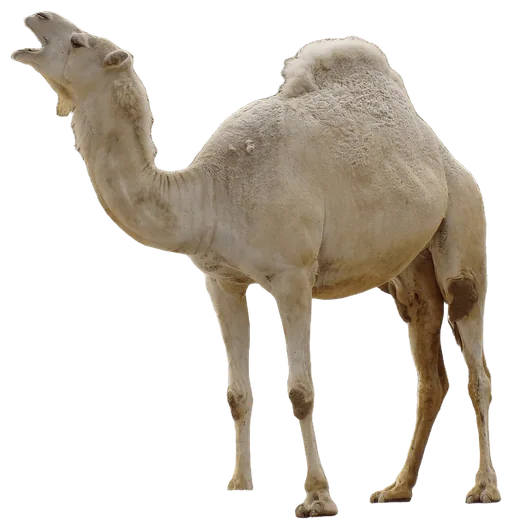
 W vs CamelLoses · 55% · Toss-up
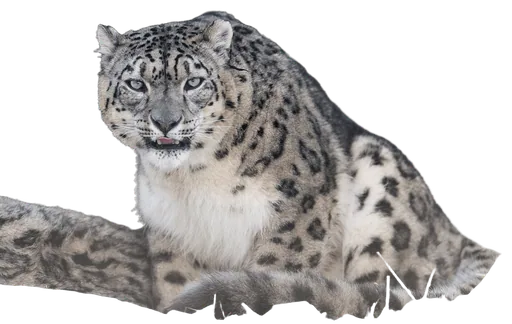
 L vs Snow LeopardWins · 58% · Slight edge
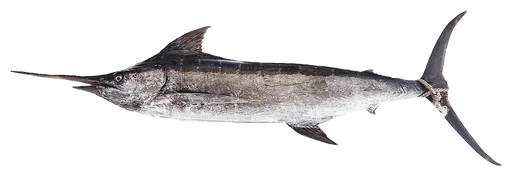
 W vs MarlinWins · 51% · Toss-up
 W
Musk Ox battle analysis
A musk ox bull is not simply a shaggy cow. Its battle anatomy is concentrated around a problem it must solve every breeding season: how to hit another 300-plus-kilogram bull head-on and remain functional. The mature horn bases spread into a thick boss across the forehead, backed by a robust frontal skull and heavy neck and shoulders. Rut contests can progress from threat displays and pushing into repeated running collisions. The same horns that absorb peer impacts end in hooks that can threaten wolves and other attackers.
That specialization changes how its ratings should be read. The musk ox is not exceptionally agile and does not need a speculative top-speed number to be dangerous. Its offense is about short-range mass transfer, frontal stability and hooking leverage. Its defense is similarly directional. An attacker meeting the forehead encounters the animal's best-protected surface, while the flanks and rear are ordinary mammalian tissue beneath a very dense coat.
The coat is the second half of the animal's unusual biology. Long guard hairs shed wind and precipitation while qiviut traps heat. Experimental work shows remarkably small coat-to-air temperature differences in extreme cold. Seasonal metabolic and digestive adjustments further reduce winter energy costs. In an ABS matchup, those traits make a cold, open environment a genuine advantage, but they should not be double-counted as generic physical armor or endless running stamina.
The famous circle defense belongs to the species' social toolkit, not to the solitary bull's raw power. A single bull still has the weapons and skull that make the circle work, but not the protection of neighboring adults. That distinction keeps the individual score honest while preserving one of the most distinctive predator-defense systems among large herbivores.
Habitat & range
Muskoxen inhabit Arctic tundra. Native populations persist principally in northern Canada and Greenland. Alaska's native population was extirpated historically and later re-established from Greenland stock; introduced or reintroduced populations also occur elsewhere at high latitudes, including Norway and Russia.
Diet & hunting
They are ruminant herbivores feeding on grasses, sedges, forbs, willow and other woody plants, plus lichens and mosses when available. Winter scarcity drives low intake and energy conservation, while summer/autumn feeding replenishes reserves. Their rumen physiology is highly seasonal and suited to coarse forage.
Social life
Muskoxen are herd-forming. Mixed groups re-form outside the rut, while dominant bulls compete for breeding access. Social hierarchy is maintained through both vocal and postural signals. Predator defense is cooperative and centered on keeping calves behind a wall of adult horns.
Conservation
The species is classified Least Concern in current IUCN-linked references, although local populations can fluctuate strongly and face climate, disease, predation and weather-related pressures. Alaska populations come from reintroduced animals rather than uninterrupted native survivors.
Quick answers
How strong is a Musk Ox?
On the Animal Battle Stats scale, the Musk Ox has an attack rating of 64 and a power index of 62.8 out of 100, which ranks it #50 of 344 animals and puts it in A tier (Elite). Its strongest stat is special (74).
How much does a Musk Ox weigh?
A typical adult Musk Ox weighs about 320 kg (705 lb). Rated specimen: healthy fully mature adult bull, represented at 320.0 kg, in normal prime adult condition with a developed horn boss.
How fast is a Musk Ox?
There is no reliable measured top speed for the Musk Ox, so we do not publish one. Its agility rating, which covers acceleration, reflexes and evasion, is 50 out of 100.
What does a Musk Ox eat?
They are ruminant herbivores feeding on grasses, sedges, forbs, willow and other woody plants, plus lichens and mosses when available. Winter scarcity drives low intake and energy conservation, while summer/autumn feeding replenishes reserves. Their rumen physiology is highly seasonal and suited to coarse forage.
Is the Musk Ox endangered?
No. The Musk Ox is listed as Least Concern. The species is classified Least Concern in current IUCN-linked references, although local populations can fluctuate strongly and face climate, disease, predation and weather-related pressures. Alaska populations come from reintroduced animals rather than uninterrupted native survivors.
What animals can beat a Musk Ox?
Among its closest rivals, the Yak (52%), the Camel (55%) would be favored against the Musk Ox. It would be favored against the Pronghorn, the Oryx, the Reindeer, the Gorilla, the Snow Leopard, the Marlin.
Researched 2026-09-27. Ratings are editorial judgments built from these sources; measurements describe a healthy adult male.
- Animal Diversity Web, Ovibos moschatusMale 300-400 kg, avg 320; female 180-275, avg 250; male 200-250 cm; ~120 cm shoulder; boss 15-20 cm; predators; circle defense
- NPS, Kobuk Valley, MuskoxRut charges from 50 yd+, repeated ramming; horn/skull protection; predator formations; diet
- NPS, Gates of the Arctic, Food and FamilyRepeated rut collisions up to ~20; 4 in horn plus 3 in skull description; harems
- NPS, Cape Krusenstern, Defense StrategyLine vs circle defense; bull/cow horn differences; wolf/bear predation
- UAF Large Animal Research StationFull-speed bull collisions; social hierarchy and signals; seasonal diet
- Munn, Barboza & Dehn 2009, Physiological and Biochemical ZoologyWinter insulation; coat surface only ~2-5 C above ambient near -40 C; low sensible heat loss
- Desforges et al. 2021, Ecology and EvolutionSeasonal heterothermy lowers winter energy expenditure/body-mass loss
- Lawler & White 1997, RangiferWinter metabolic rate lower than summer
- Barboza et al., seasonal digestion studiesSeasonal rumen fill/fermentation plasticity and autumn hyperphagia
- PubMed: Seasonal hyperphagia study74% seasonal increase in intake; body-fat and digestive-efficiency context
- Hinterland Who's Who, MuskoxWild adult bulls 270-315 kg; agility despite deliberate baseline movement
- EOL/ADW life-expectancy synthesisMales typically 10-12 y; females 15-18 y; >20 documented
- USGS, Muskoxen reportAlaska extirpation/reintroduction and population history
- GBIF species treatmentIUCN-linked Least Concern status and range/reintroduction history
- Wikimedia Commons, Charles J. Sharp male Dovrefjell 11Exact species, male, 6000x4000, CC BY-SA 4.0 image provenance
Photo: “Muskox Dalton Highway.jpg” by Naturedata, CC0, background removed and cropped. Original
Suggest a correction