

Martial Eagle
Polemaetus bellicosus
 #130 of 341
  Savanna Sky Hunter Endangered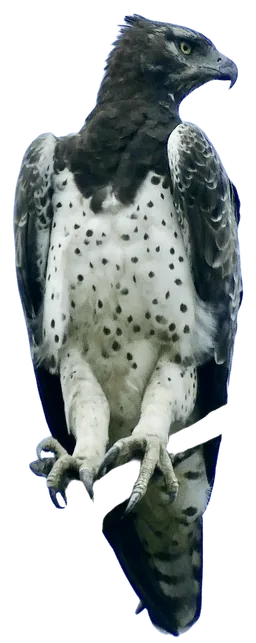
 Fight
FightPhoto: Bernard DUPONT from FRANCE · CC BY-SA 2.0
The Martial Eagle is Africa's largest eagle by wingspan. The canonical female weighs about 4.8 kg and hunts from a high soar, dropping in a long stoop onto hares, monitor lizards, snakes, small carnivores and even lion cubs. Large talons and very long legs make its strike dangerous, but its small absolute mass and lack of armor keep it far below large mammals in raw power and defense.
 Attack41.5
  Defense21
  Agility84
  Stamina80
  Intelligence65.5
  Special73
 Detailed ratings
Research-backed ratings on one 0–100 scale for all 341 animals (updated 2026-09-28). How ratings work
Special abilities
Ability 1High-Soar StoopThe eagle circles high enough to be hard to see, then comes down in a long, shallow stoop or a steep parachute drop and hits prey before it can react. In open terrain this almost guarantees the first strike.
 Ability 2Snake-and-Carnivore Takedown
Large talons, an oversized inner claw and the longest tarsus of any booted eagle let it strike from arm's length at dangerous prey such as venomous snakes, monitor lizards, jackals and lion cubs.
Unique traits
 TraitAfrica's Widest-Winged Eagle
Ten wild-measured birds averaged about 2.12 m in wingspan, about fourth among living eagles and the largest in Africa.
TraitThe Vervet's Eagle AlarmVervet monkeys give a distinct eagle alarm call mainly to martial eagles, and young monkeys learn to aim it at the right predator.
How it fights
Weapons
- The feet are the weapon. Large, curved talons (female hallux about 5.6 cm), an oversized inner claw and the longest tarsus of any booted eagle let it strike and hold prey on the ground, often in grass. The bill tears food after the kill. Most studies place mean prey mass between 1 and 5 kg: about 2.26 kg in the largest dietary study (Cape Province, dominated by 2.1 kg Cape hares), 2.31 kg in Tsavo East, and in the Maasai Mara 1.98 kg for males and 3.74 kg for females. Its prey range spans roughly 0.2 kg to about 7.5 kg, and ADW reports kills up to 35 kg, which should be treated as an exceptional upper claim.
- The strongest evidence of weapon power is what it chooses to attack. Wikipedia's account lists monitor lizards, venomous snakes, jackals and medium-sized wild cats among its prey. A 2024 paper documented seven records of martial eagles killing or attempting to kill lion cubs in Kenya's greater Mara region, nine cubs in total, most at least partly eaten. The Peregrine Fund notes that it has taken spotted eagle-owls and white-headed vultures.
 Struggles vs
- About 4.8 kg in absolute mass.
- No armor; light avian skeleton.
- Less maneuverable in dense forest and cluttered cover.
- Loses most of its advantage once grounded or pinned by a heavier grappler.
- Relies on surprise; a prepared, alert opponent removes its best attack.
- Weight
- 4.8 kg11 lb
- Height
- No reliable measurement
- Length
- 88 cm34.6 in
- Top speed
- No reliable measurement
- Bite force
- No reliable measurement
- Lifespan
- 14 years
- Home biome
- Savanna
- Lifestyle
- Mostly solitary
Rated specimen: Healthy mature adult female, 4.8 kg, 88.0 cm total length, about 2.1 m wingspan.
Fun facts
- Its scientific name, Polemaetus bellicosus, roughly means "warlike war-eagle".
- Martial eagles have been recorded killing and eating lion cubs in Kenya's Mara region.
- It has been reported to spot prey from 5–6 km away.
- Vervet monkeys have a special alarm call for eagles, given mainly to martial eagles.
- Immature birds keep a pale plumage for years; full adult plumage comes around the seventh year.
- Kruger floater eagles ranged over about 44,000 km², far beyond the park.
Closest rivals by power. Tap one for the full breakdown, or pick any opponent.
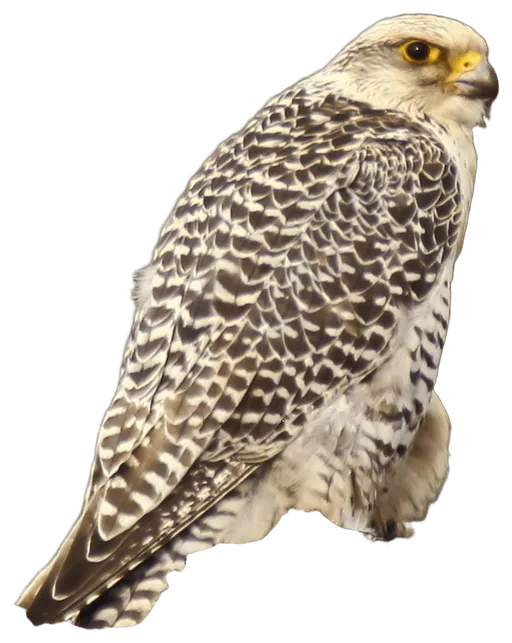
vs Golden EagleWins · 50% · Toss-up 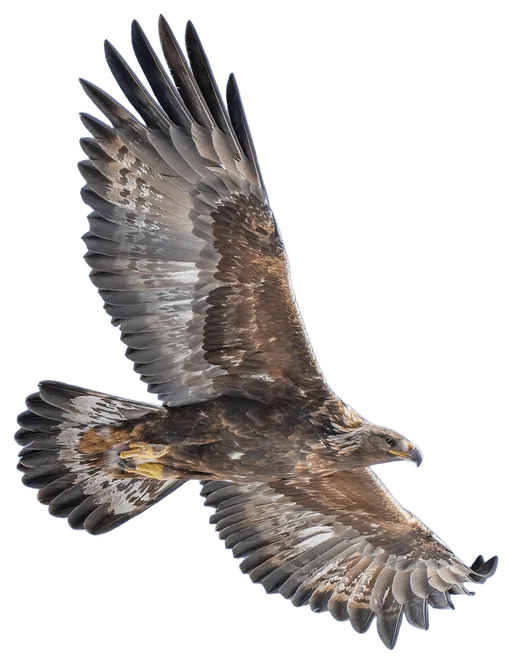 W vs GyrfalconLoses · 50% · Toss-up
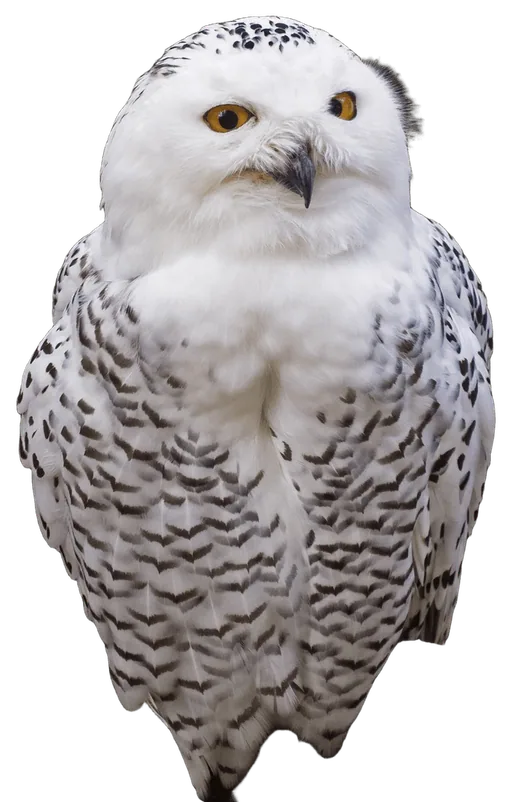
  L vs Snowy OwlLoses · 51% · Toss-up
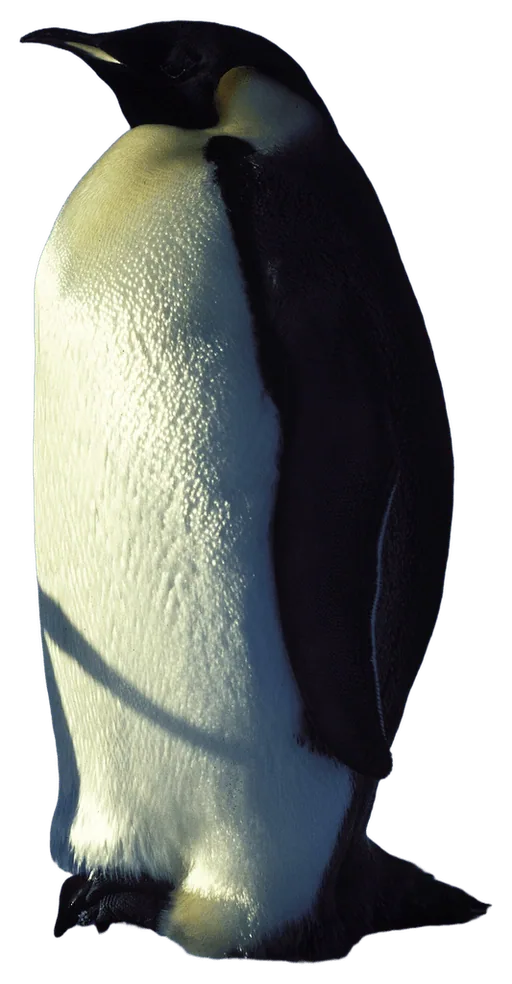
  L vs Emperor PenguinWins · 51% · Toss-up
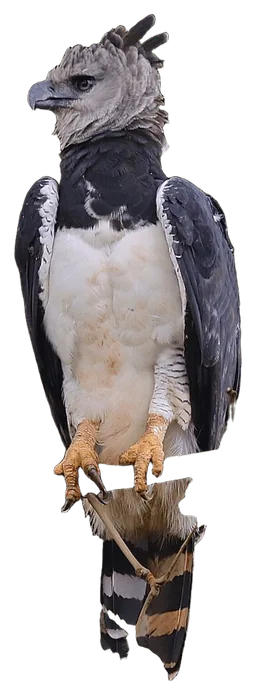
  W vs Harpy EagleWins · 52% · Toss-up
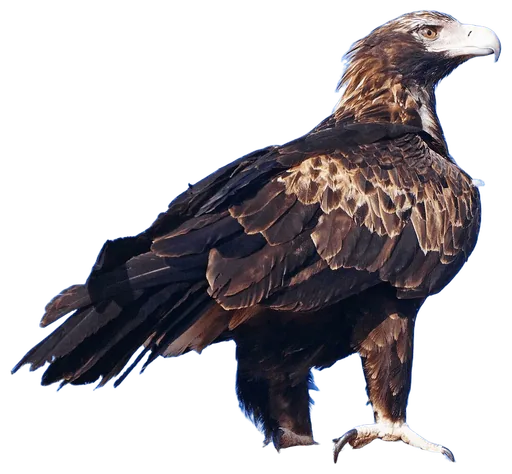
  W vs Wedge-tailed EagleWins · 52% · Toss-up
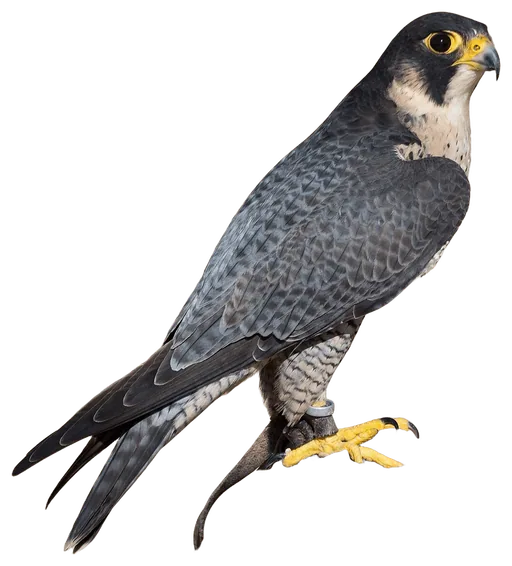
  W vs Peregrine FalconLoses · 52% · Toss-up
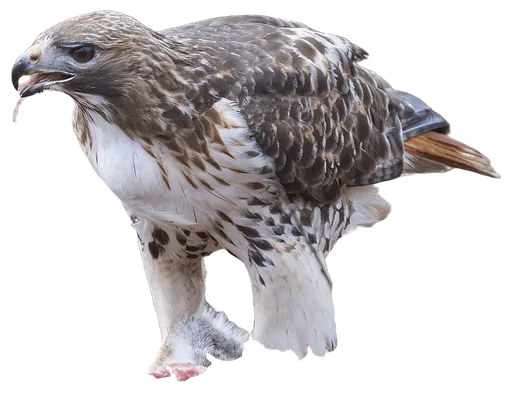
  L vs Red-tailed HawkWins · 52% · Toss-up
  W
W  Pick any opponent
 Martial Eagle battle analysis
The martial eagle hunts from above. It spends much of the day circling so high over the savanna that it is hard to see, scanning ground where hares, hyraxes, game birds and monitor lizards move in the open. When it commits, it drops in a long, shallow stoop, or a steeper parachute into cover, and arrives before the prey knows it has been seen.
Its weapons match its choice of prey. Females carry hallux claws averaging about 5.6 cm, an inner claw almost as large, and the longest legs of any booted eagle, letting them strike at snakes and small carnivores without putting the body within reach. Records of lion cubs killed in Kenya and of venomous snakes, jackals and small cats in the diet show that it takes on prey that can hurt it. Vervet monkeys take the threat seriously enough to keep a separate alarm call for it.
In an absolute matchup, however, it is still a bird under 5 kg. Its wide wings suit soaring and open-country stoops, not twisting fights in dense cover, and it has no armor and a light skeleton. It wins by striking first from above. If the first strike does not end the fight, or a heavy grappler gets a grip on it, the martial eagle has little else to rely on.
Habitat & range
The martial eagle lives across sub-Saharan Africa in open and semi-open savanna, thornveld and wooded grassland with scattered large trees. It avoids dense forest. It has been recorded up to about 3,000 m but residents rarely exceed 1,500 m. It is most common in large protected areas such as Kruger and Kgalagadi in South Africa and Etosha in Namibia. In Kruger, GPS-tracked eagles preferred areas near rivers with more tree cover.
Diet & hunting
It is an opportunistic apex predator of mammals, birds and reptiles. Hares dominate in the Cape (about 53% of prey in the largest study), and rock hyraxes elsewhere. Other prey include larger birds (including spotted eagle-owls and white-headed vultures), monitor lizards, venomous snakes, striped polecats, jackals, medium-sized wild cats and, rarely, lion cubs. Mean prey mass is usually 1–5 kg. It rarely scavenges, but it is still killed by poisoned baits set for mammalian predators.
Social life
Adults live in territorial pairs spread at very low density. Territories in Kruger averaged about 108 km². Non-territorial adults (floaters) wander widely. No cooperative hunting is documented.
Conservation
The species is listed as Endangered by BirdLife International for the IUCN Red List, with continuing declines in mature individuals and range. Threats include persecution by farmers over livestock and game losses (almost certainly exaggerated), poisoned baits, electrocution and collisions with power infrastructure, and habitat fragmentation. In Kruger, three of four wide-ranging floaters died from human-related causes, and declines are occurring even inside protected areas.
Quick answers
How strong is a Martial Eagle?
On the Animal Battle Stats scale, the Martial Eagle has an attack rating of 41.5 and a power index of 53.4 out of 100, which ranks it #130 of 341 animals and puts it in B tier (Strong). Its strongest stat is agility (84).
How much does a Martial Eagle weigh?
A typical adult Martial Eagle weighs about 4.8 kg (11 lb). Rated specimen: healthy mature adult female, 4.8 kg, 88.0 cm total length, about 2.1 m wingspan.
How fast is a Martial Eagle?
There is no reliable measured top speed for the Martial Eagle, so we do not publish one. Its agility rating, which covers acceleration, reflexes and evasion, is 84 out of 100.
What does a Martial Eagle eat?
It is an opportunistic apex predator of mammals, birds and reptiles. Hares dominate in the Cape (about 53% of prey in the largest study), and rock hyraxes elsewhere. Other prey include larger birds (including spotted eagle-owls and white-headed vultures), monitor lizards, venomous snakes, striped polecats, jackals, medium-sized wild cats and, rarely, lion cubs. Mean prey mass is usually 1–5 kg. It rarely scavenges, but it is still killed by poisoned baits set for mammalian predators.
Is the Martial Eagle endangered?
The Martial Eagle's conservation status is Endangered. The species is listed as Endangered by BirdLife International for the IUCN Red List, with continuing declines in mature individuals and range. Threats include persecution by farmers over livestock and game losses (almost certainly exaggerated), poisoned baits, electrocution and collisions with power infrastructure, and habitat fragmentation. In Kruger, three of four wide-ranging floaters died from
What animals can beat a Martial Eagle?
Among its closest rivals, the Gyrfalcon (50%), the Snowy Owl (51%), the Peregrine Falcon (52%) would be favored against the Martial Eagle. It would be favored against the Golden Eagle, the Emperor Penguin, the Harpy Eagle, the Wedge-tailed Eagle, the Red-tailed Hawk.
Researched 2026-09-28. Ratings are editorial judgments built from these sources; measurements describe a healthy adult female.
- Wikipedia, Martial eaglesex-specific mass, length, wingspan, hallux, tarsus, bill, prey mass, hunting style, dangerous prey, detection distance
- The Peregrine Fund, Martial Eaglemass, status, hunting, territory
- Animal Diversity Web, Polemaetus bellicosusmass, wingspan, lifespan, maneuverability, prey, breeding
- BirdLife DataZone factsheetconservation trend
- Hatfield et al. 2024, Ecology and Evolutiondangerous prey, prey mass range
- Kruger GPS ranging study 2017, PLOS ONE (PubMed)ranging, habitat, mortality
- GPS breeding-monitoring study 2023, Royal Society Open Sciencebreeding rate, home range
- Kenya endangered raptor habitat mapping 2023, Ecology and Evolutionstatus, threats
- Seyfarth, Cheney & Marler 1980, Sciencepredator impact, fun fact
- Commons, Martial eagleimage candidate
Photo: “Martial Eagle (Polemaetus bellicosus) (51854471490).jpg” by Bernard DUPONT from FRANCE, CC BY-SA 2.0, background removed and cropped. Original
Suggest a correction