
Mantis Shrimp
Odontodactylus scyllarusC tier · Capable34th of 51 sea creatures
Size & speed
- Weight
- 80 g2.8 oz
- Length
- 15 cm5.9 in
As heavy as 80 paperclips
Heavier than 9% of animalsAbout 1.8 credit cards long
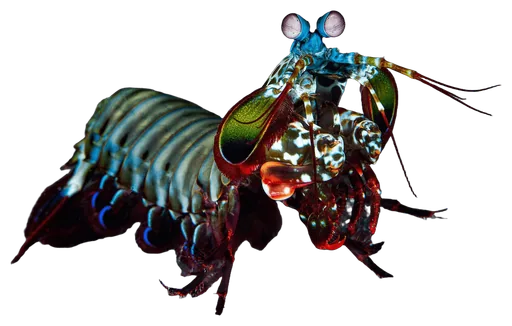
Bigger than 8% of animalsThe peacock mantis shrimp is a tiny reef predator built around one of biology's most extreme impact systems. Its spring-loaded clubs reach up to 23 m/s and generate measured impacts as high as 1,501 N, followed by a cavitation shock. Its independently moving eyes add UV and polarization channels that few animals can match. In ABS terms it is an elite specialist, not a miniature heavyweight: terrifying against similarly sized hard prey, but still only tens of grams on an absolute roster.
Detailed ratings
Research-backed ratings on one 0–100 scale for all 344 animals (updated 2026-09-27). How ratings work


Card No. 176 of 344. Every animal on Animal Battle Stats has one: its power, tier and archetype on the front; its six battle stats, abilities and signature move on the back.
Special abilities
The spring-loaded dactyl club reaches measured speeds up to 23 m/s, producing a direct impact followed within fractions of a millisecond by a cavitation-collapse force peak.
Independently mobile compound eyes detect linear, circular and ultraviolet polarization, and torsional eye movements actively maximize polarization contrast.
Unique traits
Highly mineralized, damage-tolerant dactyl clubs repeatedly survive the same high-rate impacts they deliver to hard prey.
The armored tail fan is deliberately presented to absorb rival strikes during ritualized contests over valuable burrows and reproductive access.
How it fights
Weapons
- The paired second thoracic raptorial appendages terminate in mineralized dactyl clubs. A latch-spring system stores elastic energy and releases it faster than muscle alone could power the movement. The strike combines direct club impact with a second cavitation-collapse impulse.
Struggles vs
- Tiny absolute body mass compared with vertebrate roster animals.
- Short weapon reach.
- Soft post-molt cuticle creates an acute vulnerability window.
- Exoskeleton and telson are not protection against a much larger predator's crushing or swallowing attack.
- Specialized club damage is devastating to small hard targets but scales poorly against massive flesh-and-bone opponents.
- Weight
- 80 g2.8 oz
- Height
- No reliable measurement
- Length
- 15 cm5.9 in
- Top speed
- No reliable measurement
- Bite force
- No reliable measurement
- Lifespan
- 6 years
- Home biome
- Ocean
- Lifestyle
- Mostly solitary
Rated specimen: Healthy mature large male, 0.08 kg, 15.0 cm total length.
Fun facts
- High-speed experiments measured club speeds up to 23 m/s underwater.
- Direct impact peaks reached 1,501 N, followed by cavitation peaks up to 504 N.
- The impact and cavitation peaks can occur only about 0.4 milliseconds apart.
- Its eyes can detect circularly polarized light.
- UV-sensitive receptors can also encode polarization orientation.
- The eyes actively roll to improve polarization contrast.
Closest rivals by power. Tap one for the full breakdown, or pick any opponent.
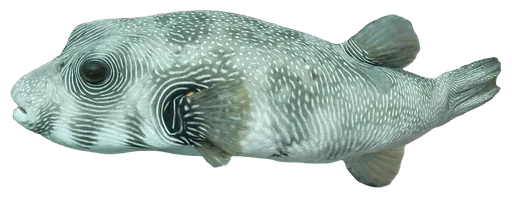
vs Goliath TigerfishLoses · 80% · Clear edge 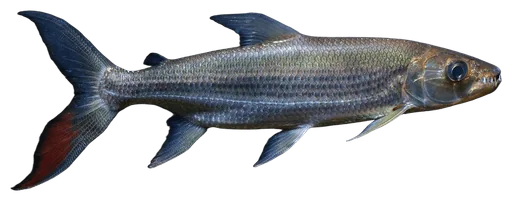 L vs PufferfishLoses · 67% · Slight edge
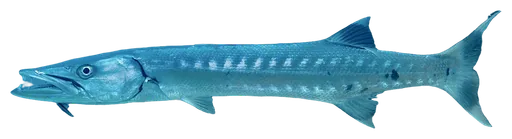
 L vs BarracudaLoses · 76% · Clear edge
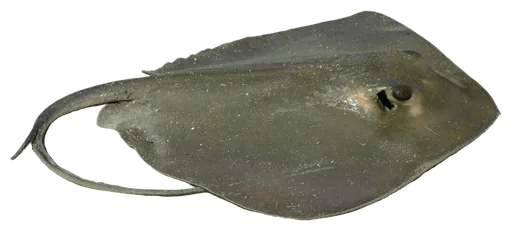
 L vs StingrayLoses · 79% · Clear edge
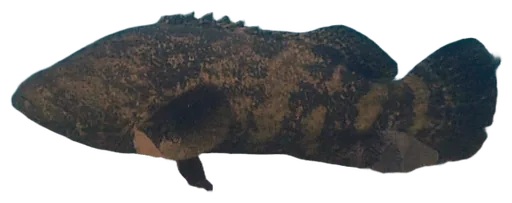
 L vs Goliath GrouperLoses · 84% · Clear edge
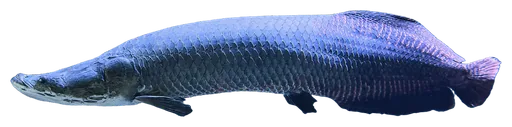
 L vs ArapaimaLoses · 85% · Decisive
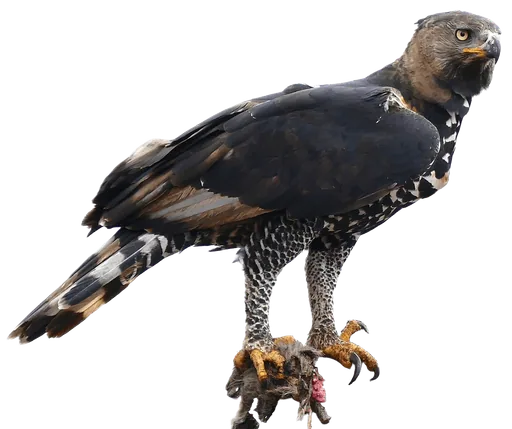
 L vs Crowned EagleLoses · 71% · Clear edge
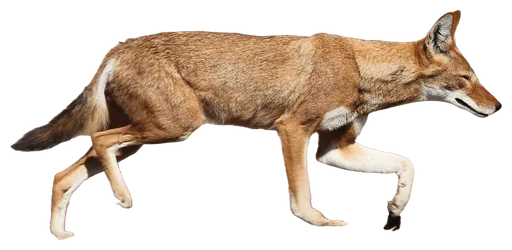
 L vs Ethiopian WolfLoses · 77% · Clear edge
 L
Mantis Shrimp battle analysis
A peacock mantis shrimp wins by concentrating a small animal's energy into an extraordinarily brief event. Muscle first loads an elastic spring system. A latch releases it, accelerating the dactyl club so quickly through water that the surrounding pressure falls enough to form vapor bubbles. The club hits first. The bubbles then collapse and produce a second force pulse. For a snail or crab shell, that one-two loading can initiate cracks that repeated blows exploit.
Its defense mirrors its offense. A mineralized exoskeleton and broad telson protect the body, and rival smashers can present the telson during ritualized contests. This is a striking example of weapon and defensive behavior being integrated without making the whole animal invulnerable. During molting, the advantage temporarily reverses because the fresh cuticle is soft and the animal must rely on its burrow.
The visual system makes the animal even stranger. Rather than merely having many photoreceptor channels, O. scyllarus can analyze polarization, including circular polarization, and actively rotate its eyes to improve polarization contrast. Those senses matter to prey tracking, communication and rival assessment. Special is therefore near the top of the roster even while Size and Defense remain low.
The key calibration point is scale. A 1,500 N transient club impact is real, but it does not turn an 80 g stomatopod into a lion-sized damage dealer. The force acts locally over a tiny displacement and is optimized for brittle shells. Against a large vertebrate, reach, target volume and total energy become decisive constraints. The correct ABS profile is thus low-to-moderate absolute Attack paired with extraordinary Special and Senses.
Habitat & range
The species occupies tropical Indo-West Pacific reef-associated hard bottoms, rubble and sand. ADW describes shallow clear coral-reef waters, while recent taxonomic synthesis extends known habitat from shallow water to roughly 100 m across the western Indian Ocean and western Pacific. Many ecological references emphasize roughly 3-40 m as common reef depth.
Diet & hunting
It is a carnivorous benthic predator specialized for hard prey. Snails, bivalves and crustaceans are repeatedly smashed to expose soft tissue. The burrow functions as refuge, territorial resource and hunting base.
Social life
Adults are strongly territorial around burrows. Visual threat signaling and telson sparring allow rivals to assess one another. Pair association can occur around reproduction, but the species should not be characterized as a permanently cooperative social hunter.
Conservation
A robust global IUCN category was not recovered in this run; Fishipedia lists the species as Not Evaluated. The research file therefore records conservation status as not securely assessed here, rather than inventing a threat category.
Quick answers
How strong is a Mantis Shrimp?
On the Animal Battle Stats scale, the Mantis Shrimp has an attack rating of 34 and a power index of 50.4 out of 100, which ranks it #176 of 344 animals and puts it in C tier (Capable). Its strongest stat is special (97).
How much does a Mantis Shrimp weigh?
A typical adult Mantis Shrimp weighs about 80 g (2.8 oz). Rated specimen: healthy mature large male, 0.08 kg, 15.0 cm total length.
How fast is a Mantis Shrimp?
There is no reliable measured top speed for the Mantis Shrimp, so we do not publish one. Its agility rating, which covers acceleration, reflexes and evasion, is 84 out of 100.
What does a Mantis Shrimp eat?
It is a carnivorous benthic predator specialized for hard prey. Snails, bivalves and crustaceans are repeatedly smashed to expose soft tissue. The burrow functions as refuge, territorial resource and hunting base.
Is the Mantis Shrimp endangered?
The Mantis Shrimp's conservation status is Not Evaluated. A robust global IUCN category was not recovered in this run; Fishipedia lists the species as Not Evaluated. The research file therefore records conservation status as not securely assessed here, rather than inventing a threat category.
What animals can beat a Mantis Shrimp?
Among its closest rivals, the Goliath Tigerfish (80%), the Pufferfish (67%), the Barracuda (76%), the Stingray (79%), the Goliath Grouper (84%), the Arapaima (85%), the Crowned Eagle (71%), the Ethiopian Wolf (77%) would be favored against the Mantis Shrimp. It would be favored against none of them.
Researched 2026-09-27. Ratings are editorial judgments built from these sources; measurements describe a healthy adult male.
- Animal Diversity Web, Odontodactylus scyllarus3-18 cm range, anatomy, sexual color dimorphism, reef habitat, prey
- Patek & Caldwell 2005, Journal of Experimental Biology / PubMed400-1501 N impact, cavitation to 504 N, double force peak
- Patek Lab, Duke University12-23 m/s raptorial speed, cavitation mechanism
- SICB, Patek & Caldwell11-15 cm experimental animals, mean and max force, >16 kN/kg scaling
- Journal of Comparative Physiology A / PMCUV polarization sensitivity, circular/linear polarization system
- Nature Communications, Daly et al. 2016active torsional eye rotation maximizing polarization contrast
- Royal Society Interface, Taylor et al. 2019telson impact mechanics and ritualized fighting context
- Western Australian Museumclub ecology, tail-fan defense, ritualized fighting, distribution
- Zenodo / South African taxonomic guide materialmeasured 129 mm male, 88 mm female, historical 171 mm maximum, range/habitat
- Lembeh Resort species field pageadult male/female coloration, 18 cm maximum, egg brooding
- Wikimedia Commons, Diego Delsoimage provenance, exact species, 4964x4964, CC BY-SA 4.0
Photo: “Odontodactylus scyllarus Réunion.jpg” by Cédric Péneau, CC BY-SA 4.0, background removed and cropped. Original
Suggest a correction