
Maned Wolf
Chrysocyon brachyurusC tier · Capable102nd of 163 mammals
Size & speed

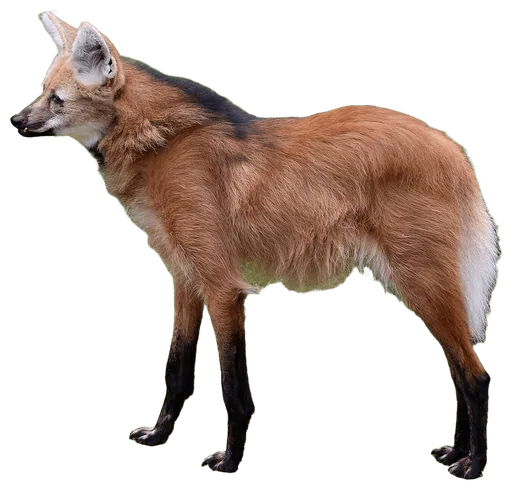
- Weight
- 23 kg51 lb
- Length
- 1.3 m4.3 ft
As heavy as 5.1 house cats
Heavier than 55% of animalsAbout 4.3 rulers long
Bigger than 56% of animalsThe maned wolf is South America's tallest canid, a 23 kg grassland specialist built around reach, hearing and precise small-prey pounces rather than brute force. Its stilt-like legs and huge ears dominate tall-grass matchups, while its slender build, modest jaw mechanics and lack of armor keep direct combat power well below stockier wolves, hyenas and large cats.
Detailed ratings
Research-backed ratings on one 0–100 scale for all 344 animals (updated 2026-09-27). How ratings work


Card No. 178 of 344. Every animal on Animal Battle Stats has one: its power, tier and archetype on the front; its six battle stats, abilities and signature move on the back.
Special abilities
Very large mobile ears plus an unusually elevated head position help locate small prey hidden in tall vegetation before a targeted pounce.
The wolf can tap vegetation/ground with a forefoot to disturb concealed prey, then exploit the movement with a rapid pounce or dig.
Unique traits
Exceptionally long limbs raise the body above cerrado grasses and improve movement and visual access through dense herbaceous cover.
Unusually heavy fruit use, especially lobeira, broadens food availability and reduces dependence on risky vertebrate kills.
How it fights
Weapons
- The maned wolf is a small-prey generalist, not a scaled-down gray wolf. Its narrow skull, reduced carnassials and slender canines suit rapid seizure of rodents, rabbits, birds, reptiles and invertebrates. Smithsonian describes a characteristic sequence in which the animal rotates its large ears to locate prey, taps the ground with a forefoot to flush it, then pounces or digs. Against a similarly sized opponent it can bite and use its reach to reposition, but its jaw architecture is not specialized for holding and dismantling large struggling prey.
Struggles vs
- Slender limbs are exposed in close combat.
- No armor or unusually thick hide.
- Modest absolute mass and bite force relative to large canids and cats.
- Long slender canines and reduced carnassials reflect small-prey specialization.
- Generally avoids costly direct conflict rather than pressing attacks.
- Weight
- 23 kg51 lb
- Height
- 90 cm35.4 in
- Length
- 1.3 m4.3 ft
- Top speed
- No reliable measurement
- Bite force
- No reliable measurement
- Lifespan
- 13 years
- Home biome
- Savanna
- Lifestyle
- Social
Rated specimen: Healthy fully mature adult male, represented at 23.0 kg.
Fun facts
- The maned wolf is the only living species in the genus Chrysocyon.
- Despite its name and fox-like face, it is neither a true wolf nor a fox.
- It stands around 90 cm at the shoulder while weighing only about 23 kg.
- Fruit can constitute roughly half of its diet, unusual for a large canid.
- It can rotate its large ears to locate prey concealed in grass.
- Pairs may share a territory while spending most hunting and resting time apart.
Closest rivals by power. Tap one for the full breakdown, or pick any opponent.
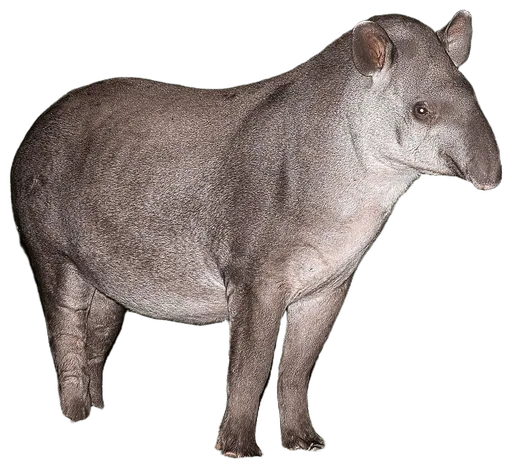
vs Ethiopian WolfWins · 52% · Toss-up 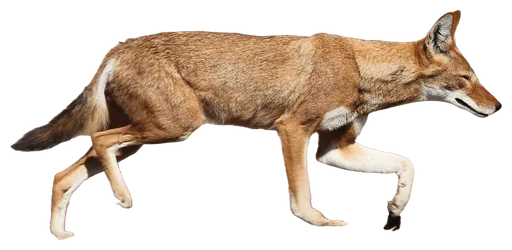 W vs TapirLoses · 63% · Slight edge
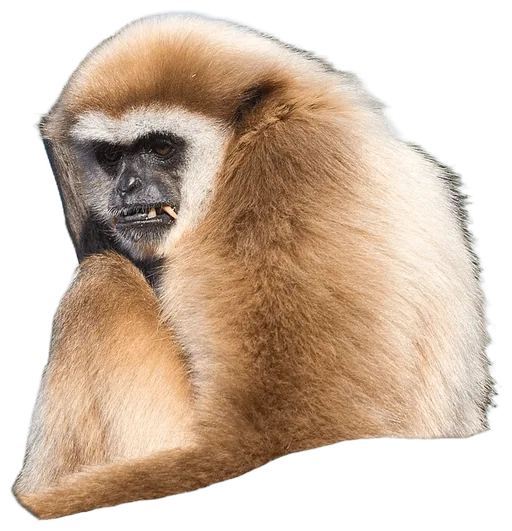
 L vs GibbonWins · 57% · Toss-up
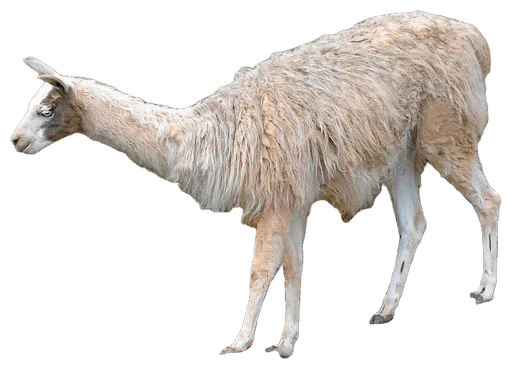
 W vs LlamaLoses · 60% · Slight edge
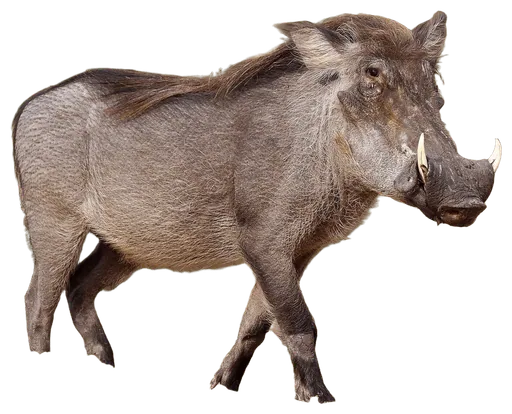
 L vs WarthogLoses · 57% · Toss-up
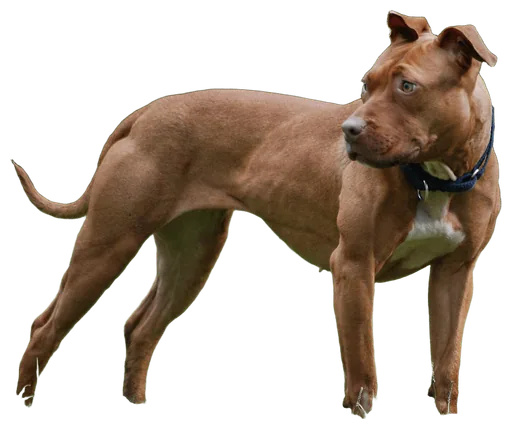
 L vs American Pit Bull TerrierDraw · 50-50 · Dead even
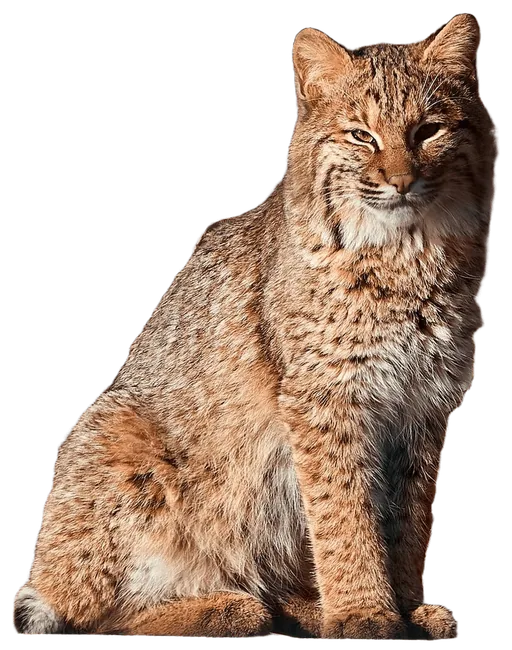
 D vs BobcatWins · 55% · Toss-up
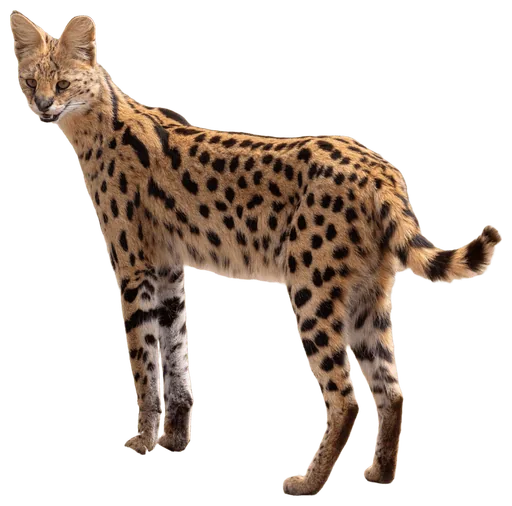
 W vs ServalWins · 52% · Toss-up
 W
Maned Wolf battle analysis
The maned wolf's silhouette can make it look larger and more formidable than its mass really is. At roughly 90 cm at the shoulder it stands almost as tall as much heavier predators, yet a representative adult weighs only about 23 kg. That mismatch is the key to its ABS profile. The legs are ecological tools: they lift the animal over cerrado grasses, extend stride and give its eyes and enormous ears access to prey cues above dense vegetation. They do not turn the animal into a heavyweight fighter.
Its hunting sequence is correspondingly precise. Rather than running down deer-sized prey, the wolf listens, approaches, taps or disturbs concealed quarry, and pounces. Jaw anatomy supports that interpretation. Comparative modeling predicts a useful but modest bite, while anatomical summaries describe reduced carnassials and slender canines. The animal can certainly injure a peer, but a gray wolf, hyena or large cat brings a much heavier killing apparatus to direct contact.
The other half of the maned wolf is ecological flexibility. It patrols large territories, communicates intensely by scent and vocalization, and survives on a diet that can be half plant matter. That flexibility supports good stamina, senses and tactical ratings. Its best matchup is not a wrestling contest. It is an open-grass encounter in which early detection, reach, pouncing control and the option to disengage matter more than crushing force.
Habitat & range
Maned wolves occupy central and eastern South America, especially Brazil's cerrado, with populations extending into Paraguay, Bolivia, northern Argentina and southern Peru. They use grassland, savanna, shrubland, wet fields, forest edges and open woodland.
Diet & hunting
They are broad omnivores. Small mammals, birds, reptiles, insects and other animal foods are combined with substantial fruit and vegetable matter. Lobeira is particularly important. This mixed diet makes the species an important predator of small vertebrates and a seed disperser rather than a large-prey apex hunter.
Social life
A male and female can form a monogamous territorial pair sharing a large home range, but typically hunt, travel and rest alone. Scent marks and loud roar-barks maintain spacing. Physical association increases around breeding and parental care.
Conservation
The IUCN assessment cited by Smithsonian is Near Threatened. Major pressures include conversion and fragmentation of cerrado, road mortality, persecution, disease and conflict with domestic animals. Remaining populations are concentrated in Brazil.
Quick answers
How strong is a Maned Wolf?
On the Animal Battle Stats scale, the Maned Wolf has an attack rating of 35 and a power index of 50.3 out of 100, which ranks it #178 of 344 animals and puts it in C tier (Capable). Its strongest stat is agility (78).
How much does a Maned Wolf weigh?
A typical adult Maned Wolf weighs about 23 kg (51 lb). Rated specimen: healthy fully mature adult male, represented at 23.0 kg.
How fast is a Maned Wolf?
There is no reliable measured top speed for the Maned Wolf, so we do not publish one. Its agility rating, which covers acceleration, reflexes and evasion, is 78 out of 100.
What does a Maned Wolf eat?
They are broad omnivores. Small mammals, birds, reptiles, insects and other animal foods are combined with substantial fruit and vegetable matter. Lobeira is particularly important. This mixed diet makes the species an important predator of small vertebrates and a seed disperser rather than a large-prey apex hunter.
Is the Maned Wolf endangered?
The Maned Wolf's conservation status is Near Threatened. The IUCN assessment cited by Smithsonian is Near Threatened. Major pressures include conversion and fragmentation of cerrado, road mortality, persecution, disease and conflict with domestic animals. Remaining populations are concentrated in Brazil.
What animals can beat a Maned Wolf?
Among its closest rivals, the Tapir (63%), the Llama (60%), the Warthog (57%) would be favored against the Maned Wolf. It would be favored against the Ethiopian Wolf, the Gibbon, the Bobcat, the Serval. It is dead even with the American Pit Bull Terrier: a draw.
Researched 2026-09-27. Ratings are editorial judgments built from these sources; measurements describe a healthy adult male.
- Smithsonian National Zoo, Maned Wolf23 kg, ~90 cm shoulder, habitat/range, diet, prey-flush/pounce behavior, social system, reproduction, threats
- Animal Diversity Web, Chrysocyon brachyurus20-23 kg, 124.5-132 cm head-body, 28-40.5 cm tail, dentition, home range, activity, social behavior
- Penrose et al. 2020, Functional morphology of jaw adductor muscles in Canidaemodeled 246 N canine and 384 N carnassial occlusion bite forces; wide-gape values
- Smithsonian 2025 breeding updatematurity near one year, managed breeding context
- Wildlife Biology 2026 movement studyhealthy female 55.7 km² home range, movement context
- SeaWorld species facts20-26 kg, 74-90 cm shoulder, tail 28-49 cm, ~15 y lifespan
- ADW adult image recordexact species, adult/sexually mature image provenance
- Wikimedia Commons / Pascal Vuylsteker image3008x2000 exact-species reusable candidate, original Flickr provenance
Photo: “Maehnenwolf Chrysocyon brachyurus Tierpark Hellabrunn-3.jpg” by Rufus46, CC BY-SA 3.0, background removed and cropped. Original
Suggest a correction