
Manatee
Trichechus manatusB tier · Strong29th of 51 sea creatures
Size & speed

- Weight
- 500 kg1,102 lb
- Length
- 3 m9.8 ft
- Top speed
- 24 km/h15 mph
As heavy as 7.1 people
Heavier than 90% of animals1.7× a person's height
Bigger than 85% of animalsAbout as fast as a person running
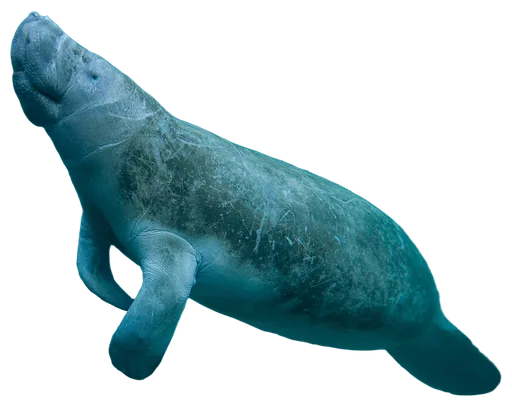
Faster than 23% of animalsThe West Indian manatee is a roughly half-ton aquatic herbivore whose strength lies in mass, endurance and sensory specialization rather than weapons. A broad paddle tail drives short bursts and long migrations, while thousands of tactile hairs detect tiny water movements around the body. Its lack of armor, predatory teeth and combat aggression keeps Attack modest despite enormous size.
Detailed ratings
Research-backed ratings on one 0–100 scale for all 344 animals (updated 2026-09-27). How ratings work


Card No. 141 of 344. Every animal on Animal Battle Stats has one: its power, tier and archetype on the front; its six battle stats, abilities and signature move on the back.
Special abilities
Thousands of highly innervated body vibrissae detect minute water movements around the animal, providing unusually broad hydrodynamic awareness in turbid water.
The broad muscular tail can propel the half-ton animal to short bursts reported at 15 mph and provides the main emergency repositioning/body-shove force.
Unique traits
New cheek teeth continually emerge posteriorly and move forward to replace teeth worn down by abrasive vegetation and sediment.
Long-lived manatees repeatedly return to seasonal ranges and warm-water refuges; mothers spend roughly two years teaching calves migration and resource locations.
How it fights
Weapons
- Manatees are large herbivores, not predatory fighters. Their strongest offensive tools are simply a roughly half-ton body and a powerful propulsive tail. During mating-herd competition, males push and shove, demonstrating that the body can apply meaningful force, but there are no horns, tusks, claws, killing teeth or venom. The prehensile muzzle and continually replacing grinding cheek teeth are feeding tools, not a carnivore-style bite system.
- A tail strike or body shove could injure a small opponent, especially in water, but ABS should not turn mass into imaginary weapon specialization. Attack therefore stays below similarly sized animals equipped with horns, hooves, tusks or predatory jaws.
- Weight
- 500 kg1,102 lb
- Height
- No reliable measurement
- Length
- 3 m9.8 ft
- Top speed
- 24 km/h15 mph
- Bite force
- No reliable measurement
- Lifespan
- 55 years
- Home biome
- Ocean
- Lifestyle
- Social
Rated specimen: Healthy fully mature adult female, 500.0 kg, 300.0 cm total length.
Fun facts
- Manatees have tactile vibrissae distributed across essentially the entire body, not just the face.
- Roughly 5,300 vibrissae are associated with an estimated ~209,000 axons in the sensory system.
- New molars continuously enter from the rear of the jaw and migrate forward as older teeth wear out.
- A telemetry study recorded median seasonal one-way migration of 280 km and a maximum of 830 km.
- One tracked adult male ranged across more than 2,300 km of coastline.
- Resting manatees can remain submerged for as long as about 20 minutes.
Closest rivals by power. Tap one for the full breakdown, or pick any opponent.
vs Humboldt SquidWins · 67% · Slight edge 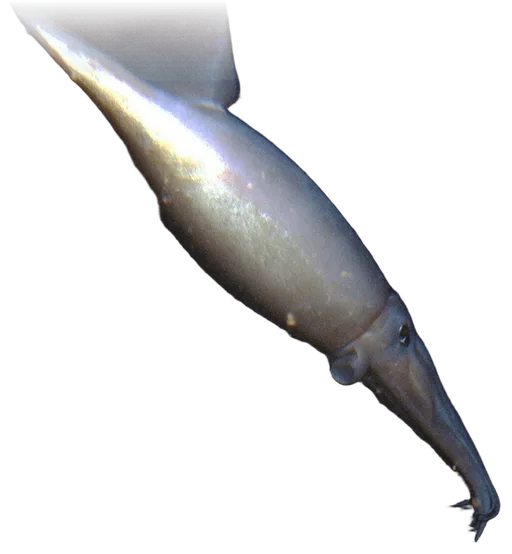 W vs Electric EelWins · 68% · Slight edge
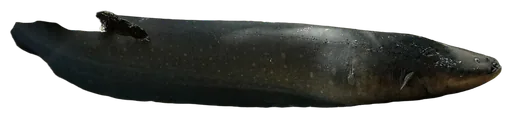 W vs ArapaimaWins · 61% · Slight edge
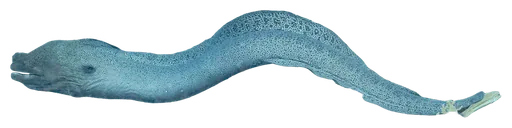
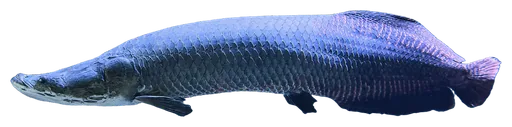 W vs Moray EelWins · 65% · Slight edge
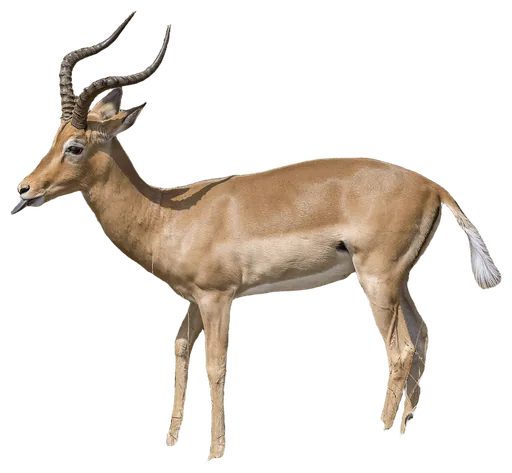
 W vs ImpalaWins · 62% · Slight edge
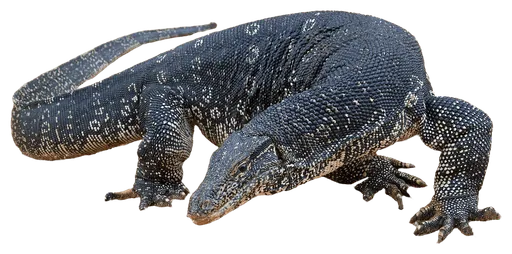
 W vs Monitor LizardWins · 68% · Slight edge
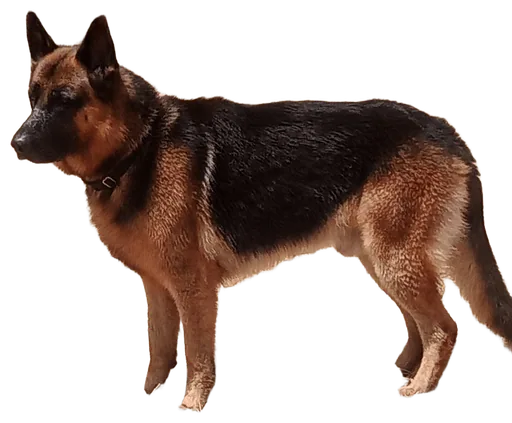
 W vs German ShepherdWins · 65% · Slight edge
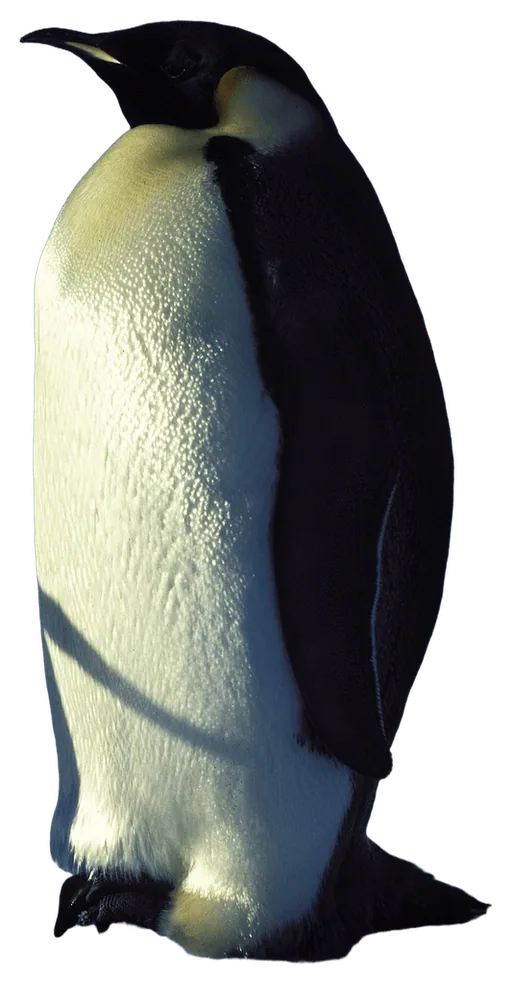
 W vs Emperor PenguinWins · 65% · Slight edge
 W
Manatee battle analysis
A manatee is a sensory tank without a cannon. In warm water, its half-ton body is difficult for small opponents to control, and the paddle tail can move that mass surprisingly quickly for a short burst. Yet there is no horn, tusk, crushing predator bite or claw system to turn that momentum into consistently lethal offense. Its natural contests are mostly pushing and shoving rather than weapon duels.
Its most extraordinary battle-relevant feature is invisible at first glance. Sparse hairs covering the body are specialized vibrissae linked to a huge somatosensory investment. Experiments show manatees detecting tiny hydrodynamic disturbances in turbid water, effectively surrounding the animal with a tactile warning field. Good underwater hearing adds another useful channel even though vision is comparatively limited.
The other surprise is travel. Manatees look sedentary, but satellite telemetry documents seasonal journeys of hundreds of kilometers and multi-week migrations. ABS therefore gives the species strong Stamina without confusing migration with explosive athleticism. Low resting metabolism and serious cold sensitivity impose a real physiological ceiling. This profile is intentionally asymmetric: high Size, Endurance, Senses and Special, but only modest Attack and Agility.
Habitat & range
West Indian manatees use coastal marine, estuarine, brackish and freshwater rivers/springs. The species ranges from the southeastern United States through the Caribbean and portions of eastern Mexico, Central America and northeastern South America. Florida manatees disperse northward and westward in warm months but concentrate around warm-water refuges when temperatures fall.
Diet & hunting
They are primarily aquatic herbivores eating seagrasses and other freshwater/marine vegetation, sometimes consuming roughly 4-10% of body mass in vegetation daily. FWC reports grazing for up to eight hours per day. Their feeding can influence aquatic plant communities, and abrasive vegetation/sediment helps explain continuous tooth replacement.
Social life
Outside cow-calf pairs and mating herds, manatees are semi-social rather than tightly group-living. They aggregate strongly at winter warm-water sites, but this often reflects shared thermal needs rather than permanent social groups. Mating herds form around receptive females and may contain many competing males.
Conservation
The West Indian manatee remains federally protected in the United States. Current FWS material recognizes two subspecies and identifies watercraft collisions, loss of warm-water habitat, forage loss, entanglement, harmful algal blooms and cold stress among major threats. Florida abundance has increased substantially from early-1990s estimates, but recent unusual mortality and habitat problems show continued vulnerability.
Quick answers
How strong is a Manatee?
On the Animal Battle Stats scale, the Manatee has an attack rating of 36 and a power index of 52.9 out of 100, which ranks it #141 of 344 animals and puts it in B tier (Strong). Its strongest stat is stamina (78).
How much does a Manatee weigh?
A typical adult Manatee weighs about 500 kg (1,102 lb). Rated specimen: healthy fully mature adult female, 500.0 kg, 300.0 cm total length.
How fast is a Manatee?
The Manatee's top speed is about 24 km/h (15 mph). Its agility rating is 48 out of 100.
What does a Manatee eat?
They are primarily aquatic herbivores eating seagrasses and other freshwater/marine vegetation, sometimes consuming roughly 4-10% of body mass in vegetation daily. FWC reports grazing for up to eight hours per day. Their feeding can influence aquatic plant communities, and abrasive vegetation/sediment helps explain continuous tooth replacement.
What animals can beat a Manatee?
The Manatee is favored against all of its closest rivals, including the Humboldt Squid, the Electric Eel, the Arapaima, the Moray Eel, the Impala, the Monitor Lizard, the German Shepherd, the Emperor Penguin.
Researched 2026-09-27. Ratings are editorial judgments built from these sources; measurements describe a healthy adult female.
- U.S. Fish & Wildlife Service, West Indian Manateetaxonomy, range, 9-10 ft adult length, ~1,000 lb typical mass, 15 mph short burst, habitat
- Florida FWC, Manatee factsdimensions, feeding, burst speed, breath hold, sociality, maturity, 65+ captive longevity
- Smithsonian Ocean, sirenians~3 m, 363-544 kg typical range; feeding morphology; classification
- Animal Diversity Web, T. manatusfemale-biased size, broad morphology/reproduction
- Harshaw et al. 2016 / USGSadult female body-condition differences; male/female morphometrics
- Deutsch et al. 2003 / USGS78-animal telemetry; 280 km median migration, 830 km max, 27.3-33.5 km/day, sex travel differences, site fidelity
- John et al. 2021 / NOAA repositorymeasured resting metabolism and locomotion cost
- Reep et al. 2011 / PubMed~5,300 vibrissae, ~209,000 axons, hydrodynamic sensitivity
- Gaspard et al. 2013 / PubMedhydrodynamic detection using facial vibrissae
- Gaspard et al. 2017 / PubMedpostcranial hydrodynamic detection
- Gaspard et al. 2012 / PubMed0.25-90.5 kHz hearing range, peak sensitivity 8-32 kHz
- Colbert et al. 2009 / PubMedfour-choice sound localization
- Rommel et al. 2003low metabolic rate, cold vulnerability, tail countercurrent heat exchange
- USGS cold-refuge study~20 C lower critical thermal threshold and refuge use
- Florida Museum, Florida Manateecontinuous “marching molar” replacement
- FWS image / Commonsexact subspecies photo, 3000x2008, public-domain provenance
Photo: “Florida Manatee FWS 28.jpg” by Keith Ramos / USFWS, Public domain, background removed and cropped. Original
Suggest a correction