
Magpie
Pica picaD tier · Underdog43rd of 55 birds
Size & speed

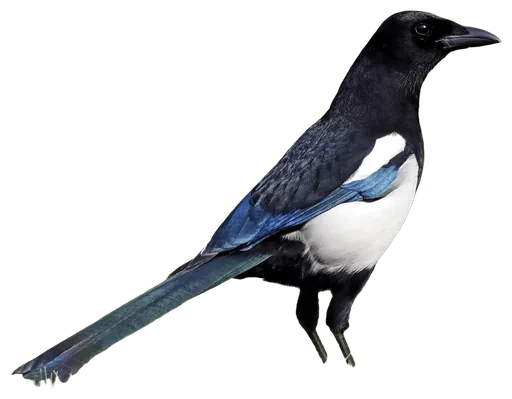
- Weight
- 230 g8.1 oz
- Length
- 48 cm18.9 in
About as heavy as a smartphone
Heavier than 12% of animalsAbout 1.6 rulers long
Bigger than 22% of animalsThe Eurasian Magpie is a ~230 g long-tailed corvid whose combat value comes from maneuverable flight and exceptional cognition rather than force. It remembers complex cache information, interprets social/alarm signals and aggressively defends territory, but its tiny body, lack of armor and modest natural weapons keep absolute Attack and Defense low.
Detailed ratings
Research-backed ratings on one 0–100 scale for all 344 animals (updated 2026-09-27). How ratings work


Card No. 270 of 344. Every animal on Animal Battle Stats has one: its power, tier and archetype on the front; its six battle stats, abilities and signature move on the back.
Special abilities
Experimental P. pica can integrate what food was cached, where it was hidden and when it was cached, supporting unusually flexible spatial/episodic-like memory.
Territorial and predator-context chatter calls carry behaviorally meaningful timing/duration information and can coordinate rapid warning and approach responses.
Unique traits
Experimental free-flight work shows the alula contributes to steep descent and body reorientation at low airspeed/high angle of attack, supporting precise landing and evasive control.
The exceptionally long graduated tail forms a major portion of total length and provides a large control surface during flight and landing.
How it fights
Weapons
- The bill is the primary weapon: a straight, robust corvid bill suited to probing, tearing, pecking, scavenging and handling varied foods. Feet and claws can grip branches and assist close contact, but they are not raptorial talons. Eurasian magpies take insects and other invertebrates, eggs and nestlings, carrion and some small vertebrate prey. Against another small bird, repeated pecks, bites and pursuit can matter; across the full ABS roster, a 230 g bird has very low absolute damage output.
- Weight
- 230 g8.1 oz
- Height
- No reliable measurement
- Length
- 48 cm18.9 in
- Top speed
- No reliable measurement
- Bite force
- No reliable measurement
- Lifespan
- 5 years
- Home biome
- Forest
- Lifestyle
- Social
Rated specimen: Healthy fully mature adult male, 0.23 kg and 48.0 cm total length.
Fun facts
- The long tail makes up roughly half of the bird's total apparent length.
- P. pica has experimentally demonstrated what-where-when memory for cached foods.
- Magpies can learn to use local visual cues to recover caches.
- A famous 2008 experiment reported mirror-directed mark behavior consistent with self-recognition.
- Breeding pairs may defend territories all year rather than only around the nest.
- Chatter calls are used both against territorial intruders and in predator contexts.
Closest rivals by power. Tap one for the full breakdown, or pick any opponent.
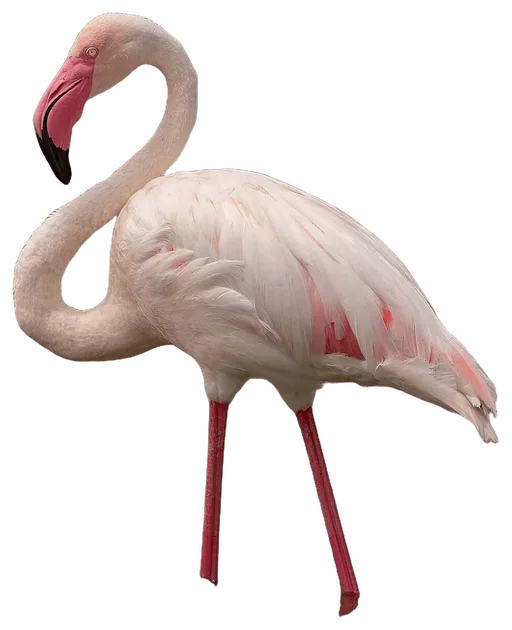
vs Yellow-naped AmazonLoses · 54% · Toss-up 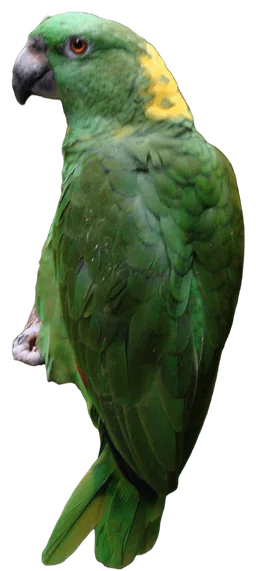 L vs FlamingoLoses · 64% · Slight edge
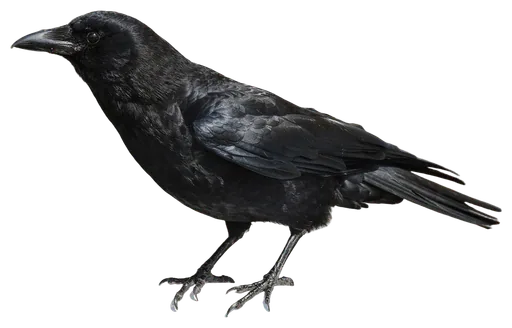
 L vs CrowLoses · 56% · Toss-up
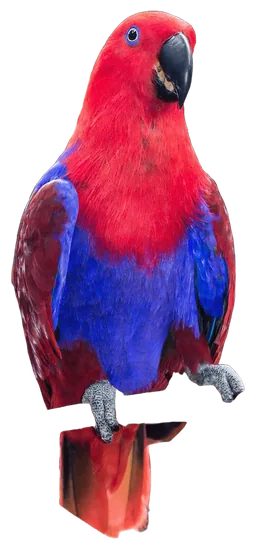
 L vs Eclectus ParrotLoses · 52% · Toss-up
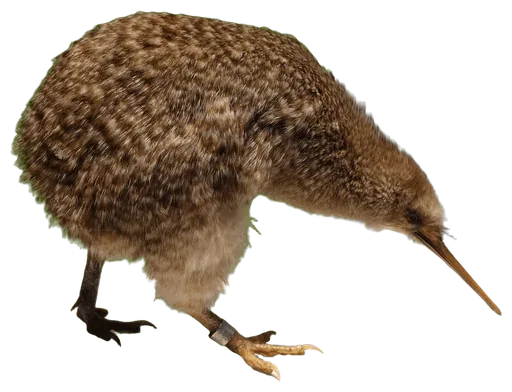
 L vs KiwiLoses · 63% · Slight edge
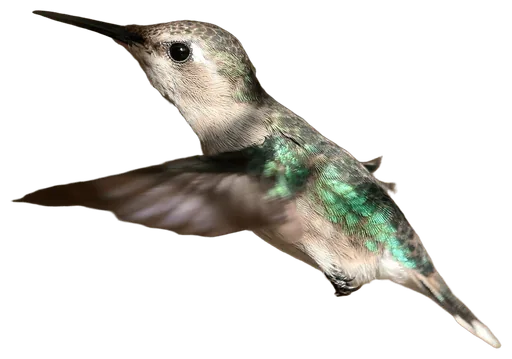
 L vs HummingbirdWins · 70% · Clear edge
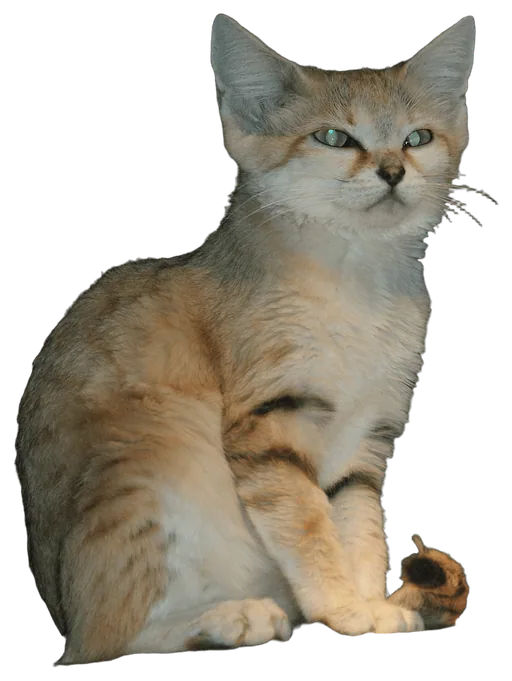
 W vs Sand CatLoses · 64% · Slight edge
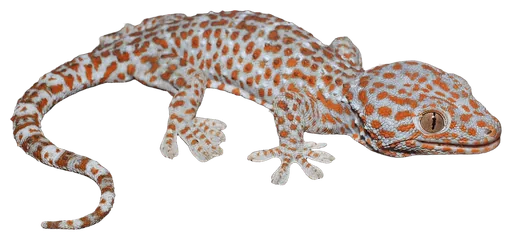
 L vs GeckoLoses · 51% · Toss-up
 L
Magpie battle analysis
A magpie is a tactical lightweight. On open ground it walks and hops while scanning continuously; at the first change in risk it can take to the air, use trees and structures as vertical cover, and re-engage from a different angle. The long tail and alula-assisted low-speed control make landings and steep transitions precise. Against an insect or tiny vertebrate, the bill is a legitimate weapon. Against a cat, eagle or even a much larger generalist bird, the correct strategy is rarely a direct force contest.
Its exceptional rating belongs in cognition. Controlled studies show that magpies can remember what they cached, where and when, develop sophisticated object permanence and learn retrieval cues. Territorial pairs also respond to details in each other's and rivals' chatter sequences. ABS therefore gives Intelligence an elite score while keeping Raw Power near the floor. This is exactly the kind of animal where pound-for-pound admiration must not leak into Attack or Defense.
Habitat & range
Eurasian magpies occupy open and semi-open country with trees: farmland, hedgerows, woodland margins, parks, gardens and suburbs across much of Europe and temperate Asia. Dense closed forest and completely treeless terrain are generally less suitable. The species is primarily resident over much of its range.
Diet & hunting
An opportunistic omnivore, it eats insects and other invertebrates, seeds, fruit/acorns, carrion and human-associated food, and also takes eggs, nestlings and small vertebrates. It scatter-hoards food. A 2021 Journal of Ecology study used radio tracking and cameras to show Eurasian magpies caching holm-oak acorns, demonstrating an ecological role in seed dispersal as well as predation/scavenging.
Social life
Breeding pairs can defend territories throughout the year. Nonbreeders flock, and even territorial pairs may temporarily join winter feeding groups. Vines' 18-month field study found higher feeding rates in flocks than for birds alone or in pairs, while aggression increased when birds fed closer together and at richer patches. Nests are substantial domed stick structures. Sexes look similar, with males averaging somewhat larger.
Conservation
The widespread Eurasian Magpie is generally treated as Least Concern. Local control occurs where it is regarded as an agricultural or nest-predation nuisance, but broad versatility in human-modified landscapes has helped it persist in many cities and farming regions.
Quick answers
How strong is a Magpie?
On the Animal Battle Stats scale, the Magpie has an attack rating of 15 and a power index of 41.3 out of 100, which ranks it #270 of 344 animals and puts it in D tier (Underdog). Its strongest stat is intelligence (91).
How much does a Magpie weigh?
A typical adult Magpie weighs about 230 g (8.1 oz). Rated specimen: healthy fully mature adult male, 0.23 kg and 48.0 cm total length.
How fast is a Magpie?
There is no reliable measured top speed for the Magpie, so we do not publish one. Its agility rating, which covers acceleration, reflexes and evasion, is 84 out of 100.
What does a Magpie eat?
An opportunistic omnivore, it eats insects and other invertebrates, seeds, fruit/acorns, carrion and human-associated food, and also takes eggs, nestlings and small vertebrates. It scatter-hoards food. A 2021 Journal of Ecology study used radio tracking and cameras to show Eurasian magpies caching holm-oak acorns, demonstrating an ecological role in seed dispersal as well as predation/scavenging.
Is the Magpie endangered?
No. The Magpie is listed as Least Concern. The widespread Eurasian Magpie is generally treated as Least Concern. Local control occurs where it is regarded as an agricultural or nest-predation nuisance, but broad versatility in human-modified landscapes has helped it persist in many cities and farming regions.
What animals can beat a Magpie?
Among its closest rivals, the Yellow-naped Amazon (54%), the Flamingo (64%), the Crow (56%), the Eclectus Parrot (52%), the Kiwi (63%), the Sand Cat (64%), the Gecko (51%) would be favored against the Magpie. It would be favored against the Hummingbird.
Researched 2026-09-27. Ratings are editorial judgments built from these sources; measurements describe a healthy adult male.
- BirdForum Opus, Eurasian Magpiemale/female mass, 46-50 cm length, sex similarity
- Oiseaux-Birds / handbook bibliography46-50 cm, 56-61 cm wingspan, male 185-245 g / female 160-240 g
- Prior, Schwarz & Güntürkün 2008, PLOS Biologymirror-induced behavior / mark-directed response
- Zinkivskay, Nazir & Smulders 2009, Animal Cognition / PubMedwhat-where-when memory for caches
- Pollok, Prior & Güntürkün 2000, J Comparative Psychology / PubMeddevelopment of object permanence
- Feenders & Smulders 2011, Animal Cognition / PubMedlocal cues in cache retrieval
- Lee et al. 2015, Scientific Reportsalula function during free descending flights
- Vines 1981, Ibisyear-round territorial pairs, flock feeding and aggression
- Kuspiel et al. 2024, Ethologypair-coordinated calling and territorial response
- Animal Cognition 2025chatter duration/rate, alarm and territorial contexts
- Martínez-Baroja et al. 2021, Journal of Ecologyscatter-hoarding and acorn caching ecology
- Commons / Jules Verne Times Twoexact species, 5820x4160 photograph, CC BY-SA 4.0
Photo: “Common magpie (Pica pica).jpg” by Charles J. Sharp, CC BY-SA 4.0, background removed and cropped. Original
Suggest a correction