
Lobster
Homarus americanusD tier · Underdog8th of 30 bugs & spiders
Size & speed
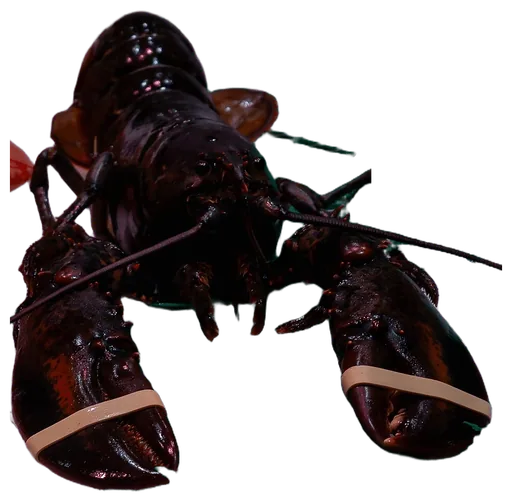
- Weight
- 1 kg2 lb
- Length
- 30 cm11.8 in
As heavy as 5 smartphones
Heavier than 19% of animalsAbout 1 rulers long
Bigger than 15% of animalsThe American Lobster is a heavily armored benthic crustacean armed with two specialized claws: a high-leverage crusher and a faster cutter. Its absolute power is modest at a representative 1 kg, but exoskeletal armor, chemical rival recognition, territorial fighting and a mechanically differentiated claw arsenal make it unusually capable for its size.
Detailed ratings
Research-backed ratings on one 0–100 scale for all 344 animals (updated 2026-09-27). How ratings work


Card No. 280 of 344. Every animal on Animal Battle Stats has one: its power, tier and archetype on the front; its six battle stats, abilities and signature move on the back.
Special abilities
One chela is mechanically optimized for force and maintained crushing while the other is faster and finer-edged for cutting and manipulation. The specialization gives the lobster two complementary close-range attack modes.
Antennular chemoreceptors detect individual-specific urine cues from previous opponents, allowing a lobster to recognize familiar rivals and alter aggression based on dominance history.
Unique traits
Juvenile claws begin relatively similar, then differential activity helps determine which develops into the crusher and which becomes the cutter; handedness is not genetically fixed to one side.
The exoskeleton periodically shifts from hardened protection to a vulnerable post-molt state, while the same growth cycle enables continued size increase and gradual regeneration of lost appendages.
How it fights
Weapons
- A lobster fights at close range by orienting the chelipeds toward the opponent, grasping, pinching, crushing or tearing. The crusher can maintain closure and exploit leverage, while the cutter closes rapidly and is better suited to cutting or controlling softer structures. Against prey, this combination handles crabs, mollusks and other benthic animals. Against conspecifics, claws are also central to ritualized and escalated dominance contests.
- Weight
- 1 kg2 lb
- Height
- No reliable measurement
- Length
- 30 cm11.8 in
- Top speed
- No reliable measurement
- Bite force
- No reliable measurement
- Lifespan
- 80 years
- Home biome
- Ocean
- Lifestyle
- Social
Rated specimen: Healthy, fully mature, hard-shelled adult male at 1.0 kg and about 30.0 cm total length.
Fun facts
- Live American lobsters are usually olive-green or greenish-brown, not restaurant red; cooking changes shell pigments.
- The side bearing the crusher claw is not genetically fixed. Either side can become the crusher during development.
- NOAA reports exceptional American lobsters up to 44 lb, vastly larger than the 1 kg representative used here.
- A lobster near minimum legal size is about one pound and may already be 5-7 years old.
- Adult lobsters can remember familiar fight opponents and avoid repeating a costly dominance contest.
- Females can store sperm internally for up to about a year before fertilizing eggs.
Closest rivals by power. Tap one for the full breakdown, or pick any opponent.
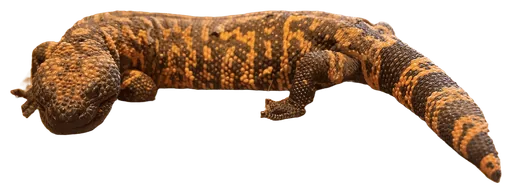
vs King CrabLoses · 54% · Toss-up 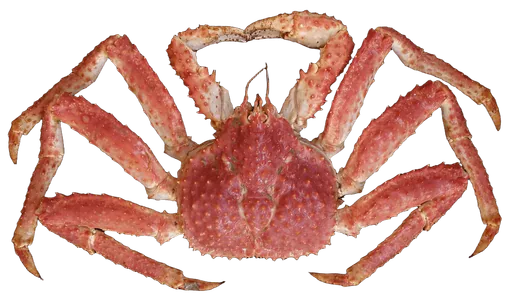 L vs Gila MonsterDraw · 50-50 · Dead even
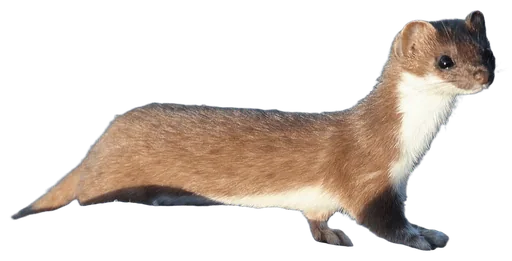
 D vs StoatWins · 58% · Slight edge
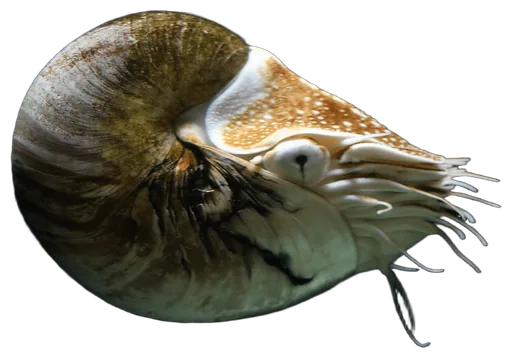
 W vs NautilusWins · 51% · Toss-up
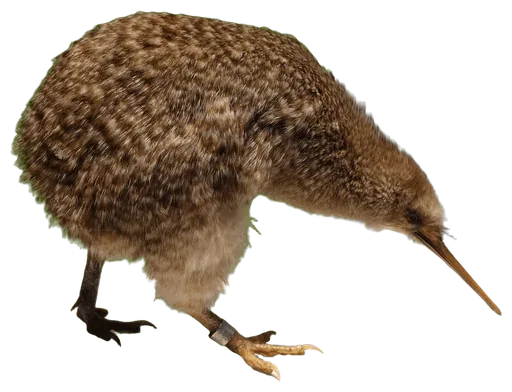
 W vs KiwiLoses · 57% · Toss-up
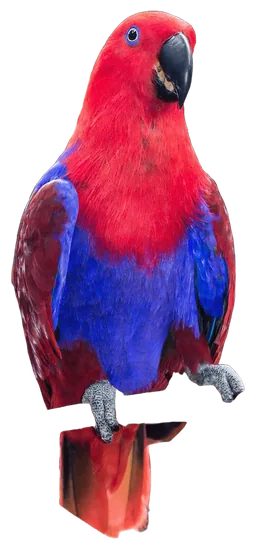
 L vs Eclectus ParrotWins · 54% · Toss-up
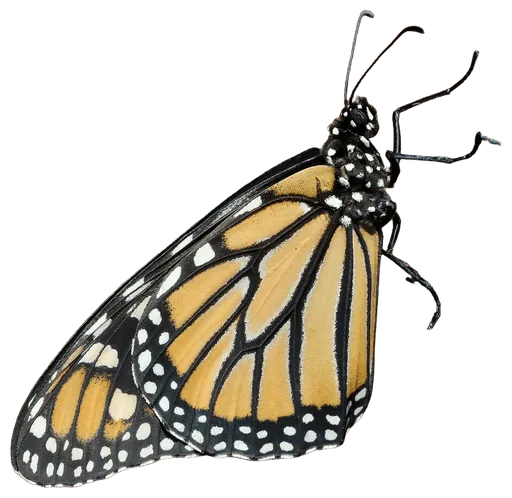
 W vs Monarch ButterflyWins · 84% · Clear edge
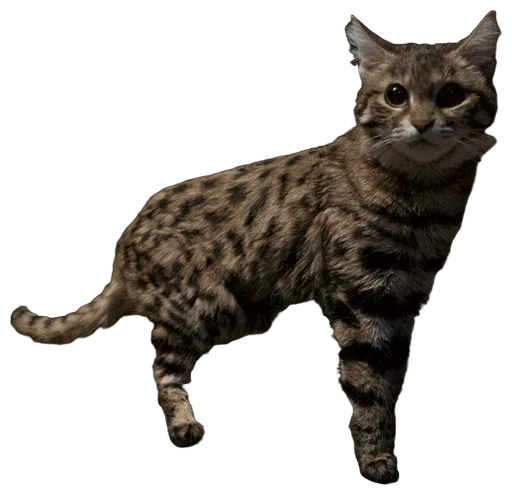
 W vs Black-footed CatLoses · 54% · Toss-up
 L
Lobster battle analysis
The lobster's combat design is built around control at arm's length, by crustacean standards. It does not need one claw to perform every job. The crusher sacrifices speed for leverage and sustained force; the cutter emphasizes rapid closure and finer edges. A target that enters the chelae's working envelope can therefore be held, crushed or torn depending on which claw secures contact.
Its armor changes the matchup against other small animals. A hard intermolt carapace is a real structural barrier, particularly against weak bites and abrasion, and a lobster can shelter with its claws facing outward. Yet the protection is incomplete. Limb joints remain weak points, the animal is only about a kilogram in the canonical profile, and every molt temporarily reverses the defensive advantage by producing a soft new shell.
Behavior adds a less obvious layer. American lobsters are not mindless pincers. Adult males establish dominance, remember previous opponents and use chemical cues to identify familiar rivals. A subordinate can withdraw from a known dominant rather than spend energy on another full fight. That is genuine combat-relevant information processing, but it belongs in Tactics, Senses and Intelligence rather than being used to inflate claw force.
Across the full ABS roster, the key calibration point is scale. A lobster can be exceptionally well armed relative to its own mass and still have low absolute Attack beside a wolf, leopard, kudu or megafaunal animal. Its strongest ratings therefore belong to protection, sensory specialization and unusual biological systems rather than Raw Power.
Habitat & range
American lobsters occupy the northwest Atlantic from Labrador/Newfoundland south to Cape Hatteras. NOAA describes greatest abundance from Maine through New Jersey, with populations extending offshore to roughly 2,300 ft. VIMS/FAO reports occurrence on varied bottom types, especially rocky substrate, from shore to about 480 m and greatest frequency around 4-50 m.
Diet & hunting
Adults are opportunistic omnivores. Major foods include crabs, mollusks, worms, echinoderms, fish and macroalgae. Lobsters can act as predators, scavengers and consumers of plant material depending on local availability. Young lobsters face many predators; large hard-shelled adults have far fewer.
Social life
Adults are largely solitary and territorial around shelters. They do not form cooperative packs, but repeated local encounters generate dominance relationships. Chemical communication allows individuals to distinguish familiar opponents and can reduce the cost of repeated fighting.
Conservation
The species supports one of North America's most important crustacean fisheries and is heavily managed through minimum/maximum carapace sizes, protection of egg-bearing/v-notched females, trap rules and area-specific measures. Management rules are not biological size limits: legal maxima should never be mistaken for species maxima.
Quick answers
How strong is a Lobster?
On the Animal Battle Stats scale, the Lobster has an attack rating of 28 and a power index of 39.8 out of 100, which ranks it #280 of 344 animals and puts it in D tier (Underdog). Its strongest stat is special (60).
How much does a Lobster weigh?
A typical adult Lobster weighs about 1 kg (2 lb). Rated specimen: healthy, fully mature, hard-shelled adult male at 1.0 kg and about 30.0 cm total length.
How fast is a Lobster?
There is no reliable measured top speed for the Lobster, so we do not publish one. Its agility rating, which covers acceleration, reflexes and evasion, is 35 out of 100.
What does a Lobster eat?
Adults are opportunistic omnivores. Major foods include crabs, mollusks, worms, echinoderms, fish and macroalgae. Lobsters can act as predators, scavengers and consumers of plant material depending on local availability. Young lobsters face many predators; large hard-shelled adults have far fewer.
What animals can beat a Lobster?
Among its closest rivals, the King Crab (54%), the Kiwi (57%), the Black-footed Cat (54%) would be favored against the Lobster. It would be favored against the Stoat, the Nautilus, the Eclectus Parrot, the Monarch Butterfly. It is dead even with the Gila Monster: a draw.
Researched 2026-09-27. Ratings are editorial judgments built from these sources; measurements describe a healthy adult male.
- NOAA Fisheries, American Lobsterexact species, range, habitat, claws, diet, molt biology, reproduction, 44-lb maximum, possible ~100-year longevity
- University of Maine Lobster Institute, Educational Resources5-8 y adulthood, ~1 lb at minimum legal size, adult molt frequency, possible ~100-y maximum, 3+ ft exceptional length
- VIMS / FAO American Lobsterusual ~250 mm length, exceptional >640 mm, habitat/depth, diet, morphology
- Elner 1981, Journal of Zoologyin vivo chela force, 256 N maximum in 172-mm-CL lobster, crusher vs cutter force, male/female mechanical advantage
- Goldstein & Tlusty 2003, Journal of Crustacean Biologydevelopment and quantification of claw asymmetry
- Costello & Lang 1979, Biological Bulletinadult crusher/cutter mechanical specialization; crusher mechanical advantage about 2.8x cutter during development
- Lang, Costello & Govind 1977, Biological Bulletincutter fast-fiber predominance; crusher slow/intermediate fiber composition
- Scopel, Golet & Watson 2009home range, mean 523.2 m/day movement in 62-93 mm CL sample
- Karavanich & Atema 1998, Behaviouradult male dominance fights and olfactory recognition of urine signals
- Karavanich & Atema 1998, Animal Behaviour / PubMedindividual recognition and opponent memory, including 24 h and in some conditions 1-2 weeks
- Johnson & Atema 2005, J Exp Biolaesthetasc chemoreceptors required for familiar-opponent recognition
- Tomina et al. 2014, J Exp Biol / PubMedoperant conditioning and goal-directed crusher-claw grasping
- Federal lobster size rulesfishery carapace minimum/maximum context
- Commons/Derek Keats imageexact-species real-photo candidate, 5040x3224, CC BY 2.0
Photo: “Boqueria, Barcelona (P1170745).jpg” by Matti Blume, CC BY-SA 4.0, background removed and cropped. Original
Suggest a correction