
Llama
Lama glamaC tier · Capable105th of 163 mammals
Size & speed

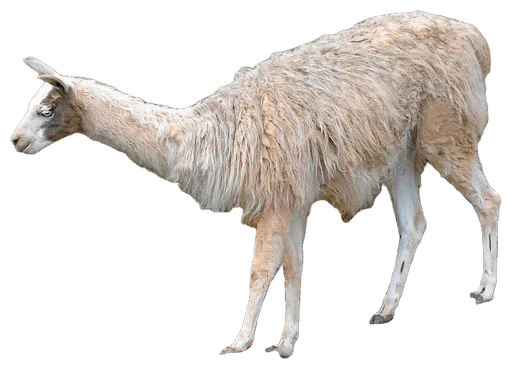
- Weight
- 150 kg331 lb
- Length
- 1.6 m5.2 ft
As heavy as 2.1 people
Heavier than 76% of animalsAbout as long as a person is tall
Bigger than 64% of animalsThe Llama is a 150 kg domestic Andean camelid whose battle profile is built around size, kicks, male fighting teeth, mountain footing and sustained high-altitude work. It can confront smaller canid threats and wrestle rivals, but its lack of armor and dedicated killing weapons keeps Attack and Defense well below comparably sized specialist predators.
Detailed ratings
Research-backed ratings on one 0–100 scale for all 344 animals (updated 2026-09-27). How ratings work


Card No. 181 of 344. Every animal on Animal Battle Stats has one: its power, tier and archetype on the front; its six battle stats, abilities and signature move on the back.
Special abilities
Llamas used as livestock guardians can detect, alarm at, approach and sometimes kick or chase canid threats. The ability represents documented predator-directed behavior, not a claim of guaranteed victory over coyotes or wolves.
South American camelid blood and cardiopulmonary physiology support useful function under chronic hypoxia, preserving sustained activity at elevations that impose greater physiological stress on many lowland mammals.
Unique traits
Intact males combine limb/neck biting with long-neck wrestling during dominance contests, giving a normally herbivorous camelid a genuine close-contact male combat system.
Centuries of domestic use selected and exploited a body capable of carrying substantial loads for long daily distances over high, uneven Andean terrain.
How it fights
Weapons
- An intact adult male's most specialized close-combat tools are the anterior fighting teeth/canines used during camelid dominance conflict. ADW describes breeding males wrestling rivals down by biting limbs while wrapping the long neck around the opponent. These teeth can lacerate, but the llama is still a 150 kg herbivore without the jaw architecture of a large carnivore.
- Weight
- 150 kg331 lb
- Height
- 1.21 m4 ft
- Length
- 1.6 m5.2 ft
- Top speed
- No reliable measurement
- Bite force
- No reliable measurement
- Lifespan
- 20 years
- Home biome
- Mountains
- Lifestyle
- Social
Rated specimen: Healthy fully mature intact male, 150.0 kg.
Fun facts
- Genomic evidence confirms that llamas were domesticated primarily from guanacos.
- A large llama can carry roughly one-quarter to nearly one-third of its own mass for long daily walking distances under pack conditions.
- Females are induced ovulators rather than following a conventional fixed estrous cycle.
- A newborn cria can be mobile very soon after birth.
- Male dominance contests can involve neck wrestling and biting an opponent's limbs until submission.
- Llamas have been deployed as nonlethal livestock guardians, especially against canid threats.
Closest rivals by power. Tap one for the full breakdown, or pick any opponent.
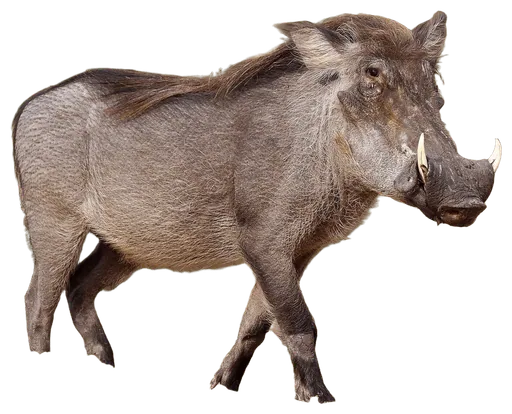
vs GibbonWins · 67% · Slight edge 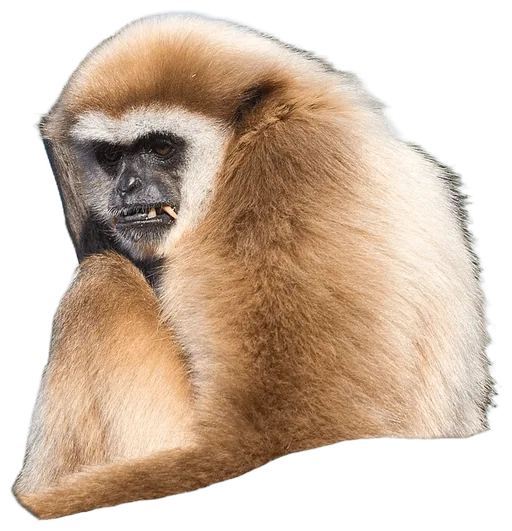 W vs WarthogWins · 53% · Toss-up
 W vs Ethiopian WolfWins · 62% · Slight edge
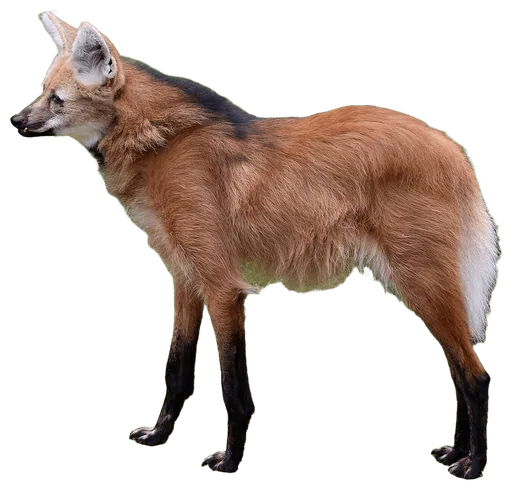
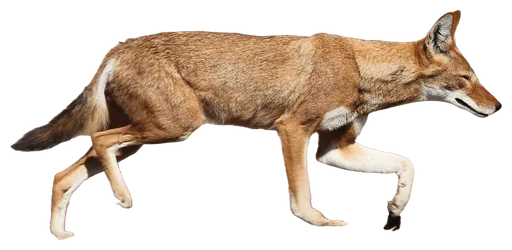 W vs Maned WolfWins · 60% · Slight edge
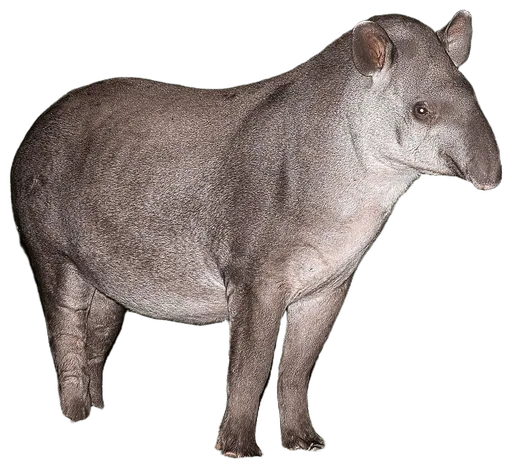
 W vs TapirLoses · 53% · Toss-up
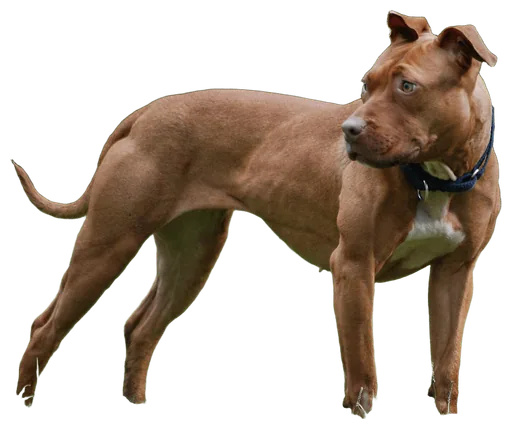
 L vs American Pit Bull TerrierWins · 61% · Slight edge
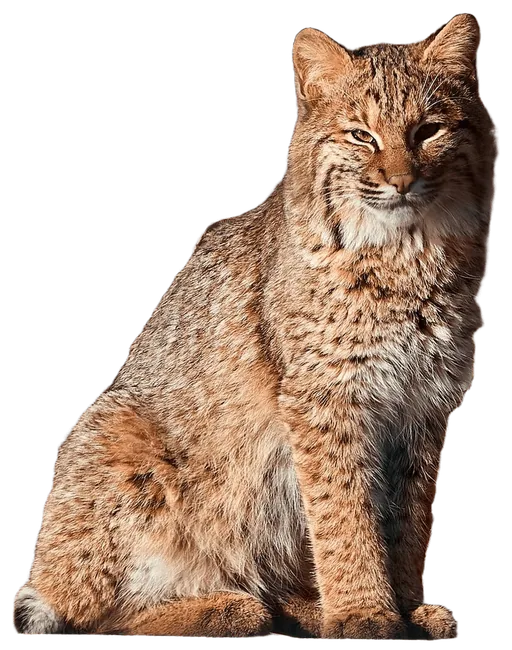
 W vs BobcatWins · 66% · Slight edge
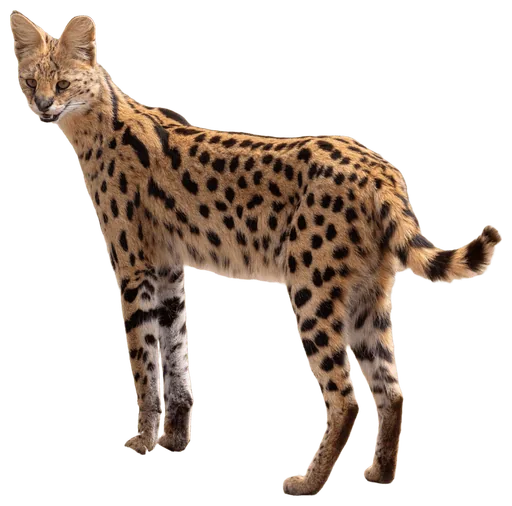
 W vs ServalWins · 63% · Slight edge
 W
Llama battle analysis
A mature male llama is more formidable than its domestic reputation suggests, but for very specific reasons. It is a tall 150 kg camelid with excellent visibility, padded feet, long-distance pack endurance and a real male dominance system. Rival males do not merely spit. They can close, wrap and lever with the neck, bite limbs and push an opponent down. Against a smaller approaching canid, the same height, vigilance and willingness to rush or kick can make the llama a useful guardian.
That does not turn the llama into a large predator. Its fighting teeth are limited cutting weapons, fleece is not armor, and the long neck creates a vulnerable target. Once a large cat or coordinated canids gain secure contact, the llama has fewer close-range answers than a horned bovid or clawed carnivore. ABS therefore gives it meaningful but moderate Attack and Defense while preserving a much stronger Stamina profile.
Its most distinctive physiology is environmental rather than lethal. Llamas were bred from animals at home in the high Andes, and peer-reviewed work documents mechanisms supporting life under chronic hypoxia. Combined with centuries of pack use, this makes sustained work in thin air a genuine strength. The rating system keeps that advantage in Stamina and Special without double-counting it as raw physical power.
Habitat & range
The llama is domesticated and has no natural wild range in the modern sense. Its cultural and biological center is the South American Andes, especially high plateaus and mountain pastoral systems of Peru, Bolivia, Chile and Argentina, and it is now kept worldwide.
Diet & hunting
Llamas are herbivorous grazers/browsers consuming grasses, shrubs and other vegetation. As domestic stock, diet and ecological impact depend heavily on management. Their padded feet are less mechanically destructive than hard hooves on some substrates.
Social life
They are gregarious. ADW describes groups of up to about 20 and a polygynous breeding structure in which a male can defend a group of females. Dominance is dynamic and maintained through postures, spitting, displacement and sometimes physical fights.
Conservation
Because the llama is a domestic form, conventional wild-species conservation categories are not the most informative framing. Conservation relevance lies in domestic genetic diversity, traditional Andean pastoral systems and its relationship to the wild guanaco.
Quick answers
How strong is a Llama?
On the Animal Battle Stats scale, the Llama has an attack rating of 40 and a power index of 50.2 out of 100, which ranks it #181 of 344 animals and puts it in C tier (Capable). Its strongest stat is stamina (77).
How much does a Llama weigh?
A typical adult Llama weighs about 150 kg (331 lb). Rated specimen: healthy fully mature intact male, 150.0 kg.
How fast is a Llama?
There is no reliable measured top speed for the Llama, so we do not publish one. Its agility rating, which covers acceleration, reflexes and evasion, is 60 out of 100.
What does a Llama eat?
Llamas are herbivorous grazers/browsers consuming grasses, shrubs and other vegetation. As domestic stock, diet and ecological impact depend heavily on management. Their padded feet are less mechanically destructive than hard hooves on some substrates.
What animals can beat a Llama?
Among its closest rivals, the Tapir (53%) would be favored against the Llama. It would be favored against the Gibbon, the Warthog, the Ethiopian Wolf, the Maned Wolf, the American Pit Bull Terrier, the Bobcat, the Serval.
Researched 2026-09-27. Ratings are editorial judgments built from these sources; measurements describe a healthy adult male.
- Animal Diversity Web, Lama glamataxonomy, mass, height, length, lifespan, feet, behavior, reproduction
- Szeged Zoo, Llamadimensions/lifespan/sociality
- ZooTampa, Llamapack capacity, daily distance, social behavior
- High Park Zoo, Llamapack endurance and domestic natural history
- Knowlton & Cavalcanti 1998, Applied Animal Behaviour Sciencepredator-directed behavior
- Franklin & Powell / Iowa State guard-llama surveylivestock guardian context
- Reynafarje et al. 1975, Journal of Applied Physiologyhigh-altitude camelid oxygen transport
- Reyes et al. 2020, Journal of Applied Physiologyhypoxia tolerance
- Fan et al. 2020, Genome Biologydomestication/genomics
- Wikimedia Commons, Zoo Llamaimage candidate
Photo: “Llama walking on the mountain.jpg” by Joselodos, CC0, background removed and cropped. Original
Suggest a correction