

Leopard Seal
Hydrurga leptonyx
 #25 of 273
  Arctic Hunter Least Concern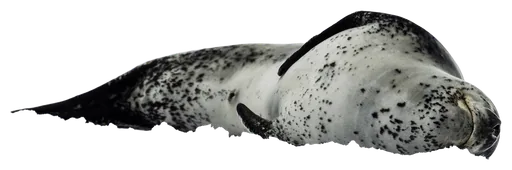
 Fight
FightPhoto: Godot13 · CC BY-SA 4.0
The leopard seal is Antarctica's top seal predator, a 420 kg, 3 m hunter with a huge head, long gripping teeth and a snake-like, agile body in the water. It ambushes penguins at the ice edge, kills other seals, and also sieves krill through its three-pointed cheek teeth. It is dangerous in the water but slow on land and has no armor.
 Attack70
  Defense55
  Agility78
  Stamina70
  Intelligence68
  Special74
 Detailed ratings
Research-backed ratings on one 0–100 scale for all 273 animals (updated 2026-09-28). How ratings work
Special abilities
Ability 1Ice-Edge AmbushWaits just below the water line where penguins must jump in or climb out, then seizes and shakes them apart against the surface. In a battle it strikes when an opponent is entering or leaving the water.
 Ability 2Krill Sieve
Sucks krill into the mouth and pushes water out through interlocking three-pointed cheek teeth, the same jaws that kill penguins and seals. This lets it switch between tiny prey and large prey, so it rarely runs out of food.
Unique traits
 TraitHeavier Females
Adult females outweigh males, averaging about 454 kg against 302 kg at Cape Shirreff, where the smallest adult female was heavier than the largest adult male.
TraitAntarctic SongsterMales sing underwater for up to 13 hours a day, with loud, patterned songs built from five call types and structured as predictably as nursery rhymes.
How it fights
Weapons
- The leopard seal is the Southern Ocean's top predator of warm-blooded prey after the killer whale. Its weapon is a large head with long canine-like teeth on a flexible, powerful neck. It seizes penguins and seals, then shakes and smashes them against the water surface to break them apart. At Cape Shirreff, about 20 leopard seals, mostly a few large females, caused the loss of roughly 70% of Antarctic fur seal pups to predation. Its bite is serious against penguins, pups and similarly sized seals, but it lacks claws or tusks as secondary weapons.
 Struggles vs
- Slow and clumsy on land and ice.
- No armor; exposed to deep bites from larger predators such as killer whales.
- Single main weapon (the bite).
- Short routine dives compared with deep-diving seals.
- Far outmatched by killer whales and very large sharks.
- Weight
- 420 kg926 lb
- Height
- No reliable measurement
- Length
- 3 m9.8 ft
- Top speed
- No reliable measurement
- Bite force
- No reliable measurement
- Lifespan
- 26 years
- Home biome
- Arctic
- Lifestyle
- Mostly solitary
Rated specimen: Healthy mature adult female, 420.0 kg and 300.0 cm standard length, representing a large, fighting-fit cow rather than a record animal.
Fun facts
- Female leopard seals are larger than males, the reverse of most large seals.
- One leopard seal's stomach held more than 10,000 freshly caught krill.
- Males can sing underwater for up to 13 hours a day.
- About 20 leopard seals at Cape Shirreff were linked to the loss of roughly 70% of fur seal pups there.
- The deepest dive reported for the species is about 1,256 m, although most dives are around 30 m.
- Its cheek teeth work like a sieve, the same way a baleen whale strains krill.
Closest rivals by power. Tap one for the full breakdown, or pick any opponent.
vs GaurWins · 51% · Toss-up  W vs Elephant SealLoses · 51% · Toss-up
  L vs Cape BuffaloWins · 51% · Toss-up
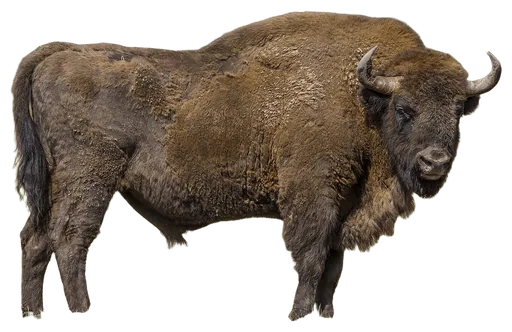
  W vs BisonWins · 52% · Toss-up
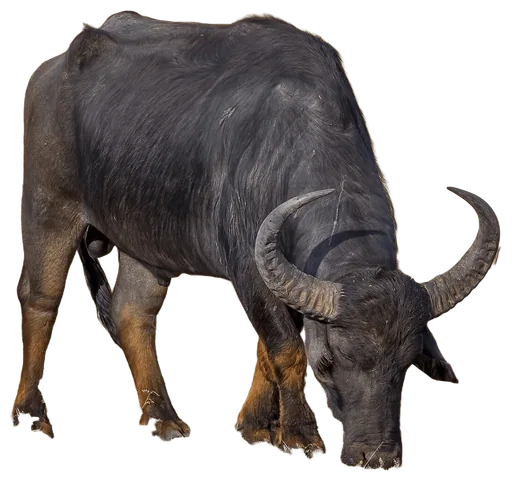
  W vs Water BuffaloWins · 52% · Toss-up
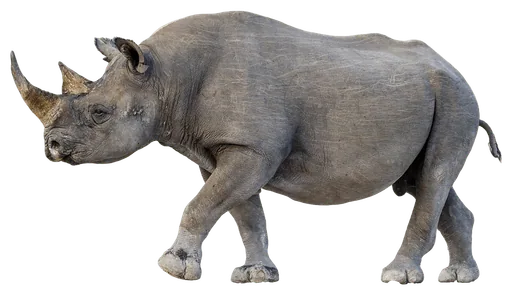
  W vs Black RhinocerosLoses · 53% · Toss-up
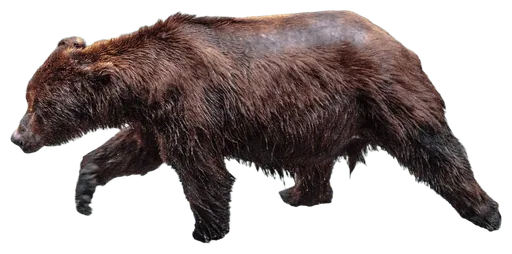
  L vs Kodiak BearLoses · 53% · Toss-up
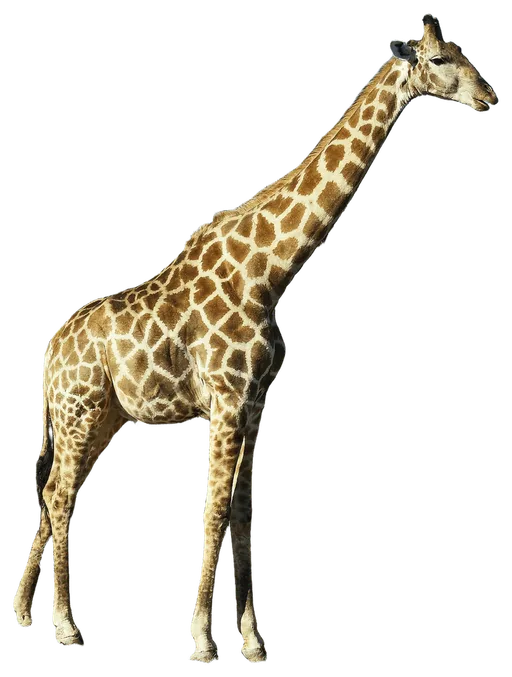
  L vs GiraffeWins · 53% · Toss-up
  W
W  Pick any opponent
 Leopard Seal battle analysis
A leopard seal at the ice edge is a problem for every penguin that has to cross it. The seal waits just under the surface where birds jump in or scramble out, and when one hits the water it is seized and thrashed against the surface until it breaks apart. The same large head and long front teeth let leopard seals take fur seal pups and other seals, and at Cape Shirreff a few big females were enough to wipe out most of a colony's pups in some seasons.
What makes the species unusual is that the same mouth also works as a strainer. Its cheek teeth have three points that interlock like a comb. When krill are plentiful, a leopard seal sucks them in and pushes the water out through that sieve, eating thousands at a time. It can therefore live at the top of the food web and near its base, switching as conditions change. Males add another surprise, filling the water under the pack ice with patterned songs for up to 13 hours a day.
In ABS terms the leopard seal is an aquatic predator with a strong bite, high Agility in water and strong tactics for a solitary animal. Its Defense is moderate because it relies on size and blubber, not armor, and it is badly outmatched by killer whales. Out of the water it is slow, but in the water it is one of the most dangerous seals in the world.
Habitat & range
Leopard seals live around Antarctica, mainly in the pack ice zone, and reach sub-Antarctic islands such as Kerguelen; wandering animals reach the coasts of southern continents, and the species appears on South Africa's national Red List. They haul out on ice floes and, at some sites, on beaches.
Diet & hunting
They feed at both the top and near the bottom of the Southern Ocean food web. Krill can make up anywhere from about half to most of the diet depending on place and season, and one examined seal held more than 10,000 freshly caught krill. They also kill penguins, Antarctic fur seal pups and other seals. Studies at Cape Shirreff showed that a small number of leopard seals can drive local declines of fur seals.
Social life
Solitary. Adults haul out and hunt alone. Genomic analyses indicate that leopard seals return to the same haul-out sites across generations.
Conservation
The species is listed as Least Concern on the IUCN Red List. Population size is uncertain: the most recent circumpolar estimate exceeds 35,000 animals but is considered a large underestimate, and the population trend is unknown. At Cape Shirreff, leopard seal numbers fell by about 76% from 2017 to 2023. Climate-driven change in sea ice is a commonly raised long-term concern.
Quick answers
How strong is a Leopard Seal?
On the Animal Battle Stats scale, the Leopard Seal has an attack rating of 70 and a power index of 67.8 out of 100, which ranks it #25 of 273 animals and puts it in A tier (Elite). Its strongest stat is agility (78).
How much does a Leopard Seal weigh?
A typical adult Leopard Seal weighs about 420 kg (926 lb). Rated specimen: healthy mature adult female, 420.0 kg and 300.0 cm standard length, representing a large, fighting-fit cow rather than a record animal.
How fast is a Leopard Seal?
There is no reliable measured top speed for the Leopard Seal, so we do not publish one. Its agility rating, which covers acceleration, reflexes and evasion, is 78 out of 100.
What does a Leopard Seal eat?
They feed at both the top and near the bottom of the Southern Ocean food web. Krill can make up anywhere from about half to most of the diet depending on place and season, and one examined seal held more than 10,000 freshly caught krill. They also kill penguins, Antarctic fur seal pups and other seals. Studies at Cape Shirreff showed that a small number of leopard seals can drive local declines of fur seals.
Is the Leopard Seal endangered?
No. The Leopard Seal is listed as Least Concern. The species is listed as Least Concern on the IUCN Red List. Population size is uncertain: the most recent circumpolar estimate exceeds 35,000 animals but is considered a large underestimate, and the population trend is unknown. At Cape Shirreff, leopard seal numbers fell by about 76% from 2017 to 2023. Climate-driven change in sea ice is a commonly raised long-term concern.
What animals can beat a Leopard Seal?
Among its closest rivals, the Elephant Seal (51%), the Black Rhinoceros (53%), the Kodiak Bear (53%) would be favored against the Leopard Seal. It would be favored against the Gaur, the Cape Buffalo, the Bison, the Water Buffalo, the Giraffe.
Researched 2026-09-28. Ratings are editorial judgments built from these sources; measurements describe a healthy adult female.
- Australian Antarctic Program, leopard sealsize by sex, lifespan
- Frontiers in Marine Science (2022), morphometrics and movements of the leopard sealcanonical mass and length
- Animal Diversity Web, Hydrurga leptonyxsize range
- Hocking et al., Polar Biology (2013), suction and filter feedingkrill sieving, dentition
- Nature news, leopard seals suck up krill like whalesfilter feeding
- Australian Geographic, leopard seals filter feed like whaleskrill fact
- Krause et al., Marine Mammal Science (2016), summer diving and haul-outdiving
- Baylor University news (2022), baseline data on leopard sealsrecord dive
- Baylor University news (2025), leopard seal feeding reshapes ecosystemspredation impact, individual specialists
- Earth.com, leopard seal diets reshaping Antarctic ecosystemspredation impact, decline
- Predation of Adélie penguins by leopard seals in Prydz Bay, Canadian Journal of Zoologypenguin predation
- Science (AAAS), Antarctic researcher killedhuman fatality
- British Antarctic Survey, interactions between humans and leopard sealshuman interaction
- Natural History Museum, are leopard seals dangerous?behavior toward people
- Scientific Reports (2025), leopard seal song predictabilitysong structure
- Discover Magazine, leopard seals sing up to 13 hours a daysinging duration
- Scientific Reports (2025), haul-out site fidelitysite fidelity
- Antarctic Environments Portal, leopard sealconservation
Photo: “Antarctic Sound-2016-Brown Bluff–Leopard seal (Hydrurga leptonyx) 02.jpg” by Godot13, CC BY-SA 4.0, background removed and cropped. Original
Suggest a correction