
Leatherback Sea Turtle
Dermochelys coriaceaB tier · Strong5th of 39 reptiles
Size & speed

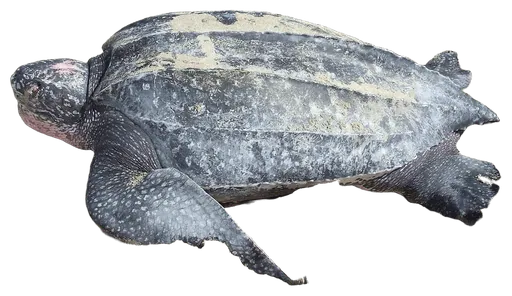
- Weight
- 400 kg882 lb
- Length
- 1.9 m6.2 ft
- Top speed
- 10 km/h6 mph
As heavy as 5.7 people
Heavier than 87% of animalsAbout as long as a person is tall
Bigger than 70% of animalsAbout jogging speed
Faster than 10% of animalsThe leatherback is the largest living turtle and an oceanic endurance specialist. A representative adult weighs about 400 kg, yet instead of a hard shell it carries a flexible leathery carapace reinforced by tiny dermal bones. Huge flippers, extreme migration endurance, deep diving and exceptional heat retention let it range from tropical nesting beaches into cold high-latitude seas. Its weakness in battle is offense: its jaws are designed for gelatinous prey, not crushing large opponents.
Detailed ratings
Research-backed ratings on one 0–100 scale for all 344 animals (updated 2026-09-27). How ratings work


Card No. 74 of 344. Every animal on Animal Battle Stats has one: its power, tier and archetype on the front; its six battle stats, abilities and signature move on the back.
Special abilities
Large body size, insulation, activity and vascular heat conservation allow leatherbacks to maintain a substantial body-to-water thermal gradient and forage in cold temperate to subpolar seas.
Specialized diving physiology supports descents approaching 1,200 m and submergence up to about 85 minutes, opening vertical habitat unavailable to most reptiles.
Unique traits
Instead of a rigid scuted shell, the back is a flexible, tough connective-tissue structure reinforced by thousands of small dermal bones and longitudinal ridges.
Sharp jaw margins and backward-pointing oral/esophageal papillae help capture and retain slippery gelatinous prey during swallowing.
How it fights
Weapons
- The primary offensive tool is the sharp-edged jaw with tooth-like cusps. It is effective for seizing and cutting gelatinous prey but lacks the crushing architecture of hard-prey turtles. Large front flippers can deliver substantial incidental mechanical force through body scale and swimming motion, but they are locomotor structures rather than specialized striking weapons.
Struggles vs
- No rigid shell or retractable head/flippers.
- Limited offensive specialization against large vertebrates.
- Extremely poor terrestrial maneuverability.
- Soft-prey feeding apparatus is not a crushing weapon.
- Large exposed flippers can be injured.
- Weight
- 400 kg882 lb
- Height
- No reliable measurement
- Length
- 1.9 m6.2 ft
- Top speed
- 10 km/h6 mph
- Bite force
- No reliable measurement
- Lifespan
- 50 years
- Home biome
- Ocean
- Lifestyle
- Social
Rated specimen: Healthy fully mature adult female, 400.0 kg, approximately 160.0 cm curved carapace length and roughly 190.0 cm total head-to-tail length.
Fun facts
- Leatherbacks are the world's largest living turtles.
- They are the only living sea turtles without a hard, scuted bony shell.
- NOAA records dives approaching 4,000 ft, deeper than most marine mammals.
- Some individuals travel more than 10,000 miles in a year.
- A leatherback can keep its body markedly warmer than cold surrounding seawater.
- Their front flippers are proportionally longer than those of other sea turtles.
Closest rivals by power. Tap one for the full breakdown, or pick any opponent.
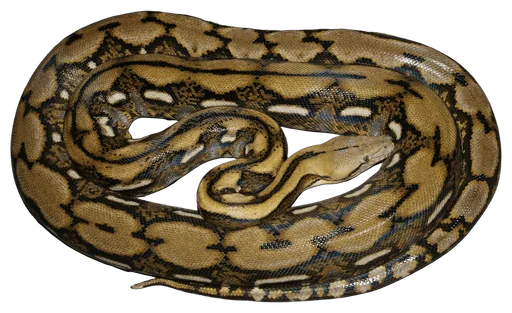
vs PythonWins · 63% · Slight edge 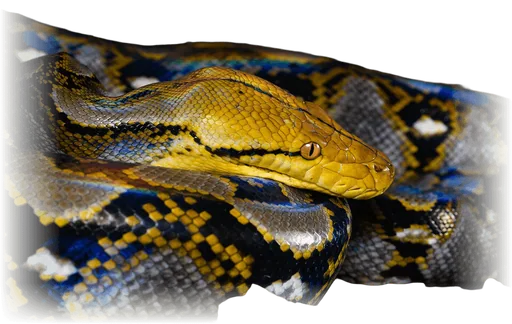 W vs Reticulated PythonWins · 63% · Slight edge
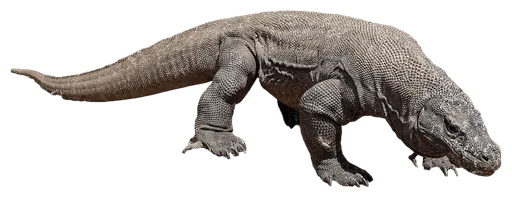
 W vs Komodo DragonWins · 61% · Slight edge
 W vs Black PantherWins · 61% · Slight edge
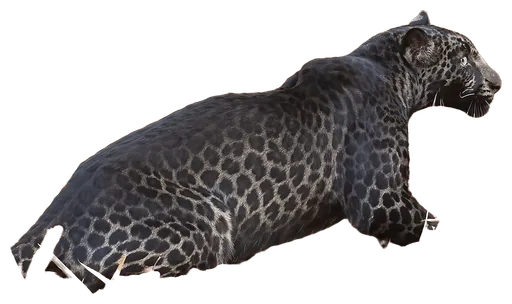 W vs Fighting BullLoses · 51% · Toss-up
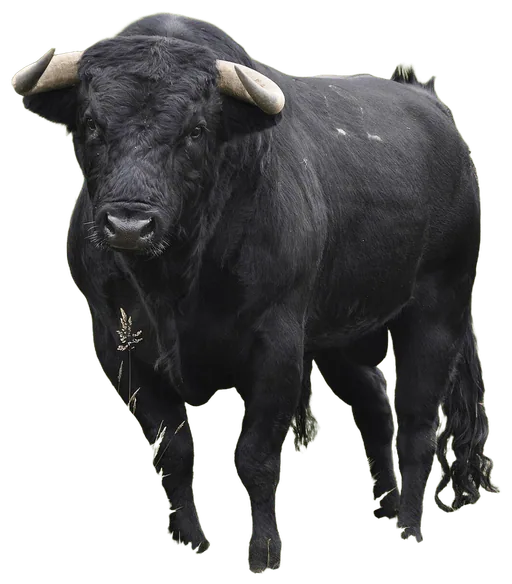 L vs Spectacled BearWins · 57% · Toss-up
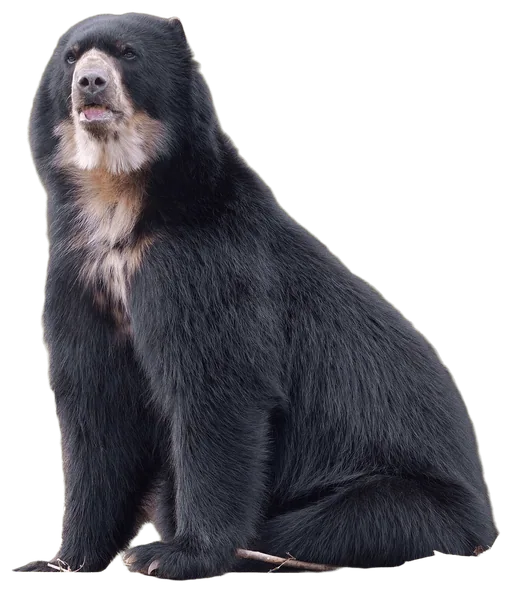 W vs Sable AntelopeWins · 54% · Toss-up
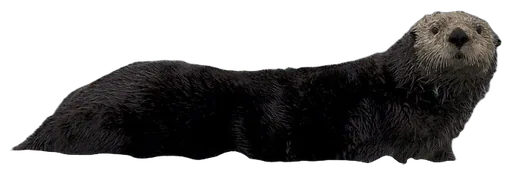
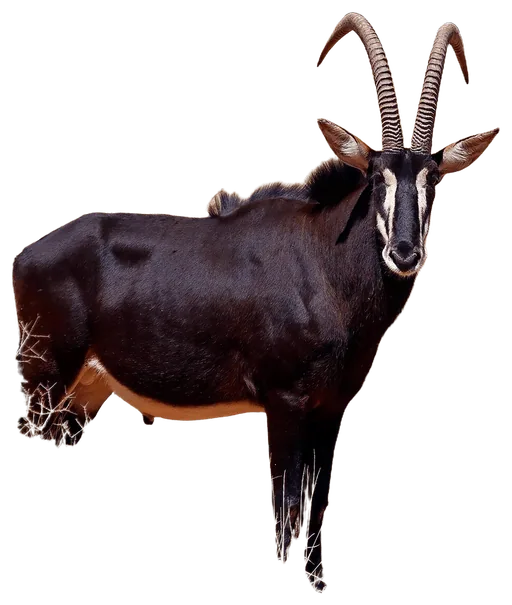 W vs Sea OtterWins · 63% · Slight edge
 W
Leatherback Sea Turtle battle analysis
The leatherback's battle profile is unusual because its extraordinary size does not translate into predator-style Attack. Its jaws and tooth-like cusps are excellent tools for trapping and cutting jellyfish, but they lack the crushing plates of hard-prey turtles and the killing dentition of sharks or crocodilians. Against another large animal, the leatherback's main assets are mass, toughness and movement rather than a decisive weapon.
In the ocean, however, few reptiles approach its physiological range. Long front flippers drive a hydrodynamic body through migrations spanning ocean basins. Thick insulation, large thermal inertia, counter-current vascular anatomy and behavior let it remain active in water far colder than most reptiles tolerate. It can then dive to depths near 1.2 km and remain submerged for long periods. That combination makes Stamina and Special the clear peaks of its ABS profile.
The carapace also demands careful interpretation. It is not a soft, defenseless hide, but neither is it a tortoise shell. Tough connective tissue, fat and thousands of embedded dermal bones create a flexible protective structure. This supports good Defense and Toughness, but exposed head and flippers and documented predation by large ocean predators prevent armor-level scoring.
Habitat & range
Leatherbacks occur across the Atlantic, Pacific and Indian Oceans and have the broadest distribution of any living reptile. Nesting is mainly tropical and subtropical, while adults forage far into temperate and subpolar waters.
Diet & hunting
They specialize heavily on gelatinous zooplankton such as jellyfish and salps. Their enormous size is therefore supported by abundant but low-energy prey, demanding high intake and extensive searching. They occupy pelagic and coastal foraging habitats and can link distant ecosystems through migration.
Social life
Leatherbacks are not cooperative social hunters. Adults are generally solitary outside breeding interactions and nesting aggregations. Male behavior at sea remains comparatively poorly known.
Conservation
NOAA lists the species as Endangered under the U.S. Endangered Species Act throughout its range and notes an estimated global decline of about 40% over three generations. Pacific populations have undergone especially severe declines. Major threats include fisheries bycatch, harvest, habitat loss, marine debris, vessel strikes and changing environmental conditions. Global IUCN and regional assessments can differ in category, so the report does not collapse all population statuses into a single regional claim.
Quick answers
How strong is a Leatherback Sea Turtle?
On the Animal Battle Stats scale, the Leatherback Sea Turtle has an attack rating of 35 and a power index of 59.9 out of 100, which ranks it #74 of 344 animals and puts it in B tier (Strong). Its strongest stat is stamina (95).
How much does a Leatherback Sea Turtle weigh?
A typical adult Leatherback Sea Turtle weighs about 400 kg (882 lb). Rated specimen: healthy fully mature adult female, 400.0 kg, approximately 160.0 cm curved carapace length and roughly 190.0 cm total head-to-tail length.
How fast is a Leatherback Sea Turtle?
The Leatherback Sea Turtle's top speed is about 10 km/h (6 mph). Its agility rating is 59 out of 100.
What does a Leatherback Sea Turtle eat?
They specialize heavily on gelatinous zooplankton such as jellyfish and salps. Their enormous size is therefore supported by abundant but low-energy prey, demanding high intake and extensive searching. They occupy pelagic and coastal foraging habitats and can link distant ecosystems through migration.
Is the Leatherback Sea Turtle endangered?
The Leatherback Sea Turtle's conservation status is Endangered. NOAA lists the species as Endangered under the U.S. Endangered Species Act throughout its range and notes an estimated global decline of about 40% over three generations. Pacific populations have undergone especially severe declines. Major threats include fisheries bycatch, harvest, habitat loss, marine debris, vessel strikes and changing environmental conditions. Global IUCN and regional assessme
What animals can beat a Leatherback Sea Turtle?
Among its closest rivals, the Fighting Bull (51%) would be favored against the Leatherback Sea Turtle. It would be favored against the Python, the Reticulated Python, the Komodo Dragon, the Black Panther, the Spectacled Bear, the Sable Antelope, the Sea Otter.
Researched 2026-09-27. Ratings are editorial judgments built from these sources; measurements describe a healthy adult female.
- NOAA Fisheries, Leatherback Turtletaxonomy, adult size, lifespan, migration, dives, diet, anatomy, conservation
- Eckert 2002, Journal of Experimental Biology / PubMedmeasured swim speed and continuous activity
- Government of Canada recovery strategycarapace structure, mass context, flipper dimensions, jaws
- Government of Canada recovery strategymorphology and feeding structures
- Bostrom et al. 2010, PLOS ONE / PubMedthermoregulation
- Greer, Lazell & Wright 1973, Natureheat conservation anatomy
- Davenport et al. 2009, Journal of Experimental Biologyinsulation
- Okuyama et al. 2021, Ecospherebehavioral thermoregulation
- COSEWIC 2012 status reportadult morphology
- Wikimedia Commons, Bernard DUPONTimage candidate and provenance
Photo: “Leatherback sea turtle on the beach Tinglar (5839996429).jpg” by U.S. Fish and Wildlife Service Southeast Region, Public domain, background removed and cropped. Original
Suggest a correction