
Kudu
Tragelaphus strepsicerosB tier · Strong60th of 163 mammals
Size & speed

- Weight
- 230 kg507 lb
- Length
- 2.2 m7.2 ft
As heavy as 3.3 people
Heavier than 81% of animalsAbout as long as a person is tall
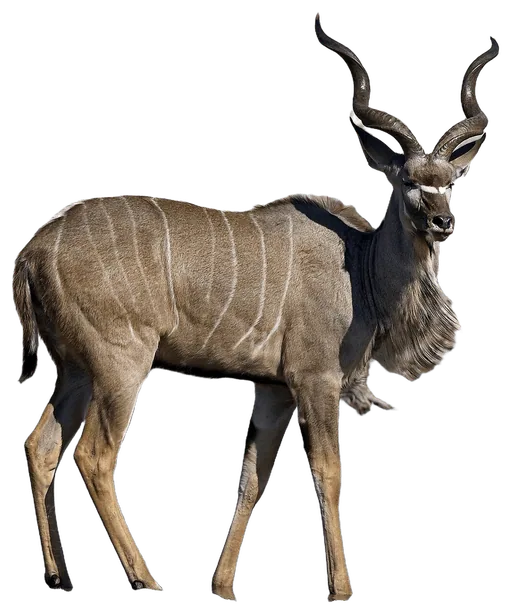
Bigger than 76% of animalsThe Greater Kudu is a massive woodland antelope whose mature bulls combine a roughly 230 kg body with extraordinarily long spiral horns. Those horns are built for locking, shoving and controlling rival males, while huge ears, striped camouflage and powerful obstacle-clearing bounds help the animal avoid predators in dense African bush. Its attack is formidable among antelope, but lack of armor and a primarily evasive anti-predator strategy keep it below large carnivores and heavyweight bovids in all-around combat.
Detailed ratings
Research-backed ratings on one 0–100 scale for all 344 animals (updated 2026-09-27). How ratings work


Card No. 97 of 344. Every animal on Animal Battle Stats has one: its power, tier and archetype on the front; its six battle stats, abilities and signature move on the back.
Special abilities
Paired corkscrew horns let a mature bull hook, bind, shove and redirect a rival's head during frontal contests, turning horn geometry into leverage as well as impact.
Long legs and powerful bounding allow rapid obstacle clearance through broken woodland, helping the kudu disengage from pursuers that must slow or detour.
Unique traits
Vertical white stripes, woodland shade and a tendency to stand still when alarmed can break up the outline before the animal commits to flight.
Oversized mobile ears provide strong acoustic vigilance, allowing a concealed kudu to detect danger while minimizing unnecessary movement.
How it fights
Weapons
- The bull's paired spiral horns are the central weapon. Mature males interlock horns and shove during dominance contests. Potawatomi Zoo describes fights between similar-sized males in which horns are locked and the animals push until dominance is established; ADW likewise notes wild fighting primarily between similarly sized kudu. The long spirals provide reach, hooking and leverage, while a 200+ kg body and muscular neck supply the force.
- The geometry has a downside: horns can become entangled. Rarely, two bulls lock so completely that they cannot separate. The horns are therefore powerful control and impact structures, but not simple forward-pointing spears.
Struggles vs
- No armor and no carnivore-style killing bite or claws.
- Long horns require useful head orientation and room to deploy.
- Tall build is less compact and grappling-resistant than a similarly massive cat or hyena.
- Much predator defense is avoidance rather than standing combat.
- Horn entanglement is a real failure mode in conspecific fights.
- Weight
- 230 kg507 lb
- Height
- 1.45 m4.8 ft
- Length
- 2.2 m7.2 ft
- Top speed
- No reliable measurement
- Bite force
- No reliable measurement
- Lifespan
- 10 years
- Home biome
- Savanna
- Lifestyle
- Social
Rated specimen: Healthy fully mature adult male bull, represented at 230.0 kg, 145.0 cm shoulder height, and 220.0 cm head-body length, with fully developed spiral horns.
Fun facts
- Male horns can reach about 1.8 m along the curve in institutional accounts.
- Only males carry the spectacular spiral horns.
- Horns may make roughly 2 to 2.5 turns when fully developed.
- Alarmed kudu can clear obstacles around 2.5 m high according to Safari West.
- Rarely, fighting bulls can become fatally locked together by their intertwined horns.
- Greater kudu use a loud bark as an alarm call.
Closest rivals by power. Tap one for the full breakdown, or pick any opponent.
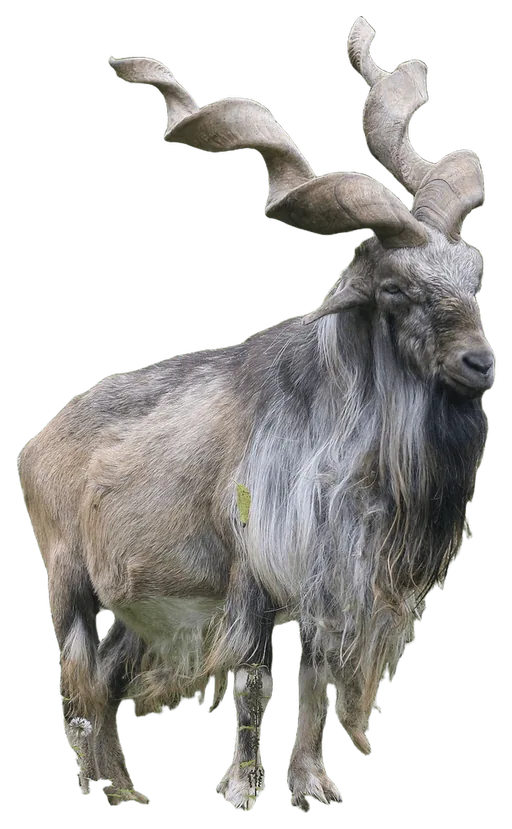
vs Wild BoarWins · 55% · Toss-up 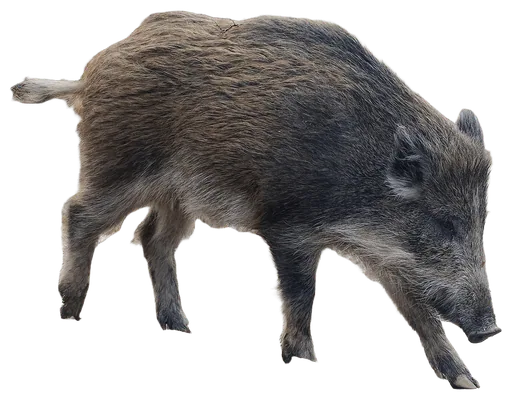 W vs MarkhorWins · 55% · Toss-up
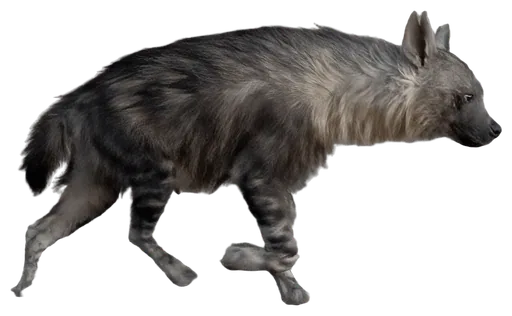
 W vs Brown HyenaWins · 59% · Slight edge
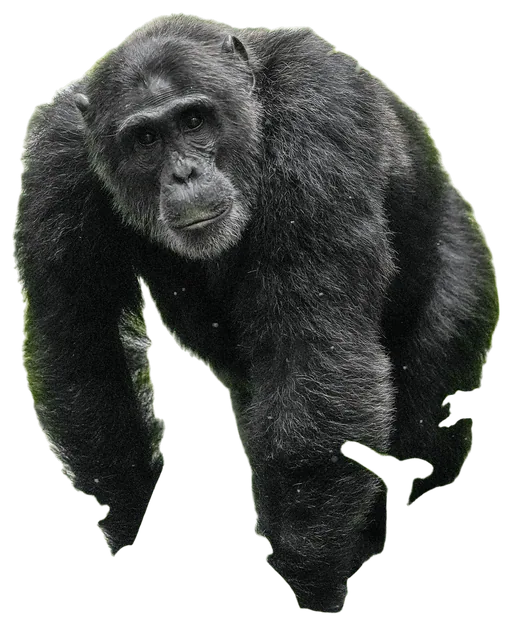
 W vs ChimpanzeeWins · 60% · Slight edge
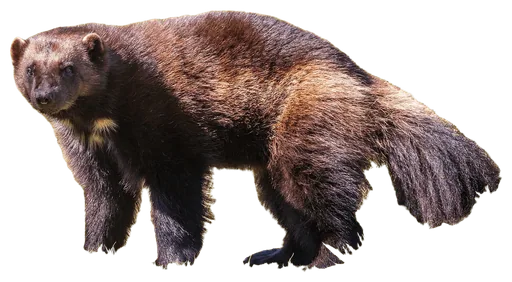
 W vs WolverineWins · 65% · Slight edge
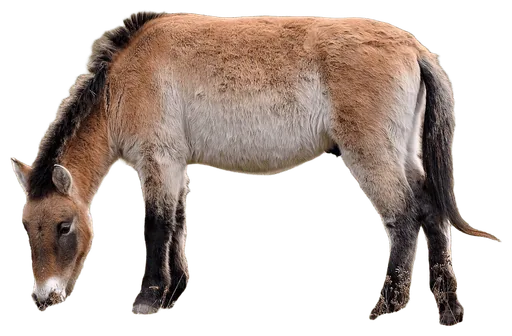
 W vs Wild HorseLoses · 53% · Toss-up
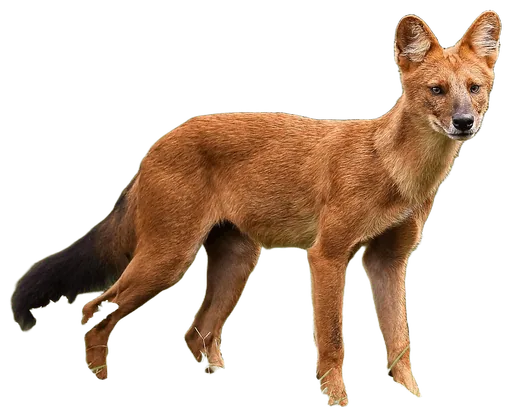
 L vs DholeWins · 65% · Slight edge
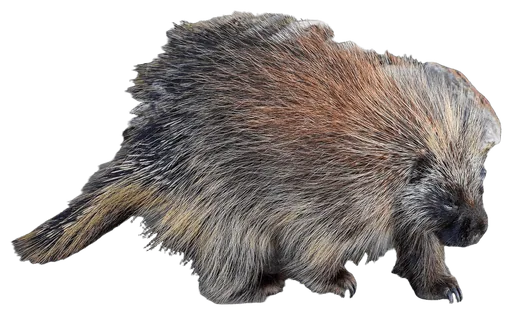
 W vs PorcupineWins · 68% · Slight edge
 W
Kudu battle analysis
A mature Greater Kudu bull is a reach fighter built around leverage. The horns rise from a muscular neck, twist outward and upward, and can exceed a metre along their curve. Against another bull they are not simply stabbing points. The spirals catch, bind and redirect the opponent while both animals drive forward with hundreds of kilograms of body mass. Much of the time the contest ends before maximal violence: size, posture and lateral display can settle rank, while evenly matched animals escalate into horn locking and shoving.
Outside the rut, the kudu's survival strategy changes completely. It is a woodland escape specialist. Large ears sample the bush for danger, stripes break the torso into bands of shadow and light, and the animal may freeze before exploding into long-legged bounds over obstacles. This is why its ABS profile should not be reduced to a questionable internet sprint number. Its real agility is the ability to place a very large body through broken cover and clear barriers while under pressure. At the same time, the kudu remains unarmored prey for lions, hyenas and wild dogs. Horn reach is dangerous, but it does not erase the vulnerabilities of a tall herbivore when a grappling predator reaches the flank.
Habitat & range
Greater kudu occupy eastern and southern Africa in woodland savanna, bushland, thickets, open forest, hills and wooded drainage systems. Columbus Zoo and MNHN both emphasize woodland/savanna habitat; current conservation references treat the species as widespread enough for Least Concern status.
Diet & hunting
They are selective herbivores consuming leaves, herbs, vines, flowers, fruit and some new grass. ADW notes that they can persist in waterless regions and may use plant moisture during dry periods. Their tall browsing height lets them exploit vegetation layers unavailable to many smaller antelope.
Social life
Females and offspring form small herds, commonly around 6–10 animals, while mature bulls are often solitary or occur in loose bachelor groups. Males join female groups primarily around breeding. This social system matters for vigilance but does not multiply a canonical individual's combat score.
Conservation
The Greater Kudu is currently listed as Least Concern in modern conservation summaries. Local populations nevertheless face hunting and habitat conversion. Horns are prized as trophies and have also been used culturally as instruments and containers.
Quick answers
How strong is a Kudu?
On the Animal Battle Stats scale, the Kudu has an attack rating of 58 and a power index of 56.4 out of 100, which ranks it #97 of 344 animals and puts it in B tier (Strong). Its strongest stat is agility (72).
How much does a Kudu weigh?
A typical adult Kudu weighs about 230 kg (507 lb). Rated specimen: healthy fully mature adult male bull, represented at 230.0 kg, 145.0 cm shoulder height, and 220.0 cm head-body length, with fully developed spiral horns.
How fast is a Kudu?
There is no reliable measured top speed for the Kudu, so we do not publish one. Its agility rating, which covers acceleration, reflexes and evasion, is 72 out of 100.
What does a Kudu eat?
They are selective herbivores consuming leaves, herbs, vines, flowers, fruit and some new grass. ADW notes that they can persist in waterless regions and may use plant moisture during dry periods. Their tall browsing height lets them exploit vegetation layers unavailable to many smaller antelope.
Is the Kudu endangered?
No. The Kudu is listed as Least Concern. The Greater Kudu is currently listed as Least Concern in modern conservation summaries. Local populations nevertheless face hunting and habitat conversion. Horns are prized as trophies and have also been used culturally as instruments and containers.
What animals can beat a Kudu?
Among its closest rivals, the Wild Horse (53%) would be favored against the Kudu. It would be favored against the Wild Boar, the Markhor, the Brown Hyena, the Chimpanzee, the Wolverine, the Dhole, the Porcupine.
Researched 2026-09-27. Ratings are editorial judgments built from these sources; measurements describe a healthy adult male.
- taxonomy, mass, height, horns, habitat, range, lifespanmales 190–300 kg; females 120–210 kg; shoulder 1–1.5 m; male horns 1.2–1.8 m; up to 14 years wild / 20 captive
- length, height, weight, behaviorabout 7 ft long, 4.5 ft tall, 550 lb; female herds; males solitary/bachelor; fights rare
- horn maximum, size, life expectancy, ecologymale horns up to 6 ft; males up to 700 lb; male median life expectancy 6.8 years
- diet, sociality, aggression, water ecologybroad browser; can survive in waterless region; wild fights mainly matched animals
- jump/escape, hearing, social groupsalarmed jumps up to about 8 ft / 2.5 m; very sensitive ears
- male fighting mechanicssimilar-sized males lock horns and shove; lateral display can settle dominance
- maturation and social developmentmales become solitary as mature around 4–5 years; spiral-horned antelope life-history context
- range-wide size/lifespan and threatsgreater kudu 120–315 kg, 100–150 cm shoulder, up to 10 years wild / 23 captive
- tail, mass/height, conservationbulls up to 250 kg; shoulder 1.4–1.55 m; tail about 43 cm; Least Concern
- mandatory image provenanceexplicit adult male, 3008×2000, CC BY-SA 2.0; visually complete body
- taxonomy/range contextfollows Owen-Smith/IUCN broad species arrangement; documents adult males
Photo: “Tragelaphus strepsiceros.jpg” by Hans Hillewaert, CC BY-SA 4.0, background removed and cropped. Original
Suggest a correction