
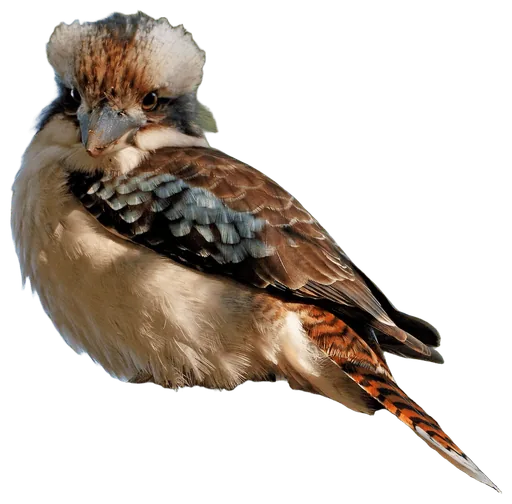
Kookaburra
Dacelo novaeguineaeD tier · Underdog50th of 55 birds
Size & speed

- Weight
- 500 g17.6 oz
- Length
- 42 cm16.5 in
As heavy as 2.5 smartphones
Heavier than 15% of animalsAbout 1.4 rulers long
Bigger than 20% of animalsThe Laughing Kookaburra is a large Australian kingfisher built for terrestrial ambush hunting. A heavy bill, precise perch-to-ground pounces and the habit of battering larger prey against hard surfaces make it formidable to small animals, while cooperative family defense and the famous territorial chorus add behavioral sophistication. At roughly half a kilogram, however, its absolute Attack and Defense remain low against the broader ABS roster.
Detailed ratings
Research-backed ratings on one 0–100 scale for all 344 animals (updated 2026-09-27). How ratings work


Card No. 289 of 344. Every animal on Animal Battle Stats has one: its power, tier and archetype on the front; its six battle stats, abilities and signature move on the back.
Special abilities
Larger prey is gripped in the bill and repeatedly struck against ground or a branch, converting the environment into an impact surface that helps kill or subdue struggling prey.
Family members coordinate the famous laughing calls to advertise and defend an occupied territory; useful for communication and deterrence, but it does not multiply an individual's one-on-one physical power.
Unique traits
Unlike the fish-centered stereotype of kingfishers, this species commonly watches from a perch and drops onto terrestrial insects and small vertebrates.
Offspring can remain as helpers, sharing breeding duties and contributing vigorously to year-round territory defense.
How it fights
Weapons
- The Laughing Kookaburra's primary weapon is its large, stout bill. It is a sit-and-wait terrestrial predator: from a perch it detects prey, drops or swoops down, seizes the target in the bill, then swallows small prey whole. Australian Museum states that larger prey is killed by bashing it against the ground or a tree branch. This handling system lets a sub-kilogram bird safely process insects, frogs, rodents, small birds, lizards and small snakes. It is meaningful weapon specialization but must remain low in absolute Attack because the bird itself is only about half a kilogram.
Struggles vs
- Roughly half a kilogram, leaving an enormous absolute power and durability deficit against most mammalian predators and large birds.
- The bill is dangerous to small prey but cannot compensate for the mass gap against large opponents.
- No armor or unusual trauma resistance.
- Perch-bashing depends on controlling prey small enough to carry or manipulate.
- Cooperative territorial behavior must not be scored as if multiple birds join a one-on-one matchup.
- Weight
- 500 g17.6 oz
- Height
- No reliable measurement
- Length
- 42 cm16.5 in
- Top speed
- No reliable measurement
- Bite force
- No reliable measurement
- Lifespan
- 15 years
- Home biome
- Forest
- Lifestyle
- Social
Rated specimen: Healthy fully mature adult female, represented at 0.465 kg and 42.0 cm total length.
Fun facts
- The Laughing Kookaburra is the world's largest kingfisher by the commonly cited size/mass comparison.
- Its famous "laugh" is a territorial call, often performed as a family chorus.
- Despite being a kingfisher, it often hunts on land rather than diving for fish.
- Large prey may be killed by repeated impacts against a branch or the ground.
- Previous offspring can stay with their parents and help raise later broods.
- Family helpers also participate in defending the territory.
Closest rivals by power. Tap one for the full breakdown, or pick any opponent.
vs CockatielWins · 60% · Slight edge 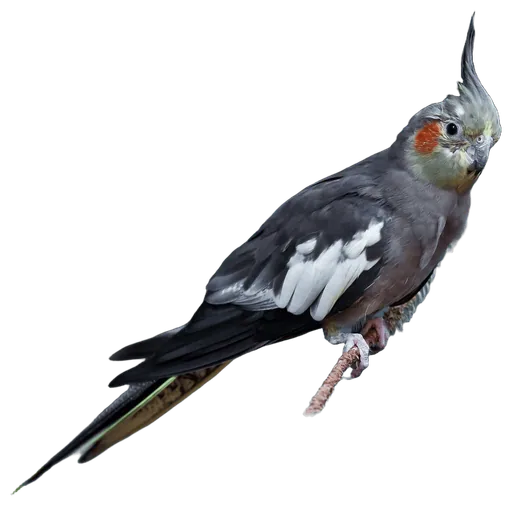 W vs BudgerigarWins · 66% · Slight edge
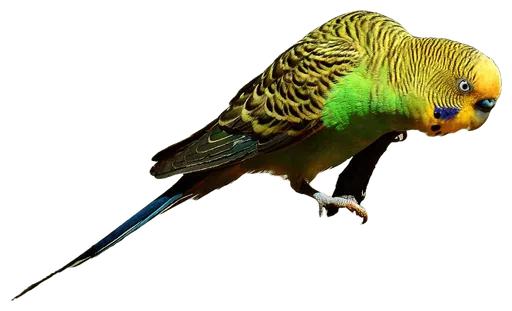 W vs Sun ConureWins · 57% · Toss-up
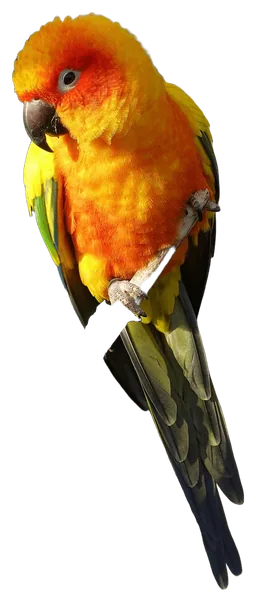 W vs Rosy-faced LovebirdWins · 64% · Slight edge
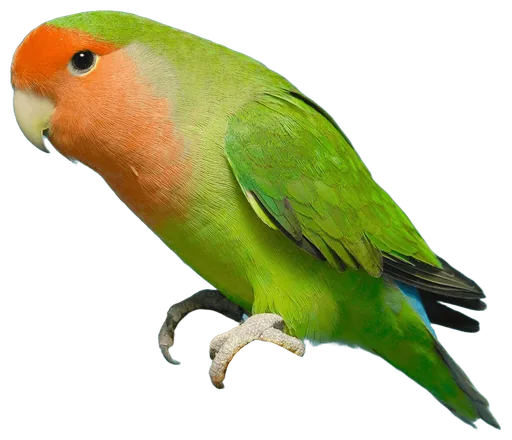 W vs Barn OwlDraw · 50-50 · Dead even
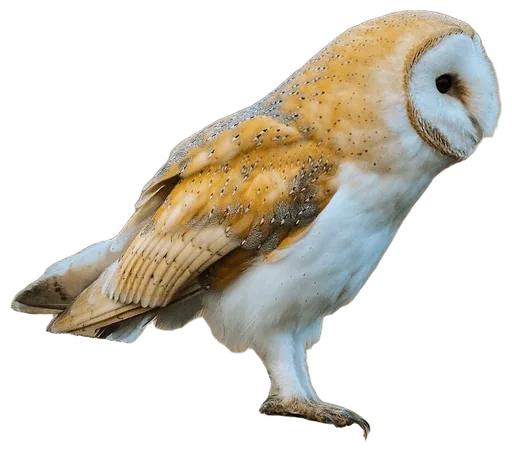 D vs ToucanWins · 52% · Toss-up
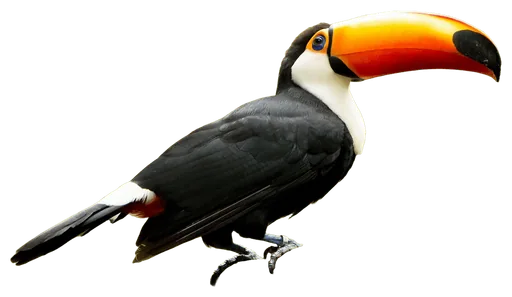 W vs Pallas's CatLoses · 62% · Slight edge
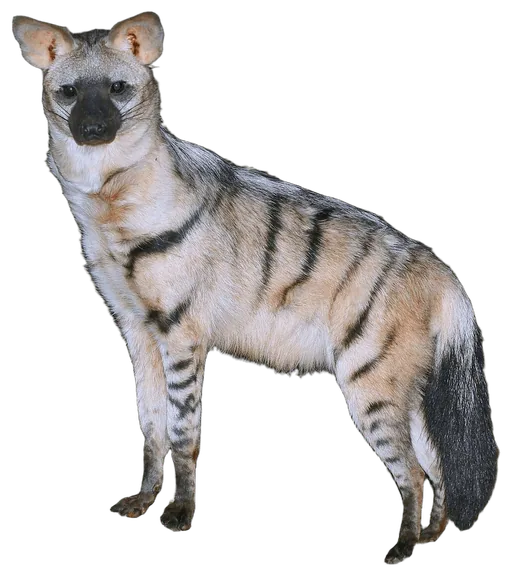
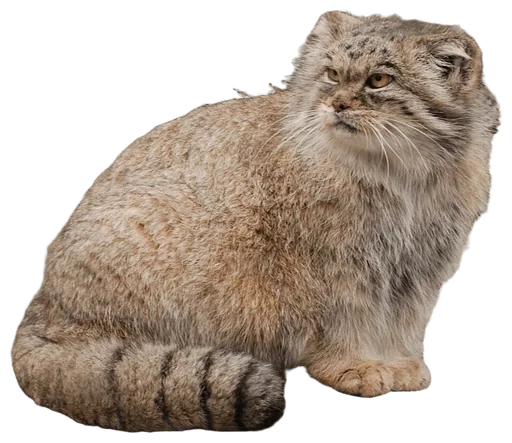 L vs AardwolfLoses · 67% · Slight edge
 L
Kookaburra battle analysis
A Laughing Kookaburra fights like an ambush predator, not an aerial duelist. It spends long periods watching from a branch, then converts height into a short controlled pounce. Small prey disappears whole. Larger prey is carried to a hard surface and beaten until it can be swallowed safely. That behavior gives the bill more practical killing value than its modest body mass would suggest, especially against insects, frogs, lizards, rodents and small snakes. Yet absolute scale matters. A representative large female is only about 0.465 kg, has no armor and lacks a documented high-force bite. Flight and precise repositioning keep Agility high, but they do not justify high Defense. Cognitively, the species deserves more credit than the old generic profile: long-term family groups coordinate territorial calls, previous offspring help rear young, and helpers participate in territory defense. Its ABS identity should therefore be a tiny but tactically competent flying ambush predator whose environmental prey-processing trick is memorable, not a physically powerful fighter.
Habitat & range
The species is native to eastern Australia and occupies eucalypt forest, woodland, forest edges, parks and gardens where suitable trees provide perches and nest hollows. It has been introduced to Tasmania, south-western Western Australia and New Zealand. It is sedentary and maintains territories year-round rather than migrating seasonally.
Diet & hunting
Laughing Kookaburras are carnivorous generalists. Australian Museum lists insects, worms and crustaceans as major foods and also records small snakes, mammals, frogs and birds. NSW Environment similarly lists fish, small snakes, lizards, rodents, worms, beetles and other insects. The species is ecologically a perch-based terrestrial predator, not primarily a fishing kingfisher.
Social life
Pairs are believed to form long-term bonds. Previous offspring may remain for one or two years or longer as helpers. Peer-reviewed work describes cooperative groups of two to eight birds, with helpers of either sex contributing to care and territory defense. The social system is therefore relevant to communication and Tactics, but ABS ratings remain for one canonical individual.
Conservation
BirdLife Australia lists the Laughing Kookaburra as IUCN Least Concern. It remains widespread and familiar, including in urbanized landscapes where old trees and feeding habitat persist.
Quick answers
How strong is a Kookaburra?
On the Animal Battle Stats scale, the Kookaburra has an attack rating of 18 and a power index of 37.7 out of 100, which ranks it #289 of 344 animals and puts it in D tier (Underdog). Its strongest stat is agility (74).
How much does a Kookaburra weigh?
A typical adult Kookaburra weighs about 500 g (17.6 oz). Rated specimen: healthy fully mature adult female, represented at 0.465 kg and 42.0 cm total length.
How fast is a Kookaburra?
There is no reliable measured top speed for the Kookaburra, so we do not publish one. Its agility rating, which covers acceleration, reflexes and evasion, is 74 out of 100.
What does a Kookaburra eat?
Laughing Kookaburras are carnivorous generalists. Australian Museum lists insects, worms and crustaceans as major foods and also records small snakes, mammals, frogs and birds. NSW Environment similarly lists fish, small snakes, lizards, rodents, worms, beetles and other insects. The species is ecologically a perch-based terrestrial predator, not primarily a fishing kingfisher.
Is the Kookaburra endangered?
No. The Kookaburra is listed as Least Concern. BirdLife Australia lists the Laughing Kookaburra as IUCN Least Concern. It remains widespread and familiar, including in urbanized landscapes where old trees and feeding habitat persist.
What animals can beat a Kookaburra?
Among its closest rivals, the Pallas's Cat (62%), the Aardwolf (67%) would be favored against the Kookaburra. It would be favored against the Cockatiel, the Budgerigar, the Sun Conure, the Rosy-faced Lovebird, the Toucan. It is dead even with the Barn Owl: a draw.
Researched 2026-09-27. Ratings are editorial judgments built from these sources; measurements describe a healthy adult female.
- taxonomy, 40–45 cm size, habitat, range, diet, prey handling, calls, cooperative breedingExact D. novaeguineae; pounces from perches; larger prey bashed against ground/branch; helpers assist breeding
- size, bill, diet, habitat, territorial callUp to 46 cm; strong beak; broad terrestrial prey; forest/open woodland habitat
- taxonomy, habitat, clutch, conservationD. novaeguineae; woodland/forest; clutch 2–3; IUCN Least Concern
- cooperative breeding, group size, helper behavior, territory defenseGroups 2–8; helpers are previous offspring; helpers contribute to care and vigorous year-round territory defense
- mass, length, lifespan, sex size13–16 oz; 15–18 in; females can reach ~1 lb; captivity up to 20 years
- mass/length context, lifespanaverage 465 g; up to 42 cm; females slightly heavier; 11 years wild / 15 zoo stated
- exact-species image, provenance, dimensions, license4000×6000 JPEG, CC BY-SA 4.0, own work
Photo: “Laughing Kookaburra. (Dacelo novaeguineae) (9572638199).jpg” by Bernard Spragg. NZ from Christchurch, New Zealand, CC0, background removed and cropped. Original
Suggest a correction