
Komodo Dragon
Varanus komodoensisB tier · Strong8th of 39 reptiles
Size & speed

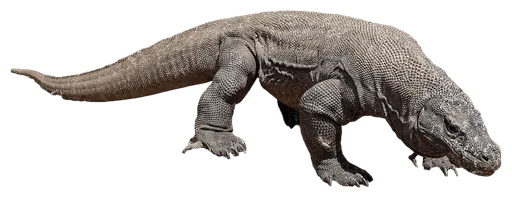
- Weight
- 85 kg187 lb
- Length
- 2.59 m8.5 ft
- Top speed
- 20 km/h13 mph
About as heavy as a person
Heavier than 70% of animals1.5× a person's height
Bigger than 81% of animalsAbout as fast as a person running
Faster than 21% of animalsThe Komodo dragon is an 85 kg-class island apex predator built around a combined wound system rather than a bone-crushing bite. Serrated iron-enriched teeth, powerful bite-and-pull mechanics, venom, sharp claws and exceptional chemoreception let a mature male open severe wounds and track prey, while adult cranial osteoderms add protection during close conflict.
Detailed ratings
Research-backed ratings on one 0–100 scale for all 344 animals (updated 2026-09-27). How ratings work


Card No. 85 of 344. Every animal on Animal Battle Stats has one: its power, tier and archetype on the front; its six battle stats, abilities and signature move on the back.
Special abilities
Serrated cutting teeth create deep wounds while mandibular venom contributes anticoagulant and shock-inducing effects, making escape from the initial bite less protective than it would be against an ordinary lizard.
Tongue-flicking chemoreception samples airborne/ground chemical cues and can locate carrion over kilometer-scale distances under favorable conditions, supporting tracking and target reacquisition.
Unique traits
Iron enrichment concentrates along tooth cutting edges/tips, helping maintain the sharp slicing apparatus documented in modern Komodo dentition.
Mature dragons develop extensive, morphologically diverse cranial osteoderms absent in juveniles, adding protection where adult-on-adult conflict is concentrated.
How it fights
Weapons
- The Komodo dragon is a cut-and-pull predator, not primarily a crushing-jaw predator. Curved serrated teeth open deep lacerations, the neck and body add pulling/shaking force, sturdy claws help control position, and venom worsens bleeding and shock. Smithsonian describes violent side-to-side shaking after a bite. This combined system is more informative than a single bite-force number.
- The muscular tail is a secondary close-range weapon and balance/control structure. Large prey can be attacked at the legs or other accessible tissue, after which severe wounds and venom can degrade the victim even if immediate restraint fails.
Struggles vs
- Cold conditions reduce reptilian performance.
- Long open pursuit removes the ambush advantage.
- Very large armored or thick-skinned opponents reduce immediate effectiveness of slicing wounds.
- Venom is dangerous but not an instant unrealistic knockout; it should not be double-counted as immediate raw force.
- Weight
- 85 kg187 lb
- Height
- No reliable measurement
- Length
- 2.59 m8.5 ft
- Top speed
- 20 km/h13 mph
- Bite force
- No reliable measurement
- Lifespan
- 30 years
- Home biome
- Desert
- Lifestyle
- Mostly solitary
Rated specimen: Healthy fully mature adult male, represented at 85.0 kg and 259.0 cm total length.
Fun facts
- It is the largest living lizard.
- Mature males average around 2.59 m in the Guinness summary, but a verified extreme reached 3.13 m and 166 kg.
- The mouth carries around 60 serrated teeth, which are continually replaced.
- The cutting edges of the teeth contain concentrated iron.
- Adults can briefly run around 20 km/h.
- Juveniles use trees extensively, in part because larger Komodo dragons are cannibalistic.
Closest rivals by power. Tap one for the full breakdown, or pick any opponent.
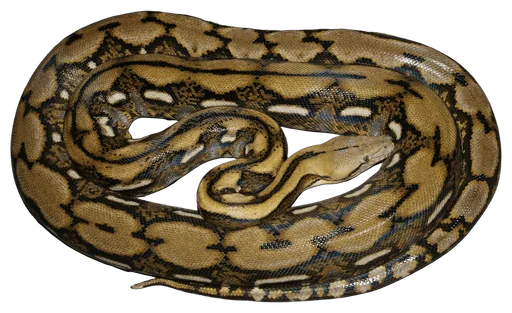
vs PythonWins · 52% · Toss-up 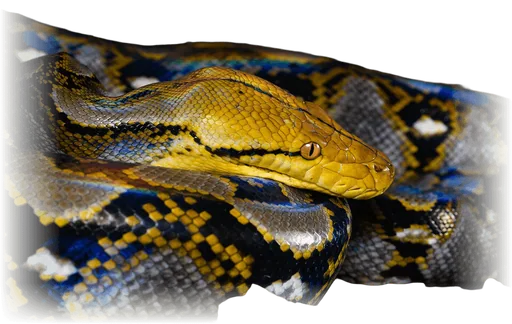 W vs Reticulated PythonWins · 52% · Toss-up
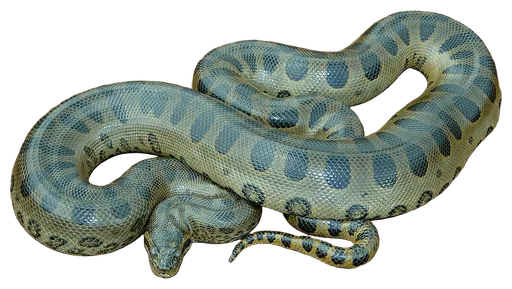
 W vs Green AnacondaWins · 55% · Toss-up
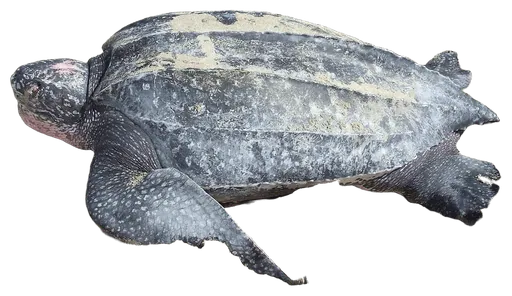
 W vs Leatherback Sea TurtleLoses · 61% · Slight edge
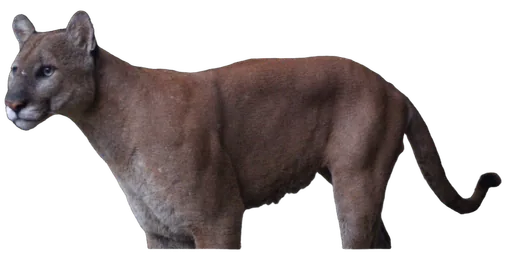
 L vs CougarWins · 52% · Toss-up
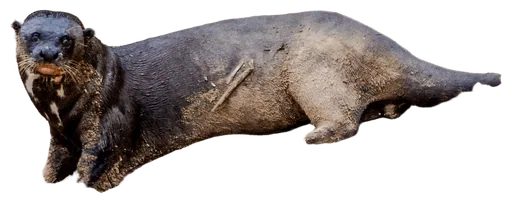
 W vs Giant OtterWins · 56% · Toss-up
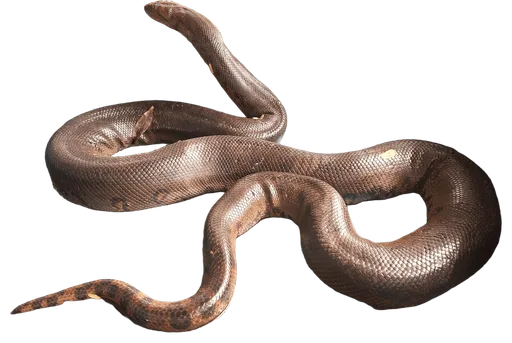
 W vs AnacondaWins · 56% · Toss-up
 W vs ZebraLoses · 56% · Toss-up
 L
Komodo Dragon battle analysis
A mature male Komodo dragon is less a giant crushing-jaw reptile than a specialized living cutting machine. Its recurved serrated teeth open flesh, its neck and body convert a bite into damaging pull-and-shake loads, and venom worsens the physiological consequences of those wounds. The result explains how an animal with comparatively modest compressive bite mechanics can be a formidable large-prey predator.
Its second advantage is information. The forked tongue and vomeronasal system continuously sample chemical traces, allowing a dragon to find carrion and follow opportunities across rugged island terrain. That makes an escaped, bleeding target harder to lose. The dragon is also behaviorally flexible enough to ambush, scavenge, track and learn husbandry tasks in captivity.
Defense is substantial but should not be romanticized. Adult cranial osteoderms form impressive localized armor, yet an 85 kg monitor remains physically outscaled by bears, big bovids, rhinos, elephants and the largest crocodilians. Likewise, a 20 km/h sprint is useful for an ambush launch but does not make the animal highly agile by speed alone. Its ABS placement therefore concentrates its exceptional biology in Weaponry, Senses and Special while keeping Size, Defense, Speed and raw physical power proportional to the full roster.
Habitat & range
Komodo dragons are endemic to a very small Indonesian range in the Lesser Sunda Islands. They occupy tropical savanna, dry/open woodland and related island habitats from beaches to ridges. The restricted, fragmented range makes local habitat change unusually important.
Diet & hunting
They are apex carnivores and scavengers. Adults take Timor deer, wild pigs and other vertebrates and readily exploit carrion. Younger animals eat smaller prey and spend more time in trees to avoid cannibalistic adults. Adults can consume extraordinarily large meals; Smithsonian notes the expandable stomach can accommodate up to about 80% of body mass in a feeding event.
Social life
They are mostly solitary outside feeding aggregations and reproduction. Males wrestle during breeding competition. Females lay eggs, and the species is also famous for documented facultative parthenogenesis in captivity. Maturity is generally reached around 5-7 years in zoo references.
Conservation
The Komodo dragon is Endangered on the IUCN Red List. Its very small fragmented island range, habitat pressures, prey depletion outside protected cores and projected climate/sea-level effects are major concerns. Core populations benefit from Komodo National Park protection.
Quick answers
How strong is a Komodo Dragon?
On the Animal Battle Stats scale, the Komodo Dragon has an attack rating of 62 and a power index of 58.4 out of 100, which ranks it #85 of 344 animals and puts it in B tier (Strong). Its strongest stat is special (88).
How much does a Komodo Dragon weigh?
A typical adult Komodo Dragon weighs about 85 kg (187 lb). Rated specimen: healthy fully mature adult male, represented at 85.0 kg and 259.0 cm total length.
How fast is a Komodo Dragon?
The Komodo Dragon's top speed is about 20 km/h (13 mph). Its agility rating is 59 out of 100.
What does a Komodo Dragon eat?
They are apex carnivores and scavengers. Adults take Timor deer, wild pigs and other vertebrates and readily exploit carrion. Younger animals eat smaller prey and spend more time in trees to avoid cannibalistic adults. Adults can consume extraordinarily large meals; Smithsonian notes the expandable stomach can accommodate up to about 80% of body mass in a feeding event.
Is the Komodo Dragon endangered?
The Komodo Dragon's conservation status is Endangered. The Komodo dragon is Endangered on the IUCN Red List. Its very small fragmented island range, habitat pressures, prey depletion outside protected cores and projected climate/sea-level effects are major concerns. Core populations benefit from Komodo National Park protection.
What animals can beat a Komodo Dragon?
Among its closest rivals, the Leatherback Sea Turtle (61%), the Zebra (56%) would be favored against the Komodo Dragon. It would be favored against the Python, the Reticulated Python, the Green Anaconda, the Cougar, the Giant Otter, the Anaconda.
Researched 2026-09-27. Ratings are editorial judgments built from these sources; measurements describe a healthy adult male.
- Smithsonian National Zoo, Komodo dragontypical wild mass, sex dimorphism, 20 km/h burst speed, ~30 y wild lifespan, chemoreception, feeding, venom, teeth
- Guinness World Records, Largest lizardmale 2.59 m / 79-91 kg average; female averages; verified extreme
- San Diego Zoo, Komodo Dragonadult size range, diet, maturity, lifespan, ~60 teeth
- Fry et al. 2009, PNAS recordlow-compression/high-pull skull mechanics; venom anticoagulation/shock; rejection of bacteria-only explanation
- DOI for Fry et al.original combined-arsenal paper
- Natural History Museum, iron-tipped teeth2024 iron-enriched tooth cutting edges
- Smithsonian Magazine, osteodermsadult cranial osteoderm coverage/diversity; juvenile absence
- Smithsonian, danger and huntingbite-and-shake mechanics, prey spectrum, predator defense
- Natural History Museum, conservationEndangered status and climate/habitat threat context
- Commons Raja male imageexplicit male, 3264x2448, CC BY-SA 4.0, but explicitly young
Photo: “Varanus komodoensis, Komodo Island, Indonesia, 20250822 1324 2788.jpg” by Jakub Hałun, CC BY 4.0, background removed and cropped. Original
Suggest a correction