
King Crab
Paralithodes camtschaticusD tier · Underdog9th of 30 bugs & spiders
Size & speed
- Weight
- 3.1 kg7 lb
- Length
- 17.4 cm6.9 in
About as heavy as a house cat
Heavier than 31% of animalsAbout 2 credit cards long
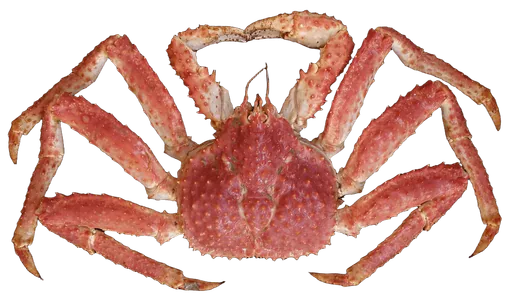
Bigger than 10% of animalsA giant cold-water lithodid armed with asymmetric crushing claws and a spiny calcified shell. The red king crab is a slow but well-protected close-range grappler whose armor and claw leverage matter far more than speed.
Detailed ratings
Research-backed ratings on one 0–100 scale for all 344 animals (updated 2026-09-27). How ratings work


Card No. 286 of 344. Every animal on Animal Battle Stats has one: its power, tier and archetype on the front; its six battle stats, abilities and signature move on the back.
Special abilities
The adult's typically enlarged right claw provides a specialized close-range crushing and gripping tool capable of processing hard benthic prey.
A calcified, spine-bearing exoskeleton protects much of the dorsal body and makes attacks by small opponents difficult.
Unique traits
Adult claw asymmetry concentrates the strongest manipulation/crushing role in the usually larger right chela.
Mature crabs perform recurring nearshore/offshore migrations, with Kodiak males documented traveling up to roughly 100 miles round trip annually.
How it fights
Weapons
- The primary weapons are the paired chelae. The adult right claw is normally larger and is suited to crushing and manipulating hard prey. NOAA reports that larger red king crabs consume clams, mussels, barnacles, crabs, fish, sea stars, sand dollars and brittle stars, demonstrating useful crushing/manipulation against shelled and structurally resistant prey. The smaller opposite chela provides a second gripping/manipulating tool. The animal can seize, brace and crush at close range, but it lacks long-range offense and is vastly weaker in absolute force than large vertebrate predators.
Struggles vs
- Very slow tactical relocation compared with vertebrate and many smaller mobile roster animals.
- Vulnerable joints and ventral surfaces remain less armored than the dorsal carapace.
- Post-molt soft-shell state is an extreme temporary weakness.
- Marine specialization makes dry-land matchups physiologically unfavorable.
- Absolute mass and force remain modest on the 225-animal scale despite impressive size among crustaceans.
- Weight
- 3.1 kg7 lb
- Height
- No reliable measurement
- Length
- 17.4 cm6.9 in
- Top speed
- No reliable measurement
- Bite force
- No reliable measurement
- Lifespan
- 20 years
- Home biome
- Arctic
- Lifestyle
- Social
Rated specimen: Healthy, hard-shelled, fully mature adult male, represented at 3.1 kg and about 17.4 cm carapace length.
Fun facts
- Exceptional Alaska males can approach a five-foot leg span.
- The record male cited by ADF&G weighed 24 lb, but this is deliberately not used as the canonical specimen.
- The fifth pair of legs is small and normally tucked under the rear carapace; males use these specialized limbs in sperm transfer.
- Adult males can sometimes retain the same shell for one or two years by skipping a molt.
- Kodiak adult males have been reported migrating as much as 100 miles round trip annually.
- Juvenile pods can contain tens of thousands of crabs according to NOAA.
Closest rivals by power. Tap one for the full breakdown, or pick any opponent.
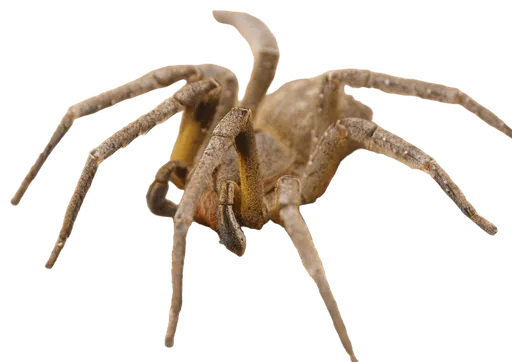
vs Giant CentipedeWins · 74% · Clear edge 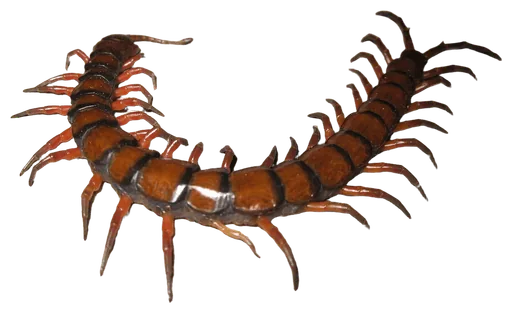 W vs Brazilian Wandering SpiderWins · 84% · Clear edge
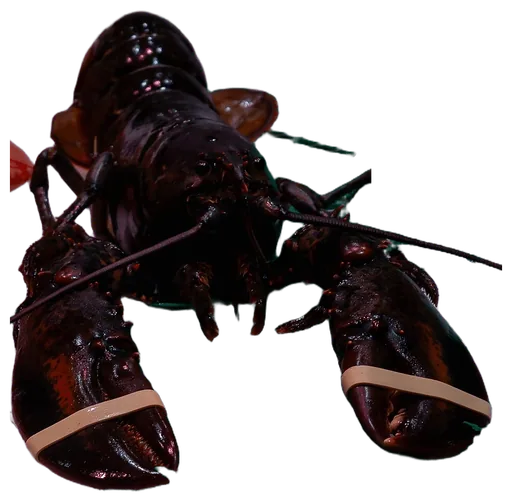
 W vs LobsterWins · 54% · Toss-up
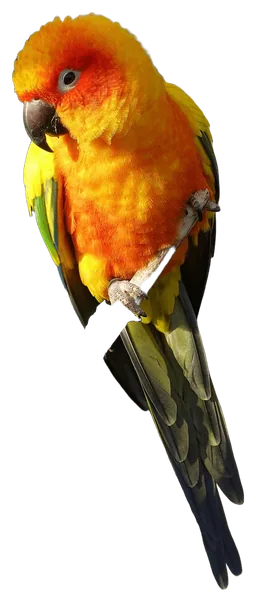
 W vs Sun ConureWins · 68% · Slight edge
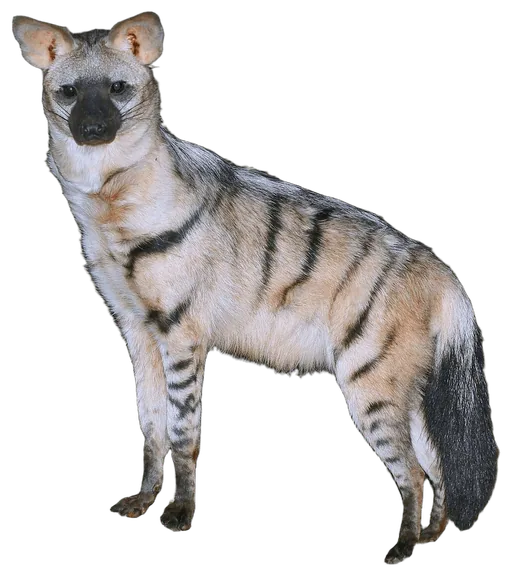
 W vs AardwolfLoses · 56% · Toss-up
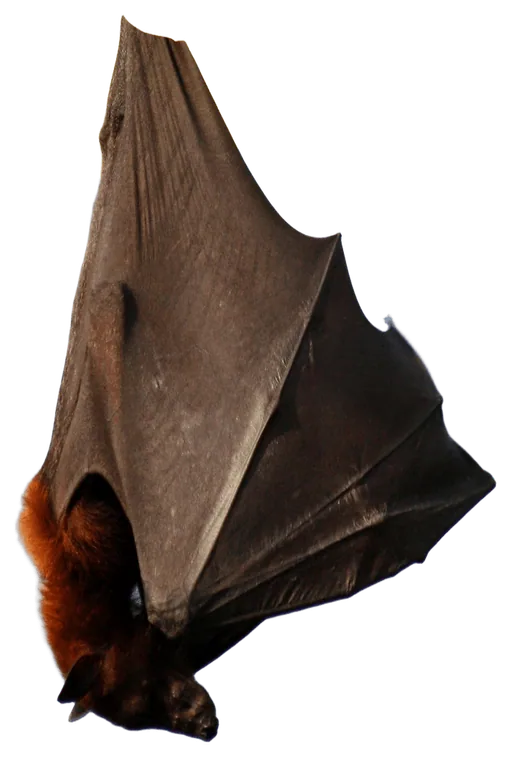
 L vs Flying FoxWins · 56% · Toss-up
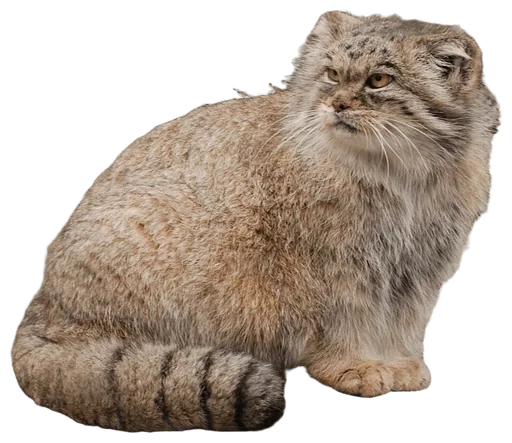
 W vs Pallas's CatLoses · 51% · Toss-up
 L vs FerretWins · 53% · Toss-up
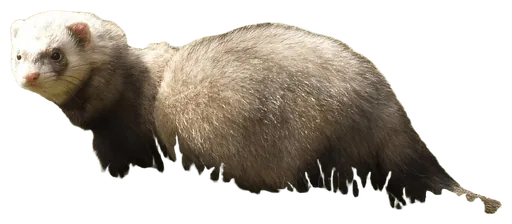 W
King Crab battle analysis
The red king crab wins by making close contact unpleasant. A hard, thorny shell shields a compact central body while long walking legs hold a broad stance and paired chelae manipulate whatever enters reach. The right claw is normally the larger adult crusher, a useful tool against the clams, mussels, barnacles and other armored benthic prey in its diet. Yet its reputation as a giant crab must stay in scale: a representative mature male is only a few kilograms, and the spectacular 24-pound, five-foot-span animals are exceptional old specimens rather than the correct default fighter. Against similarly sized soft-bodied opponents the shell-and-claw combination is formidable. Against a large vertebrate predator, the crab's modest absolute force, exposed joints and slow relocation become severe constraints. Its armor is also conditional: after molting, the normally durable shell becomes temporarily soft and vulnerable.
Habitat & range
Native range extends from British Columbia north through Alaska/Bering Sea and across the northern Pacific toward Japan. It has also become established in the Barents Sea after introduction. Mature animals generally occupy deeper continental-shelf habitat, while early life stages use shallower complex habitat.
Diet & hunting
Large adults are broad benthic omnivores/predators. NOAA lists worms, clams, mussels, barnacles, crabs, fish, sea stars, sand dollars and brittle stars. They can also be cannibalistic. Juveniles face many fish and crab predators; large hard-shelled adults have fewer predators, though octopuses and sea otters remain important threats.
Social life
Sexes tend to segregate in deeper water outside mating/molting areas. Females must molt to mate, while adult males can skip molts and retain a shell for one or two years. Sexual maturity occurs around four to five years according to ADF&G. Juveniles can form very large pods, likely as anti-predator aggregation.
Conservation
The species supports major commercial, personal-use and subsistence fisheries. NOAA currently manages multiple Alaska stocks separately; stock condition differs geographically. It is also an ecologically consequential introduced species in the Barents Sea.
Quick answers
How strong is a King Crab?
On the Animal Battle Stats scale, the King Crab has an attack rating of 30 and a power index of 38.3 out of 100, which ranks it #286 of 344 animals and puts it in D tier (Underdog). Its strongest stat is stamina (55).
How much does a King Crab weigh?
A typical adult King Crab weighs about 3.1 kg (7 lb). Rated specimen: healthy, hard-shelled, fully mature adult male, represented at 3.1 kg and about 17.4 cm carapace length.
How fast is a King Crab?
There is no reliable measured top speed for the King Crab, so we do not publish one. Its agility rating, which covers acceleration, reflexes and evasion, is 26 out of 100.
What does a King Crab eat?
Large adults are broad benthic omnivores/predators. NOAA lists worms, clams, mussels, barnacles, crabs, fish, sea stars, sand dollars and brittle stars. They can also be cannibalistic. Juveniles face many fish and crab predators; large hard-shelled adults have fewer predators, though octopuses and sea otters remain important threats.
What animals can beat a King Crab?
Among its closest rivals, the Aardwolf (56%), the Pallas's Cat (51%) would be favored against the King Crab. It would be favored against the Giant Centipede, the Brazilian Wandering Spider, the Lobster, the Sun Conure, the Flying Fox, the Ferret.
Researched 2026-09-27. Ratings are editorial judgments built from these sources; measurements describe a healthy adult male.
- size, sex differences, claws, maturity, molt, migration, lifespan, rangemales to 24 lb, nearly 5-ft span; right claw usually largest; maturity ~4–5 yr; adult migration; 20–30 yr estimate for large animals
- diet, predators, habitat, podding, molt vulnerability, stock contextlarge crabs crush broad prey spectrum; mature animals deeper; juveniles pod; post-molt shell vulnerable
- dimorphism and morphometricslarge males have significantly greater CW/CL and merus ratios than large females
- representative adult male dimensions/massmale n=8: mean CL 174.4 mm, mean 3090.1 g, ranges 122.5–230 mm and 980–6320 g
- lifespan/behavior backgroundexpected lifespan 15–20 yr; molting is hazardous
- image taxon, male sex, provenancelarge male P. camtschaticus, 2586×1708, CC BY 2.0 / NOAA provenance
- alternate exact-species image3000×2003, public domain, USFWS attribution
Photo: “Lithodes confundens male dorsal plate black background.jpg” by Gustavo A. Lovrich, CC BY-SA 4.0, background removed and cropped. Original
Suggest a correction