

Jaguarundi
Herpailurus yagouaroundi
 #219 of 341
  Jungle Hunter Near Threatened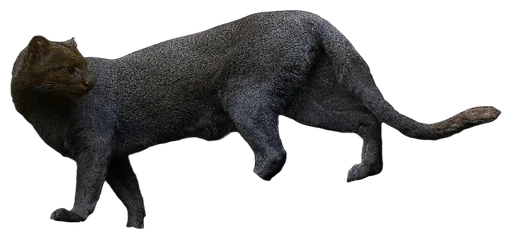
 Fight
FightPhoto: Vassil · CC0
A long, low, otter-shaped wild cat of the Americas, the jaguarundi hunts birds and rodents by day, climbs, swims and leaps 2 m into the air. It is agile and versatile in habitat use, but at about 7 kg it is a small predator with modest absolute power.
 Attack30
  Defense21
  Agility85
  Stamina62
  Intelligence62
  Special55
 Detailed ratings
Research-backed ratings on one 0–100 scale for all 341 animals (updated 2026-09-28). How ratings work
Special abilities
Ability 1Daylight StalkerUnlike most small American cats it hunts mainly by day, with a peak from late morning to noon, which puts it in a different time slot from ocelots and margays and lets it surprise diurnal birds and lizards.
 Ability 2Bird-Snatch Leap
It can spring about 2 m into the air to knock down birds, and it climbs and swims well, so it can follow or escape an opponent across ground, branches and water.
Unique traits
 TraitOtter-Shaped Cat
A long, low body, short legs, a small flat head, small round ears and a long tail make it look more like a weasel or otter than a typical cat.
TraitThirteen-Call VoiceThirteen distinct calls have been recorded, including chattering, purring, screaming, whistling, yapping and a bird-like chirp.
How it fights
Weapons
- The jaguarundi hunts mainly on the ground for prey under 1 kg: ground-feeding birds, rodents (especially rice rats, cotton rats and cane mice), reptiles, frogs and arthropods. It also takes larger prey such as poultry, fish, marmosets, rabbits, opossums and occasionally common tapeti, and small deer have been found in its diet (possibly as carrion). It eats about 400 g of vertebrate prey a day. Its weapons are ordinary small-cat claws and bite on a slender 7 kg body; it is effective against small animals but lacks the mass or grappling power for anything much larger.
 Struggles vs
- Low absolute mass and power.
- No armor.
- Outclassed by ocelots, cougars and dogs.
- Small prey focus limits its practice against large, dangerous opponents.
- Weight
- 7 kg15 lb
- Height
- 35 cm13.8 in
- Length
- 70 cm27.6 in
- Top speed
- No reliable measurement
- Bite force
- No reliable measurement
- Lifespan
- 15 years
- Home biome
- Jungle
- Lifestyle
- Mostly solitary
Rated specimen: Healthy mature adult male, 7.0 kg, the top of the usual 3.5–7 kg range (Wikipedia) and the middle of ADW's 4.5–9.0 kg range.
Fun facts
- Its name comes from the Old Guarani word for "dark jaguar".
- It can leap about 2 m into the air to catch birds.
- Jaguarundis have 38 chromosomes, while other small South American cats have 36.
- It has 13 recorded calls, including a bird-like chirp.
- It is one of the few small cats that hunts mainly by day.
- One was recorded swimming across Bolivia's Tuichi River.
Closest rivals by power. Tap one for the full breakdown, or pick any opponent.
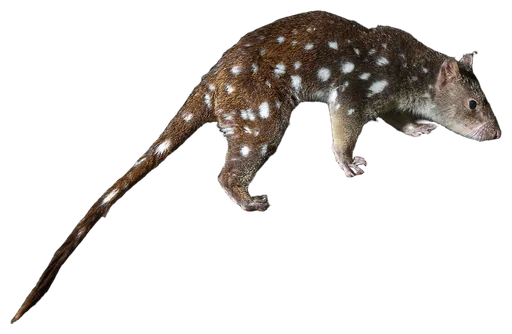
vs Capuchin MonkeyWins · 50% · Toss-up 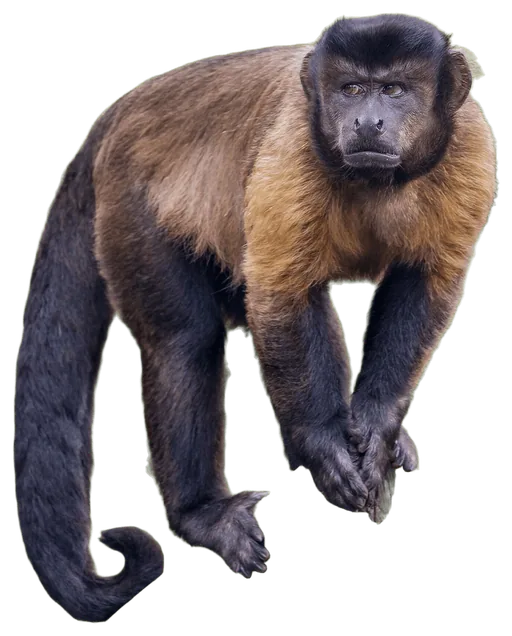 W vs QuollWins · 50% · Toss-up
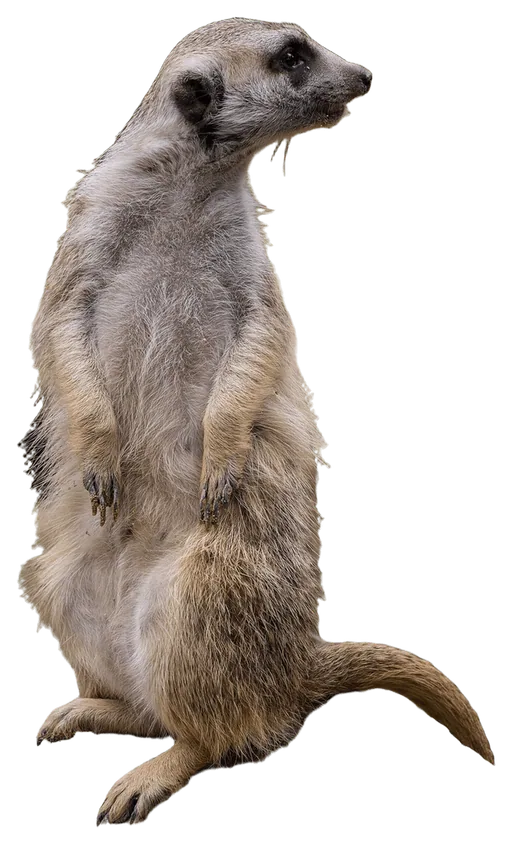
  W vs MeerkatWins · 50% · Toss-up
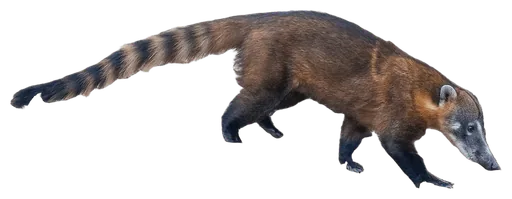
  W vs South American CoatiLoses · 51% · Toss-up
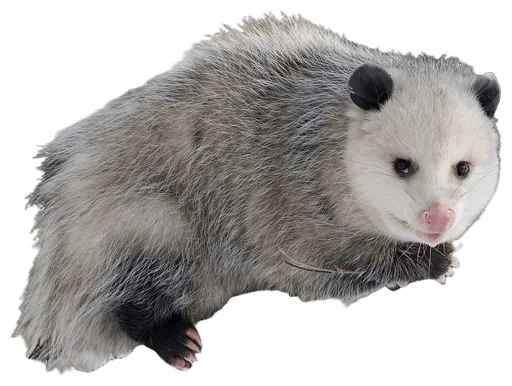
  L vs OpossumLoses · 51% · Toss-up
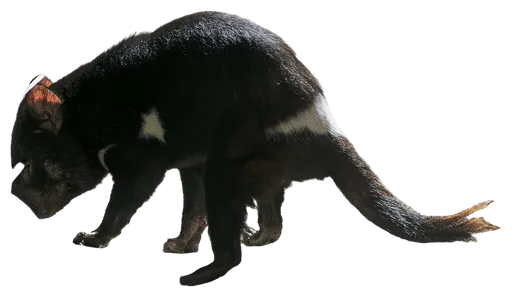
  L vs Tasmanian DevilLoses · 51% · Toss-up
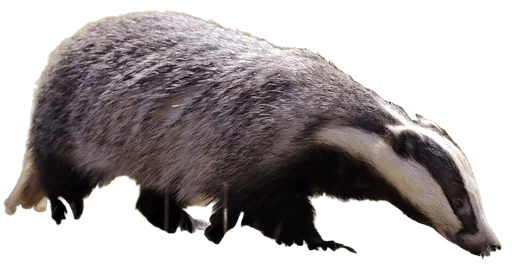
  L vs BadgerWins · 51% · Toss-up
  W vs AnteaterWins · 51% · Toss-up
  W
W  Pick any opponent
 Jaguarundi battle analysis
The jaguarundi does not look like most cats. Its long, slender body, short legs, small flattened head and long tail give it the outline of a weasel or otter, and its coat is plain grey-brown or reddish with no spots. It is also unusual in its schedule: while ocelots and margays hunt at night, the jaguarundi is most active in daylight, peaking from late morning to noon.
It hunts mainly on the ground, pouncing on rodents, lizards and ground birds, but it climbs easily, swims across rivers and can leap two metres into the air after a bird. Radio-tracked males in Belize used ranges of up to 100 km², and the species turns up in rainforest, dry scrub and farmland alike, as long as there is dense cover and water nearby.
In a matchup, the jaguarundi is a quick, versatile small predator. At about 7 kg it is heavier than a house cat and better armed than a fox of similar weight, but it is roughly half the mass of an ocelot, the rival that suppresses it in the wild, and far below the cougar. Its best fights are against small, lightly armed animals; larger cats, dogs and big constrictors are dangerous to it.
Habitat & range
From southern Texas (where it is now very rare or gone) and Mexico through Central America to northern Argentina and Uruguay. It uses an unusually broad range of habitats for a small cat: tropical rainforest, deciduous forest, dry thorn scrub, savanna and semi-desert, usually near running water and dense cover, and it can live in reforested and farmed mosaics.
Diet & hunting
Mostly small animals under 1 kg: rodents, ground-feeding birds, reptiles, frogs and arthropods, with occasional poultry, fish, rabbits, marmosets and opossums. It appears to take the most abundant and easily caught prey in each area.
Social life
Solitary or in pairs. Home ranges are large for its size: 1.4–18 km² for females and 8.5–25.3 km² for males in Brazil, and up to 88–100 km² for two males in Belize. It scent-marks by scraping, clawing logs, head rubbing and leaving feces uncovered.
Conservation
Listed as Near Threatened in the IUCN Red List's 2026 assessment as shown in Wikipedia's species box; the article text still describes its earlier Least Concern listing, noting that assessors already considered Near Threatened justified. A 2024 continental analysis found its area of occupancy has shrunk over the last two decades (Global Ecology and Conservation). It is listed as endangered in the United States and threatened in Mexico. Threats are habitat loss and fragmentation, and persecution for killing poultry.
Quick answers
How strong is a Jaguarundi?
On the Animal Battle Stats scale, the Jaguarundi has an attack rating of 30 and a power index of 45.8 out of 100, which ranks it #219 of 341 animals and puts it in C tier (Capable). Its strongest stat is agility (85).
How much does a Jaguarundi weigh?
A typical adult Jaguarundi weighs about 7 kg (15 lb). Rated specimen: healthy mature adult male, 7.0 kg, the top of the usual 3.5–7 kg range (Wikipedia) and the middle of ADW's 4.5–9.0 kg range.
How fast is a Jaguarundi?
There is no reliable measured top speed for the Jaguarundi, so we do not publish one. Its agility rating, which covers acceleration, reflexes and evasion, is 85 out of 100.
What does a Jaguarundi eat?
Mostly small animals under 1 kg: rodents, ground-feeding birds, reptiles, frogs and arthropods, with occasional poultry, fish, rabbits, marmosets and opossums. It appears to take the most abundant and easily caught prey in each area.
Is the Jaguarundi endangered?
The Jaguarundi's conservation status is Near Threatened. Listed as Near Threatened in the IUCN Red List's 2026 assessment as shown in Wikipedia's species box; the article text still describes its earlier Least Concern listing, noting that assessors already considered Near Threatened justified. A 2024 continental analysis found its area of occupancy has shrunk over the last two decades (Global Ecology and Conservation). It is listed as endangered in the
What animals can beat a Jaguarundi?
Among its closest rivals, the South American Coati (51%), the Opossum (51%), the Tasmanian Devil (51%) would be favored against the Jaguarundi. It would be favored against the Capuchin Monkey, the Quoll, the Meerkat, the Badger, the Anteater.
Researched 2026-09-28. Ratings are editorial judgments built from these sources; measurements describe a healthy adult male.
- Wikipedia, Jaguarundimass, height, length, dentition, diet, activity, climbing, swimming, leaping, home ranges, calls, predators, status
- Animal Diversity Web, Puma yagouaroundimass, height, lifespan, climbing, swimming
- Texas Parks and Wildlife Department, jaguarundimass, climbing, swimming, captive lifespan, US status
- Circadian activity of predators and prey in Costa Rica, Journal of Mammalogy 2020activity pattern
- Interspecific patterns of small cats in the Caatinga, PLOS One 2023activity, competition
- Small felids coexist in the Bolivian Amazon, Animals 2024detectability, ecology
- Continental-wide decline in five Neotropical carnivores, Global Ecology and Conservation 2024conservation trend
- Jaguarundi in human-altered environments of San Luis Potosí, Acta Zoológica Mexicana 2019habitat use, status in Mexico
Photo: “Puma yagouaroundi Pont-Scorff Zoo 17082015 2.jpg” by Vassil, CC0, background removed and cropped. Original
Suggest a correction