
Impala
Aepyceros melampusB tier · Strong88th of 163 mammals
Size & speed

- Weight
- 65 kg143 lb
- Length
- 1.45 m4.8 ft
- Top speed
- 80 km/h50 mph
About as heavy as a person
Heavier than 68% of animalsAbout 4.8 rulers long
Bigger than 60% of animals1.8× Usain Bolt's top speed
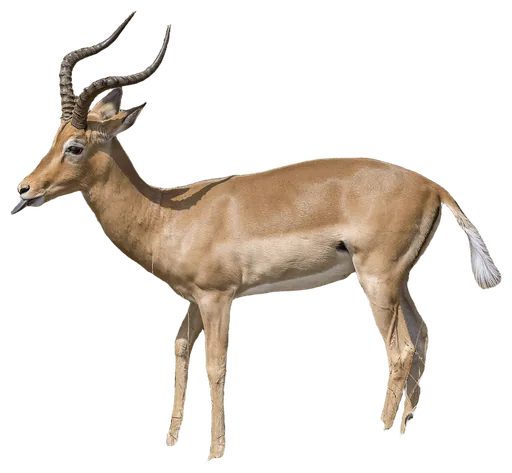
Faster than 94% of animalsThe impala is a fast, evasive African antelope built to survive by not being caught. A mature ram combines elite bounding and sprint maneuverability with long lyre-shaped horns used in serious male combat. Its weakness is the other side of that specialization: once a large predator secures contact, the impala has little armor and limited close-range options beyond its forward horn arc.
Detailed ratings
Research-backed ratings on one 0–100 scale for all 344 animals (updated 2026-09-27). How ratings work


Card No. 142 of 344. Every animal on Animal Battle Stats has one: its power, tier and archetype on the front; its six battle stats, abilities and signature move on the back.
Special abilities
Explosive bounding can clear major horizontal and vertical obstacles while maintaining escape momentum, making interception difficult in broken open terrain.
Mature males can thrust, hook and clash with long ridged horns during frontal engagements, punishing opponents that enter the head-and-neck arc.
Unique traits
Distinctive dark hair/gland regions above the rear hooves are part of the impala's characteristic signaling anatomy.
Males possess a highly mobile laryngeal system used to produce unusually impressive rutting calls during reproductive competition.
How it fights
Weapons
- The adult male's primary weapons are the paired ridged horns, potentially approaching 0.9 m in length. Rutting males defend access to females and engage rivals directly. Peer-reviewed observations of rutting males document fights and intense horn-stabbing of the ground, with broken horns observed in some males. In a one-on-one matchup the impala's offense is therefore a forward horn thrust, hook, clash or shove delivered from a mobile stance. Hooves can contribute incidental kicks, but they are secondary to the horns.
Struggles vs
- Limited protection once seized.
- Horn offense is male-specific and most effective forward-facing.
- Gracile limbs can be compromised by heavy impact or grappling.
- High sprint performance does not equal extreme sustained endurance.
- Herbivore combat repertoire is narrower than that of similarly sized dedicated predators.
- Weight
- 65 kg143 lb
- Height
- 90 cm35.4 in
- Length
- 1.45 m4.8 ft
- Top speed
- 80 km/h50 mph
- Bite force
- No reliable measurement
- Lifespan
- 15 years
- Home biome
- Savanna
- Lifestyle
- Social
Rated specimen: Healthy fully mature territorial male, 65.0 kg, approximately 90.0 cm shoulder height, 145.0 cm head-body length.
Fun facts
- Male horns can approach 92 cm, roughly comparable to the canonical animal's shoulder height.
- Peer-reviewed rut observations recorded males stabbing the ground with their horns and noted broken horns in some individuals.
- A classic Kruger study estimated only about 3 km of daily movement despite the species' spectacular sprint capability.
- Impala can switch between grazing and browsing as seasonal food conditions change.
- Their black markings include distinctive patches above the rear hooves, linked with metatarsal glands.
- Rutting males use a mobile larynx to produce resonant calls during competition.
Closest rivals by power. Tap one for the full breakdown, or pick any opponent.
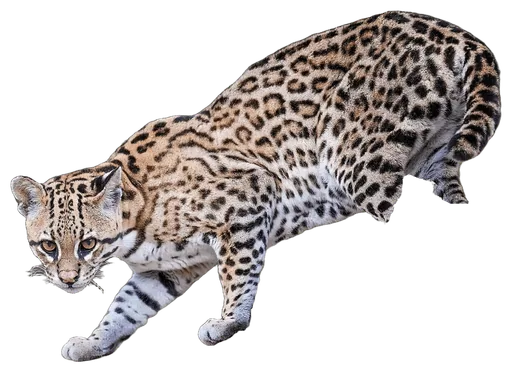
vs German ShepherdWins · 53% · Toss-up 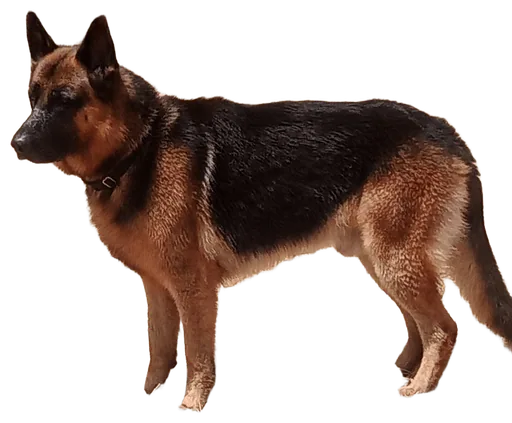 W vs OcelotWins · 60% · Slight edge
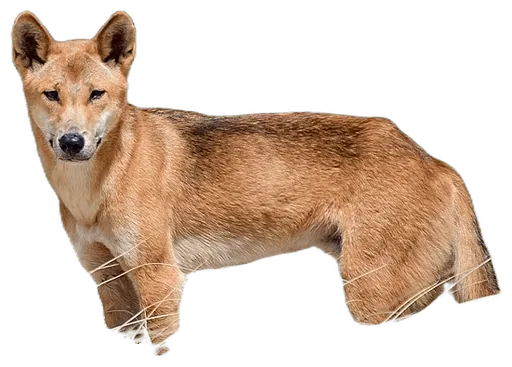
 W vs DingoWins · 58% · Slight edge
 W vs BonoboWins · 52% · Toss-up
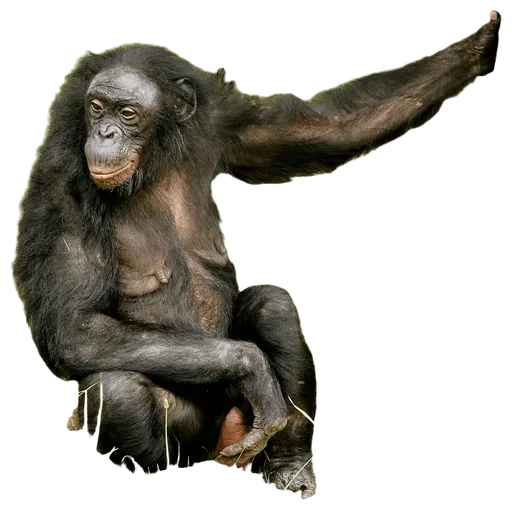 W vs African Wild DogWins · 55% · Toss-up
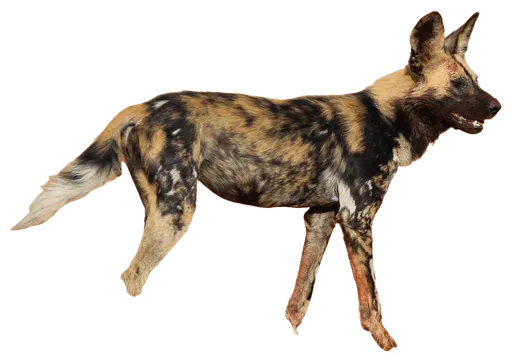 W vs DonkeyLoses · 55% · Toss-up
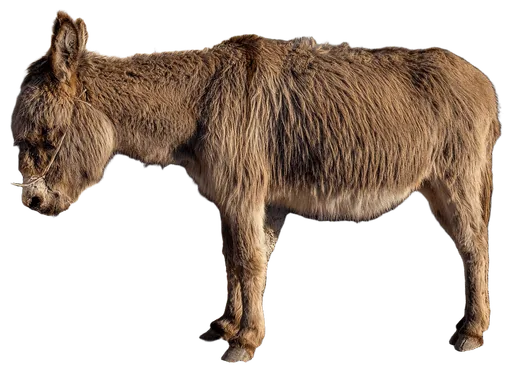 L vs Giant Forest HogLoses · 58% · Slight edge
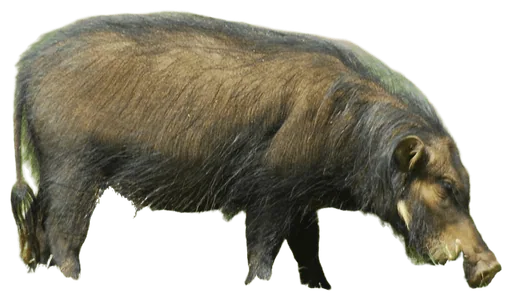 L vs PangolinWins · 62% · Slight edge
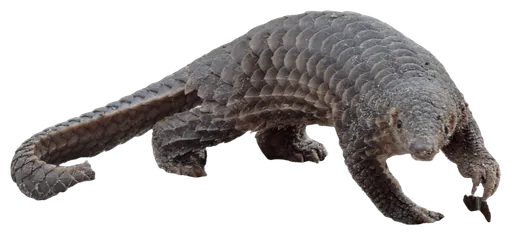 W
Impala battle analysis
An impala ram is not a miniature buffalo. Its build is light, spring-loaded and optimized around spacing. Long limbs generate explosive escape, while the body remains narrow enough for rapid changes of direction. In open savanna that geometry is a major defensive advantage because a pursuer must repeatedly solve a moving interception problem rather than simply match straight-line speed.
The male's horns transform an otherwise escape-focused herbivore into a credible frontal fighter. During the rut, males do not merely display: direct fighting occurs, and field observations document horn impacts severe enough that broken horns are seen. Even so, ABS scaling must preserve absolute force. A 65 kg ram cannot be scored as though horn length erases the mass gap to an ibex, large cat, hyena, buffalo or megafaunal opponent.
Its best battle plan is therefore positional. Keep distance, force a slower opponent to turn, use acceleration and bounds to reset the angle, and present the horns when contact becomes unavoidable. In cramped terrain the strategy collapses. A grappling predator that gets past the horn tips reaches a lightly protected torso and slender limbs. This makes the impala an unusually clear example of why Agility, Defense and Stamina should remain separate ratings.
Habitat & range
Impala occupy savannas, grasslands, light woodland and woodland-savanna edges across eastern and southern Africa, commonly associated with access to water and suitable browse/grass. The common form remains widespread and abundant.
Diet & hunting
Impala are mixed-feeding herbivores, shifting between grazing and browsing according to season and food availability. This flexibility helps them persist across seasonal savanna systems. They are also an important prey base for multiple African carnivores.
Social life
Three broad organizations are commonly recognized: territorial adult males, bachelor groups and breeding/female herds. During the rut, males compete for access to females and defend space or female groups. Large seasonal aggregations can form when resources are abundant.
Conservation
The species is assessed as Least Concern and the common impala population is estimated at roughly two million, with substantial numbers in protected areas and on private land. The black-faced form has a much smaller distribution and has required targeted conservation attention. The common form's secure status should not be generalized to every regional population.
Quick answers
How strong is an Impala?
On the Animal Battle Stats scale, the Impala has an attack rating of 43 and a power index of 52.9 out of 100, which ranks it #142 of 344 animals and puts it in B tier (Strong). Its strongest stat is agility (91).
How much does an Impala weigh?
A typical adult Impala weighs about 65 kg (143 lb). Rated specimen: healthy fully mature territorial male, 65.0 kg, approximately 90.0 cm shoulder height, 145.0 cm head-body length.
How fast is an Impala?
The Impala's top speed is about 80 km/h (50 mph). Its agility rating is 91 out of 100.
What does an Impala eat?
Impala are mixed-feeding herbivores, shifting between grazing and browsing according to season and food availability. This flexibility helps them persist across seasonal savanna systems. They are also an important prey base for multiple African carnivores.
Is the Impala endangered?
No. The Impala is listed as Least Concern. The species is assessed as Least Concern and the common impala population is estimated at roughly two million, with substantial numbers in protected areas and on private land. The black-faced form has a much smaller distribution and has required targeted conservation attention. The common form's secure status should not be generalized to every regional population.
What animals can beat an Impala?
Among its closest rivals, the Donkey (55%), the Giant Forest Hog (58%) would be favored against the Impala. It would be favored against the German Shepherd, the Ocelot, the Dingo, the Bonobo, the African Wild Dog, the Pangolin.
Researched 2026-09-27. Ratings are editorial judgments built from these sources; measurements describe a healthy adult male.
- Animal Diversity Webmass, horns, dimorphism, ecology
- SeaWorldmale mass, lifespan, life history
- National Geographicshoulder height, mass, range/ecology
- Ultimate Ungulatedimensions
- Planete Sauvagespeed, jumping
- Young, Zoologica Africanamovement/endurance context
- Frey et al., PMCrut fighting, vocal anatomy
- Endangered Wildlife Trust assessmentconservation
- Commons, male Krugerpreferred image candidate
- Commons, Adult impala maleimage cross-check
Photo: “Impala (Aepyceros melampus) male Kruger 2.jpg” by Charles J. Sharp, CC BY-SA 4.0, background removed and cropped. Original
Suggest a correction