
Hyena
Crocuta crocutaA tier · Elite25th of 163 mammals
Size & speed

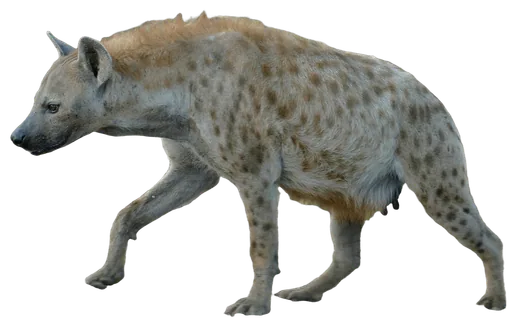
- Weight
- 75 kg165 lb
- Length
- 1.45 m4.8 ft
- Top speed
- 50 km/h31 mph
About as heavy as a person
Heavier than 69% of animalsAbout 4.8 rulers long
Bigger than 60% of animalsFaster than Usain Bolt (44.7 km/h)
Faster than 57% of animalsThe spotted hyena is a female-dominated African endurance predator built around powerful bone-cracking jaws, durable forequarters and unusually sophisticated social cognition. Its greatest battle strengths are repeated jaw damage, stamina and tactical flexibility, not armor or cat-like agility.
Detailed ratings
Research-backed ratings on one 0–100 scale for all 344 animals (updated 2026-09-27). How ratings work


Card No. 45 of 344. Every animal on Animal Battle Stats has one: its power, tier and archetype on the front; its six battle stats, abilities and signature move on the back.
Special abilities
Vaulted cranial architecture, sagittal crest, enlarged jaw musculature and robust premolars distribute feeding stresses and permit repeated bone cracking. In combat this makes limb/joint bites unusually damaging for a carnivore of this mass.
Spotted hyenas recognize individuals, rank and third-party social relationships and adjust cooperation to social context. In any matchup permitting allies, this supports unusually efficient coordination; in a one-on-one fight it contributes tactical reading rather than imaginary extra bodies.
Unique traits
Females are larger on average and socially dominant, making a mature female the biologically appropriate canonical fighter.
Specialized teeth, skull mechanics and digestion let the species exploit skin, connective tissue and bone that many carnivores leave behind, supporting exceptional ecological resilience.
How it fights
Weapons
- The jaws are the decisive weapon. A spotted hyena can seize flesh, crush smaller bones and repeatedly process resistant carcass material with enlarged premolars. The neck and forequarters stabilize the skull during biting and pulling. Non-retractile claws provide traction rather than cat-like slashing weapons.
- Against large ungulates, hyenas often use endurance, repeated bites and positional pressure rather than a single precision killing bite. Group hunts can dramatically improve success, but ABS individual ratings do not multiply one animal's Attack because clans exist.
- Weight
- 75 kg165 lb
- Height
- 85 cm33.5 in
- Length
- 1.45 m4.8 ft
- Top speed
- 50 km/h31 mph
- Bite force
- No reliable measurement
- Lifespan
- 21 years
- Home biome
- Savanna
- Lifestyle
- Social, nocturnal
Rated specimen: Healthy mature female, representative mass 75.0 kg, length 145.0 cm head-body, shoulder height 85.0 cm.
Fun facts
- Females are larger than males, an uncommon pattern among large terrestrial carnivores.
- Their clans can reach dozens of animals and have primate-like social complexity in several measurable respects.
- Bone cracking is supported by specialized cranial geometry, not simply an oversized generic bite.
- San Diego Zoo reports they can eat about one-third of their body weight in one meal.
- Cubs do not reach adult feeding performance immediately after weaning; direct bite studies found bite strength continuing to increase for years after much skull growth had plateaued.
- Hyenas are classified with the feliform (cat-like) carnivores rather than with dogs, despite their superficially dog-like build.
Closest rivals by power. Tap one for the full breakdown, or pick any opponent.
vs Grizzly BearLoses · 57% · Toss-up 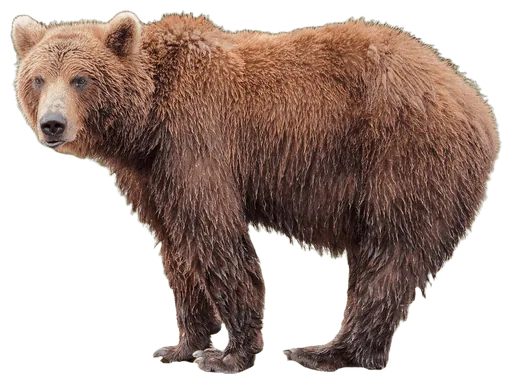 L vs Snow LeopardWins · 53% · Toss-up
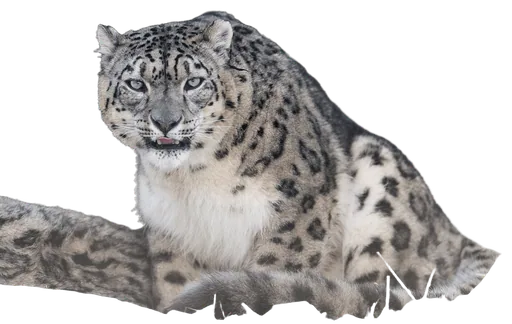 W vs CamelLoses · 61% · Slight edge
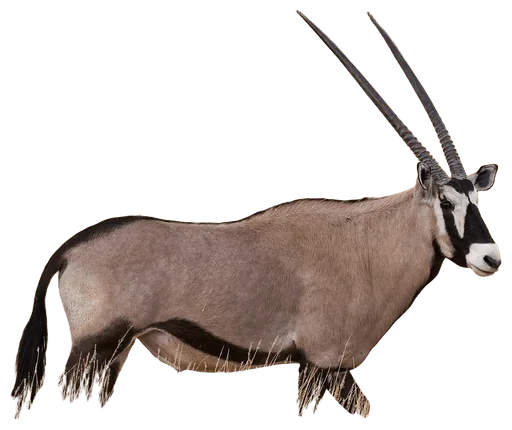
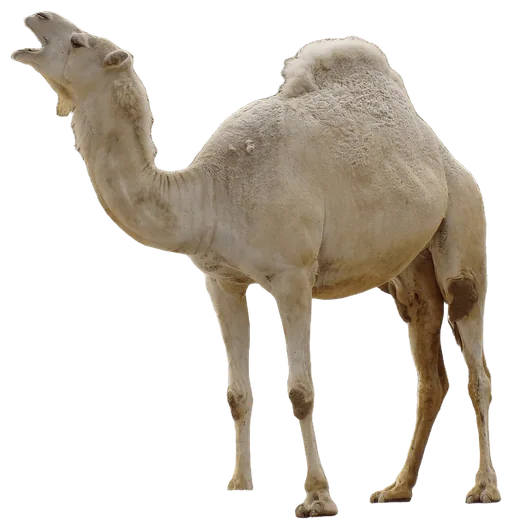 L vs OryxLoses · 55% · Toss-up
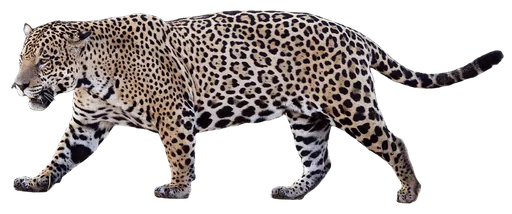
 L vs JaguarLoses · 54% · Toss-up
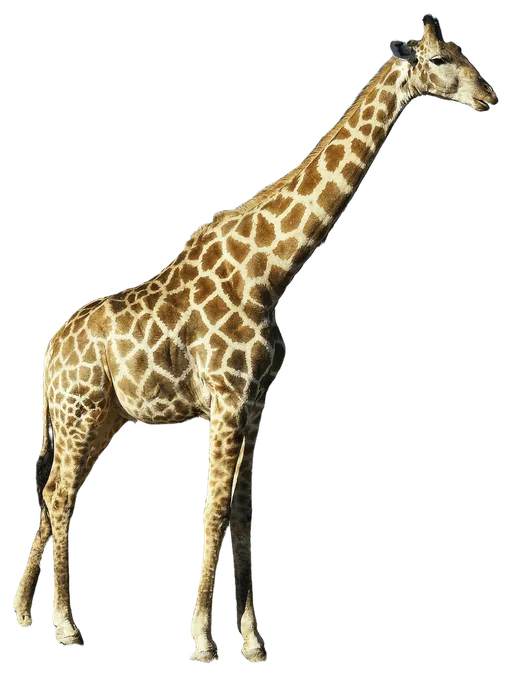
 L vs GiraffeLoses · 68% · Slight edge
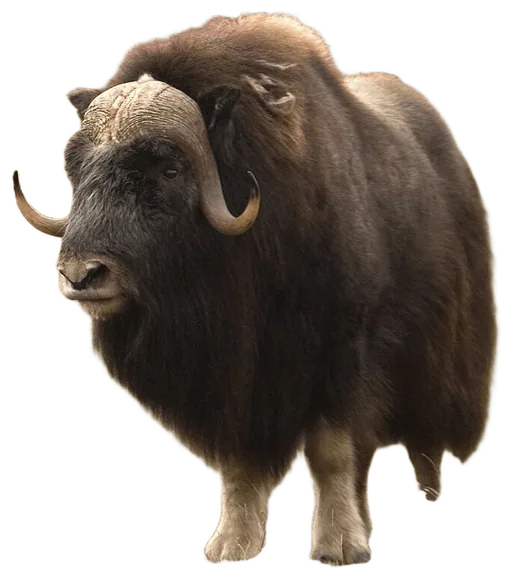
 L vs Musk OxLoses · 56% · Toss-up
 L vs PronghornWins · 55% · Toss-up
 W
Hyena battle analysis
A spotted hyena is not a wolf with a sloping back and it is not merely a scavenger. Its skull is a specialized load-bearing feeding machine. Robust premolars sit where mechanical advantage is high, the forehead is vaulted, and cranial sinuses help spread stress during unilateral bone cracking. That makes the jaw system unusually effective at repeatedly processing resistant material. On a 75 kg adult female, those mechanics produce a serious medium-predator weapon without requiring a fabricated PSI number.
The rest of the animal is built to keep that weapon working. Strong forequarters and neck stabilize the head, broad paws support terrestrial travel, and the locomotor system favors economical distance coverage. Spotted hyenas can run quickly when necessary, but their deeper advantage is that they can keep going. Against prey that cannot escape immediately, repeated pursuit and pressure turn fatigue into an offensive opening.
Their cognitive ecology is equally important. A clan is not a simple mob. Individuals know ranks, relationships and identities and can alter behavior according to who is present. This gives spotted hyenas some of the best-supported social cognition among non-primate terrestrial carnivores. ABS should reward that in Intelligence and Tactics while still treating a one-on-one fight as one animal. The result is a dangerous but correctly scaled profile: far more formidable than small canids and mid-sized generalists, yet still physically below the largest cats, bears, great apes and megafauna.
Habitat & range
Spotted hyenas occupy much of sub-Saharan Africa in savannas, grasslands, shrublands, woodlands, semi-desert and some mountainous habitats. They avoid the most extreme deserts and are not tropical-rainforest specialists. WWF gives a broad habitat set extending into mountainous areas, while AWF reports occurrence up to about 4,000 m.
Diet & hunting
They are carnivorous generalists centered on medium and large vertebrate prey, especially ungulates, but also consume carrion and smaller prey. Their ecological niche combines active predation with unusually complete carcass utilization. This is why calling them simply scavengers is inaccurate.
Social life
Spotted hyenas live in fission-fusion clans that can become very large in prey-rich ecosystems. Female philopatry, male dispersal, linear dominance hierarchies, coalition formation and individual recognition produce a complex social environment. Clan membership should inform Intelligence/Tactics, but individual physical scores remain individual.
Conservation
Current major conservation organizations list C. crocuta as Least Concern, with an estimated global population on the order of 27,000-47,000 and a decreasing trend in many areas. Major pressures include persecution, poisoning, trapping, habitat loss/fragmentation and conflict over livestock.
Quick answers
How strong is a Hyena?
On the Animal Battle Stats scale, the Hyena has an attack rating of 61 and a power index of 64.4 out of 100, which ranks it #45 of 344 animals and puts it in A tier (Elite). Its strongest stat is stamina (83).
How much does a Hyena weigh?
A typical adult Hyena weighs about 75 kg (165 lb). Rated specimen: healthy mature female, representative mass 75.0 kg, length 145.0 cm head-body, shoulder height 85.0 cm.
How fast is a Hyena?
The Hyena's top speed is about 50 km/h (31 mph). Its agility rating is 61 out of 100.
What does a Hyena eat?
They are carnivorous generalists centered on medium and large vertebrate prey, especially ungulates, but also consume carrion and smaller prey. Their ecological niche combines active predation with unusually complete carcass utilization. This is why calling them simply scavengers is inaccurate.
Is the Hyena endangered?
No. The Hyena is listed as Least Concern. Current major conservation organizations list C. crocuta as Least Concern, with an estimated global population on the order of 27,000-47,000 and a decreasing trend in many areas. Major pressures include persecution, poisoning, trapping, habitat loss/fragmentation and conflict over livestock.
What animals can beat a Hyena?
Among its closest rivals, the Grizzly Bear (57%), the Camel (61%), the Oryx (55%), the Jaguar (54%), the Giraffe (68%), the Musk Ox (56%) would be favored against the Hyena. It would be favored against the Snow Leopard, the Pronghorn.
Researched 2026-09-27. Ratings are editorial judgments built from these sources; measurements describe a healthy adult female.
- San Diego Zoo Wildlife Alliance, Spotted Hyenasize, dimorphism, speed, lifespan, life history
- Animal Diversity Web, Crocuta crocutamorphology, sex size, tail, behavior, longevity
- SeaWorld, Spotted Hyenasex-specific size
- Tanner et al. 2008, Biological Journal of the Linnean Societyskull mechanics
- Binder & Van Valkenburgh, Journal of Zoologybite development and tooth use
- Holekamp 2007, Philosophical Transactions Bsocial cognition
- Duke University / Drea cooperative study summarycooperation
- WWF, Spotted Hyenaconservation, ecology, range
- African Wildlife Foundation, Hyenasenses, habitat, threats
- Wikimedia Commons, Bernard Dupont femaleimage provenance
Photo: “Spotted Hyena (Crocuta crocuta) female ... (52772009649).jpg” by Bernard DUPONT from FRANCE, CC BY-SA 2.0, background removed and cropped. Original
Suggest a correction