
Huntsman Spider
Heteropoda maximaF tier · Snack19th of 30 bugs & spiders
Size & speed
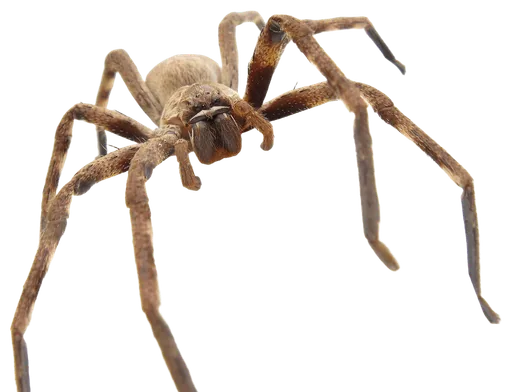
- Length
- 3.8 cm1.5 in
About 1.6 coins long
Bigger than 3% of animalsThe giant huntsman spider is a Lao cave-associated sparassid and the world-record spider for leg span. Its battle value comes from extreme reach, crab-like multidirectional movement, active hunting and venom-assisted chelicerae, not from absolute strength or armor.
Detailed ratings
Research-backed ratings on one 0–100 scale for all 344 animals (updated 2026-09-27). How ratings work


Card No. 316 of 344. Every animal on Animal Battle Stats has one: its power, tier and archetype on the front; its six battle stats, abilities and signature move on the back.
Special abilities
The crab-like, laterally oriented leg geometry gives rapid multidirectional repositioning and a very wide capture envelope on walls and irregular surfaces.
Prey is physically controlled by the chelicerae and venom-assisted bite, making small-arthropod captures much more decisive than raw body mass suggests.
Unique traits
H. maxima holds the documented arachnid leg-span record at up to about 30 cm, an extreme reach-to-body-size configuration.
The accepted species is known from Laos and documented in limestone-cave systems, pairing giant sparassid proportions with a crevice/cave-associated ecology.
How it fights
Weapons
- The giant huntsman is a cursorial capture predator. Its combat sequence is best modeled as rapid approach/reorientation, leg-assisted control, cheliceral grip and venom delivery. Heteropoda literature supports strong chelicerae and venom-assisted prey capture, but there is no basis for treating H. maxima venom as a roster-level vertebrate killer.
Struggles vs
- Open terrain removes much of its crevice advantage.
- Water immersion, severe desiccation and cold can impair a terrestrial ectothermic arthropod.
- Its absolute mass and exoskeletal protection are tiny relative to mammalian, avian and large-reptile opponents.
- Weight
- No reliable measurement
- Height
- No reliable measurement
- Length
- 3.8 cm1.5 in
- Top speed
- No reliable measurement
- Bite force
- No reliable measurement
- Lifespan
- No reliable measurement
- Home biome
- Forest
- Lifestyle
- Social
Rated specimen: Healthy mature female, using a representative adult body length of 3.8 cm rather than the 4.85 cm upper measured female.
Fun facts
- It was formally described only in 2001.
- Guinness recognizes it as the arachnid with the largest documented leg span, up to 30 cm.
- Bayer & Jäger later measured 20 females and 7 males in their redescription, providing unusually useful sex-specific morphology.
- Females can reach 48.5 mm body length, while the measured male range was 24.0-30.0 mm.
- The World Spider Catalog still lists the accepted species distribution simply as Laos.
- Its fame comes from span, not mass: the Goliath birdeater remains the much heavier kind of giant spider.
Closest rivals by power. Tap one for the full breakdown, or pick any opponent.
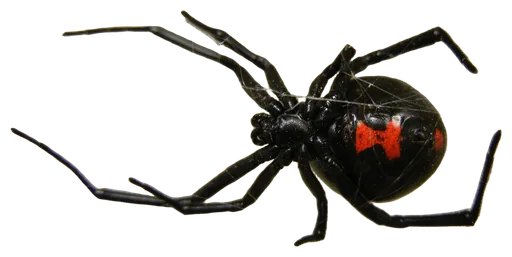
vs Africanized Honey BeeWins · 87% · Decisive 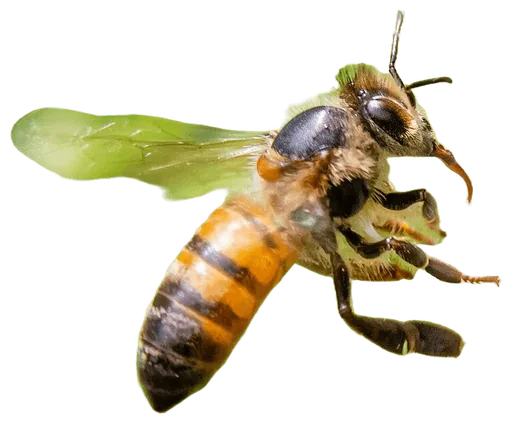 W vs Black WidowWins · 78% · Clear edge
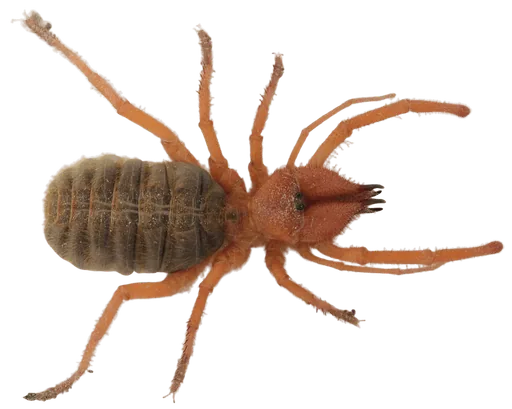
 W vs Camel SpiderWins · 58% · Slight edge
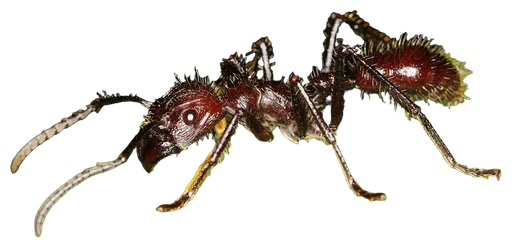
 W vs Bullet AntWins · 72% · Clear edge
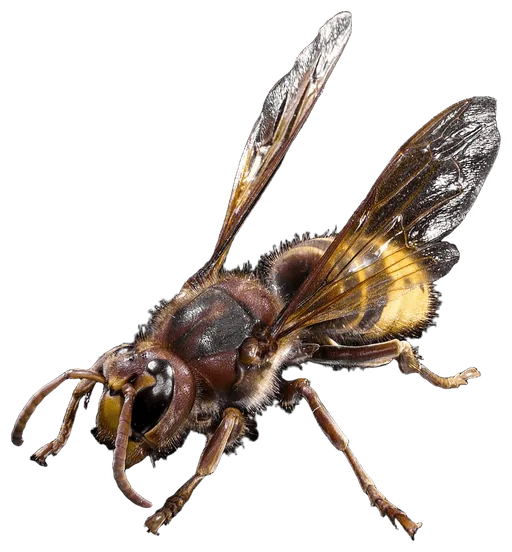
 W vs HornetWins · 76% · Clear edge
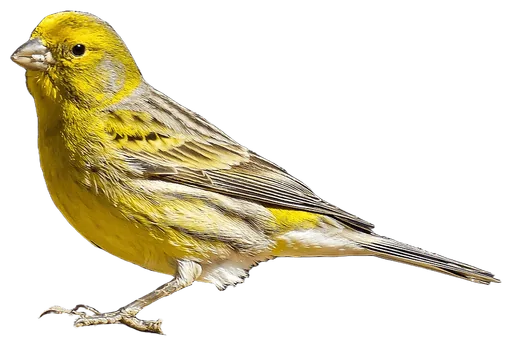
 W vs CanaryWins · 62% · Slight edge
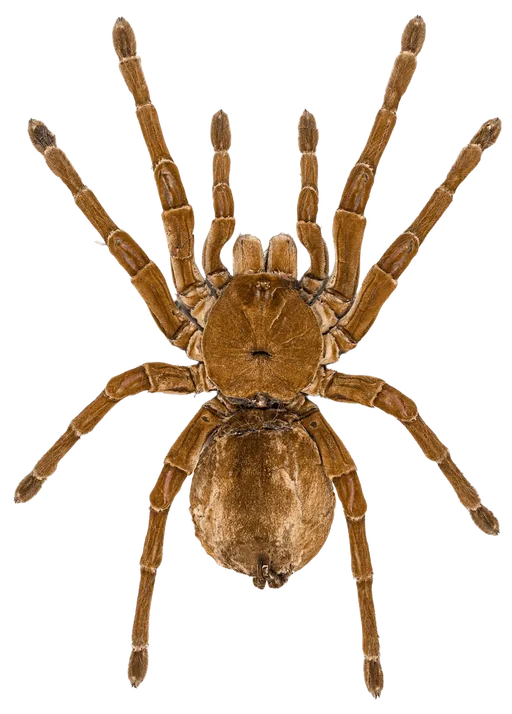
 W vs Goliath BirdeaterLoses · 52% · Toss-up
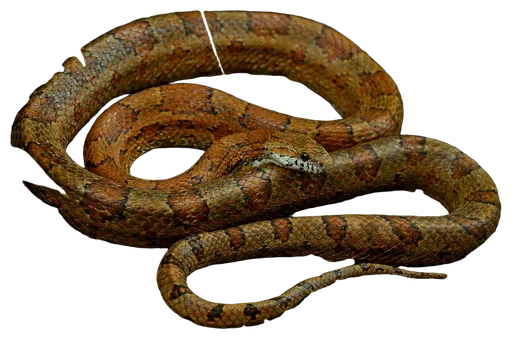
 L vs Corn SnakeLoses · 56% · Toss-up
 L
Huntsman Spider battle analysis
Heteropoda maxima is a useful test of ABS's absolute-scale discipline. At spider scale it is extraordinary: a body only a few centimeters long can command a leg span approaching 30 cm, giving the animal a huge sensory and capture perimeter. Its laterigrade legs spread sideways rather than behaving like miniature mammal limbs, fitting the active huntsman lifestyle on complex surfaces. It does not need a prey web to make contact. It closes distance, controls prey with the legs and chelicerae, and uses venom as part of the capture sequence.
That spectacular geometry does not turn it into a heavyweight. Against vertebrate-sized opponents, the same spider is fragile and extremely low-mass. Its best ABS categories should therefore be Agility, Senses and Special, while Raw Power, Protection, Attack and Defense stay near the roster floor. This preserves what is biologically exceptional without converting proportional spider feats into fictional absolute strength.
Habitat & range
Accepted records place H. maxima in Laos, particularly Khammouan limestone-cave localities. The narrow documented range warrants caution: absence of records elsewhere is not proof of absolute absence, but the site should not portray it as a pan-Asian species.
Diet & hunting
Direct species-specific diet quantification is lacking. Heteropoda and huntsman spiders are active predators of insects and other invertebrates and do not depend on a prey-capture web. The ecological role is therefore best described as a cursorial arthropod predator, with exact prey composition left unresolved.
Social life
No robust *H. maxima*-specific social or reproductive field dataset was recovered. Huntsman family references document egg-sac guarding and, in some taxa, prolonged maternal attendance. Those are useful hypotheses for future H. maxima work, not facts to copy into the canonical profile.
Conservation
No IUCN Red List assessment for H. maxima was recovered in this run. Its apparently restricted cave/karst distribution makes habitat specificity relevant, but assigning a threatened category without an assessment would be inappropriate.
Quick answers
How strong is a Huntsman Spider?
On the Animal Battle Stats scale, the Huntsman Spider has an attack rating of 10 and a power index of 31.7 out of 100, which ranks it #316 of 344 animals and puts it in F tier (Snack). Its strongest stat is agility (86).
How much does a Huntsman Spider weigh?
A typical adult Huntsman Spider weighs about 170 g (6 oz). Rated specimen: healthy mature female, using a representative adult body length of 3.8 cm rather than the 4.85 cm upper measured female.
How fast is a Huntsman Spider?
There is no reliable measured top speed for the Huntsman Spider, so we do not publish one. Its agility rating, which covers acceleration, reflexes and evasion, is 86 out of 100.
What does a Huntsman Spider eat?
Direct species-specific diet quantification is lacking. Heteropoda and huntsman spiders are active predators of insects and other invertebrates and do not depend on a prey-capture web. The ecological role is therefore best described as a cursorial arthropod predator, with exact prey composition left unresolved.
What animals can beat a Huntsman Spider?
Among its closest rivals, the Goliath Birdeater (52%), the Corn Snake (56%) would be favored against the Huntsman Spider. It would be favored against the Africanized Honey Bee, the Black Widow, the Camel Spider, the Bullet Ant, the Hornet, the Canary.
Researched 2026-09-27. Ratings are editorial judgments built from these sources; measurements describe a healthy adult female.
- zenodo.org
- wsc.nmbe.ch
- science.mnhn.fr
- guinnessworldrecords.com
- doi.org
- doi.org
- pubmed.ncbi.nlm.nih.gov
- australian.museum
- journals.uchicago.edu
- commons.wikimedia.org
Photo: “Sparassidae Palystes castaneus mature female 9923s.jpg” by JonRichfield, CC BY-SA 3.0, background removed and cropped. Original
Suggest a correction