

Humpback Whale
Megaptera novaeangliae
 #9 of 273
  Ocean Tank Least Concern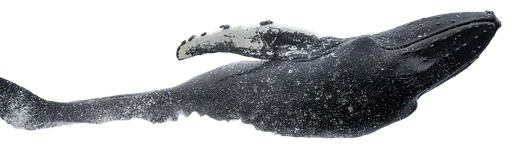
 Fight
FightPhoto: Giles Laurent · CC BY-SA 4.0
The humpback whale is a 30-tonne, big-winged baleen giant that fights with fluke and flipper strikes rather than teeth. It is famous for charging into killer whale attacks, building bubble nets, singing learned songs and migrating across whole oceans, but without a bite it relies on mass, endurance and nerve.
 Attack72
  Defense85
  Agility56
  Stamina89
  Intelligence78
  Special78
 Detailed ratings
Research-backed ratings on one 0–100 scale for all 273 animals (updated 2026-09-28). How ratings work
Special abilities
Ability 1Big-Wing Flipper StrikePectoral flippers far longer than in other whales, with tubercles that keep lift at steep angles, let the humpback turn tightly and swing a heavy limb at an attacker. Combined with fluke slaps, this is its main weapon against predators.
 Ability 2Orca-Mobbing Charge
Humpbacks deliberately approach and harass mammal-eating killer whales that are attacking prey, as shown across 115 recorded interactions. In a battle it will commit to a fight with an apex predator rather than flee.
Unique traits
 TraitBubble-Net Architect
Humpbacks blow rings and spirals of bubbles to trap fish, sometimes working in cooperative groups, and the technique spreads socially through populations.
TraitOcean-Basin SonglineMales sing long, structured songs that are learned and passed between populations across whole ocean basins, and individual whales can travel more than 9,800 km between breeding areas.
How it fights
Weapons
- The humpback has no teeth, claws or horns. Its offensive tools are the flukes and the very long pectoral flippers, swung with the force of a 30-tonne body, plus body mass itself. NOAA describes humpbacks as highly active, often slapping the surface with their flippers or tails and leaping clear of the water. These movements show the power a humpback can put behind a strike.
- Its most striking documented "combat" behavior is interference with killer whales. Pitman et al. (2017) reviewed 115 interactions between humpbacks and killer whales. Humpbacks initiated most encounters (57%), almost all of the killer whales involved were mammal-eating forms (95%), and at least 87% of the killer whales approached were attacking or feeding at the time. In 55% or more of 56 detailed interactions, the humpbacks actively harassed the attacking killer whales, which the authors interpret as mobbing behavior. This shows a willingness to charge into a fight with the ocean's top predator.
 Struggles vs
- No bite or cutting weapon; damage comes only from blunt strikes.
- Must surface to breathe and does not dive to the depths toothed whales reach.
- Slower and less agile than orcas and sharks.
- Calves and lone animals are vulnerable to coordinated killer whale packs.
- Stranded or entangled whales are helpless.
- Weight
- 30 t33.1 US tons
- Height
- No reliable measurement
- Length
- 14 m45.9 ft
- Top speed
- No reliable measurement
- Bite force
- No reliable measurement
- Lifespan
- 80 years
- Home biome
- Ocean
- Lifestyle
- Social
Rated specimen: Healthy mature adult male, 30,000 kg and 14.0 m long, placed below NOAA's stated species maximum of about 60 ft and 40 tons.
Fun facts
- Megaptera means "big-winged", after the whale's long flippers.
- The bumps on a humpback's flipper edge keep it generating lift at steep angles, an idea engineers have borrowed for blades.
- One female was photographed off Brazil and later off Madagascar, at least 9,800 km away.
- Songs spread from population to population; new song types have moved eastward across the South Pacific from Australia.
- Humpbacks often charge into killer whale attacks on other species, including seals and other whales.
- Bubble nets are built in the top 20 m of water, where bubbles hold together best.
Closest rivals by power. Tap one for the full breakdown, or pick any opponent.
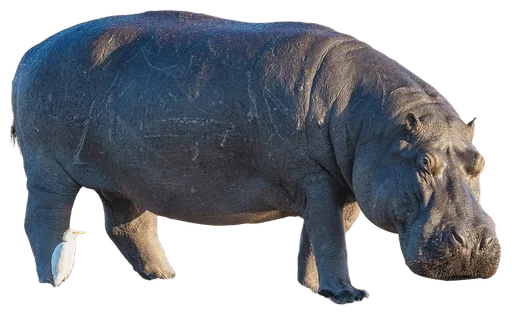
vs Polar BearWins · 52% · Toss-up 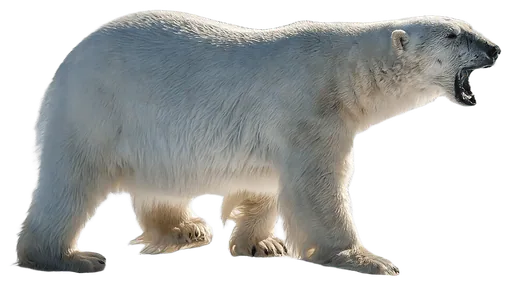 W vs HippopotamusWins · 53% · Toss-up
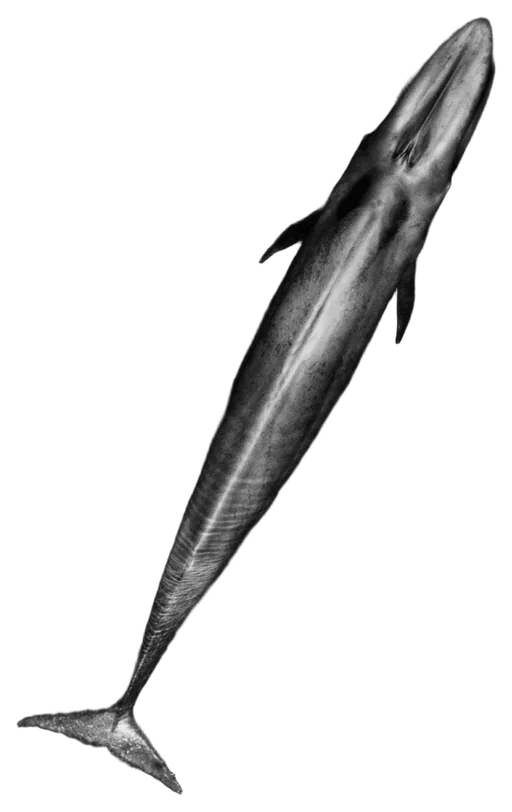
  W vs Blue WhaleLoses · 50% · Toss-up
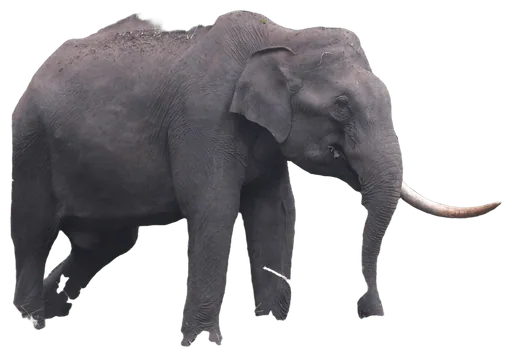
  L vs Asian ElephantLoses · 54% · Toss-up
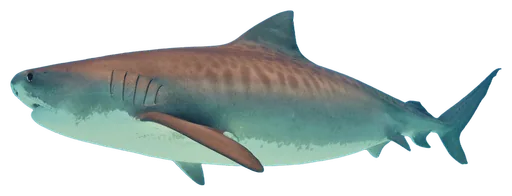
  L vs Tiger SharkLoses · 53% · Toss-up
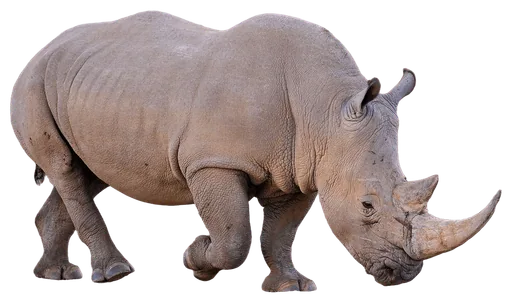
  L vs RhinocerosWins · 56% · Toss-up
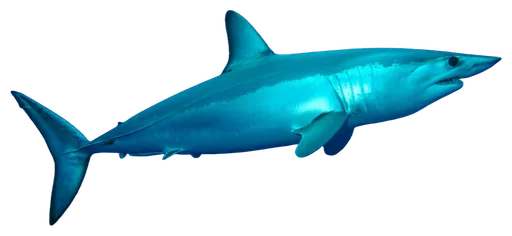
  W vs Mako SharkWins · 55% · Toss-up
  W vs Saltwater CrocodileWins · 55% · Toss-up
  W
W  Pick any opponent
 Humpback Whale battle analysis
The humpback is a giant with no teeth that still picks fights with killer whales. A large adult weighs around 30 tonnes and carries the longest flippers of any whale, each edged with rounded bumps that keep water flowing smoothly over the fin even when it is angled steeply. Those flippers let the humpback turn tightly enough to swim in spirals around fish schools, and they double as heavy clubs.
Researchers reviewing 115 encounters found that humpbacks usually started interactions with killer whales, almost always when mammal-eating orcas were already attacking something, and then harassed the attackers. Whether that is defense of their own calves generalised to other targets or something more, it means a humpback in a battle will not simply flee. Its weapons are blunt: a fluke or flipper strike from a 30-tonne body can do real harm, but it cannot bite or cut, so it wins by deterring, battering and outlasting rather than killing.
Its endurance and behavioral range are exceptional. Humpbacks cross whole ocean basins, one documented journey exceeding 9,800 km, and feed with techniques such as bubble nets that spread socially through populations. Males sing long, structured songs that are learned and carried from one population to another. The result is a strong defensive heavyweight with high stamina and real intelligence, held back in attack by the absence of any true weapon.
Habitat & range
Humpbacks are found in all the world's oceans. They feed in cold, productive high-latitude waters in summer and migrate to warm tropical and subtropical waters to breed and calve. They often come close to coasts, which makes them one of the most visible large whales.
Diet & hunting
Humpbacks are baleen filter feeders. They eat krill and small schooling fish such as herring, capelin and sand lance, lunging through prey patches with an expanding throat. Bubble-net feeding lets them corral schools; Wiley et al. (2011) identified upward-spiral and double-loop methods and found bubble nets are made within roughly the top 20 m of water. Much of the year's feeding happens in summer, and whales rely on stored energy during migration and breeding.
Social life
Humpbacks are loosely social. They form short-term groups for feeding, travel and courtship. Some feeding groups repeatedly cooperate, and mothers stay closely with calves. Males gather in competitive groups around females on the breeding grounds.
Conservation
Globally the humpback is listed as Least Concern on the IUCN Red List after strong recoveries from commercial whaling, while NOAA manages it as distinct population segments, some of which remain protected under the US Endangered Species Act. These statuses were taken from general agency summaries and not re-verified from a retrieved assessment page in this run. Current threats include entanglement in fishing gear, ship strikes and ocean noise.
Quick answers
How strong is a Humpback Whale?
On the Animal Battle Stats scale, the Humpback Whale has an attack rating of 72 and a power index of 76.1 out of 100, which ranks it #9 of 273 animals and puts it in S tier (Apex). Its strongest stat is stamina (89).
How much does a Humpback Whale weigh?
A typical adult Humpback Whale weighs about 30 t (33.1 US tons). Rated specimen: healthy mature adult male, 30,000 kg and 14.0 m long, placed below NOAA's stated species maximum of about 60 ft and 40 tons.
How fast is a Humpback Whale?
There is no reliable measured top speed for the Humpback Whale, so we do not publish one. Its agility rating, which covers acceleration, reflexes and evasion, is 56 out of 100.
What does a Humpback Whale eat?
Humpbacks are baleen filter feeders. They eat krill and small schooling fish such as herring, capelin and sand lance, lunging through prey patches with an expanding throat. Bubble-net feeding lets them corral schools; Wiley et al. (2011) identified upward-spiral and double-loop methods and found bubble nets are made within roughly the top 20 m of water. Much of the year's feeding happens in summer, and whales rely on stored energy during migration and breeding.
Is the Humpback Whale endangered?
No. The Humpback Whale is listed as Least Concern. Globally the humpback is listed as Least Concern on the IUCN Red List after strong recoveries from commercial whaling, while NOAA manages it as distinct population segments, some of which remain protected under the US Endangered Species Act. These statuses were taken from general agency summaries and not re-verified from a retrieved assessment page in this run. Current threats include entanglement
What animals can beat a Humpback Whale?
Among its closest rivals, the Blue Whale (50%), the Asian Elephant (54%), the Tiger Shark (53%) would be favored against the Humpback Whale. It would be favored against the Polar Bear, the Hippopotamus, the Rhinoceros, the Mako Shark, the Saltwater Crocodile.
Researched 2026-09-28. Ratings are editorial judgments built from these sources; measurements describe a healthy adult male.
- NOAA Fisheries, Humpback Whale species pagelength, mass, lifespan, flippers, behavior
- Pitman et al. 2017, Marine Mammal Scienceorca mobbing, ferocity, tactics
- NOAA Institutional Repository copy of Pitman et al. 2017same study, open access
- Fish & Battle 1995, Journal of Morphologyflipper design and maneuverability
- Fish et al. 2011, tubercles and bio-inspired technologytubercle function, human interaction
- SICB abstract, flipper fluid dynamics and maneuverabilitymaneuverability
- Wiley et al. 2011, Behaviourbubble-net feeding
- Proceedings B, diffusion of cooperative and solo bubble-net feedingsocial learning of feeding
- Stevick et al. 2011, Biology Lettersendurance
- Interbreeding area movement, east Pacific to southwest Indian Oceanendurance
- Smithsonian Magazine on the record migrationendurance context
- Garland et al. 2011, Current Biologysong culture, intelligence
- Science 2025, whale song statistical structuresong complexity
Photo: “026a Humpback whale jump and splash Photo by Giles Laurent.jpg” by Giles Laurent, CC BY-SA 4.0, background removed and cropped. Original
Suggest a correction