
Hippopotamus
Hippopotamus amphibiusS tier · Apex6th of 163 mammals
Size & speed

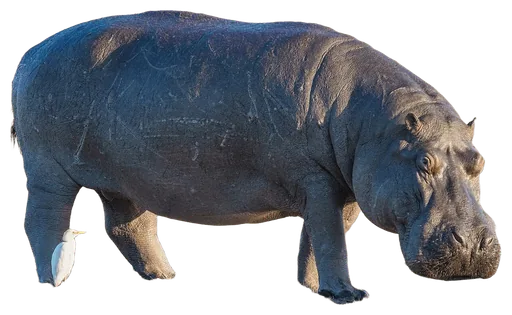
- Weight
- 1.8 t2 US tons
- Length
- 4 m13.1 ft
As heavy as 1.2 cars
Heavier than 96% of animals2.3× a person's height
Bigger than 90% of animalsThe common hippopotamus is a semiaquatic megaherbivore whose mature bulls combine roughly two tonnes of body mass with one of the most formidable close-range weapon systems among living land mammals. Its giant gape and continuously growing tusks are used heavily in male-male competition, while thick tissues and sheer bulk make it exceptionally hard to stop. Hippos are more mobile than their shape suggests: they trot on land and use buoyancy-assisted bottom contact underwater. Their weakness is not lack of power, but limited fine agility, heat constraints and a combat style that must bring an opponent into very close range.
Detailed ratings
Research-backed ratings on one 0–100 scale for all 344 animals (updated 2026-09-27). How ratings work


Card No. 10 of 344. Every animal on Animal Battle Stats has one: its power, tier and archetype on the front; its six battle stats, abilities and signature move on the back.
Special abilities
The mouth opens to roughly 150 degrees, exposing continuously growing lower canines and incisors in an enormous attack arc. Mature bulls have strongly selected jaw/canine weapon mass, allowing puncture, rake and tearing attacks during territorial fights.
Instead of relying on ordinary swimming, the hippo uses bottom contact and buoyancy to walk, trot and enter unsupported phases underwater, preserving useful mobility in shallow aquatic combat while reducing the effective burden of its body mass.
Unique traits
Males average only modestly heavier than females, yet a 2,994-animal dataset found male jaw and canine mass dramatically more enlarged. The fighting phenotype is concentrated in weapon architecture rather than simple body-size inflation.
Specialized skin secretions containing hipposudoric and norhipposudoric acids absorb UV and inhibit bacterial growth. This is an environmental physiology trait, not literal armor.
How it fights
Weapons
- The primary weapon system is the enormous jaw and continuously growing incisors/canines. Mature bulls have disproportionately enlarged jaws and canines. The mouth can open to around 150 degrees, giving the tusks a very large working arc. The lower canines are the principal long stabbing/slashing structures, while incisors and opposing teeth add puncture, tearing and display capability.
Struggles vs
- Eyes and other facial soft tissues remain vulnerable.
- The skin can be deeply wounded by rival tusks despite overall toughness.
- Peak agility is low compared with much smaller opponents.
- High-output land exertion is thermally expensive.
- Huge body size makes the hippo easy to detect and impossible to conceal in open terrain.
- Weight
- 1.8 t2 US tons
- Height
- 1.55 m5.1 ft
- Length
- 4 m13.1 ft
- Top speed
- No reliable measurement
- Bite force
- No reliable measurement
- Lifespan
- 36 years
- Home biome
- Wetlands
- Lifestyle
- Social
Rated specimen: Healthy mature adult male, because males are the territorial fighting sex and have disproportionately enlarged jaws and canines.
Fun facts
- Hippos are not aquatic “horses”; taxonomists group them with cetaceans in Whippomorpha/Cetancodonta.
- A 2024 gait study showed fast-moving hippos can have all four feet off the ground during parts of a trot.
- Underwater they use bottom-contact locomotion with unsupported phases rather than ordinary continuous swimming.
- Male hippos are only modestly heavier on average than females, but their canine mass is dramatically greater.
- Their reddish skin secretion is not blood or sweat. It contains pigments with UV-absorbing and antimicrobial properties.
- Their eyes, ears and nostrils sit high on the skull, allowing most of the body to remain submerged while monitoring the surroundings.
Closest rivals by power. Tap one for the full breakdown, or pick any opponent.
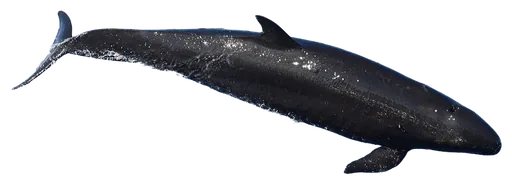
vs Polar BearWins · 57% · Toss-up 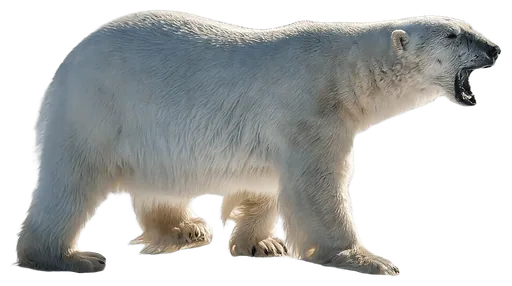 W vs False Killer WhaleWins · 53% · Toss-up
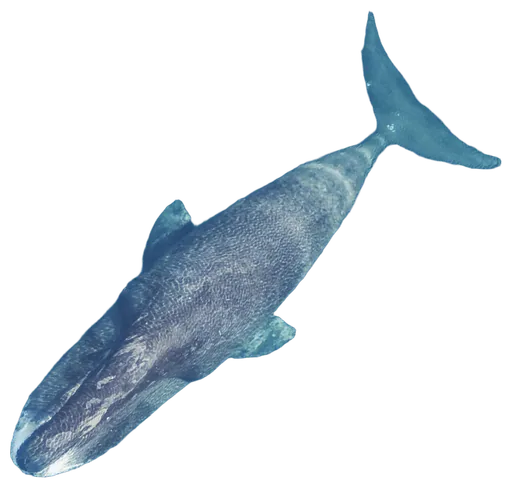
 W vs Bowhead WhaleLoses · 68% · Slight edge
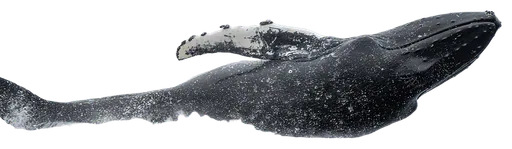
 L vs Humpback WhaleLoses · 68% · Slight edge
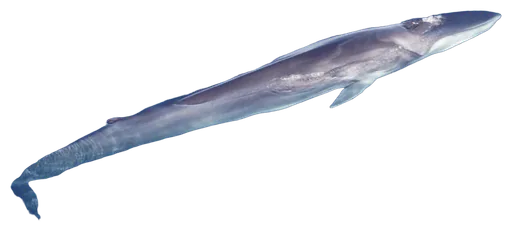
 L vs Fin WhaleLoses · 65% · Slight edge
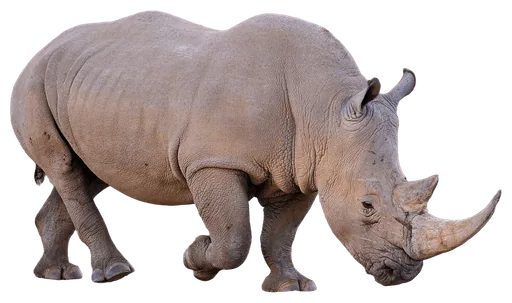
 L vs RhinocerosWins · 52% · Toss-up
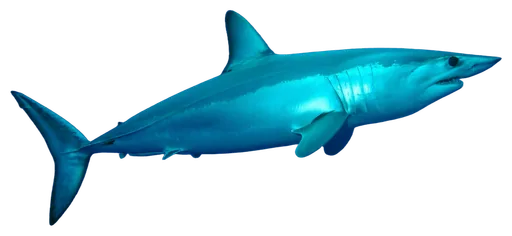
 W vs Mako SharkWins · 63% · Slight edge
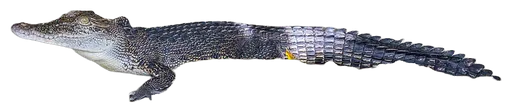
 W vs Saltwater CrocodileWins · 59% · Slight edge
 W
Hippopotamus battle analysis
The hippo is a useful calibration test because reputation can easily distort the numbers in both directions. Calling it a clumsy herbivore misses modern locomotor evidence and the extraordinary enlargement of its jaws in males. Calling it an invulnerable 4.5-tonne, 2,000-PSI monster makes the opposite error by using exceptional individuals and poorly sourced pressure figures.
A representative mature bull around 1.8 tonnes is already enormous. The decisive feature is that bulls are not vastly heavier than cows. Instead, their weapons are disproportionately large. In a dataset of almost three thousand aged animals, males averaged only about five percent heavier than females but carried much heavier jaws and canines. This is exactly the kind of evidence ABS should privilege: a direct biological reason for very high Weaponry and Attack that does not require a fabricated PSI number.
The hippo's fight geometry is brutally close. A bull presents an enormous gape, then drives long lower canines and incisors through the attack arc while its head and body supply leverage. Rival bulls leave scars because those weapons can penetrate hippo tissue itself. Against smaller unarmored animals, the combination of reach, mass and puncture/tearing potential is overwhelming. Against elephants or similarly massive horned megaherbivores, however, the hippo no longer enjoys a simple scale advantage, so it remains below the roster ceiling.
Defense comes from mass and tissue depth more than rigid armor. The animal can absorb trauma that would catastrophically disable smaller mammals, but its own species demonstrates that the skin is penetrable. This distinction prevents “thick skin” from becoming an unjustified near-100 armor score.
Mobility is equally nuanced. High-speed video has shown a trotting gait with aerial phases, so Agility cannot be based on an old cartoon image of a waddling animal. Yet a 1.8-tonne body cannot turn, accelerate or evade like a cat, canid or small primate. Underwater, buoyancy produces a different mechanical regime: the hippo contacts the bottom and can enter unsupported phases, effectively bounding in reduced gravity. That is a real Special capability, not a reason to inflate ordinary land speed.
The resulting profile is a close-range megafaunal tank with elite attack and durability, moderate cognition and endurance, limited fine agility, and strong environment-dependent semiaquatic specialization.
Habitat & range
Common hippos depend on rivers, lakes, pools and wetlands with nearby grazing habitat. They spend much of daylight in water or mud to manage heat and emerge mainly at night to graze.
The species persists patchily across sub-Saharan Africa. Its former range was broader, and populations have disappeared from parts of northern and western Africa. Distribution is strongly tied to permanent or seasonally reliable water.
Diet & hunting
Primarily short grasses, with some fallen fruit and other plant material. Despite dramatic tusks and jaw musculature, the species is fundamentally herbivorous rather than a specialized predator.
Social life
Hippos aggregate in water, but these groups are not wolf-like cooperative combat units. Dominant males defend aquatic territories containing females and tolerate subordinate animals under context-dependent conditions. Females form the strongest persistent bond with calves. Individual combat scores therefore do not receive a “group multiplier.”
Conservation
Current major conservation references continue to list the common hippopotamus as Vulnerable, with a commonly cited global estimate around 115,000-130,000. Major threats include habitat loss/degradation, water diversion, conflict with people, unregulated hunting and trade in hippo ivory. CITES Appendix II regulates international trade.
Quick answers
How strong is a Hippopotamus?
On the Animal Battle Stats scale, the Hippopotamus has an attack rating of 90 and a power index of 74.5 out of 100, which ranks it #10 of 344 animals and puts it in S tier (Apex). Its strongest stat is attack (90).
How much does a Hippopotamus weigh?
A typical adult Hippopotamus weighs about 1.8 t (2 US tons). Rated specimen: healthy mature adult male, because males are the territorial fighting sex and have disproportionately enlarged jaws and canines.
How fast is a Hippopotamus?
There is no reliable measured top speed for the Hippopotamus, so we do not publish one. Its agility rating, which covers acceleration, reflexes and evasion, is 48 out of 100.
What does a Hippopotamus eat?
Primarily short grasses, with some fallen fruit and other plant material. Despite dramatic tusks and jaw musculature, the species is fundamentally herbivorous rather than a specialized predator.
Is the Hippopotamus endangered?
The Hippopotamus's conservation status is Vulnerable. Current major conservation references continue to list the common hippopotamus as Vulnerable, with a commonly cited global estimate around 115,000-130,000. Major threats include habitat loss/degradation, water diversion, conflict with people, unregulated hunting and trade in hippo ivory. CITES Appendix II regulates international trade.
What animals can beat a Hippopotamus?
Among its closest rivals, the Bowhead Whale (68%), the Humpback Whale (68%), the Fin Whale (65%) would be favored against the Hippopotamus. It would be favored against the Polar Bear, the False Killer Whale, the Rhinoceros, the Mako Shark, the Saltwater Crocodile.
Researched 2026-09-27. Ratings are editorial judgments built from these sources; measurements describe a healthy adult male.
- Animal Diversity Web, H. amphibiusmass, dimensions, gape, teeth, skin secretion, locomotion
- Shannon et al. 2021, Biology Letters / PubMedsexual dimorphism, weapon size
- Dryad dataset for Shannon et al.provenance of dimorphism dataset
- Hutchinson & Pringle 2024, PeerJterrestrial gait
- Coughlin & Fish 2009, Journal of Mammalogyunderwater locomotion
- San Diego Zoo Wildlife Alliancesize, lifespan, ecology
- Denver Zoo Conservation Alliancemale mass, skin, fighting
- Toronto Zoocanine dimensions
- University of Pretoria 2026 research newsbite force context
- WWFconservation
- Wikimedia Commons, Rome Zoo hippoimage provenance
- Wikimedia Commons, Delhi Zoo hippoalternate image candidate
Photo: “Hipopótamo (Hippopotamus amphibius), parque nacional de Chobe, Botsuana, 2018-07-28, DD 82.jpg” by Diego Delso, CC BY-SA 4.0, background removed and cropped. Original
Suggest a correction