
Hercules Beetle
Dynastes herculesF tier · Snack26th of 30 bugs & spiders
Size & speed
- Weight
- 34 g1.2 oz
- Length
- 7.8 cm3.1 in
As heavy as 34 paperclips
Heavier than 6% of animalsAbout 0.9 credit cards long
Bigger than 5% of animalsA giant by beetle standards but tiny on the full ABS roster, the male Hercules beetle fights with an extraordinary two-horn vise. It wedges rivals between opposing horns, pries them from bark and throws them away. A hardened exoskeleton, flight, chemical sensing, defensive stridulation and humidity-sensitive color-changing elytra make it highly specialized, but its 34 g representative mass keeps absolute attack and durability low against larger animals.
Detailed ratings
Research-backed ratings on one 0–100 scale for all 344 animals (updated 2026-09-27). How ratings work


Card No. 339 of 344. Every animal on Animal Battle Stats has one: its power, tier and archetype on the front; its six battle stats, abilities and signature move on the back.
Special abilities
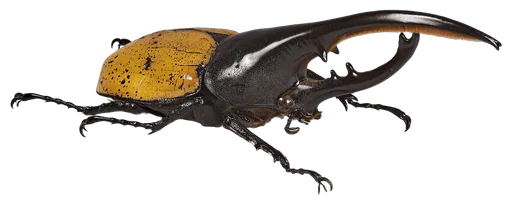
The pronotal and cephalic horns form an opposing clamp that grips a rival; the male uses leg anchorage and body leverage to pry the rival loose, lift it and throw/slam it from the fighting surface.
Rubbing abdominal/elytral structures produces the characteristic defensive huffing/stridulatory sound documented by Jarman & Hinton, potentially startling or warning small threats.
Unique traits
The male elytra reversibly shift from yellow/olive toward black as moisture changes the optical behavior of a porous cuticular layer. This is real structural/physiological coloration, not camouflage trick.
Females are hornless while males can devote an extraordinary fraction of total length to the two-part fighting apparatus; geographic and individual variation makes horn-inclusive length unusually variable.
How it fights
Weapons
- The male's paired horns are the defining weapon system. The upper pronotal horn and lower cephalic horn operate as an opposing clamp. During contests, males get the rival between the horns, pry or lift him from the substrate and throw/slam him away. This is primarily a displacement weapon for mating contests, not a piercing spear system.
Struggles vs
- Extremely small absolute mass and force compared with vertebrates.
- Exposed joints, legs, antennae and ventral membranes.
- Horn system is optimized to dislodge beetle-sized rivals rather than penetrate thick tissue.
- No venom, toxin injection, crushing bite or ranged weapon.
- If flipped onto a poor substrate, recovery can cost time and expose the underside.
- Weight
- 34 g1.2 oz
- Height
- No reliable measurement
- Length
- 7.8 cm3.1 in
- Top speed
- No reliable measurement
- Bite force
- No reliable measurement
- Lifespan
- 1.9 years
- Home biome
- Jungle
- Lifestyle
- Social
Rated specimen: Healthy mature major adult male, because only males carry the opposing cephalic and pronotal horns and male-male contests are the species' principal direct combat context.
Fun facts
- A late Hercules beetle larva can weigh far more than the adult it becomes; metamorphosis produces a lighter adult specialized for dispersal and reproduction.
- A male's horn pair works mechanically more like a giant pincer/lever than a pair of stabbing spears.
- The male's elytra can darken within minutes as humidity changes the optical properties of a microscopic porous layer.
- The adult stage is only a small fraction of a life cycle that can approach two years.
- The 15.5 cm Muséum de Toulouse male is a spectacular real specimen, but the ADW male average is only about 7.8 cm, illustrating why record-looking beetles should not define the canonical profile.
Closest rivals by power. Tap one for the full breakdown, or pick any opponent.
vs MosquitoWins · 92% · Decisive 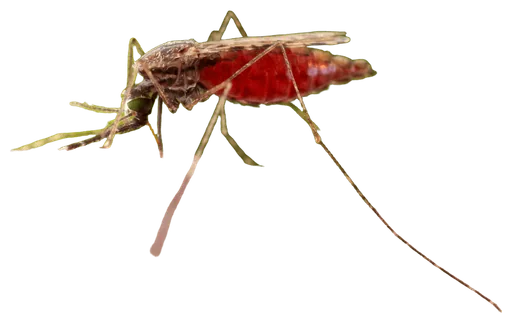 W vs Titan BeetleWins · 54% · Toss-up
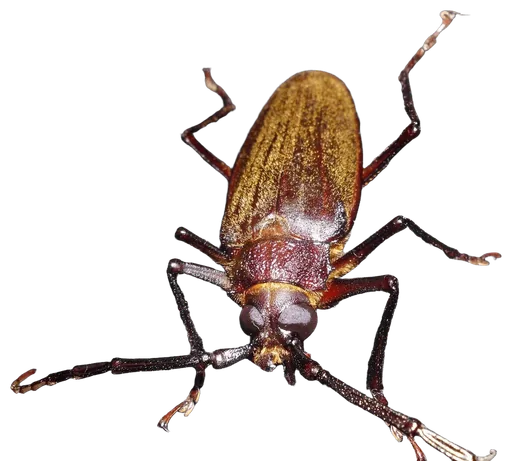 W vs Emperor ScorpionLoses · 54% · Toss-up
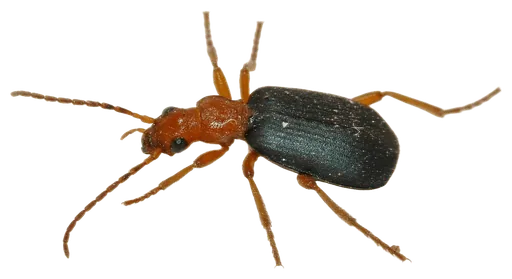
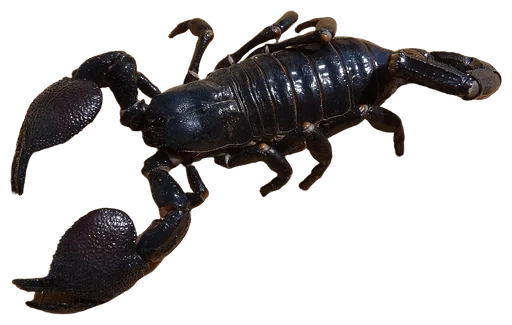 L vs Bombardier BeetleWins · 82% · Clear edge
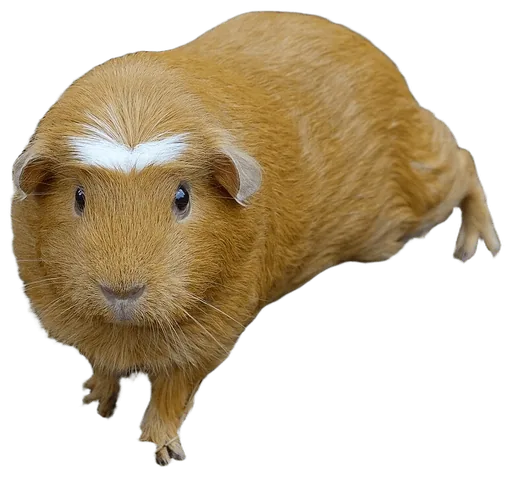
 W vs Guinea PigLoses · 70% · Clear edge
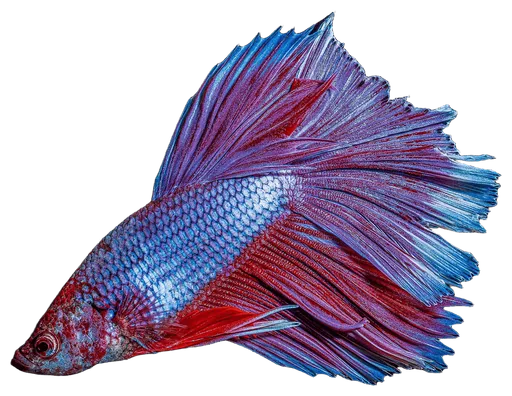
 L vs Betta FishWins · 63% · Slight edge
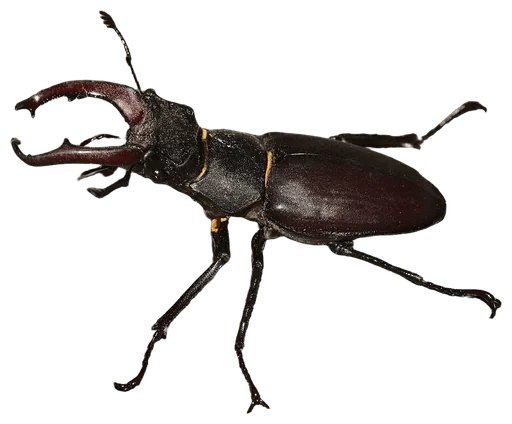
 W vs Stag BeetleWins · 69% · Slight edge
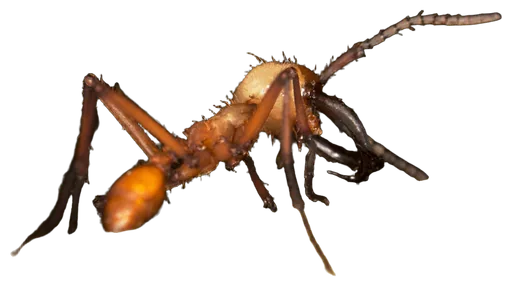
 W vs Army AntWins · 89% · Decisive
 W
Hercules Beetle battle analysis
The Hercules beetle is a useful test of whether ABS really follows an absolute scale. Its reputation for strength is deserved in a proportional sense: a major male is a compact mechanical wrestler whose six legs anchor to bark while an enormous horn pair closes around another beetle. The contest is about leverage. Once a rival is captured, the male lifts, rotates and ejects it from the resource or mating site. The system is so mechanically specialized that classic entomological work directly measured forces between the horns and examined the friction-enhancing structures that improve grip.
Yet this is still an insect weighing only a few tens of grams. A fair roster model must preserve both truths simultaneously. Against another beetle, the horn vise can dominate positioning. Against a mammal, bird or large reptile, the same apparatus has negligible absolute reach and force. The exoskeleton similarly changes from impressive armor at insect scale to a thin biological shell under vertebrate-scale loads. This is why the proposed Raw Power and Attack ratings stay low even while Special remains comparatively high.
The species is also more than its weapon. Its adult phase is a short climax to a long life spent mostly as a giant wood-eating larva. Adults fly at night, locate mates chemically, feed on fruit and sap, and can produce a defensive stridulatory huff. Male elytra contain a microscopic porous layer whose optical behavior changes with moisture, turning the normally yellow/olive shell dark under humid conditions. That phenomenon is scientifically well documented, but it is not treated as unrealistic camouflage or as a direct damage bonus.
Habitat & range
The species occupies tropical and montane rainforest from southern Mexico through Central America into northern/western South America as far as Bolivia, with populations in the Lesser Antilles. Adults are associated with moist forest floor/understory habitats; larvae require substantial decaying wood.
Diet & hunting
Larvae consume decaying wood and help recycle woody material. Adults feed on soft/rotting fruit and sap-like resources rather than hunting animals. This ecological split between huge saproxylophagous larva and short-lived reproductive adult is important when interpreting size and strength claims.
Social life
Adults are not cooperative social insects. They are principally solitary, with temporary interactions at feeding or mating resources. Male contests arise when multiple males compete for access to a female.
Conservation
No robust IUCN species assessment was recovered in this run. Do not label the species Least Concern merely because secondary sites do. Habitat dependence and collecting pressure may matter locally, but this report does not invent a global population trend.
Quick answers
How strong is a Hercules Beetle?
On the Animal Battle Stats scale, the Hercules Beetle has an attack rating of 7 and a power index of 23.9 out of 100, which ranks it #339 of 344 animals and puts it in F tier (Snack). Its strongest stat is special (60).
How much does a Hercules Beetle weigh?
A typical adult Hercules Beetle weighs about 34 g (1.2 oz). Rated specimen: healthy mature major adult male, because only males carry the opposing cephalic and pronotal horns and male-male contests are the species' principal direct combat context.
How fast is a Hercules Beetle?
There is no reliable measured top speed for the Hercules Beetle, so we do not publish one. Its agility rating, which covers acceleration, reflexes and evasion, is 44 out of 100.
What does a Hercules Beetle eat?
Larvae consume decaying wood and help recycle woody material. Adults feed on soft/rotting fruit and sap-like resources rather than hunting animals. This ecological split between huge saproxylophagous larva and short-lived reproductive adult is important when interpreting size and strength claims.
Is the Hercules Beetle endangered?
No. The Hercules Beetle is listed as Least Concern. No robust IUCN species assessment was recovered in this run. Do not label the species Least Concern merely because secondary sites do. Habitat dependence and collecting pressure may matter locally, but this report does not invent a global population trend.
What animals can beat a Hercules Beetle?
Among its closest rivals, the Emperor Scorpion (54%), the Guinea Pig (70%) would be favored against the Hercules Beetle. It would be favored against the Mosquito, the Titan Beetle, the Bombardier Beetle, the Betta Fish, the Stag Beetle, the Army Ant.
Researched 2026-09-27. Ratings are editorial judgments built from these sources; measurements describe a healthy adult male.
- Animal Diversity Web, Dynastes herculesmass, length, dimorphism, combat, habitat, communication, lifespan
- UF/IFAS EENY659taxonomy, range, adult morphology, life cycle, activity
- Jarman & Hinton 1974, Royal Entomological Societyhorn force, grip mechanics, stridulation
- Hinton & Jarman 1972, Naturehumidity color change
- Hinton & Jarman 1973, Journal of Insect Physiologyoptical mechanism
- University of Nebraska State Museum scarab guidebiology and life cycle
- Wikimedia Commons / Muséum de Toulouseimage candidate and upper-end male morphology
- Smithsonian collection recordindependent exact-taxon sex record
Photo: “Dynastes hercules ecuatorianus MHNT.jpg” by Didier Descouens, CC BY-SA 4.0, background removed and cropped. Original
Suggest a correction