
Hammerhead Shark
Sphyrna mokarranS tier · Apex6th of 51 sea creatures
Size & speed

- Weight
- 230 kg507 lb
- Length
- 4 m13.1 ft
As heavy as 3.3 people
Heavier than 81% of animals2.3× a person's height
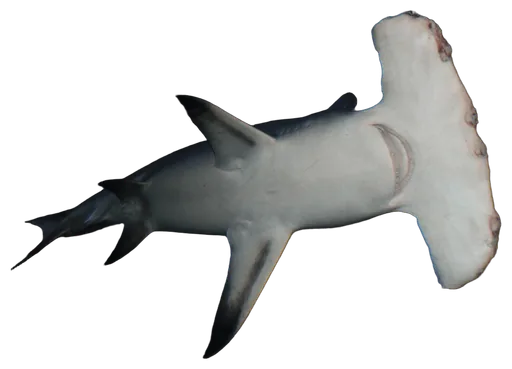
Bigger than 90% of animalsThe great hammerhead is a roughly four-meter, 230-kilogram sensory-and-control specialist. Its serrated bite is dangerous, but its defining advantage is the cephalofoil: a broad electrosensory platform that also improves maneuvering and helps pin and reposition rays. It trades some hydrodynamic efficiency for exceptional prey detection and close-range control.
Detailed ratings
Research-backed ratings on one 0–100 scale for all 344 animals (updated 2026-09-27). How ratings work


Card No. 15 of 344. Every animal on Animal Battle Stats has one: its power, tier and archetype on the front; its six battle stats, abilities and signature move on the back.
Special abilities
The laterally expanded head spreads ampullary receptors across a broad search surface, allowing close-range localization of prey-generated electric fields, including benthic prey that may be visually concealed.
The shark uses its cephalofoil and tight body turns to pin, control and reposition rays before or during biting, reducing the prey's ability to bring its defensive spine to bear.
Unique traits
The broad head generates strong reaction forces when actively angled, giving the shark unusually effective pitch and turning control at the cost of extra drag.
Unlike schooling scalloped hammerheads, great hammerheads are generally solitary and can alternate between seasonal long-distance migration and year-round local residency.
How it fights
Weapons
- The primary weapon is a wide, serrated-tooth bite delivered by a large, powerful shark. Its cephalofoil also has direct prey-handling utility. Field observations document great hammerheads pinning stingrays against the substrate and using tight turning/head movements to reposition prey. This makes the head an active control surface and restraint tool, not a blunt-force fantasy weapon.
- Weight
- 230 kg507 lb
- Height
- No reliable measurement
- Length
- 4 m13.1 ft
- Top speed
- No reliable measurement
- Bite force
- No reliable measurement
- Lifespan
- 39.1 years
- Home biome
- Ocean
- Lifestyle
- Social, nocturnal
Rated specimen: Healthy mature female, approximately 230.0 kg and 400.0 cm total length.
Fun facts
- The great hammerhead is the largest living hammerhead species.
- A 2020 CFD analysis found hammerhead heads can impose much greater drag than conventional shark heads, showing that the famous shape carries a real energetic tradeoff.
- Researchers have directly observed great hammerheads pinning stingrays with the cephalofoil.
- Some individuals repeatedly migrate away from and back to the Florida Keys, while others remain local year-round.
- A tracked Australian individual moved 776 km and returned to its original region within six weeks.
- The oldest female in a validated Australian age study was 39.1 years old.
Closest rivals by power. Tap one for the full breakdown, or pick any opponent.
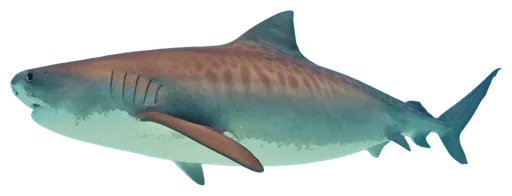
vs Mako SharkLoses · 51% · Toss-up 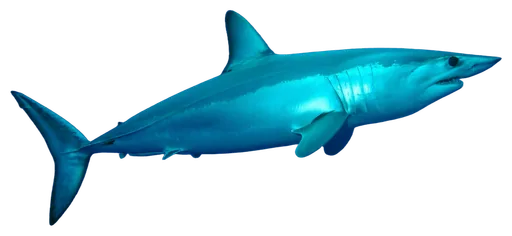 L vs Tiger SharkLoses · 54% · Toss-up
 L vs Bowhead WhaleLoses · 79% · Clear edge
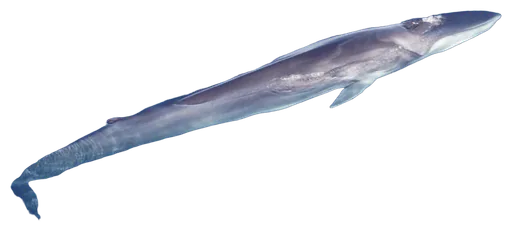
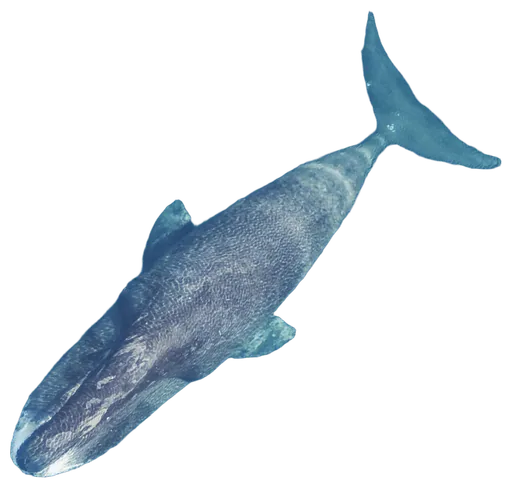 L vs Fin WhaleLoses · 77% · Clear edge
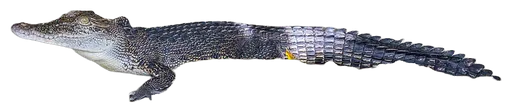
 L vs Saltwater CrocodileLoses · 55% · Toss-up
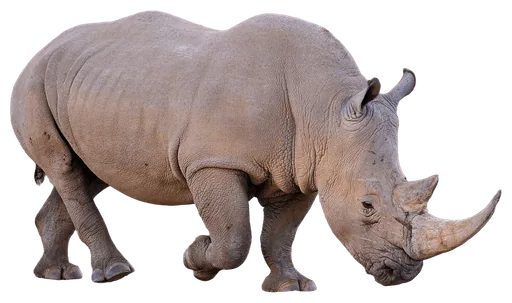
 L vs RhinocerosLoses · 62% · Slight edge
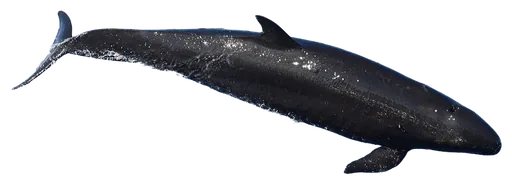
 L vs False Killer WhaleLoses · 62% · Slight edge
 L vs Bengal TigerWins · 53% · Toss-up
 W
Hammerhead Shark battle analysis
The great hammerhead's silhouette is not cosmetic. Its cephalofoil changes how the shark senses, steers and handles prey. Electric fields generated by animals can be detected at close range, and spreading receptors laterally gives the shark a broad search geometry over the seafloor. When a ray is found, the same head can become a physical control tool. Field observations document pinning, pivoting, tight grasp-turns and repeated head repositioning rather than a simple straight-line bite.
That specialization has a cost. Computational hydrodynamics shows that hammerhead heads create substantially more drag than conventional shark heads. The structure is best understood as a controllable forward surface, not a free lift-generating wing. Great hammerheads gain maneuvering leverage and sensory reach while paying for it energetically.
A representative adult is formidable but not a miniature great white. At roughly 230 kg it has less absolute mass and damage capacity than the staged 900 kg white shark. Its ABS advantage instead lies in Agility, Senses and Special. This preserves the roster's absolute scale while rewarding a biological mechanism that genuinely changes aquatic matchups.
Habitat & range
Great hammerheads occur in tropical and warm-temperate coastal and offshore waters worldwide. NOAA documents them in the western Atlantic from Massachusetts to Brazil, including the Caribbean and Gulf, with coastal and offshore habitat from the surface to beyond 76 m. Tracking shows much deeper excursions occur, while western North Atlantic tagged animals spend most recorded time in the upper 30 m and 23-28 C water.
Diet & hunting
Diet includes bony fishes, crustaceans, cephalopods, sharks and rays, with stingrays especially important to the species' ecological identity. The shark is a large upper-level predator but should not be reduced to a generic apex-predator label because its cephalofoil supports unusually specialized benthic-prey detection and handling.
Social life
Usually solitary. This is an important distinction from scalloped hammerheads, which can form large schools. Aggregation should not be assumed to provide pack-combat bonuses.
Conservation
The great hammerhead is globally assessed as Critically Endangered in recent literature, with severe historical fishing pressure, fin retention, bycatch and high post-release mortality. Conservation status does not affect combat scores but is essential profile context.
Quick answers
How strong is a Hammerhead Shark?
On the Animal Battle Stats scale, the Hammerhead Shark has an attack rating of 74 and a power index of 73 out of 100, which ranks it #15 of 344 animals and puts it in S tier (Apex). Its strongest stat is special (92).
How much does a Hammerhead Shark weigh?
A typical adult Hammerhead Shark weighs about 230 kg (507 lb). Rated specimen: healthy mature female, approximately 230.0 kg and 400.0 cm total length.
How fast is a Hammerhead Shark?
There is no reliable measured top speed for the Hammerhead Shark, so we do not publish one. Its agility rating, which covers acceleration, reflexes and evasion, is 84 out of 100.
What does a Hammerhead Shark eat?
Diet includes bony fishes, crustaceans, cephalopods, sharks and rays, with stingrays especially important to the species' ecological identity. The shark is a large upper-level predator but should not be reduced to a generic apex-predator label because its cephalofoil supports unusually specialized benthic-prey detection and handling.
Is the Hammerhead Shark endangered?
The Hammerhead Shark's conservation status is Critically Endangered. The great hammerhead is globally assessed as Critically Endangered in recent literature, with severe historical fishing pressure, fin retention, bycatch and high post-release mortality. Conservation status does not affect combat scores but is essential profile context.
What animals can beat a Hammerhead Shark?
Among its closest rivals, the Mako Shark (51%), the Tiger Shark (54%), the Bowhead Whale (79%), the Fin Whale (77%), the Saltwater Crocodile (55%), the Rhinoceros (62%), the False Killer Whale (62%) would be favored against the Hammerhead Shark. It would be favored against the Bengal Tiger.
Researched 2026-09-27. Ratings are editorial judgments built from these sources; measurements describe a healthy adult female.
- NOAA Fisheries, Shark IdentificationTaxon, maximum length, range, habitat, identification
- Florida Museum, Great HammerheadMass, maximum size, teeth, denticles, older lifespan summary
- Harry et al. 2011, Journal of Fish BiologyGrowth, maturity, age, sex
- CITES hammerhead reviewMature-adult size, reproduction, rarity
- Gaylord et al. 2020, Scientific ReportsCephalofoil hydrodynamics
- O'Connell 2018, Zoology and EcologyElectro-sensory foraging and prey handling
- Roemer et al. 2016Shallow-water prey handling
- Strong, Snelson & Gruber 1990, CopeiaStingray predation
- Casselberry et al. 2025, Journal of Fish BiologyMature movement/migration
- Frontiers 2023 trophic/spatial ecologyAustralian movement
- Guttridge et al. 2022, Journal of Fish BiologyDepth/temperature use
- Kajiura 2001, Environmental Biology of FishesHammerhead electroreceptor morphology
- Commons / Jim CapaldiImage provenance
Photo: “Sphyrna mokarran camden.jpg” by Jim Capaldi from Springfield, USA, CC BY 2.0, background removed and cropped. Original
Suggest a correction