

Gyrfalcon
Falco rusticolus
 #108 of 273
  Arctic Sky Hunter Least Concern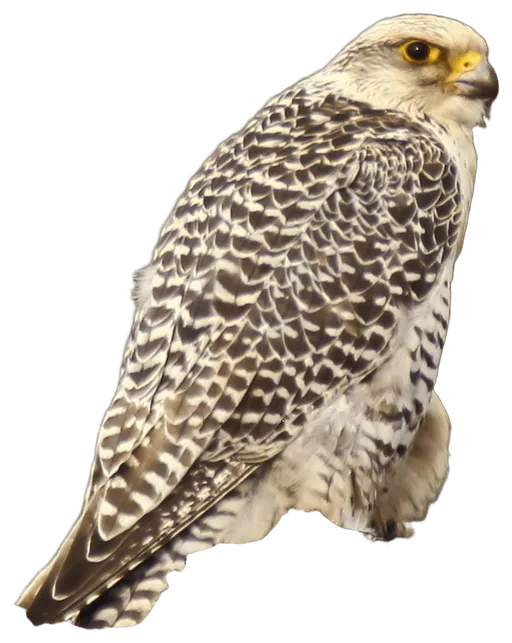
 Fight
FightPhoto: Ólafur Larsen · CC BY-SA 2.0
The gyrfalcon is the world's largest falcon, a 1.7 kg Arctic hunter that chases ptarmigan and ducks low over the tundra until they tire. It is fast, tough in the cold and armed with sharp talons and a killing bite, but its light body means it can only overpower prey far smaller than the roster's heavy hitters.
 Attack37
  Defense20
  Agility88
  Stamina84
  Intelligence68
  Special76
 Detailed ratings
Research-backed ratings on one 0–100 scale for all 273 animals (updated 2026-09-28). How ratings work
Special abilities
Ability 1Tundra Tail-ChaseWhen an ambush misses, it keeps chasing low over the ground, wearing down fast ptarmigan and ducks with sustained pursuit rather than a single dive.
 Ability 2Neck-Breaking Bite
Binds prey with its talons, then kills with a bite to the neck from its notched falcon bill.
Unique traits
 TraitLargest Falcon
The biggest falcon in the world, with females reaching about 2.1 kg and a wingspan up to 130 cm.
TraitSea-Ice WintererSome birds spend more than a month at a time over winter sea ice far from land, hunting seabirds and sea ducks around open water.
How it fights
Weapons
- The gyrfalcon kills with its feet and beak. It strikes or grabs prey with its talons, often binding to it and bringing it to the ground, then finishes it with a bite to the neck using its notched bill. Its prey is large for a falcon: ptarmigan make up the bulk of the diet in many areas, and it also takes ducks, seabirds, Arctic hares and lemmings. At 1.7 kg it is roughly 70% heavier than a female peregrine, which gives it more grip and impact against bird-sized and hare-sized prey.
 Struggles vs
- Low absolute mass and no armor.
- Flight-critical wings; a grounded falcon is badly exposed.
- Less agile in tight turns than smaller falcons.
- Weapons suited to bird-sized and hare-sized prey, not large animals.
- Weight
- 1.7 kg4 lb
- Height
- No reliable measurement
- Length
- 58 cm22.8 in
- Top speed
- No reliable measurement
- Bite force
- No reliable measurement
- Lifespan
- 8 years
- Home biome
- Arctic
- Lifestyle
- Mostly solitary
Rated specimen: Healthy adult female, 1.7 kg, 58.0 cm total length, wingspan about 125 cm.
Fun facts
- It is the largest falcon in the world.
- Females can weigh nearly twice as much as males.
- In northeast Iceland, ptarmigan make up about 72% of its summer diet by weight.
- Some gyrfalcons spend weeks living over winter sea ice far from land.
- One tracked juvenile female traveled nearly 3,000 miles in about 200 days, much of it over the sea.
- It rarely uses the peregrine's high-speed stoop and prefers low, long chases.
Closest rivals by power. Tap one for the full breakdown, or pick any opponent.
vs Snowy OwlLoses · 51% · Toss-up 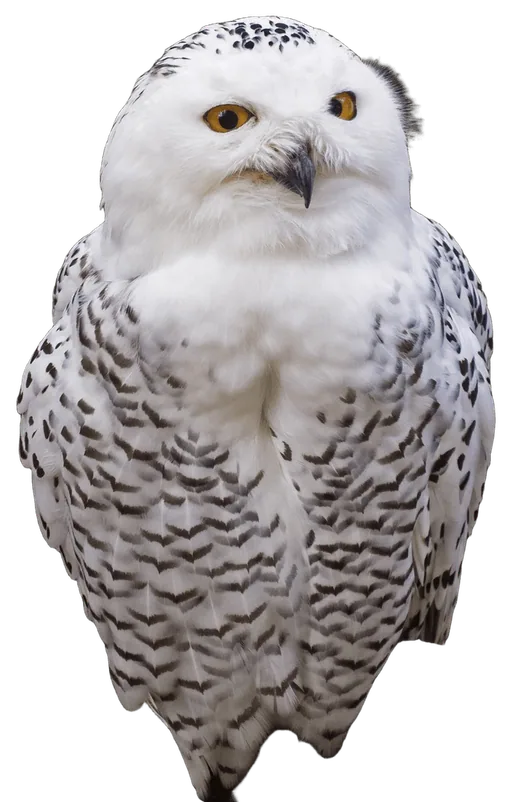 L vs Golden EagleWins · 51% · Toss-up
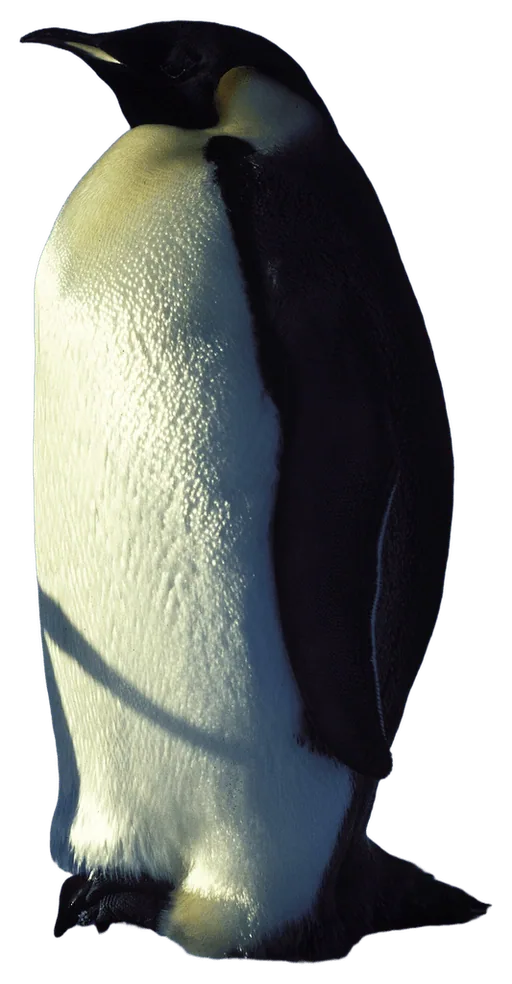
 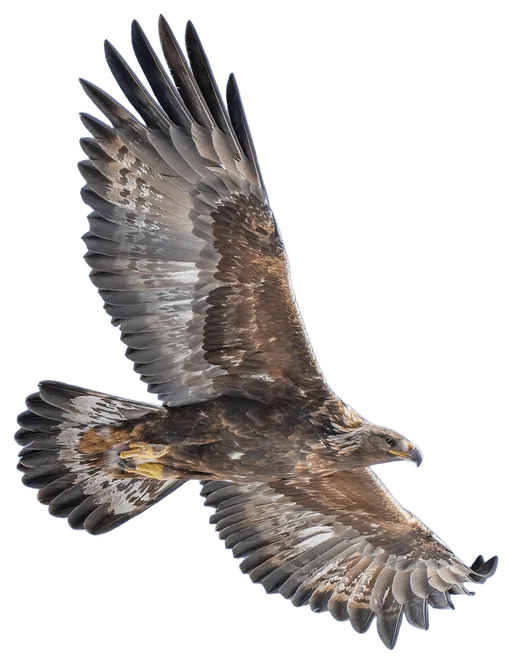 W vs Emperor PenguinWins · 51% · Toss-up
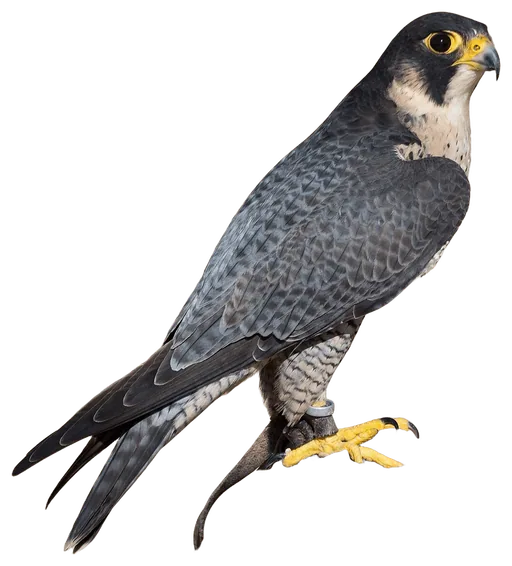
  W vs Peregrine FalconLoses · 52% · Toss-up
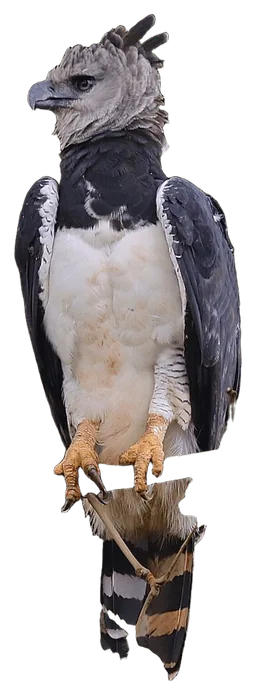
  L vs Harpy EagleWins · 52% · Toss-up
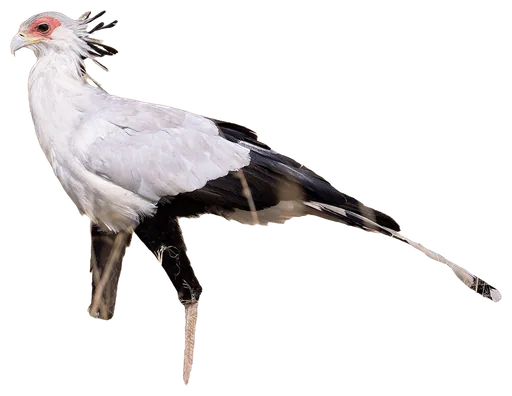
  W vs Secretary BirdLoses · 52% · Toss-up
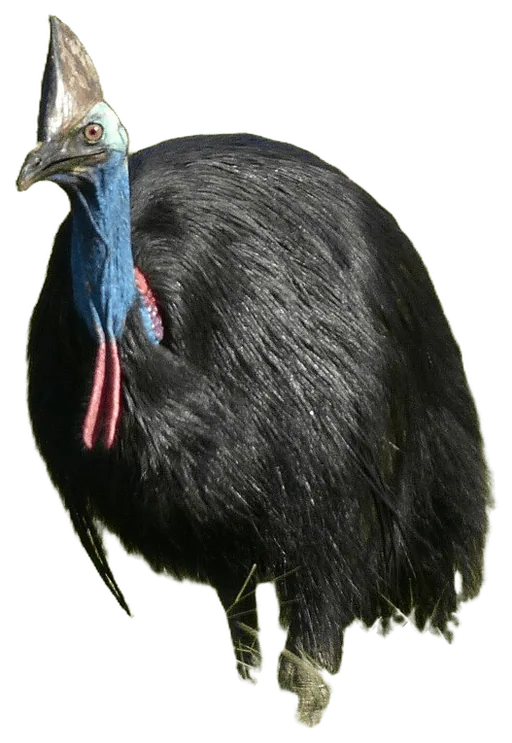
  L vs CassowaryLoses · 52% · Toss-up
  L vs Red-tailed HawkWins · 52% · Toss-up
 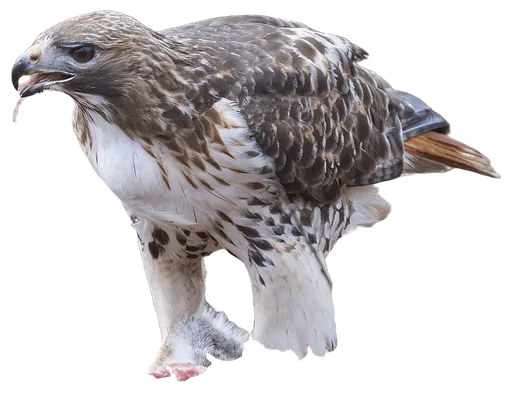 W
W  Pick any opponent
 Gyrfalcon battle analysis
The gyrfalcon is the heavyweight of the falcon world. A female, the larger sex, weighs about 1.7 kg and spans up to 130 cm, nearly twice the weight of a male. It lives where few raptors can, nesting on Arctic cliffs and staying through the polar winter, when some birds live for weeks over sea ice hunting seabirds and ducks around open water.
Its hunting style is different from the peregrine's famous dive. Gyrfalcons usually attack low, bursting from a perch or sweeping along a ridge to surprise ptarmigan and other birds. When that first strike misses, they settle into a long tail-chase just above the ground, relying on powerful flight muscles to wear their prey down. A study of young gyrfalcons found they steer toward targets using the same rule as peregrines, but correct their heading less sharply, a match for a bigger bird built for sustained pursuit.
In a battle, the gyrfalcon is a dangerous small predator. Its talons and notched bill kill prey as large as ducks and hares, and it presses attacks with real commitment. But at under 2 kg it has no armor, and a heavy hit to its wings can end the fight. It rates highly for Agility, Stamina and senses, and modestly for Attack and Defense.
Habitat & range
Breeds across the Arctic and sub-Arctic of North America, Greenland, Iceland, Scandinavia and Russia on cliffs and outcrops in tundra, coastal and mountain landscapes. Many adults stay near breeding areas all year, while some birds, especially juveniles, move south in winter or out onto sea ice.
Diet & hunting
A bird specialist centered on rock and willow ptarmigan, which make up about 72% of summer diet biomass in northeast Iceland. It also takes waterfowl, seabirds, shorebirds, Arctic hares, ground squirrels and lemmings. In Iceland its breeding success rises and falls with ptarmigan numbers.
Social life
Solitary outside the breeding season; breeding pairs hold territories around cliff nest sites and often reuse old raven or rough-legged hawk nests, as they build no nest of their own.
Conservation
Listed as Least Concern on the IUCN Red List since 2004 because of its huge range and a population estimated at about 50,000–70,000 birds. Partners in Flight estimates a global breeding population of about 70,000 and reports no evidence of long-term decline in North America. Warming that alters ptarmigan cycles and Arctic habitats is a concern for the future.
Quick answers
How strong is a Gyrfalcon?
On the Animal Battle Stats scale, the Gyrfalcon has an attack rating of 37 and a power index of 53.6 out of 100, which ranks it #108 of 273 animals and puts it in B tier (Strong). Its strongest stat is agility (88).
How much does a Gyrfalcon weigh?
A typical adult Gyrfalcon weighs about 1.7 kg (4 lb). Rated specimen: healthy adult female, 1.7 kg, 58.0 cm total length, wingspan about 125 cm.
How fast is a Gyrfalcon?
There is no reliable measured top speed for the Gyrfalcon, so we do not publish one. Its agility rating, which covers acceleration, reflexes and evasion, is 88 out of 100.
What does a Gyrfalcon eat?
A bird specialist centered on rock and willow ptarmigan, which make up about 72% of summer diet biomass in northeast Iceland. It also takes waterfowl, seabirds, shorebirds, Arctic hares, ground squirrels and lemmings. In Iceland its breeding success rises and falls with ptarmigan numbers.
Is the Gyrfalcon endangered?
No. The Gyrfalcon is listed as Least Concern. Listed as Least Concern on the IUCN Red List since 2004 because of its huge range and a population estimated at about 50,000–70,000 birds. Partners in Flight estimates a global breeding population of about 70,000 and reports no evidence of long-term decline in North America. Warming that alters ptarmigan cycles and Arctic habitats is a concern for the future.
What animals can beat a Gyrfalcon?
Among its closest rivals, the Snowy Owl (51%), the Peregrine Falcon (52%), the Secretary Bird (52%), the Cassowary (52%) would be favored against the Gyrfalcon. It would be favored against the Golden Eagle, the Emperor Penguin, the Harpy Eagle, the Red-tailed Hawk.
Researched 2026-09-28. Ratings are editorial judgments built from these sources; measurements describe a healthy adult female.
- Birds of the World, Gyrfalcon identificationsize, dimorphism, morphs
- Birds of the World, Gyrfalcon behaviorhunting mechanics
- Wikipedia, Gyrfalconmass, length, wingspan, IUCN summary
- Cornell Lab, All About Birds, Gyrfalcon life historylongevity, population
- Cornell Lab, All About Birds, Gyrfalcon overviewgeneral biology
- Montana Field Guide, Gyrfalconsize, winter range
- Audubon Field Guide, Gyrfalcongeneral biology
- Attack behaviour in naive gyrfalcons is modelled by the same guidance law as in peregrine falcons, but at a lower guidance gainpursuit steering
- Survival rates of adult and juvenile gyrfalcons in Iceland: estimates and driverssurvival, lifespan estimate
- Nielsen, Gyrfalcon population and reproduction in relation to rock ptarmigan numbers in Icelanddiet
- Barraquand et al. (2018), Predator-prey feedback in a gyrfalcon-ptarmigan system?predator-prey cycle
- Burnham & Newton, Ecology and biology of gyrfalcons in Greenland (Peregrine Fund proceedings)Greenland ecology, sea ice
- The Peregrine Fund, First falcon study in northern Greenland using satellite trackingsea-ice wintering, long movements
- USGS, Use of satellite telemetry for study of a gyrfalcon in Greenlandtracking methods
- HawkWatch International, Gyrfalcon fact sheethunting, flushing tactics
- Wikipedia, Fastest animalsspeed (unverified)
- AnAge, Gyrfalcon longevitylongevity
Photo: “Fálki (Falco rusticolus) - Gyr Falcon (cropped).jpg” by Ólafur Larsen, CC BY-SA 2.0, background removed and cropped. Original
Suggest a correction