
Great Horned Owl
Bubo virginianusC tier · Capable22nd of 55 birds
Size & speed

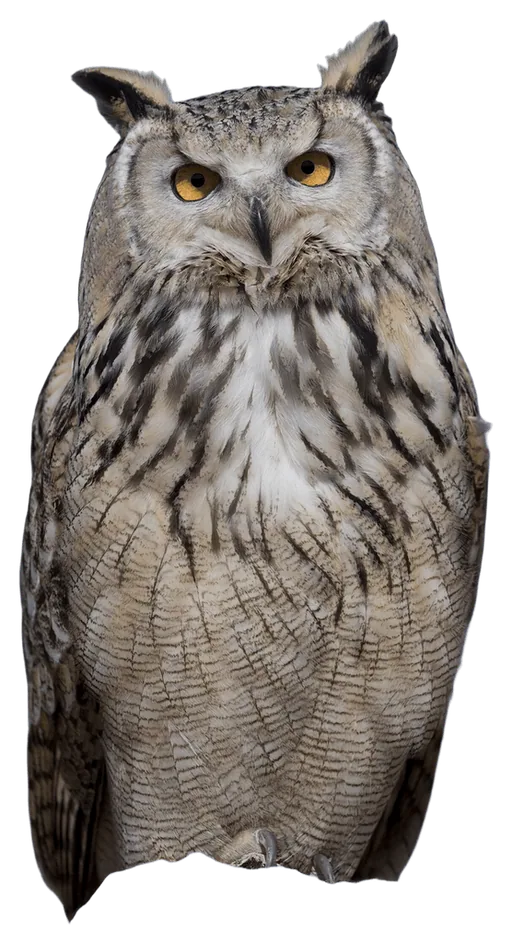
- Weight
- 1.7 kg4 lb
- Length
- 55 cm21.7 in
- Top speed
- 64 km/h40 mph
As heavy as 8.5 smartphones
Heavier than 26% of animalsAbout 1.8 rulers long
Bigger than 27% of animalsFaster than Usain Bolt (44.7 km/h)
Faster than 84% of animalsA large, highly versatile American owl, the Great Horned Owl combines precise talons, quiet low-light flight and exceptional nocturnal targeting. Its absolute power is limited by a roughly 1.7 kg body, but surprise, aerial control and sensory specialization make it extremely dangerous to prey near its own scale.
Detailed ratings
Research-backed ratings on one 0–100 scale for all 344 animals (updated 2026-09-27). How ratings work


Card No. 195 of 344. Every animal on Animal Battle Stats has one: its power, tier and archetype on the front; its six battle stats, abilities and signature move on the back.
Special abilities
Soft flight plumage and controlled short-glide attacks reduce warning time before a talon-first strike.
Facial-disc-assisted hearing and forward sensory focus allow precise prey localization in darkness and clutter.
Unique traits
An unusually broad vertebrate prey spectrum lets the owl switch tactics across mammals, birds, reptiles and wetland-edge prey.
Resident pairs use conspicuous hooting and persistent territorial defense, with disputes capable of escalating to lethal contact.
How it fights
Weapons
- The great horned owl is an aerial ambush predator. It typically watches from a perch, makes a short quiet approach, extends the feet and uses the talons to seize and puncture prey. The beak is secondary to the feet in initial capture. USFS diet synthesis documents prey including rabbits, rodents, skunks, ducks, geese, pheasants, grouse, reptiles and other vertebrates. A North Dakota study recorded 2,900 prey items at 22 nesting areas, with wetland-dependent prey making up 76% of prey biomass and birds 84% of biomass in that local breeding sample. This is strong evidence for dietary breadth, not evidence that every owl routinely kills the largest listed prey.
Struggles vs
- Open daylight reduces concealment and surprise.
- Grounded combat removes much of the owl's positional advantage.
- Large mammals and heavily armored animals exceed the talons' practical control scale.
- Wings are large exposed structures that can be damaged during grappling.
- High speed alone does not compensate for low body mass against much larger roster animals.
- Weight
- 1.7 kg4 lb
- Height
- No reliable measurement
- Length
- 55 cm21.7 in
- Top speed
- 64 km/h40 mph
- Bite force
- No reliable measurement
- Lifespan
- 13 years
- Home biome
- Forest
- Lifestyle
- Social
Rated specimen: Healthy fully mature female, 1.7 kg, 55.0 cm body length, representing the larger sex without using a record individual.
Fun facts
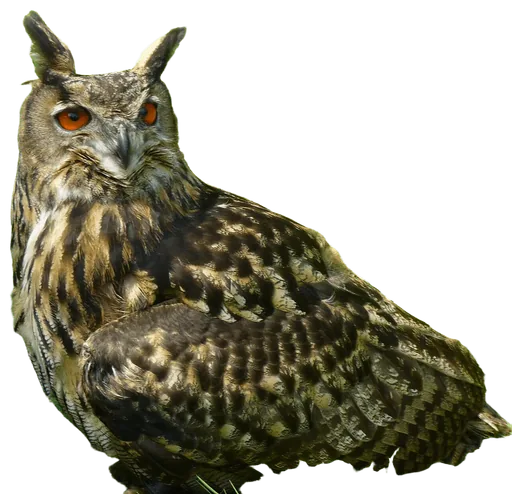
- The visible "horns" are feather tufts, not the owl's ears.
- Females are larger than males, reversing the common mammalian pattern of male-biased size.
- The species can prey on skunks despite their chemical defense.
- A North Dakota study identified 2,900 prey items from only 22 nesting areas.
- Great horned owls commonly appropriate nests built by other large birds.
- Wild longevity can greatly exceed the roughly 13-year typical figure, with records approaching three decades.
Closest rivals by power. Tap one for the full breakdown, or pick any opponent.
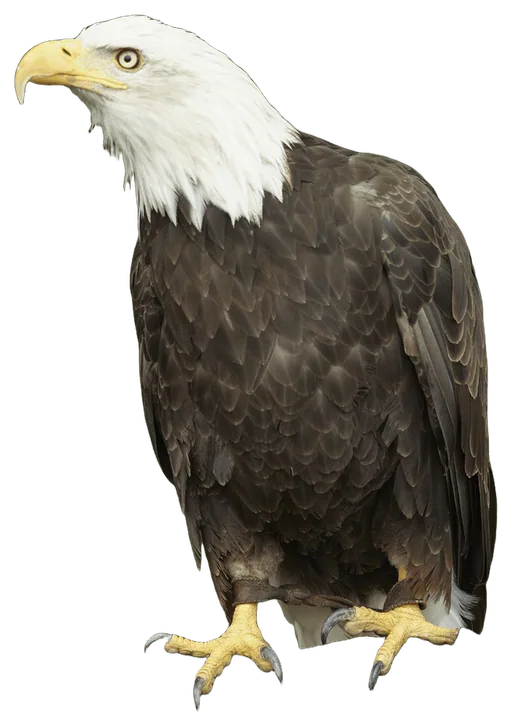
vs RavenWins · 52% · Toss-up 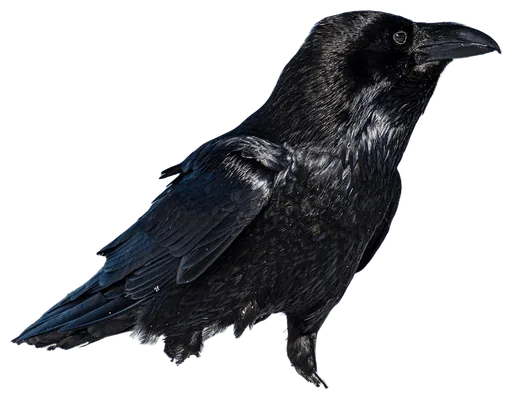 W vs Bald EagleLoses · 57% · Toss-up
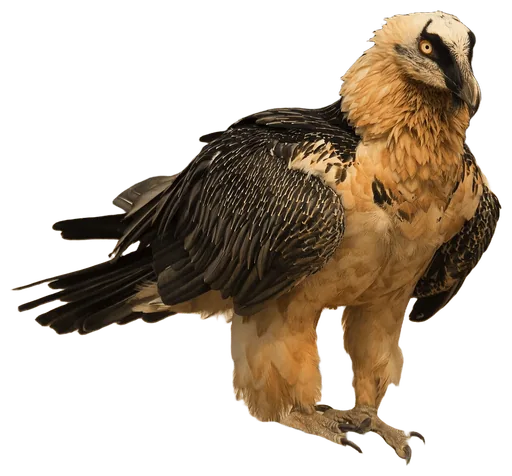
 L vs Bearded VultureLoses · 56% · Toss-up
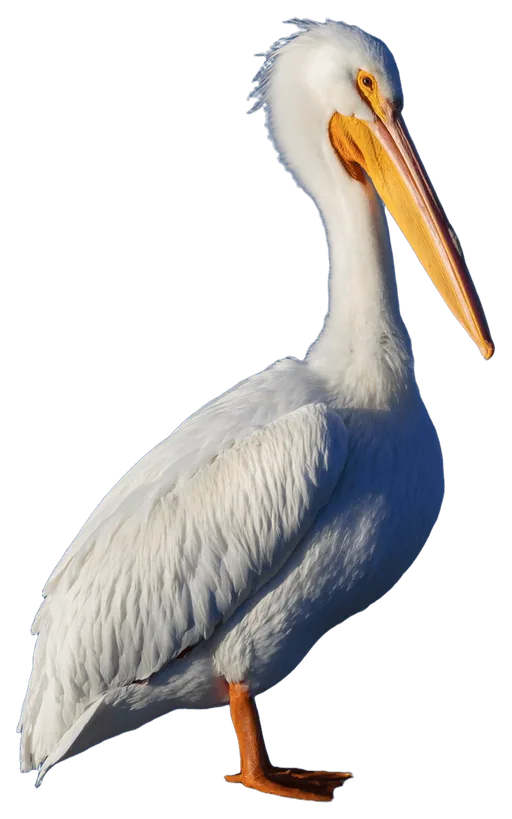
 L vs PelicanLoses · 57% · Toss-up
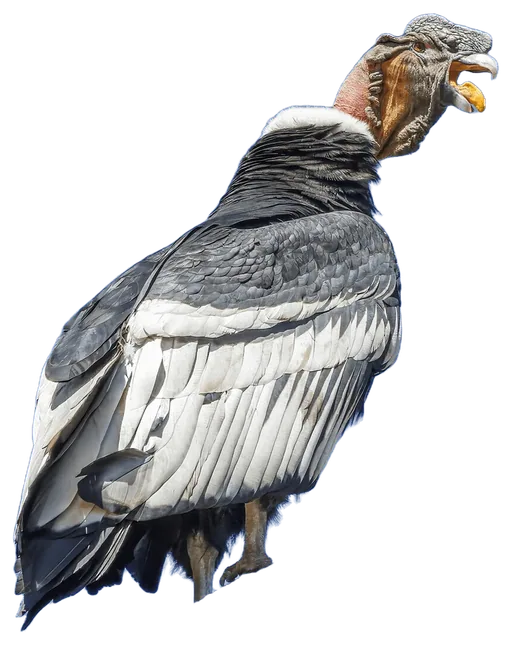
 L vs CondorLoses · 61% · Slight edge
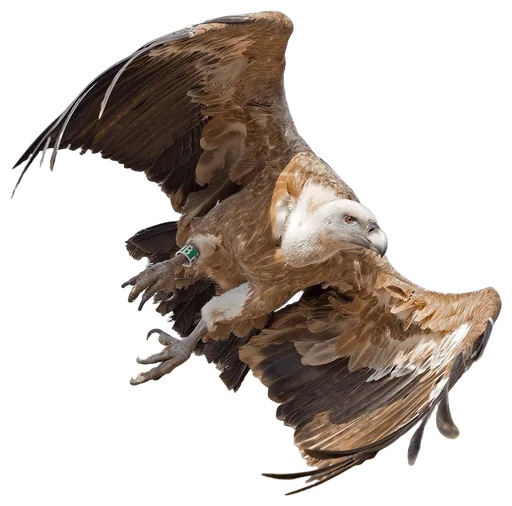
 L vs VultureLoses · 57% · Toss-up
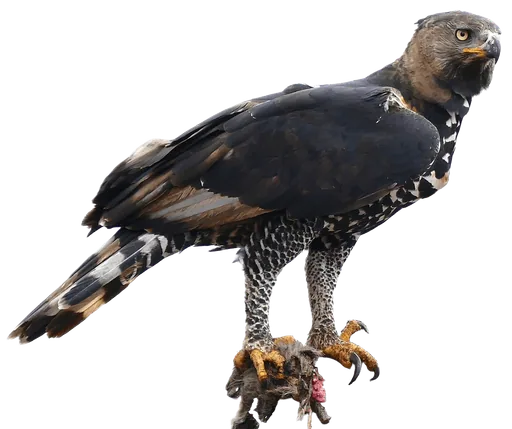
 L vs Crowned EagleLoses · 57% · Toss-up
 L vs Eurasian Eagle-OwlLoses · 56% · Toss-up
 L
Great Horned Owl battle analysis
The Great Horned Owl is not a miniature eagle that wins through brute force. Its advantage is a tightly integrated ambush system. A female can wait motionless above a clearing, detect movement with strong hearing and forward vision, descend with little warning, brake precisely and present both feet at the moment of contact. Against rabbit-sized prey or another bird, the result can be a fast puncture-and-restraint event rather than a prolonged wrestling match.
That specialization must still obey ABS absolute scaling. A representative female weighs about 1.7 kg. Feathers are not armor, hollow/light avian construction is vulnerable to crushing trauma, and no reliable beak or talon PSI value was found. The owl therefore belongs far below wolves, great apes and megafauna in Raw Power, Attack and Defense. Its elite scores instead belong in Maneuverability, Senses and Special, where nocturnal localization, quiet flight and three-dimensional positioning genuinely compete with the roster's best specialists.
Habitat & range
B. virginianus occupies an enormous American range and uses forests, woodland/open-field mosaics, deserts, swamps, marshes, mangroves, farmland and urban environments. ADW reports occurrence from sea level to about 3,353 m elevation. Most populations are resident, although severe northern winters can produce movements.
Diet & hunting
This is a highly generalist carnivore. Mammals often dominate, but local ecology can shift the diet dramatically. USFS lists rabbits, rodents, skunks, waterfowl, pheasants, grouse, reptiles and other prey. The North Dakota breeding study is especially useful because 2,900 identified prey items showed that local wetland birds could dominate biomass.
Social life
Adults are generally solitary outside nesting and maintain territories. Pairs communicate by hooting and defend breeding space. Social coordination exists in pair and parental contexts, but there is no basis for pack-hunting bonuses.
Conservation
The species is broadly considered Least Concern and remains widespread, but local mortality can arise from vehicles, poisoning, electrocution and other human pressures. Conservation status does not imply that all regional populations are equally secure.
Quick answers
How strong is a Great Horned Owl?
On the Animal Battle Stats scale, the Great Horned Owl has an attack rating of 35 and a power index of 49.1 out of 100, which ranks it #195 of 344 animals and puts it in C tier (Capable). Its strongest stat is agility (89).
How much does a Great Horned Owl weigh?
A typical adult Great Horned Owl weighs about 1.7 kg (4 lb). Rated specimen: healthy fully mature female, 1.7 kg, 55.0 cm body length, representing the larger sex without using a record individual.
How fast is a Great Horned Owl?
The Great Horned Owl's top speed is about 64 km/h (40 mph). Its agility rating is 89 out of 100.
What does a Great Horned Owl eat?
This is a highly generalist carnivore. Mammals often dominate, but local ecology can shift the diet dramatically. USFS lists rabbits, rodents, skunks, waterfowl, pheasants, grouse, reptiles and other prey. The North Dakota breeding study is especially useful because 2,900 identified prey items showed that local wetland birds could dominate biomass.
Is the Great Horned Owl endangered?
No. The Great Horned Owl is listed as Least Concern. The species is broadly considered Least Concern and remains widespread, but local mortality can arise from vehicles, poisoning, electrocution and other human pressures. Conservation status does not imply that all regional populations are equally secure.
What animals can beat a Great Horned Owl?
Among its closest rivals, the Bald Eagle (57%), the Bearded Vulture (56%), the Pelican (57%), the Condor (61%), the Vulture (57%), the Crowned Eagle (57%), the Eurasian Eagle-Owl (56%) would be favored against the Great Horned Owl. It would be favored against the Raven.
Researched 2026-09-27. Ratings are editorial judgments built from these sources; measurements describe a healthy adult female.
- Animal Diversity Web, Bubo virginianustaxonomy, mass, length, wingspan, dimorphism, range, senses, behavior, longevity
- US Forest Service FEIS, Bubo virginianusprey breadth, hunting style, residency
- US Forest Service, Murphy 1997quantified breeding-season diet
- Squam Lakes Natural Science Centerflight-speed context, lifespan
- Government of Northwest Territories species searchmaturity, longevity, northern ecology
- Therya Notes, Sánchez-Rojas et al.skunk predation
- USGS, Woodman et al. 2005diet-method caveat
- Wikimedia Commons, Peter K Burian flight photographimage candidate
- Wikimedia Commons / USGS female nest photographimage age/sex search alternative
Photo: “Bubo bubo sibiricus - 01.JPG” by Carlos Delgado, CC BY-SA 4.0, background removed and cropped. Original
Suggest a correction