
Gorilla
Gorilla beringeiA tier · Elite33rd of 163 mammals
Size & speed

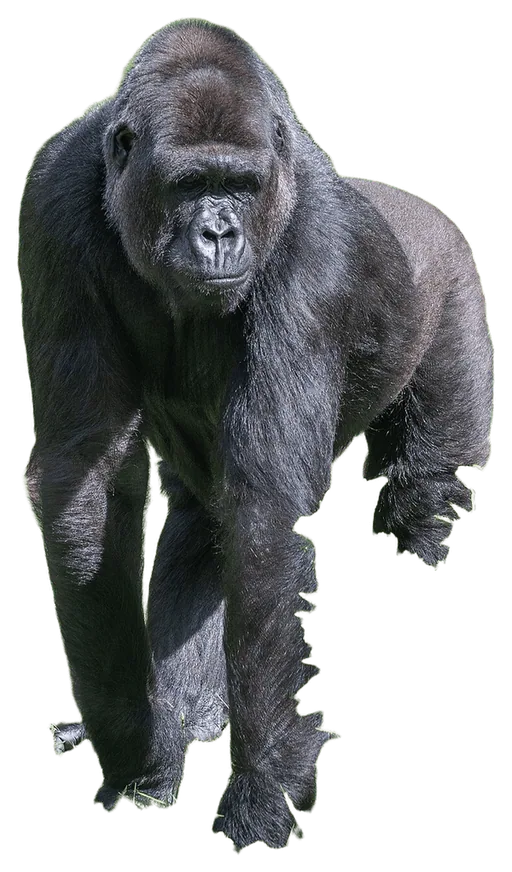
- Weight
- 195 kg430 lb
- Length
- 1.5 m4.9 ft
As heavy as 2.8 people
Heavier than 79% of animalsAbout as long as a person is tall
Bigger than 61% of animalsThe mountain gorilla is the world's most massive living primate combatant: a roughly 195 kg mature silverback built for close-range grappling, biting and intimidation rather than pursuit. Its greatest advantages are upper-body power, robust mass and elite great-ape cognition. It lacks armor and specialized killing weapons, so its battle profile should remain far below megafauna in raw force and below similarly sized apex carnivores in dedicated weaponry.
Detailed ratings
Research-backed ratings on one 0–100 scale for all 344 animals (updated 2026-09-19). How ratings work


Card No. 57 of 344. Every animal on Animal Battle Stats has one: its power, tier and archetype on the front; its six battle stats, abilities and signature move on the back.
Special abilities
Long powerful forelimbs, grasping hands and massive upper-body musculature let a mature male control, shove, pull and bite at close range. This is a real anatomical advantage, not a claim of quantified superhero lifting strength.
Chest-beat peak frequency correlates inversely with male body size, making the display an honest competitive signal that can deter or assess rivals before damaging contact.
Unique traits
Mature males occupy a central protective and conflict-management role; group members preferentially associate with dominant males in contexts where protection matters.
Dense hair, terrestrial knuckle walking and flexible climbing support life in cold, wet, steep Albertine Rift forest.
How it fights
Weapons
- A silverback is a close-range grappler rather than a pursuit predator. Its best offense combines mass, long muscular forelimbs, hands capable of controlling an opponent, powerful pulling and shoving, and a large-jawed bite with male canines. It can rapidly turn a display into contact aggression, but spectacular internet claims about multi-ton lifting or quantified punching force are not accepted as measurements.
- Mountain-gorilla violence is real but should not be exaggerated into constant berserk behavior. A 50-year demographic analysis recorded a threefold rise in violent encounters after social-unit density increased, along with seven lethal fights among mature males. Another study of 58 inter-group encounters found encounters generally aggressive, although contact aggression was less frequent than older descriptions suggested. This supports serious fighting capacity while distinguishing threat/display from actual contact.
Struggles vs
- No armor or long piercing weapon comparable with horns, tusks or large felid claws.
- Limited long-range offense.
- Large body and forelimb-heavy locomotion reduce open-ground maneuverability against fast cursorial opponents.
- Disease transmission from humans is a major real-world vulnerability.
- Aquatic matchups are poor; gorillas are not specialized swimmers.
- Weight
- 195 kg430 lb
- Height
- 1.5 m4.9 ft
- Length
- 1.5 m4.9 ft
- Top speed
- No reliable measurement
- Bite force
- No reliable measurement
- Lifespan
- 40 years
- Home biome
- Mountains
- Lifestyle
- Social
Rated specimen: Healthy fully mature adult male silverback, representative rather than record-sized.
Fun facts
- Individual gorillas can be identified by distinctive nose-print patterns.
- Male mountain-gorilla chest beats contain acoustic information about body size.
- Wild gorillas have demonstrated spontaneous tool use for water-depth testing and swamp crossing.
- A 50-year mountain-gorilla dataset documented lethal fights among mature males, confirming that rare escalated contests can be fatal.
- Male and female growth trajectories diverge strongly after roughly 8.5-10 years of age.
Closest rivals by power. Tap one for the full breakdown, or pick any opponent.
vs ReindeerWins · 51% · Toss-up 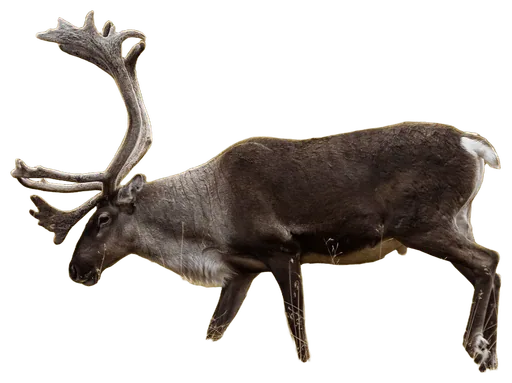 W vs YakLoses · 56% · Toss-up
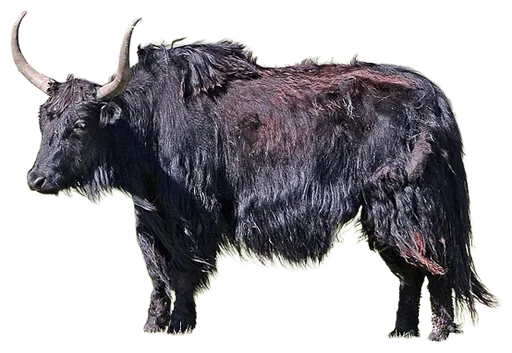 L vs PronghornWins · 56% · Toss-up
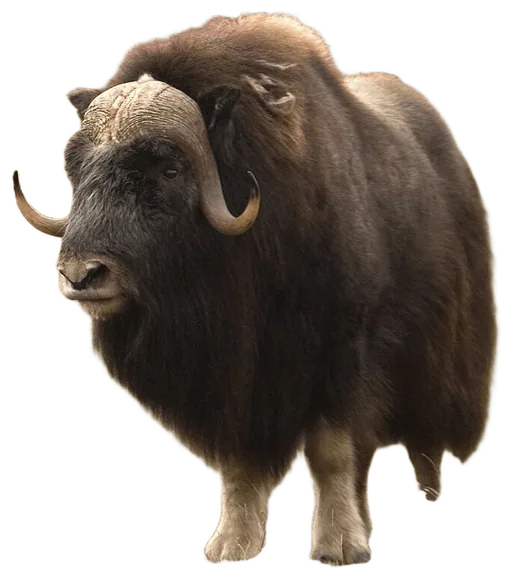
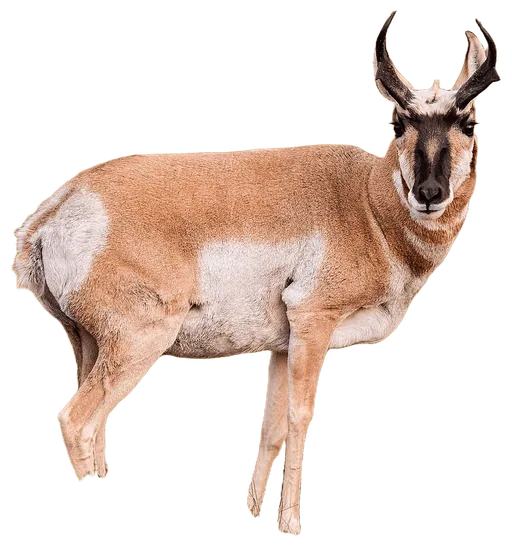 W vs Musk OxLoses · 54% · Toss-up
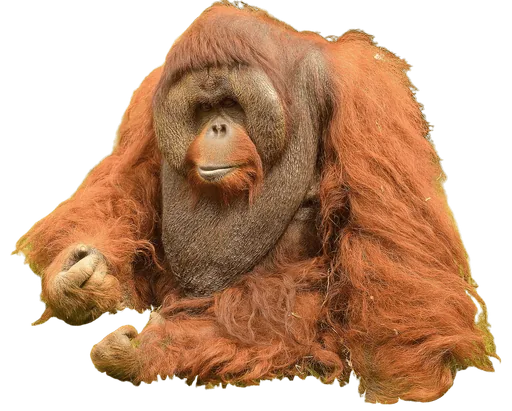
 L vs OrangutanWins · 56% · Toss-up
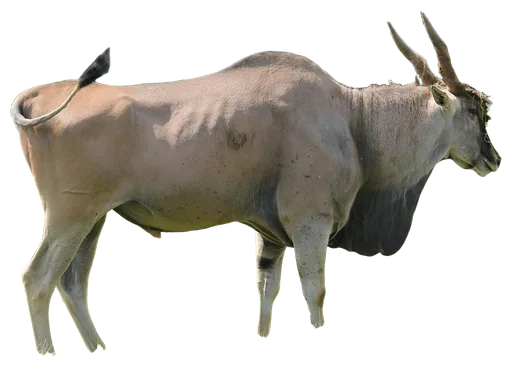
 W vs Common ElandLoses · 56% · Toss-up
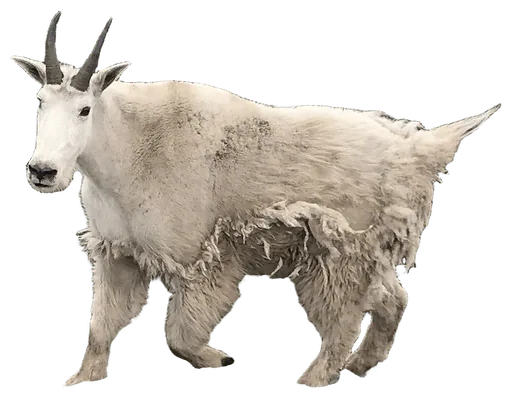
 L vs Mountain GoatWins · 55% · Toss-up
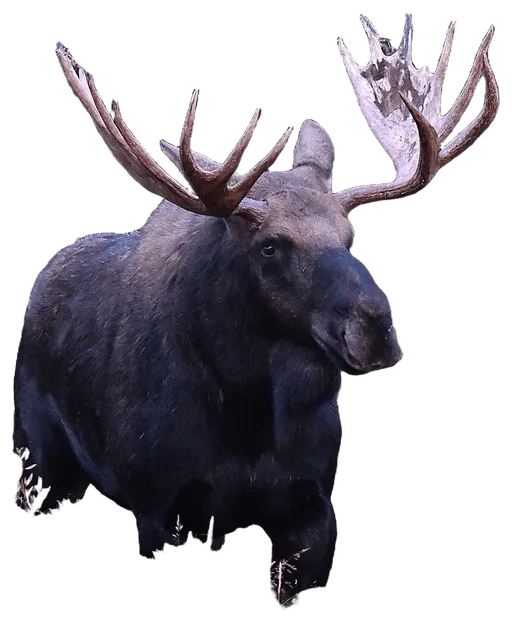
 W vs MooseLoses · 54% · Toss-up
 L
Gorilla battle analysis
A silverback's reputation often gets distorted by internet strength misconceptions. The real animal is more interesting. Mountain gorillas combine very large primate body mass with long muscular forelimbs, grasping hands, a powerful jaw system and unusually sophisticated social judgment. They can fight lethally, and long-term field data confirm fatal adult-male contests, yet much of their competitive system is designed to avoid that cost. Posture, vocal behavior and chest beating advertise condition and body size before a contest becomes physical.
In an ABS matchup, the gorilla is therefore a bruiser-controller rather than a fantasy puncher. It wants close range, where it can grab, destabilize, shove and bite. It is dangerous to smaller opponents that lack penetrating weapons, but a large horned ungulate, armored reptile or comparably massive carnivore presents a serious problem because the gorilla's own skin and soft tissue are not specialized armor. Its cognition improves assessment and tactical flexibility, but intelligence cannot erase unfavorable anatomy or mass ratios.
Habitat & range
Mountain gorillas survive in two restricted East African populations: the Virunga Massif and Bwindi-Sarambwe landscape in Rwanda, Uganda and the Democratic Republic of the Congo. IUCN reported their protected habitat at roughly 792 km² in these two areas.
Diet & hunting
They are predominantly herbivorous/folivorous, consuming leaves, stems, shoots and other plant matter, with food availability shaping movement. They are large-bodied terrestrial browsers rather than active predators.
Social life
Groups may contain one or several adult males, adult females and offspring. The dominant silverback is a major social hub, protector and mating competitor. Long-term data show complex relationships between neighboring groups: aggression increases toward home-range cores, while groups with prior social relationships can show more affiliation and reduced aggression in peripheral areas.
Conservation
Mountain gorillas are Endangered. IUCN reported that intensive conservation helped increase the population from about 680 in 2008 to more than 1,000 by 2018. Major continuing threats include poaching/snaring, civil unrest, habitat pressure and human-transmitted disease. The parent species Gorilla beringei remains Critically Endangered.
Quick answers
How strong is a Gorilla?
On the Animal Battle Stats scale, the Gorilla has an attack rating of 67 and a power index of 62 out of 100, which ranks it #57 of 344 animals and puts it in A tier (Elite). Its strongest stat is intelligence (89).
How much does a Gorilla weigh?
A typical adult Gorilla weighs about 195 kg (430 lb). Rated specimen: healthy fully mature adult male silverback, representative rather than record-sized.
How fast is a Gorilla?
There is no reliable measured top speed for the Gorilla, so we do not publish one. Its agility rating, which covers acceleration, reflexes and evasion, is 55 out of 100.
What does a Gorilla eat?
They are predominantly herbivorous/folivorous, consuming leaves, stems, shoots and other plant matter, with food availability shaping movement. They are large-bodied terrestrial browsers rather than active predators.
Is the Gorilla endangered?
The Gorilla's conservation status is Endangered. Mountain gorillas are Endangered. IUCN reported that intensive conservation helped increase the population from about 680 in 2008 to more than 1,000 by 2018. Major continuing threats include poaching/snaring, civil unrest, habitat pressure and human-transmitted disease. The parent species Gorilla beringei remains Critically Endangered.
What animals can beat a Gorilla?
Among its closest rivals, the Yak (56%), the Musk Ox (54%), the Common Eland (56%), the Moose (54%) would be favored against the Gorilla. It would be favored against the Reindeer, the Pronghorn, the Orangutan, the Mountain Goat.
Researched 2026-09-19. Ratings are editorial judgments built from these sources; measurements describe a healthy adult male.
- McFarlin et al., Body growth and life history in wild mountain gorillasgrowth, dimorphism, maturity
- Wright et al., Chest beats as an honest signal of body sizedisplay, competitive assessment
- Morrison et al., Violent encounters between social units...fighting, lethality
- Sicotte, inter-group encountersaggression, herding, cooperation
- Sicotte, interpositionsconflict resolution
- Rosenbaum et al.paternal/protective behavior
- Morrison et al., territorial defencesocial tactics, territorial context
- Rosenbaum et al., sibling relationshipssocial cognition
- Animal Diversity Web, Gorilla beringeilifespan, daily activity, social structure
- Breuer et al., first wild gorilla tool usecognition/tool use
- IUCN 2018 mountain-gorilla updateconservation
- JICA Rwanda reportrepresentative mass/height
- Wikimedia Commons, Silver back.jpgimage provenance
Photo: “Male Gorilla gorilla gorilla Apenheul 2023 02.jpg” by Tuxyso, CC BY-SA 4.0, background removed and cropped. Original
Suggest a correction