
Giraffe
Giraffa camelopardalisA tier · Elite22nd of 163 mammals
Size & speed

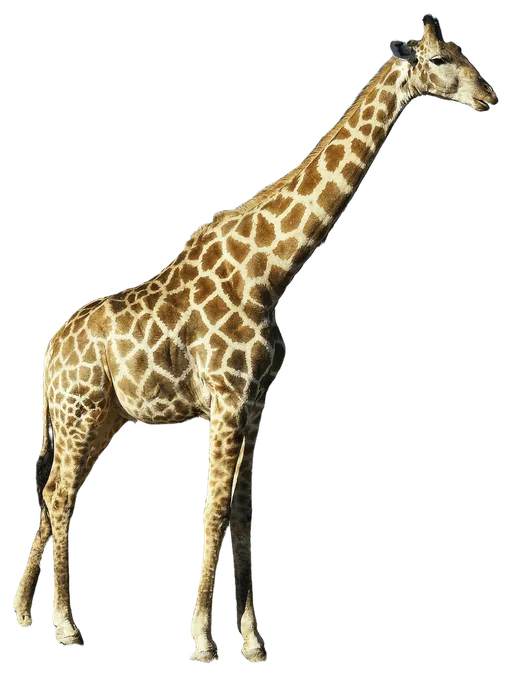
- Weight
- 1.2 t1.3 US tons
- Length
- 5.2 m17.1 ft
- Top speed
- 60 km/h37 mph
As heavy as 17 people
Heavier than 94% of animals3× a person's height
Bigger than 96% of animalsFaster than Usain Bolt (44.7 km/h)
Faster than 79% of animalsThe giraffe is the tallest living animal and a surprisingly formidable megaherbivore. A representative mature bull weighs about 1.2 tonnes and combines lethal-range kicks, male neck-and-ossicone strikes, strong running endurance and exceptional visual reach. Its size makes it difficult prey, but a high center of mass, limited tight turning and extreme vulnerability after being toppled keep it below the heaviest armored megafauna in defense.
Detailed ratings
Research-backed ratings on one 0–100 scale for all 344 animals (updated 2026-09-27). How ratings work


Card No. 40 of 344. Every animal on Animal Battle Stats has one: its power, tier and archetype on the front; its six battle stats, abilities and signature move on the back.
Special abilities
A mature bull swings its long neck to deliver the reinforced skull and ossicones into rivals during necking, creating an unusually long-reach impact weapon.
Long front and rear limbs let an adult defend a broad perimeter with kicks dangerous enough that lion attacks carry serious injury risk.
Unique traits
Cardiovascular specializations maintain brain perfusion across an extreme heart-to-head height difference and rapid posture changes.
Exceptional standing height combines high browsing reach with long-distance visual surveillance over open habitat.
How it fights
Weapons
- Primary: long legs and hooves. A giraffe can kick forward or backward, with reach amplified by limb length and a very large body mass behind rapid limb motion. The lion literature confirms kicks are a meaningful lethal-injury risk to predators.
- Secondary: in mature males, the neck/head/ossicone system. Necking is a specialized intraspecific contest behavior. Bulls brace, position and swing the neck so the skull and ossicones strike the opponent. This is a genuine weapon system, but the long neck should not be scored as if it were a rigid club: it is flexible, energetically costly and exposes the animal to balance constraints.
Struggles vs
- High center of mass and catastrophic vulnerability after a fall.
- Limited close-in turning compared with cats/canids.
- No armor and no specialized killing bite.
- Necking is best suited to similarly tall rivals, not every opponent geometry.
- Watering posture temporarily compromises mobility and vigilance.
- Weight
- 1.2 t1.3 US tons
- Height
- 5.2 m17.1 ft
- Length
- 5.2 m17.1 ft
- Top speed
- 60 km/h37 mph
- Bite force
- No reliable measurement
- Lifespan
- 25 years
- Home biome
- Savanna
- Lifestyle
- Social
Rated specimen: Healthy mature male, 1,200.0 kg, about 520.0 cm standing height.
Fun facts
- Giraffes still have only seven cervical vertebrae, despite their extreme neck length.
- Free-ranging running research recorded strides up to 8.3 m.
- Direct South African carcass data put adult male mean body mass around 1,174 kg.
- Mature males develop heavier skulls and ossicones than females.
- Adult mean arterial pressure at heart level is roughly 200–250 mmHg.
- The giraffe's first thoracic vertebra contributes unusually to neck mobility, effectively extending the functional neck base.
Closest rivals by power. Tap one for the full breakdown, or pick any opponent.
vs JaguarWins · 65% · Slight edge  W vs Water BuffaloWins · 51% · Toss-up
 W vs BisonDraw · 50-50 · Dead even
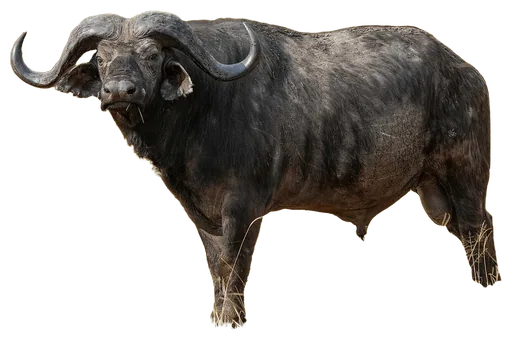
 D vs Cape BuffaloWins · 51% · Toss-up
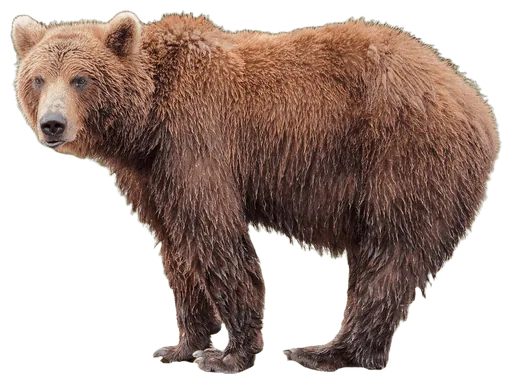
 W vs Grizzly BearWins · 62% · Slight edge
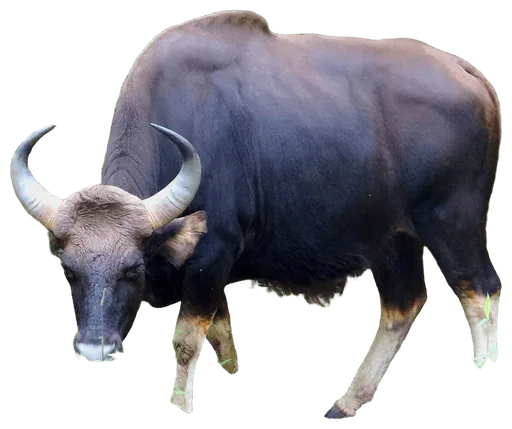
 W vs GaurLoses · 51% · Toss-up
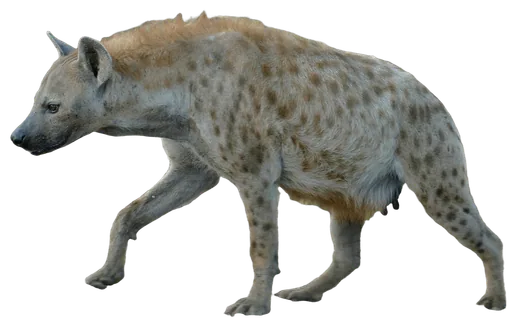
 L vs HyenaWins · 68% · Slight edge
 W vs Snow LeopardWins · 70% · Clear edge
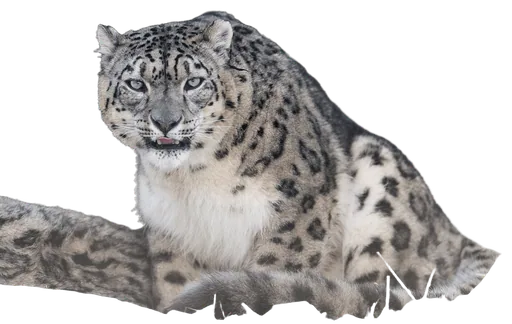 W
Giraffe battle analysis
A giraffe's combat profile is easy to underestimate because its anatomy looks specialized for browsing rather than fighting. The same long limbs that lift the body several metres above the ground also place hooves at the end of enormous levers. Predator studies confirm that lions risk maiming or death when entering that kick zone. In males, the neck becomes a second weapon system: bulls position beside rivals and swing the head and ossicones in necking contests that help structure dominance.
Yet the giraffe is not simply a giant stat block. Its height creates vulnerabilities. Tight turns are costly, the drinking stance is awkward, and a successful takedown removes much of the defensive advantage. This makes the animal a useful calibration case: its Attack should be far above medium carnivores in absolute impact potential, while Agility should not inherit its respectable sprint speed. Defense should reward mass and deterrent reach without pretending skin is armor.
Its physiology is equally distinctive. Supplying a brain metres above the heart requires persistently high arterial pressure and specialized vascular control. These systems are biologically extraordinary but should influence Special more than Attack or Defense. The result is a powerful, durable, high-stamina megaherbivore whose danger comes from leverage, reach and mass rather than predatory weapon specialization.
Habitat & range
Giraffes inhabit African savannas, open woodlands, shrublands and semi-arid systems where woody browse is available. The old one-species concept spans multiple geographically distinct populations. Modern four-species treatments divide that range among northern, reticulated, Masai and southern giraffes.
Diet & hunting
They are selective browsers, feeding heavily on woody plants including acacias/senegalias and other trees and shrubs. Their height allows access to foliage unavailable to most sympatric browsers. Field experiments support vertical resource partitioning: giraffes preferentially browse high in canopies, where leaf availability is less depleted by smaller browsers.
Social life
Giraffes use fluid fission-fusion social systems. Groups change membership; females with calves can associate, bachelor males spar, and mature bulls may roam in search of receptive females. Male reproductive and social activity can shift over short androgen-linked rut-like periods.
Conservation
Taxonomy matters here. The older IUCN single-species assessment listed giraffe as Vulnerable, but modern work recognizes four species with very different trajectories. GCF's State of Giraffe 2025 estimated about 140,000 giraffes total, including roughly 7,037 northern, 20,901 reticulated, 43,926 Masai and 68,837 southern giraffes. Three of the four are described as highly threatened under the newer framework, while southern giraffe are doing substantially better.
Quick answers
How strong is a Giraffe?
On the Animal Battle Stats scale, the Giraffe has an attack rating of 73 and a power index of 65.9 out of 100, which ranks it #40 of 344 animals and puts it in A tier (Elite). Its strongest stat is attack (73).
How much does a Giraffe weigh?
A typical adult Giraffe weighs about 1.2 t (1.3 US tons). Rated specimen: healthy mature male, 1,200.0 kg, about 520.0 cm standing height.
How fast is a Giraffe?
The Giraffe's top speed is about 60 km/h (37 mph). Its agility rating is 48 out of 100.
What does a Giraffe eat?
They are selective browsers, feeding heavily on woody plants including acacias/senegalias and other trees and shrubs. Their height allows access to foliage unavailable to most sympatric browsers. Field experiments support vertical resource partitioning: giraffes preferentially browse high in canopies, where leaf availability is less depleted by smaller browsers.
Is the Giraffe endangered?
The Giraffe's conservation status is Vulnerable. Taxonomy matters here. The older IUCN single-species assessment listed giraffe as Vulnerable, but modern work recognizes four species with very different trajectories. GCF's State of Giraffe 2025 estimated about 140,000 giraffes total, including roughly 7,037 northern, 20,901 reticulated, 43,926 Masai and 68,837 southern giraffes. Three of the four are described as highly threatened under the newe
What animals can beat a Giraffe?
Among its closest rivals, the Gaur (51%) would be favored against the Giraffe. It would be favored against the Jaguar, the Water Buffalo, the Cape Buffalo, the Grizzly Bear, the Hyena, the Snow Leopard. It is dead even with the Bison: a draw.
Researched 2026-09-27. Ratings are editorial judgments built from these sources; measurements describe a healthy adult male.
- 1. Animal Diversity Web, Giraffa camelopardalistraditional taxonomy, dimensions, tail, ossicones, social behavior and longevity. Moderate institutional synthesis; taxonomy/older ranges need modern context.
- 2. Hall-Martin et al. 1977, carcass compositiondirectly measured adult male mean 1,174.3 ± 31.5 kg and female mean 791.8 ± 17.6 kg. High for sampled South African population.
- 3. Gloneková et al. 2016, Zoo Biologyrepeatedly weighed adult Rothschild giraffes, males 1,307 ± 52 kg, females 835 ± 45 kg, seasonal variation. High for captive population; authors note relatively large taxon.
- 4. Shorrocks, Giraffe (Cambridge)wild mature male 850–1,950 kg, female 700–1,200 kg; standard 1,200/800 kg averages. High scholarly synthesis.
- 5. Basu/Deacon/Hutchinson/Wilson fast-speed kinematics35 free-ranging giraffes, 2.8–11 m/s, stride 2.9–8.3 m, predominantly four-beat rotary gallop. High for directly observed study range; not maximum trial.
- 6. Mitchell 2021, How Giraffes Work, exercise chapterobservational ~60 km/h short-period running and ~40 km/h longer running. Moderate-high specialist synthesis; exact top-speed protocol unavailable.
- 7. Strauss 2013, Journal of Zoologylion claw-mark/predation evidence; front/rear kicks can maim or kill lions; ground-down vulnerability. High peer-reviewed field context.
- 8. Granweiler et al. 2021, Ethologyquantitative male sparring dynamics and laterality. High peer-reviewed behavioral evidence.
- 9. Mitchell et al. 2013, Journal of Zoologyhead/neck growth, heavier mature male skulls/ossicones, sexual dimorphism; cautions against treating the neck primarily as a weapon. High.
- 10. Van Sittert et al. 2015, Journal of Morphologyappendicular skeletal scaling across fetuses, females and males. High anatomical evidence.
- 11. Kudo et al. 2016, functional cervicothoracic boundaryfirst thoracic vertebra contributes cervical-like mobility. High anatomical evidence.
- 12. Mitchell et al. 2006, J Exp Biolorigin of giraffe arterial/jugular pressures. High physiology evidence.
- 13. Mitchell et al. 2025, J Exp Bioladult MAP 200–250 mmHg and energetic burden of high pressure. High current physiology evidence.
- 14. Sathar et al. 2010, Anatomical Recordskin thickness/composition and collagenous structure. High anatomical evidence; small sample.
- 15. Cameron & du Toit 2007high-level browsing/resource partitioning. High field experimental evidence.
- 16. Giraffe Conservation Foundation taxonomyfour-species treatment from extensive genetic sampling. High specialist conservation authority; taxonomy has changed from site's legacy label.
- 17. Kargopoulos et al. 2024, PLOS ONE515 skulls, cranial differences supporting four species. High peer-reviewed morphology evidence.
- 18. GCF State of Giraffe 2025current four-species abundance estimates. High specialist current conservation synthesis.
- 19. Wikimedia Commons candidate)_male_(16465272177).jpg — 3457x4644 male, CC BY-SA 2.0, reviewed Flickr provenance. High for file metadata/license; adulthood and strict full-body anatomy not certified.
Photo: “Giraffa camelopardalis angolensis.jpg” by Hans Hillewaert, CC BY-SA 4.0, background removed and cropped. Original
Suggest a correction