
Giant Squid
Architeuthis duxB tier · Strong2nd of 30 bugs & spiders
Size & speed

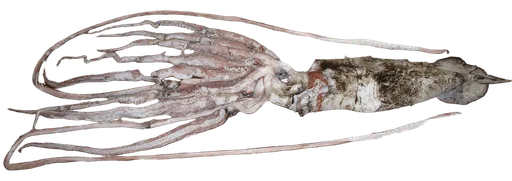
- Weight
- 150 kg331 lb
- Length
- 5 m16.4 ft
As heavy as 2.1 people
Heavier than 76% of animals2.9× a person's height
Bigger than 94% of animalsThe giant squid is a deep-ocean long-range grappler built around two extraordinary feeding tentacles, hundreds of toothed suckers and a cutting beak. A large female can weigh around 150 kg while extending far beyond its compact mantle with thin capture tentacles. Huge eyes, ink, jet propulsion and near-neutral buoyancy make it highly specialized for deep pelagic life, but its soft unarmored body keeps Defense well below its famous size and Special ratings.
Detailed ratings
Research-backed ratings on one 0–100 scale for all 344 animals (updated 2026-09-27). How ratings work


Card No. 144 of 344. Every animal on Animal Battle Stats has one: its power, tier and archetype on the front; its six battle stats, abilities and signature move on the back.
Special abilities
Two highly extensible feeding tentacles project a capture envelope far beyond the mantle and terminate in clubs armed with hundreds of toothed suckers, allowing prey to be seized and reeled toward the arm crown.
Enormous camera-type eyes gather scarce deep-water light and support visual prey/predator detection where ordinary surface vision is heavily disadvantaged.
Unique traits
Much of the animal's famous total length comes from two thin, extensible feeding tentacles, so mantle length and mass are more meaningful combat-size metrics than headline tip-to-tip length.
Ammonium-rich tissues reduce body density and help this huge soft-bodied predator remain suspended with less continuous swimming effort.
How it fights
Weapons
- The giant squid is a long-reach aquatic grappler. Its two feeding tentacles create the initial capture envelope. The terminal clubs use many toothed suckers to attach to prey, after which the tentacles retract and the eight arms add multiple contact points. The prey is then brought to the central beak for cutting.
- This is a dangerous system at 150 kg because it combines reach, redundancy and restraint. It is not equivalent to the colossal squid's swivelling hooks, and the two species should not share a generic 'giant squid hook' ability. Architeuthis uses toothed sucker rings rather than the prominent rotating hooks of Mesonychoteuthis.
Struggles vs
- Terrestrial combat is effectively nonfunctional.
- Soft tissue lacks passive armor.
- Long tentacles can be damaged, severed or controlled by much larger predators.
- High-output jetting cannot be assumed sustainable indefinitely.
- Extreme total-length figures exaggerate effective body mass because much of the length is two thin extensible tentacles.
- Weight
- 150 kg331 lb
- Height
- No reliable measurement
- Length
- 5 m16.4 ft
- Top speed
- No reliable measurement
- Bite force
- No reliable measurement
- Lifespan
- 3 years
- Home biome
- Ocean
- Lifestyle
- Social
Rated specimen: Healthy mature large female, 150.0 kg, using the Smithsonian's well-documented 149.6 kg female as a representative large-female mass anchor rather than the 220-275 kg verified/estimated maxima or older tonne-scale folklore.
Fun facts
- The first photographs of a live giant squid in its natural environment were obtained only in the 21st century.
- In 2012 researchers filmed a giant squid in its deep natural habitat for the first time.
- Smithsonian reports a documented female about 10.9 m long and 149.6 kg, with approximately 6.7 m of that length in the feeding tentacles.
- Giant squid use toothed sucker rings, not the rotating hooks characteristic of the colossal squid.
- A 2013 mitogenomic study of 43 specimens from around the world found remarkably little mitochondrial variation and supported one global species.
- Three mature males from Irish waters measured about 0.98-1.08 m mantle length, illustrating the strong female-biased size dimorphism.
Closest rivals by power. Tap one for the full breakdown, or pick any opponent.
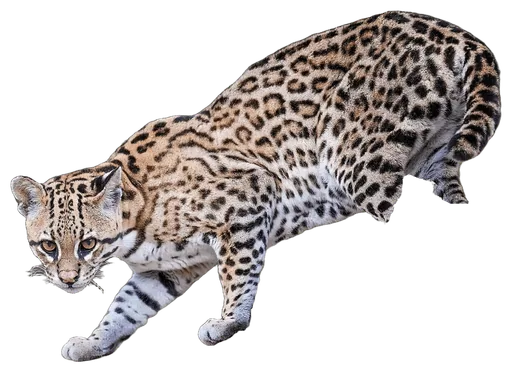
vs Emperor PenguinWins · 58% · Slight edge 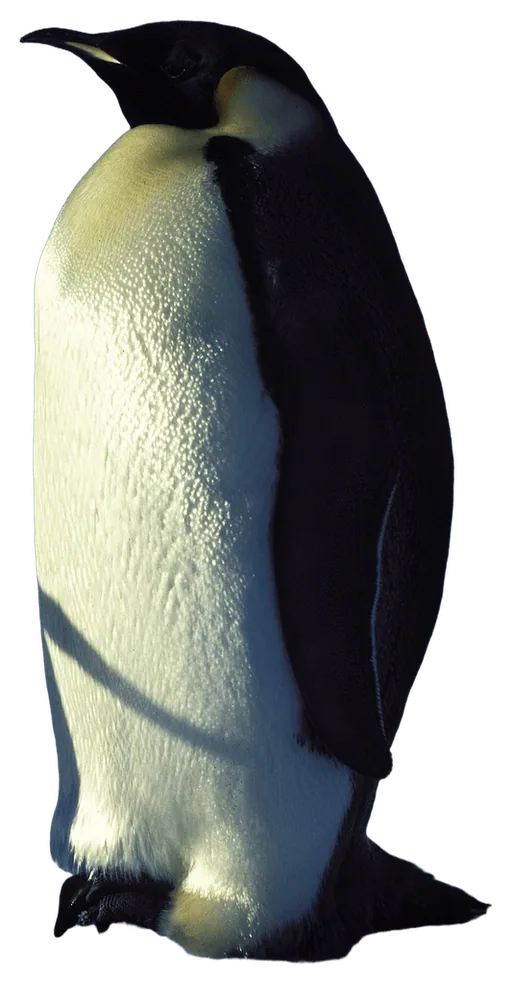 W vs OcelotWins · 64% · Slight edge
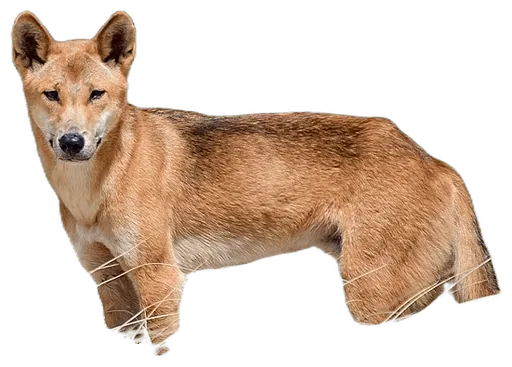
 W vs DingoWins · 62% · Slight edge
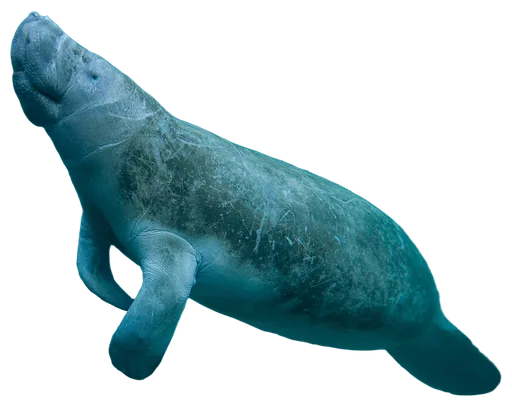
 W vs ManateeLoses · 57% · Toss-up
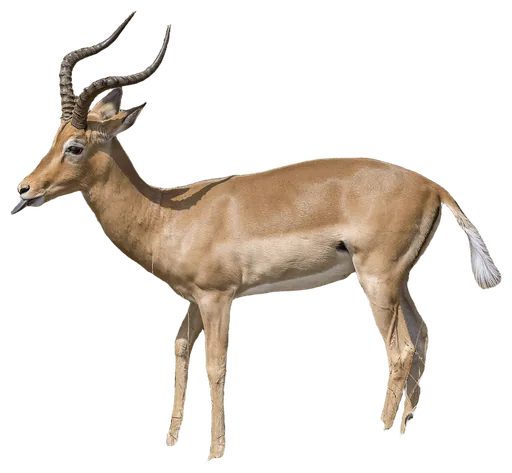
 L vs ImpalaWins · 55% · Toss-up
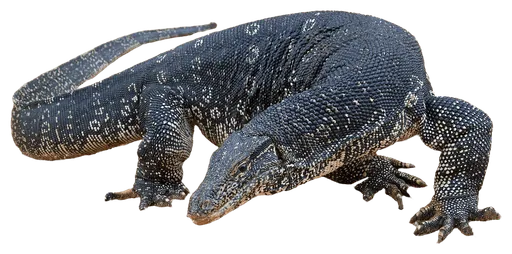
 W vs Monitor LizardWins · 61% · Slight edge
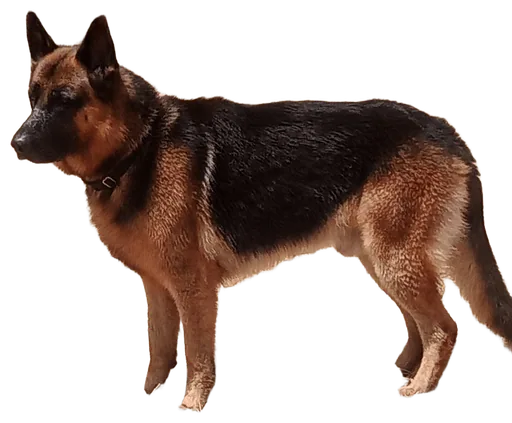
 W vs German ShepherdWins · 58% · Slight edge
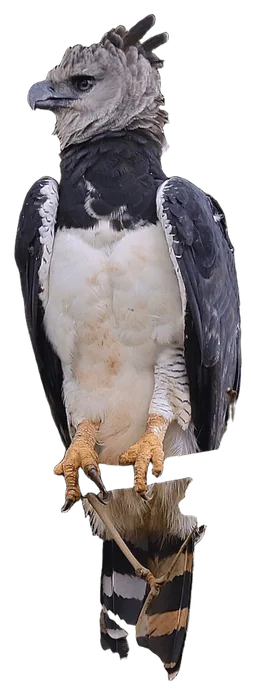
 W vs Harpy EagleWins · 67% · Slight edge
 W
Giant Squid battle analysis
Architeuthis dux is a perfect example of why Animal Battle Stats cannot score from reputation. Its popular image is a many-tonne sea monster wrestling ships and sperm whales. The measured animal is stranger and more interesting. A robust female can be heavier than a person, but much of the spectacular headline length is concentrated in two narrow feeding tentacles. The core body is measured more honestly by mantle length and mass.
That anatomy creates a distinctive combat geometry. The squid does not need to place its mantle beside prey to begin an attack. It can extend two tentacles, attach the clubs with arrays of toothed suckers, and pull prey into eight shorter arms. Only after restraint does the beak become the main cutting weapon. The result is excellent reach and control against fish and other cephalopods, but not the crushing bite of a crocodilian or the hook system of a colossal squid.
Defense is the inverse problem. The giant squid has active escape tools but very little passive armor. Ink can disrupt vision. Jetting can rapidly change position. Giant eyes help detect events in dim water. Yet if a sperm whale or large shark makes damaging contact, the mantle and appendages are still soft tissue. Sperm-whale predation is therefore central to realistic calibration: scars and beaks document violent encounters, but they do not transform the squid into an equal-mass whale fighter.
Its cognition also demands restraint. Coordinating ten appendages, visual input, prey capture and jet propulsion requires sophisticated nervous control, but direct adult behavioral experiments are nearly nonexistent. The report therefore credits functional tactics without borrowing the most impressive cognitive findings from octopuses or cuttlefish.
The final profile is a large, unusual ambush/grapple predator with moderate absolute power, low passive protection, high sensory specialization and an exceptional capture envelope. Its strongest ABS identity is not 'sea monster'. It is a deep-water reach specialist whose biology rewards positioning and first secure contact.
Habitat & range
Genetic and specimen evidence supports a broadly distributed global species in temperate and subtropical deep oceans. Giant squid are associated with continental slopes and deep pelagic habitat, commonly inferred in roughly several hundred to around 1,000 m depth depending on region and life stage. They are uncommon in polar extremes and very warm tropical surface waters.
Diet & hunting
Adult giant squid prey on fishes and cephalopods. Stomach-content records include blue whiting, horse mackerel, Norway lobster and curled octopus. Stable-isotope profiles show an ontogenetic increase in trophic position, indicating diet shifts toward larger/higher-trophic prey as the squid grows. Giant squid are themselves important prey of sperm whales, linking deep pelagic cephalopod biomass to marine mammals.
Social life
Unknown. There is no strong evidence for stable cooperative groups or pack hunting in adults. ABS treats the canonical individual as solitary.
Conservation
Population size is difficult to estimate directly because the species occupies deep water and most records come from strandings, fisheries encounters, predator stomach contents and rare live observations. The 2013 mitochondrial study found extremely low global genetic diversity and no clear phylogeographic structure. That pattern may reflect population history or selective processes and should not be casually translated into either abundance or conservation security.
Quick answers
How strong is a Giant Squid?
On the Animal Battle Stats scale, the Giant Squid has an attack rating of 58 and a power index of 52.8 out of 100, which ranks it #144 of 344 animals and puts it in B tier (Strong). Its strongest stat is special (86).
How much does a Giant Squid weigh?
A typical adult Giant Squid weighs about 150 kg (331 lb). Rated specimen: healthy mature large female, 150.0 kg, using the Smithsonian's well-documented 149.6 kg female as a representative large-female mass anchor rather than the 220-275 kg verified/estimated maxima or older tonne-scale folklore.
How fast is a Giant Squid?
There is no reliable measured top speed for the Giant Squid, so we do not publish one. Its agility rating, which covers acceleration, reflexes and evasion, is 54 out of 100.
What does a Giant Squid eat?
Adult giant squid prey on fishes and cephalopods. Stomach-content records include blue whiting, horse mackerel, Norway lobster and curled octopus. Stable-isotope profiles show an ontogenetic increase in trophic position, indicating diet shifts toward larger/higher-trophic prey as the squid grows. Giant squid are themselves important prey of sperm whales, linking deep pelagic cephalopod biomass to marine mammals.
What animals can beat a Giant Squid?
Among its closest rivals, the Manatee (57%) would be favored against the Giant Squid. It would be favored against the Emperor Penguin, the Ocelot, the Dingo, the Impala, the Monitor Lizard, the German Shepherd, the Harpy Eagle.
Researched 2026-09-27. Ratings are editorial judgments built from these sources; measurements describe a healthy adult female.
- Smithsonian Ocean, Giant SquidAnatomy, size, capture tentacles, sucker rings, observations
- Smithsonian/Commons 2005 femaleCanonical mass/sex and specimen dimensions
- Guinness World Records, largest cephalopodsUpper mass/length context
- Winkelmann et al. 2013, Proceedings BTaxonomy, global population structure
- Lordan, Collins & Perales-Raya 1998Mature male size, diet, rapid growth
- Guerra et al. 2010, ICES Journal of Marine ScienceOntogenetic diet and habitat inference
- Animal Diversity Web, Architeuthis duxReproduction and lifespan context
- CEPH REF, Architeuthis duxAge uncertainty and morphology
- Smithsonian Institution collectionExact species/depth specimen evidence
- Commons, Female giant squid NMNHNew-animal image candidate
Photo: “MOL 1130046 Architeuthis specimen.jpg” by NOAA; "creator" given as Paul Greenhall , Smithsonian Institution, Public domain, background removed and cropped. Original
Suggest a correction