
Giant Centipede
Scolopendra giganteaD tier · Underdog10th of 30 bugs & spiders
Size & speed
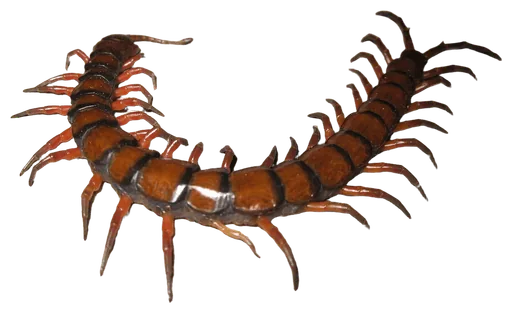
- Length
- 30 cm11.8 in
About 1 rulers long
Bigger than 15% of animalsThe Amazonian giant centipede is a roughly 30 cm venomous predator built around close-range control. Its absolute strength and durability are tiny on the full ABS roster, but venomous forcipules, dozens of gripping legs and exceptional climbing let it kill small vertebrates and even capture bats from cave ceilings. Its profile is therefore low in raw power and defense but very high in agility and biological specialization.
Detailed ratings
Research-backed ratings on one 0–100 scale for all 344 animals (updated 2026-09-27). How ratings work


Card No. 293 of 344. Every animal on Animal Battle Stats has one: its power, tier and archetype on the front; its six battle stats, abilities and signature move on the back.
Special abilities
Modified front limbs pierce and hold prey while delivering medically significant venom, turning a low-mass strike into a disproportionately effective small-prey weapon.
Many contact points and powerful terminal anchoring allow the centipede to suspend itself from cave ceilings while seizing bats, a directly observed predatory tactic.
Unique traits
More than twenty pairs of walking legs distribute grip across irregular terrain, allowing rapid control through leaf litter, crevices and steep surfaces.
A long, flexible, flattened body permits access to narrow refuges and lets the animal wrap its contact points around complex substrate while keeping the venomous head mobile.
How it fights
Weapons
- The primary weapon is the paired venomous forcipules. They combine penetration, gripping and chemical incapacitation. Mandibles process food after capture. Numerous legs stabilize the body and allow rapid traction around irregular substrate, while the terminal legs contribute to anchoring and grappling.
Struggles vs
- High dehydration risk in dry exposed environments
- Very low absolute mass and tissue depth
- Exoskeleton offers little protection from much larger vertebrate attacks
- Venom delivery requires close contact
- Open terrain removes much of its concealment and climbing advantage
- Weight
- No reliable measurement
- Height
- No reliable measurement
- Length
- 30 cm11.8 in
- Top speed
- No reliable measurement
- Bite force
- No reliable measurement
- Lifespan
- 10 years
- Home biome
- Jungle
- Lifestyle
- Mostly solitary, nocturnal
Rated specimen: Healthy mature adult of unknown sex, 30.0 cm total length.
Fun facts
- S. gigantea is among the world's largest living centipedes, reaching roughly 30 cm in strong references.
- The famous Venezuelan cave observations show it can hang from ceilings and capture bats in flight or at roost.
- The bat study explicitly reports prey substantially heavier than the centipedes themselves.
- Its “fangs” are not true jaws: they are a pair of venomous forcipules on the first body segment.
- Females brood their eggs rather than abandoning them immediately.
- Taxonomic revision showed that some famous “giant centipede” records from western South America belong to S. galapagoensis, illustrating why exact-species sourcing matters.
Closest rivals by power. Tap one for the full breakdown, or pick any opponent.
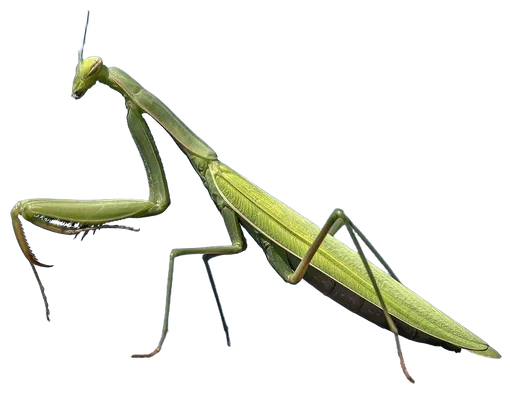
vs Brazilian Wandering SpiderWins · 64% · Slight edge 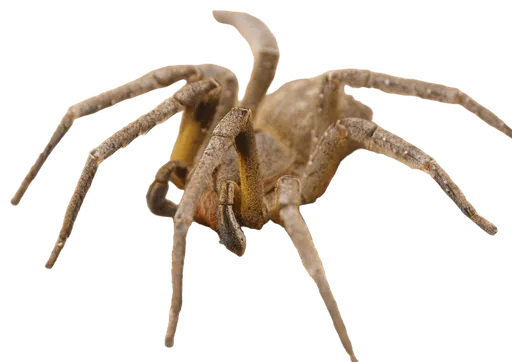 W vs Praying MantisWins · 64% · Slight edge
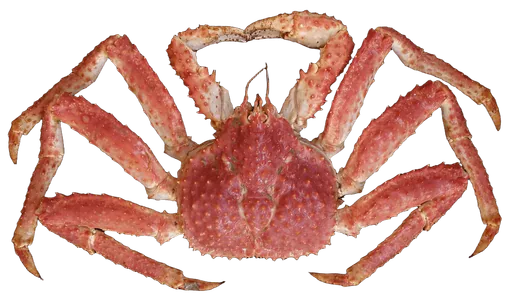
 W vs King CrabLoses · 74% · Clear edge
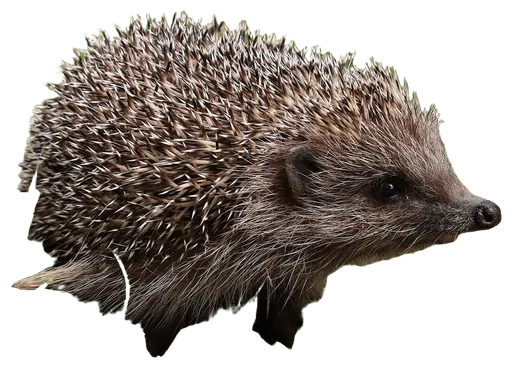
 L vs HedgehogLoses · 67% · Slight edge
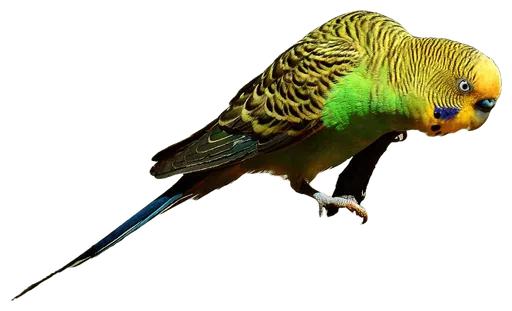
 L vs BudgerigarWins · 53% · Toss-up
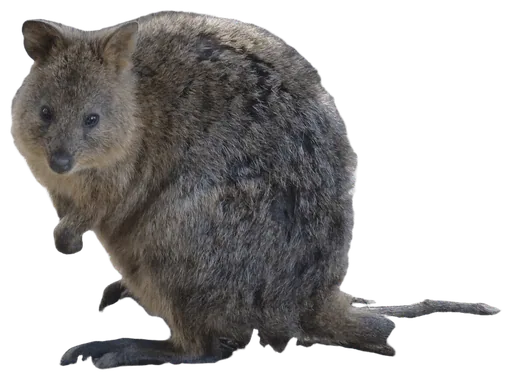
 W vs QuokkaLoses · 73% · Clear edge
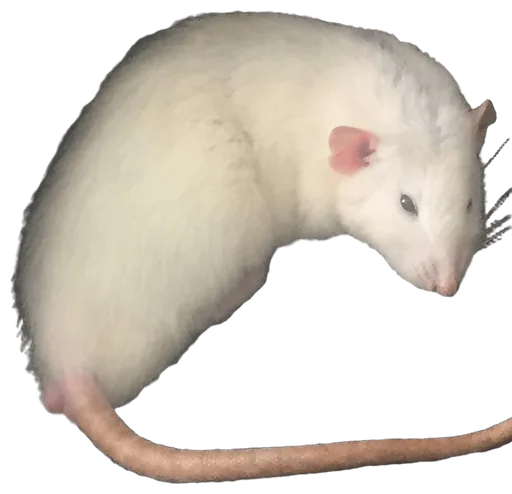
 L vs Fancy RatLoses · 63% · Slight edge
 L vs CockatielLoses · 54% · Toss-up
 L
Giant Centipede battle analysis
Scolopendra gigantea is a useful calibration test because its most dramatic feats are real but easy to mis-score. A giant centipede can subdue prey heavier than itself, yet that does not make its Raw Power comparable with a fox, wolf or large reptile. The correct explanation is a package of penetration, venom, leverage and many-point anchoring operating against relatively small prey.
Its cave-bat predation is particularly informative. Rather than chasing bats through open air, the centipede exploits the cave ceiling as an anchor, leaving enough of its body free to seize and envenomate a passing or perched bat. This supports very high maneuverability and Special without inventing high sprint speed or vertebrate-scale strength.
Defense remains poor in absolute terms. The exoskeleton is meaningful against arthropod-scale attacks but offers little against crushing or pecking by much larger animals. Humidity dependence also creates an environmental weakness. The result is a polarized but biologically grounded fighter: extremely specialized at close-range predation on small targets, yet physically fragile against most of the roster.
Habitat & range
The taxonomically revised core range is northern South America and the southern Caribbean, especially northern Colombia and Venezuela, Trinidad, Margarita, Curaçao and Aruba, with later literature extending verified distribution westward to Panama and eastward toward the Guianas. It occupies tropical/subtropical forest and dry-forest habitats but relies on dark humid refuges such as leaf litter, soil, rocks, logs and caves.
Diet & hunting
It is a generalist carnivorous predator of large invertebrates and small vertebrates. ADW lists crickets, worms, snails and roaches plus lizards, toads and mice. The strongest field evidence is the Venezuelan cave study documenting predation on Mormoops megalophylla, Pteronotus davyi and Leptonycteris curasoae bats.
Social life
Adults are primarily solitary predators. Reproduction is indirect: the male deposits a spermatophore/sperm package and the female receives it. Females brood eggs and remain with the early young, an important form of parental care for an arthropod predator.
Conservation
No robust IUCN global assessment was located for S. gigantea in this run. Conservation status should therefore be recorded as not evaluated / no verified assessment found, not assumed from abundance in the pet trade.
Quick answers
How strong is a Giant Centipede?
On the Animal Battle Stats scale, the Giant Centipede has an attack rating of 18 and a power index of 37.2 out of 100, which ranks it #293 of 344 animals and puts it in D tier (Underdog). Its strongest stat is special (94).
How much does a Giant Centipede weigh?
A typical adult Giant Centipede weighs about 50 g (1.8 oz). Rated specimen: Healthy mature adult of unknown sex, 30.0 cm total length.
How fast is a Giant Centipede?
There is no reliable measured top speed for the Giant Centipede, so we do not publish one. Its agility rating, which covers acceleration, reflexes and evasion, is 84 out of 100.
What does a Giant Centipede eat?
It is a generalist carnivorous predator of large invertebrates and small vertebrates. ADW lists crickets, worms, snails and roaches plus lizards, toads and mice. The strongest field evidence is the Venezuelan cave study documenting predation on Mormoops megalophylla, Pteronotus davyi and Leptonycteris curasoae bats.
Is the Giant Centipede endangered?
The Giant Centipede's conservation status is Not Evaluated. No robust IUCN global assessment was located for S. gigantea in this run. Conservation status should therefore be recorded as not evaluated / no verified assessment found, not assumed from abundance in the pet trade.
What animals can beat a Giant Centipede?
Among its closest rivals, the King Crab (74%), the Hedgehog (67%), the Quokka (73%), the Fancy Rat (63%), the Cockatiel (54%) would be favored against the Giant Centipede. It would be favored against the Brazilian Wandering Spider, the Praying Mantis, the Budgerigar.
Researched 2026-09-27. Ratings are editorial judgments built from these sources; measurements describe a healthy adult.
- Shelley & Kiser, Tropical ZoologyTaxonomy, range
- Shelley taxonomic treatment / ZenodoTaxonomic status, distribution
- Quintero Arias & Cupul-MagañaDistribution
- Animal Diversity WebLength, lifespan, habitat, reproduction, diet, water balance
- Australian MuseumSize comparison
- Guinness World RecordsLength context
- Molinari et al., bat predation recordCombat mechanics, climbing, prey
- Rodríguez-Acosta et al. 2000Human envenomation
- Wikimedia Commons, Tod BakerImage provenance
Photo: “Scolopendra gigantea.jpg” by Katka Nemčoková, CC BY-SA 3.0, background removed and cropped. Original
Suggest a correction