
Gecko
Gekko geckoD tier · Underdog31st of 39 reptiles
Size & speed
- Weight
- 300 g10.6 oz
- Length
- 38 cm15 in
As heavy as 1.5 smartphones
Heavier than 13% of animalsAbout 1.3 rulers long
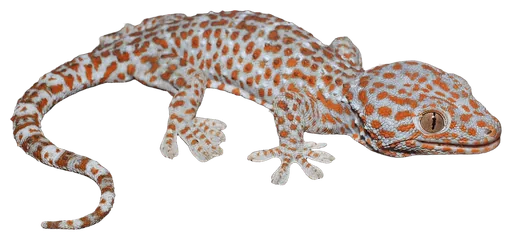
Bigger than 19% of animalsThe Tokay Gecko is a large, territorial nocturnal gecko whose real advantage is not brute force but extraordinary three-dimensional mobility. Adhesive toe pads let it sprint across walls and ceilings, while a tenacious bite and detachable regenerating tail give it useful close-range offense and escape tools. At only a few hundred grams, however, it remains physically fragile against larger roster animals.
Detailed ratings
Research-backed ratings on one 0–100 scale for all 344 animals (updated 2026-09-27). How ratings work


Card No. 272 of 344. Every animal on Animal Battle Stats has one: its power, tier and archetype on the front; its six battle stats, abilities and signature move on the back.
Special abilities
Microscopic adhesive toe structures permit secure locomotion on vertical and overhanging surfaces, dramatically expanding usable combat terrain and escape routes.
Caudal autotomy can leave an attacker with the tail while the gecko escapes; the tail later regenerates, though the replacement is imperfect and the event has energetic/function costs.
Unique traits
The loud species-defining call advertises territory and reproductive presence, paired with aggressive mouth-gaping and barking displays.
Unusually capable low-light visual performance, including color and UV sensitivity, supports prey detection and navigation after dark.
How it fights
Weapons
- The principal offensive weapon is a rapid jaw strike followed by a tenacious bite. Tokays also use body positioning and close-range lunging. They lack venom, armor, horns or specialized slicing claws. Their small absolute mass sharply limits damage against medium and large roster animals.
Struggles vs
- Tiny absolute mass and low stopping power.
- No armor and little trauma tolerance against much larger animals.
- Bite requires very close range.
- Adhesion is environment-dependent.
- Ectothermy makes cold a direct performance penalty.
- Weight
- 300 g10.6 oz
- Height
- No reliable measurement
- Length
- 38 cm15 in
- Top speed
- No reliable measurement
- Bite force
- No reliable measurement
- Lifespan
- 10.5 years
- Home biome
- Desert
- Lifestyle
- Social
Rated specimen: Healthy mature male, 0.25 kg and 38.0 cm total length.
Fun facts
- The common name “tokay” imitates the male's famous call.
- A documented adult male museum specimen from Timor-Leste measured only 236 mm total length, showing why one internet “maximum size” should not define every population.
- Tokays can traverse vertical and inverted surfaces using microscopic toe structures rather than glue or suction cups.
- Their eyelids are fused and transparent rather than blinking like mammalian eyelids.
- The species is regulated under CITES Appendix II despite its global Least Concern assessment because international trade is substantial.
- Controlled experiments show that cold, not simply humidity, can sharply depress running performance.
Closest rivals by power. Tap one for the full breakdown, or pick any opponent.
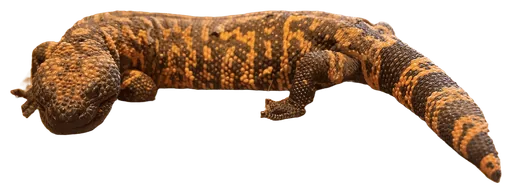
vs IguanaLoses · 69% · Slight edge 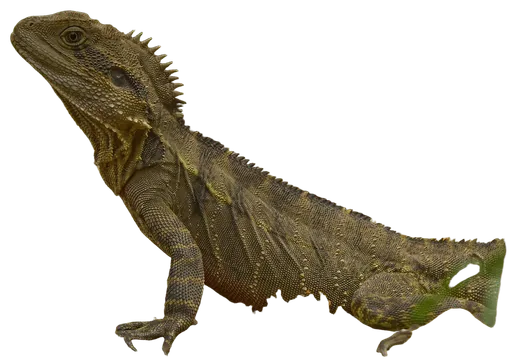 L vs Gila MonsterLoses · 55% · Toss-up
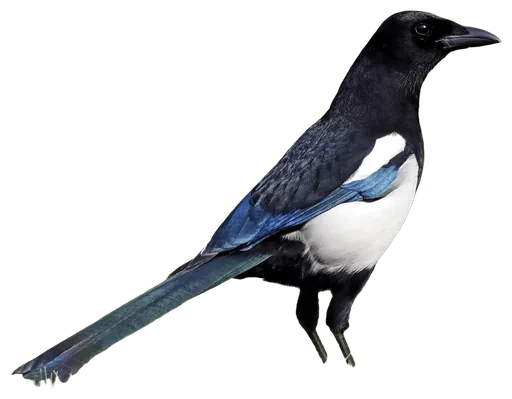
 L vs MagpieWins · 51% · Toss-up
 W vs Sand CatLoses · 63% · Slight edge
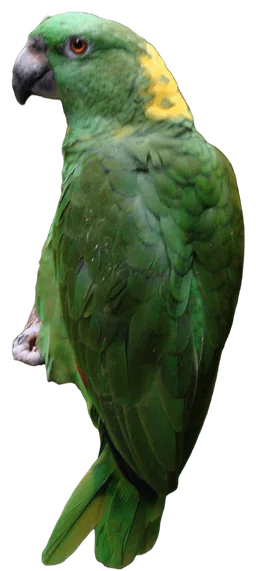
 L vs Yellow-naped AmazonLoses · 53% · Toss-up
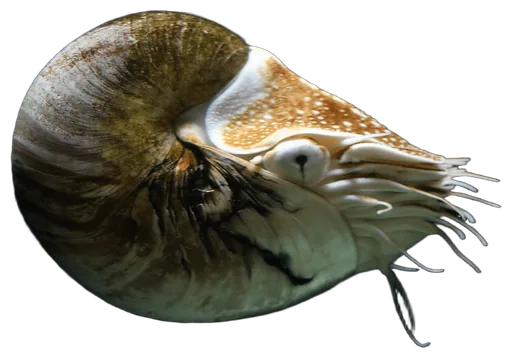
 L vs NautilusLoses · 54% · Toss-up
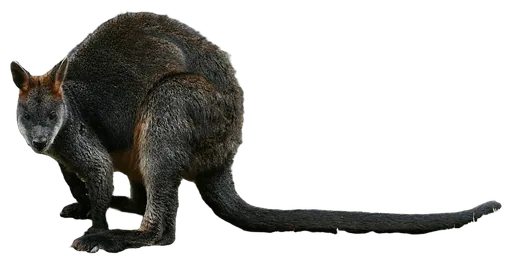
 L vs WallabyLoses · 72% · Clear edge
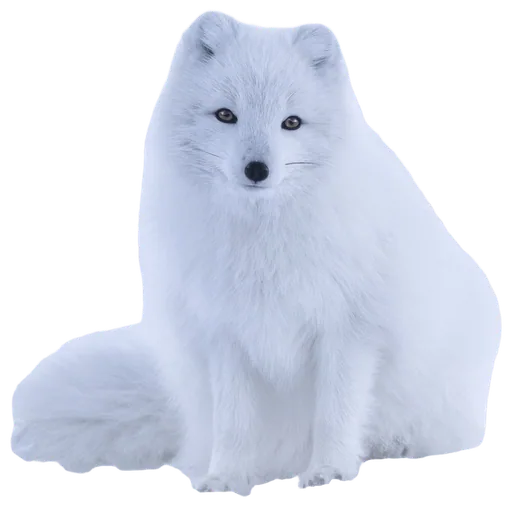
 L vs Arctic FoxLoses · 65% · Slight edge
 L
Gecko battle analysis
The Tokay Gecko turns architecture into a weapon. A wall that blocks a terrestrial animal is simply another running surface, and a ceiling can become an escape lane. Its toe pads create this advantage through millions of microscopic contact structures, giving the animal exceptional control without requiring claws to penetrate the surface. In warm conditions, that makes a tokay extraordinarily difficult for a similarly small ground-bound opponent to corner.
Its reputation for aggression is real but must be scaled correctly. A mature male has a broad head, strong jaws and a willingness to bite during territorial conflict, yet it weighs only a fraction of a kilogram. Against insects, small vertebrates or another gecko, that bite is meaningful. Against a coyote, cat or even many mid-sized birds, it is not. The ABS profile therefore places its physical Attack and Defense near the low end while reserving elite values for Agility and Special, where its biology genuinely competes with the roster's specialists.
The tail adds another layer. Autotomy can convert a successful grab into an escape, but losing the tail is costly and the regenerated structure is not identical to the original. The result is a specialist whose best battle plan is positioning, surface access and disengagement, not trading damage.
Habitat & range
G. gecko is native across South and Southeast Asia and parts of the Indo-Australian region, using tropical forests, trees, limestone/rock environments and human structures. Introduced populations occur outside the native range, including parts of the United States. Taxonomic boundaries in northern portions of the historical Tokay range require care because G. reevesii is distinct.
Diet & hunting
The species is a nocturnal carnivore dominated by large insects and other invertebrates, with small lizards and other small vertebrates taken opportunistically. It is both predator and prey and can reduce insect abundance around buildings.
Social life
Tokays are territorial, particularly males, but breeding pairs/family associations can be more socially complex than the old stereotype of a purely solitary gecko. Females commonly cement pairs of hard-shelled eggs to vertical surfaces. Bern researchers report parental care behaviors in captivity, including defense and interactions with juveniles.
Conservation
The 2019 IUCN assessment lists G. gecko as Least Concern, while CITES regulates international trade under Appendix II. TRAFFIC/IUCN analysis notes a very broad range and ecological flexibility but also substantial trade and reported local declines in parts of Asia. Global LC status therefore should not be interpreted as absence of local pressure.
Quick answers
How strong is a Gecko?
On the Animal Battle Stats scale, the Gecko has an attack rating of 12 and a power index of 41.2 out of 100, which ranks it #272 of 344 animals and puts it in D tier (Underdog). Its strongest stat is agility (96).
How much does a Gecko weigh?
A typical adult Gecko weighs about 300 g (10.6 oz). Rated specimen: healthy mature male, 0.25 kg and 38.0 cm total length.
How fast is a Gecko?
There is no reliable measured top speed for the Gecko, so we do not publish one. Its agility rating, which covers acceleration, reflexes and evasion, is 96 out of 100.
What does a Gecko eat?
The species is a nocturnal carnivore dominated by large insects and other invertebrates, with small lizards and other small vertebrates taken opportunistically. It is both predator and prey and can reduce insect abundance around buildings.
Is the Gecko endangered?
No. The Gecko is listed as Least Concern. The 2019 IUCN assessment lists G. gecko as Least Concern, while CITES regulates international trade under Appendix II. TRAFFIC/IUCN analysis notes a very broad range and ecological flexibility but also substantial trade and reported local declines in parts of Asia. Global LC status therefore should not be interpreted as absence of local pressure.
What animals can beat a Gecko?
Among its closest rivals, the Iguana (69%), the Gila Monster (55%), the Sand Cat (63%), the Yellow-naped Amazon (53%), the Nautilus (54%), the Wallaby (72%), the Arctic Fox (65%) would be favored against the Gecko. It would be favored against the Magpie.
Researched 2026-09-27. Ratings are editorial judgments built from these sources; measurements describe a healthy adult male.
- Smithsonian National Zoo, Tokay Geckomale/female length, adhesion, bite, senses, tail regeneration, range
- University of Bern Behavioral Ecology, Tokay geckosSVL ceiling, nocturnal/color/UV vision, territoriality, aggression, reproduction, parental care
- Ringenwald et al. 2021, JEZ / PubMed PMID 33830673temperature/humidity/substrate effects on locomotion
- Andrews & Bertram 1997, Physiological Zoology / PubMed PMID 9231392prey-handling mechanics and bite/work response to prey
- Animal Diversity Web, Gekko geckocaptive lifespan, territoriality, bite behavior, chemosensation
- WWF India Tokay Gecko factsheetbroad sex-specific length, 150–400 g, ecology, CITES/IUCN context
- Sacramento Zoo, Tokay Gecko250–350 g, 11–15 in, lifespan and ecology
- IUCN/TRAFFIC CoP18 analysis2019 LC assessment, trade/local decline context
- Cash et al. 2025, Biological Conservationcomparative mass/SVL and trade susceptibility
- Commons / ZooKeys adult male USNM 573671exact adult male identity, SVL 142 mm, TL 236 mm, CC BY 3.0 image provenance
Photo: “Tokay gecko (Gekko gecko).jpg” by MH Herpetology, CC BY-SA 4.0, background removed and cropped. Original
Suggest a correction