

Gaur
Bos gaurus
 #27 of 273
  Jungle Tank Vulnerable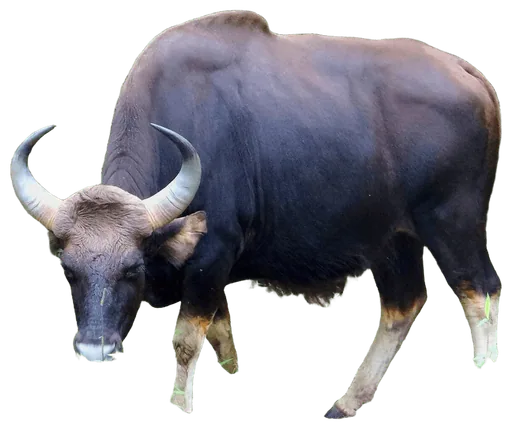
 Fight
FightPhoto: Nishikant · CC BY-SA 4.0
The gaur is the largest wild cattle species on Earth, a tonne-class forest bull armed with thick upcurved horns and wrapped in heavy muscle beneath a towering dorsal ridge. Usually shy, it becomes a formidable, horn-hooking brawler when surprised or cornered, strong enough to kill a tiger on occasion but still vulnerable to one.
 Attack78
  Defense72
  Agility56
  Stamina69
  Intelligence54
  Special50
 Detailed ratings
Research-backed ratings on one 0–100 scale for all 273 animals (updated 2026-09-28). How ratings work
Special abilities
Ability 1Hooking Horn SweepBulls strike sideways and upward with thick, upcurved horns braced by a broad frontal ridge, backed by a tonne of body mass.
 Ability 2Lateral Size Display
Bulls turn side-on to show their full height and ridge, settling many contests and deterring threats before contact.
Unique traits
 TraitLargest Wild Cattle
The gaur is the biggest wild bovid alive, with bulls around a tonne and up to 2.2 m at the shoulder.
TraitWhite-Stockinged GiantA glossy dark coat, pale lower legs, a tall dorsal ridge over the shoulders and a hanging dewlap give bulls a distinctive silhouette.
How it fights
Weapons
- The gaur's weapon system is a tonne of muscle driving a pair of thick, upcurved horns. Bulls hook sideways and upward with the horns rather than meeting head-on like a Cape buffalo; the heavy frontal ridge between the horns braces the strike. Mass, shoving and trampling add damage. The combination is lethal to people: at a tertiary hospital in Manipal, Karnataka, gaur caused more significant and life-threatening injuries than any other wild mammal in the surrounding region.
 Struggles vs
- No true armor; flanks, belly and hindquarters are soft targets.
- Heat limits prolonged exertion.
- Mostly avoids a fight, giving an ambush predator the first move.
- A tonne of mass limits sharp turning.
- Tigers do kill adult gaur.
- Weight
- 1 t1.1 US tons
- Height
- 1.9 m6.2 ft
- Length
- 3 m9.8 ft
- Top speed
- No reliable measurement
- Bite force
- No reliable measurement
- Lifespan
- 25 years
- Home biome
- Jungle
- Lifestyle
- Social
Rated specimen: Healthy mature adult male (bull) of about 1,000 kg and 190 cm shoulder height, with fully grown horns and dorsal ridge.
Fun facts
- Gaur are the largest wild cattle species in the world.
- Despite the nickname "Indian bison", gaur are wild oxen and not bison.
- Both bulls and cows carry horns up to about 115 cm long.
- A Thai study of kills by 24 collared tigers found the average gaur killed weighed about 398 kg, well under half a prime bull's mass.
- Gaur have been recorded killing tigers, one of very few prey animals to do so.
- Near Manipal in Karnataka, gaur caused more serious injuries to people than any other wild mammal.
Closest rivals by power. Tap one for the full breakdown, or pick any opponent.
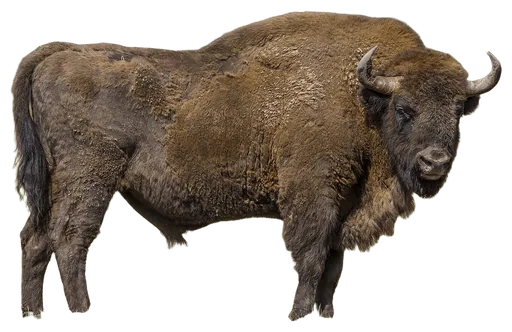
vs Cape BuffaloWins · 51% · Toss-up 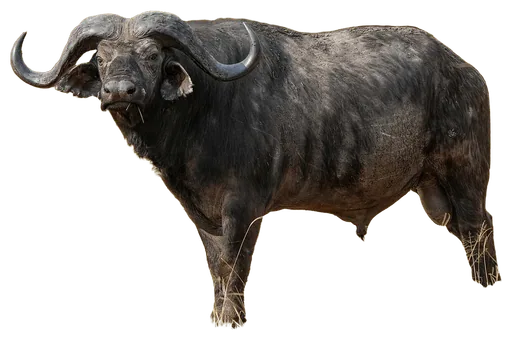 W vs BisonWins · 51% · Toss-up
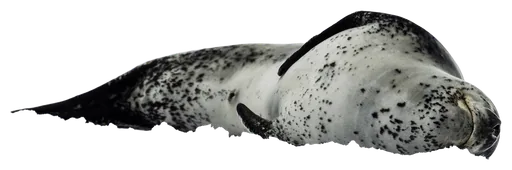
  W vs Leopard SealLoses · 51% · Toss-up
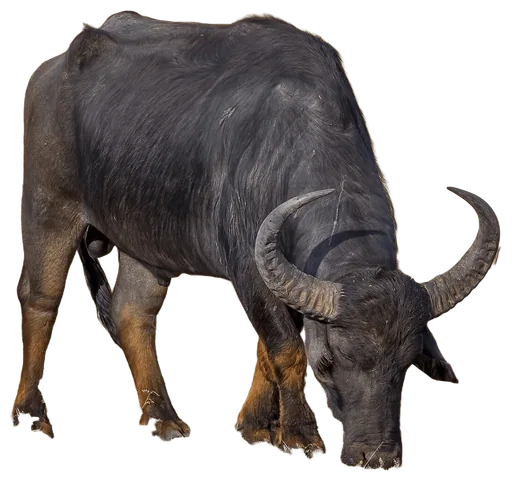
  L vs Water BuffaloWins · 51% · Toss-up
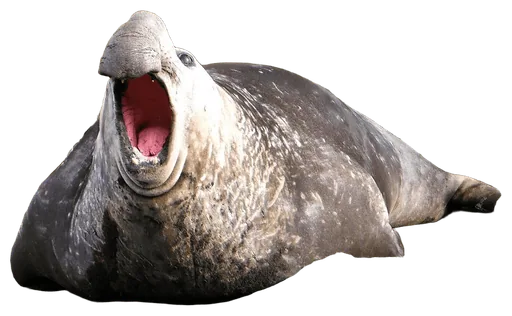
  W vs Elephant SealLoses · 52% · Toss-up
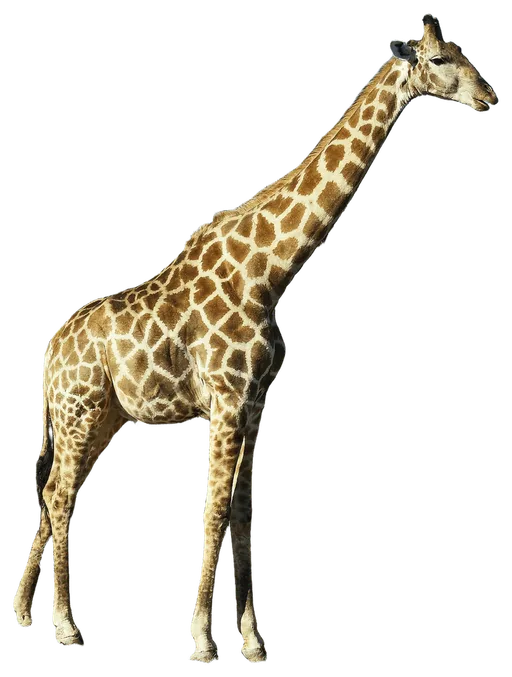
  L vs GiraffeWins · 52% · Toss-up
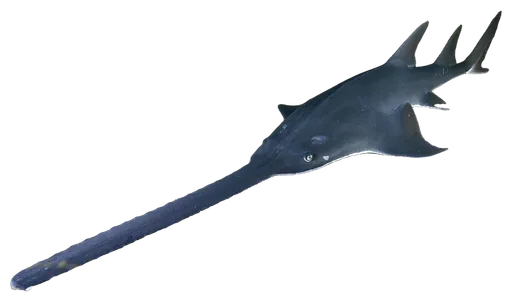
  W vs SawfishWins · 50% · Toss-up
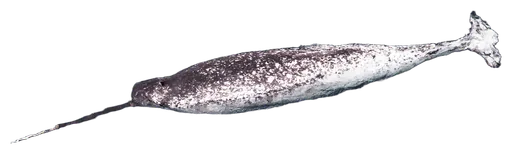
  W vs NarwhalWins · 50% · Toss-up
  W
W  Pick any opponent
 Gaur battle analysis
A mature gaur bull is an imposing animal: close to two metres at the shoulder, around a tonne in weight, glossy near-black with white socks, and topped by a high muscular ridge that runs from the shoulders into the back. Its horns, present in both sexes, sweep up and inward from a broad, pale forehead. Everything about the silhouette advertises mass, and bulls use that silhouette deliberately, turning side-on to rivals so their full size is visible.
Most of the time gaur avoid trouble. They graze and browse in forest glades and hillside grasslands, retreat into cover at the first sign of danger, and in disturbed areas shift their activity into the night. When a threat is too close to escape, the response is a fast, heavy charge ending in hooking horn strikes. That reaction is why gaur injure more people than any other wild mammal around one Karnataka hospital, and why tigers usually target calves, cows and weakened animals rather than prime bulls.
For ABS calibration the gaur sits at the top of the wild-cattle group: heavier than the Cape Buffalo and Bison, with slightly higher Raw Power and Attack, but with a less aggressive temperament than the Cape Buffalo and no fused horn boss. It remains well below rhinoceros and elephant scale in size, power and defense, and it has no special mechanism beyond size, horns and display.
Habitat & range
Gaur live in South and Southeast Asia, from India and Nepal through Myanmar, Thailand, Laos, Cambodia, Vietnam and Peninsular Malaysia. They use evergreen and deciduous forest, bamboo, forest glades and nearby grasslands, often in hilly country. About 85% of the population is in India.
Diet & hunting
Gaur graze on grasses and browse leaves, shoots, bamboo, bark and fruit. As large herbivores they shape forest-edge vegetation and are major prey for tigers, which rely heavily on them in some reserves.
Social life
Herds of about 2 to 40 animals centre on females and young, typically with one breeding bull; bulls may move between herds during the breeding season or live alone. Bulls establish rank mainly by lateral display rather than all-out fights.
Conservation
Vulnerable on the IUCN Red List, a status held since 1986. The 2016 assessment estimated roughly 6,000–21,000 mature individuals, with declines of more than 70% in parts of the range over three generations. Populations are stable or recovering in well-protected Indian reserves but face poaching, habitat loss, disease from domestic cattle, uncontrolled fire, invasive plants and disturbance elsewhere.
Quick answers
How strong is a Gaur?
On the Animal Battle Stats scale, the Gaur has an attack rating of 78 and a power index of 67.2 out of 100, which ranks it #27 of 273 animals and puts it in A tier (Elite). Its strongest stat is attack (78).
How much does a Gaur weigh?
A typical adult Gaur weighs about 1 t (1.1 US tons). Rated specimen: healthy mature adult male (bull) of about 1,000 kg and 190 cm shoulder height, with fully grown horns and dorsal ridge.
How fast is a Gaur?
There is no reliable measured top speed for the Gaur, so we do not publish one. Its agility rating, which covers acceleration, reflexes and evasion, is 56 out of 100.
What does a Gaur eat?
Gaur graze on grasses and browse leaves, shoots, bamboo, bark and fruit. As large herbivores they shape forest-edge vegetation and are major prey for tigers, which rely heavily on them in some reserves.
Is the Gaur endangered?
The Gaur's conservation status is Vulnerable. Vulnerable on the IUCN Red List, a status held since 1986. The 2016 assessment estimated roughly 6,000–21,000 mature individuals, with declines of more than 70% in parts of the range over three generations. Populations are stable or recovering in well-protected Indian reserves but face poaching, habitat loss, disease from domestic cattle, uncontrolled fire, invasive plants and disturbance elsewher
What animals can beat a Gaur?
Among its closest rivals, the Leopard Seal (51%), the Elephant Seal (52%) would be favored against the Gaur. It would be favored against the Cape Buffalo, the Bison, the Water Buffalo, the Giraffe, the Sawfish, the Narwhal.
Researched 2026-09-28. Ratings are editorial judgments built from these sources; measurements describe a healthy adult male.
- Plazi TreatmentBank, Bos gaurusmass, height, length, tail
- Animal Diversity Web, gaur accountdimorphism, male mass
- Dimensions.com, gaurheight, length
- Kadoorie Farm and Botanic Gardensize, lifespan, features, status
- Asian Wild Cattle Specialist Group, gaurspecies rank
- Khaewphakdee et al. 2020, Ecology and Evolutionpredation
- Karanth & Sunquist 1995, Journal of Animal Ecologypredation
- San Diego Zoo tiger fact sheet (IELC)tiger risk
- Case report, gaur gores in the Western Ghatsdanger to humans
- Human-gaur conflict in Tamil Nadu, Discover Animalshuman interaction
- Chitwan habitat-use studythreats
- WorldAtlas, gaur factshorns, lifespan
- Wikipedia, GaurIUCN summary
- New World Encyclopedia, Gaurmorphology, social behavior
Photo: “Male Gaur.jpg” by Nishikant, CC BY-SA 4.0, background removed and cropped. Original
Suggest a correction