
Gaboon Viper
Bitis gabonicaC tier · Capable26th of 39 reptiles
Size & speed

- Weight
- 7 kg15 lb
- Length
- 1.3 m4.3 ft
As heavy as 1.6 house cats
Heavier than 41% of animalsAbout 4.3 rulers long
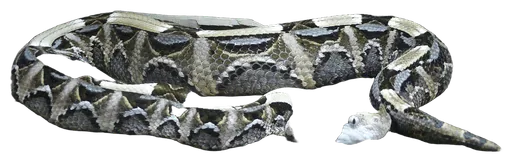
Bigger than 56% of animalsA massive forest-floor ambush viper whose extraordinary camouflage, 5 cm hinged fangs and high-capacity venom system make close-range contact dangerous, despite slow locomotion and a generally placid temperament.
Detailed ratings
Research-backed ratings on one 0–100 scale for all 344 animals (updated 2026-09-27). How ratings work


Card No. 223 of 344. Every animal on Animal Battle Stats has one: its power, tier and archetype on the front; its six battle stats, abilities and signature move on the back.
Special abilities
Solenoglyphous fangs reaching about 5 cm permit unusually deep venom injection, backed by very large venom reserves.
Geometric disruptive coloration and prolonged stillness can erase the snake's outline against forest-floor debris, enabling close ambushes.
Unique traits
Major institutional references place Gaboon-viper fangs at roughly 5 cm, an exceptional delivery apparatus among venomous snakes.
Smithsonian reports that this species commonly holds prey after striking rather than immediately releasing it, enabling continued venom delivery and physical control of small prey.
How it fights
Weapons
- The Gaboon viper is an ambush specialist. Its practical offensive sequence is concealment, very short-range explosive strike, deep fang penetration, venom injection, and often retention of prey. The long fangs give unusually deep delivery. Large venom reserves increase the potential dose, but venom quantity is actively variable, and a dry or reduced-dose bite is possible.
- The venom is medically dangerous and predominantly cytotoxic/hemotoxic in clinical effect, with severe local tissue injury, swelling, coagulopathy and systemic complications possible. This is a matchup-changing biochemical weapon, not a reason to inflate raw muscular power.
Struggles vs
- Open high-visibility ground reduces the value of crypsis.
- Cold conditions suppress ectothermic performance.
- Long pursuit strongly disadvantages its locomotor design.
- Very large opponents may remain mechanically dangerous after a bite because venom is not instantaneous.
- Weight
- 7 kg15 lb
- Height
- No reliable measurement
- Length
- 1.3 m4.3 ft
- Top speed
- No reliable measurement
- Bite force
- No reliable measurement
- Lifespan
- 20 years
- Home biome
- Jungle
- Lifestyle
- Social
Rated specimen: Healthy mature female, 7.0 kg and 130.0 cm total length.
Fun facts
- Its fangs can reach about 5 cm, longer than those of any other venomous snake cited by Smithsonian.
- It can remain so still and cryptic in leaf litter that people may step close before noticing it.
- Smithsonian notes that it often holds prey after the strike instead of immediately releasing it.
- Females can produce extraordinarily large litters, with Smithsonian reporting 50-60 young.
- Historical giant 'Gaboon viper' records require taxonomic checking because the western form is now Bitis rhinoceros.
Closest rivals by power. Tap one for the full breakdown, or pick any opponent.
vs BoomslangWins · 68% · Slight edge 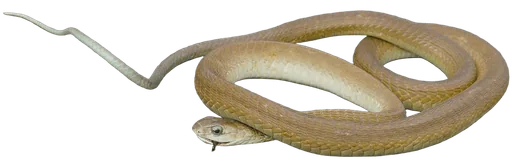 W vs JaguarundiDraw · 50-50 · Dead even
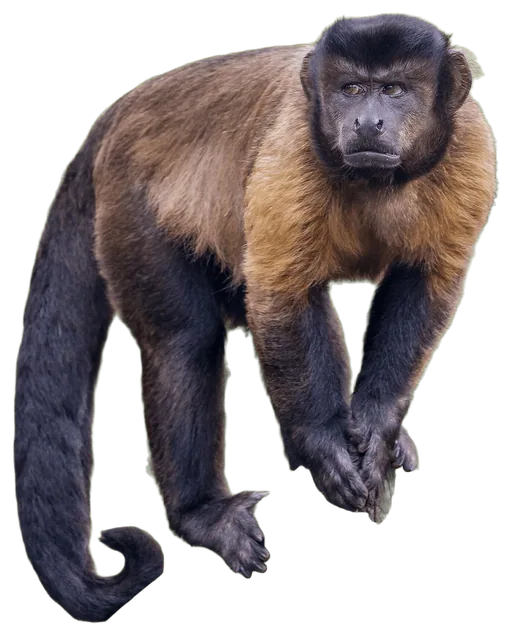
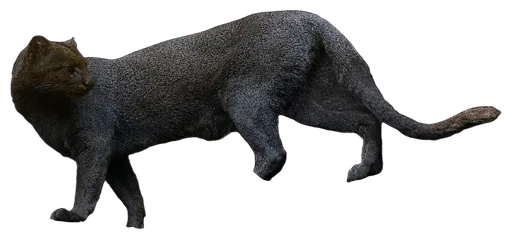 D vs Capuchin MonkeyWins · 54% · Toss-up
 W vs QuollWins · 54% · Toss-up
 W vs Saw-scaled ViperWins · 73% · Clear edge
 W vs MeerkatWins · 63% · Slight edge
 W vs KeaWins · 61% · Slight edge
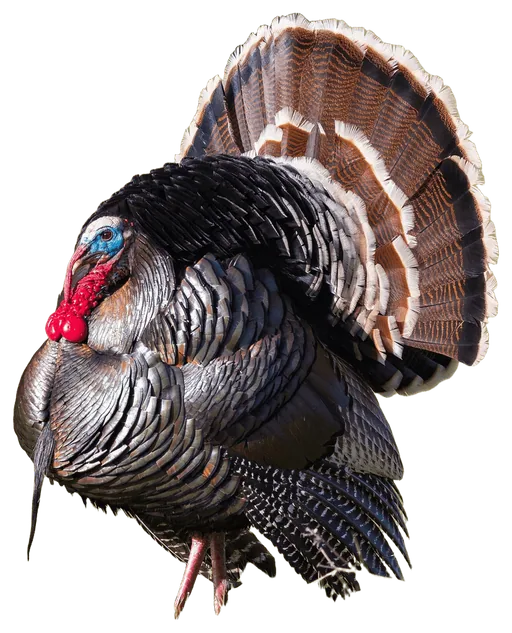
 W vs Wild TurkeyDraw · 50-50 · Dead even
 D
Gaboon Viper battle analysis
The Gaboon viper is built around one tactical problem: letting prey come close enough that speed over distance becomes irrelevant. Its patterned body dissolves into leaf litter, its heavy frame remains motionless with little energetic cost, and its broad head houses an extreme venom-delivery system. Once prey crosses the strike envelope, the apparent sluggishness disappears. The anterior body launches, very long hinged fangs penetrate deeply, and venom is delivered through a system capable of holding a large reserve. Smithsonian's account that the snake may hold prey until death reinforces how different this is from a chase predator.
That specialization also defines its limitations. A seven-kilogram snake cannot trade blunt-force trauma with large mammals, and scales are not armor. Its excellent short-range strike does not translate into high travel speed or prolonged combat stamina. ABS therefore treats the Gaboon viper as a low-to-moderate physical combatant carrying a near-ceiling special weapon, rather than inflating every category because the venom is frightening.
Habitat & range
B. gabonica inhabits humid forest and forest-associated habitats in central/eastern portions of sub-Saharan Africa. Taxonomic separation of western B. rhinoceros means older 'Gaboon viper' range statements should be handled cautiously.
Diet & hunting
A sit-and-wait predator of small to medium mammals and birds. Regional references also report prey extending to hares and other vertebrates. Its ecological role includes rodent control.
Social life
Predominantly solitary outside reproductive interactions. There is no basis for the live catalogue's generic 'Social' label.
Conservation
Recent IUCN-linked references list B. gabonica as Vulnerable, with habitat loss an important concern. Older sources may still describe it as common or use outdated assessments.
Quick answers
How strong is a Gaboon Viper?
On the Animal Battle Stats scale, the Gaboon Viper has an attack rating of 53 and a power index of 45.8 out of 100, which ranks it #223 of 344 animals and puts it in C tier (Capable). Its strongest stat is special (97).
How much does a Gaboon Viper weigh?
A typical adult Gaboon Viper weighs about 7 kg (15 lb). Rated specimen: healthy mature female, 7.0 kg and 130.0 cm total length.
How fast is a Gaboon Viper?
There is no reliable measured top speed for the Gaboon Viper, so we do not publish one. Its agility rating, which covers acceleration, reflexes and evasion, is 48 out of 100.
What does a Gaboon Viper eat?
A sit-and-wait predator of small to medium mammals and birds. Regional references also report prey extending to hares and other vertebrates. Its ecological role includes rodent control.
Is the Gaboon Viper endangered?
The Gaboon Viper's conservation status is Vulnerable. Recent IUCN-linked references list B. gabonica as Vulnerable, with habitat loss an important concern. Older sources may still describe it as common or use outdated assessments.
What animals can beat a Gaboon Viper?
The Gaboon Viper is favored against its other closest rivals, including the Boomslang, the Capuchin Monkey, the Quoll, the Saw-scaled Viper, the Meerkat, the Kea. It is dead even with the Jaguarundi, the Wild Turkey: a draw.
Researched 2026-09-27. Ratings are editorial judgments built from these sources; measurements describe a healthy adult female.
- Smithsonian's National Zoo, Gaboon viper~20-year lifespan, ~5 cm fangs, prey, hold-on bite behavior, placid defensive behavior, large litters
- Animal Diversity Web, Bitis gabonicafemale-biased size, mass/length context, morphology
- Biodiversity Explorer, Bitis gabonicasouthern-African length, habitat, prey, lifespan, venom medical importance
- Wikimedia Commons / iNaturalist reviewed fileexact-species image candidate, 2048x1356, CC0 provenance
- Marsh & Whaler venom extraction values as summarized in accessible literaturevenom-yield context and warning against treating extraction maximum as routine injected dose
- Current ABS schemaconfirms live taxon and current 12 substat names; identifies legacy unreviewed fields
Photo: “Bitis gabonica rhinoceros (6).jpg” by TimVickers, Public domain, background removed and cropped. Original
Suggest a correction