
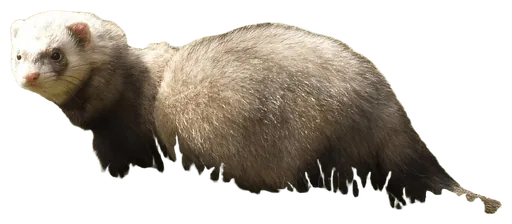
Ferret
Mustela furoD tier · Underdog148th of 163 mammals
Size & speed

- Weight
- 1.5 kg3 lb
- Length
- 50 cm19.7 in
As heavy as 7.5 smartphones
Heavier than 24% of animalsAbout 1.7 rulers long
Bigger than 23% of animalsA 1.5 kg tunnel specialist, the domestic ferret trades armor and raw power for extreme close-quarters maneuverability, sharp carnivoran teeth, strong prey instincts and useful hearing. It is dangerous to similarly sized prey in confined spaces but badly outscaled by medium and large roster animals.
Detailed ratings
Research-backed ratings on one 0–100 scale for all 344 animals (updated 2026-09-27). How ratings work


Card No. 283 of 344. Every animal on Animal Battle Stats has one: its power, tier and archetype on the front; its six battle stats, abilities and signature move on the back.
Special abilities
The elongated flexible mustelid body retains effective gait mechanics under severe tunnel restriction, allowing pursuit, turning and attack in spaces that strongly constrain larger animals.
Intact anal glands can release a pungent secretion under fear or trauma, creating a close-range deterrent/distraction. This is situational and many domestic ferrets are descented, so it is not treated as universal high-grade chemical weaponry.
Unique traits
Long torso, short limbs and low profile provide exceptional confined-space body control without implying high absolute strength.
Controlled prey-capture experiments found an innate tendency to aim bites at the front of moving prey-like targets, giving the animal a grounded close-quarters targeting behavior.
How it fights
Weapons
- The bite is the principal damaging tool. Ferrets are small obligate carnivores with enlarged canines and carnassial dentition. Their predatory motor pattern is not random snapping: controlled experiments found an innate tendency to target the anterior end of prey-like moving objects. The claws are non-retractile and useful for purchase, burrowing and holding position but are not comparable to felid talons or large mustelid digging claws as standalone weapons.
Struggles vs
- Very low absolute mass and striking force.
- No armor and limited reach.
- Bite requires close contact.
- Long sleep requirement and bursty activity profile do not support elite sustained exertion.
- Many larger predators can incapacitate it with one successful bite, stomp or strike.
- Weight
- 1.5 kg3 lb
- Height
- No reliable measurement
- Length
- 50 cm19.7 in
- Top speed
- No reliable measurement
- Bite force
- No reliable measurement
- Lifespan
- 8 years
- Home biome
- Savanna
- Lifestyle
- Social
Rated specimen: Healthy, intact, mature male (hob), approximately 1.5 kg.
Fun facts
- Ferrets can maintain surprisingly similar locomotor mechanics even when a tunnel forces a major reduction in back and hip height.
- Adult males are substantially larger than females; this is real sexual dimorphism, not merely a pet-breed difference.
- Controlled experiments show moving, fur-textured targets are especially effective at eliciting prey-catching bites.
- Ferrets are unusually sleepy mammals: controlled laboratory work found more than 60% of the day spent asleep.
- Their hearing has been studied extensively enough that complete experimental audiograms extend from very low frequencies into ultrasound-range frequencies.
- The familiar name Mustela putorius furo remains common in biomedical and agency databases even though ITIS and the Mammal Diversity Database currently recognize Mustela furo as the valid species name.
Closest rivals by power. Tap one for the full breakdown, or pick any opponent.
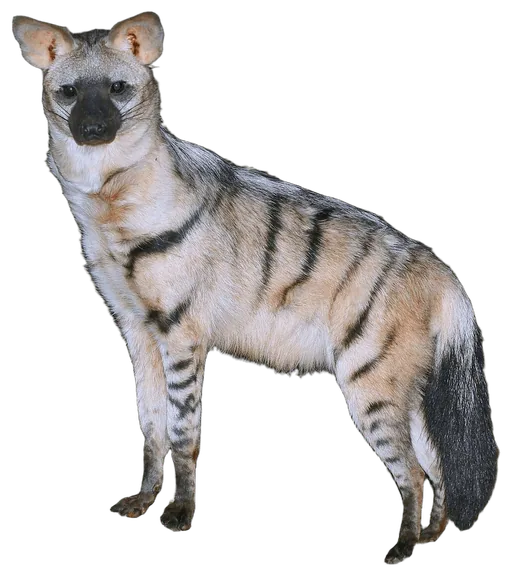
vs Flying FoxWins · 53% · Toss-up 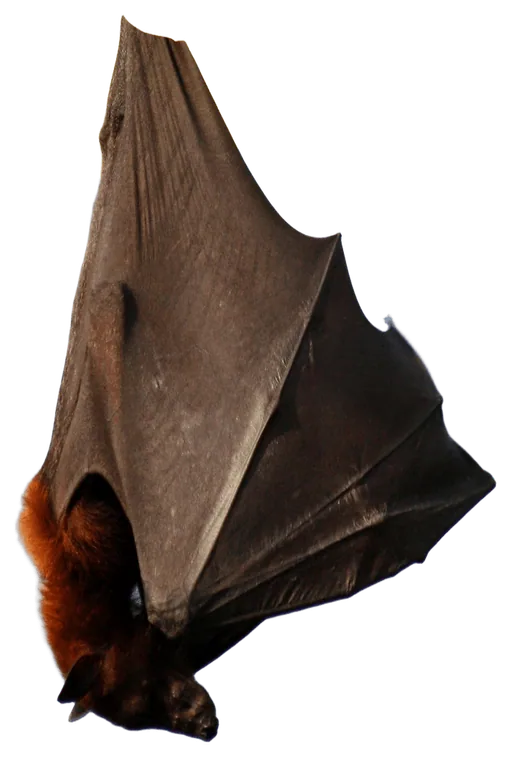 W vs AardwolfLoses · 60% · Slight edge
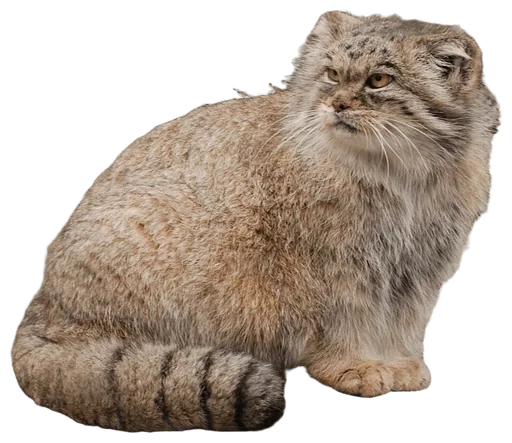
 L vs Pallas's CatLoses · 54% · Toss-up
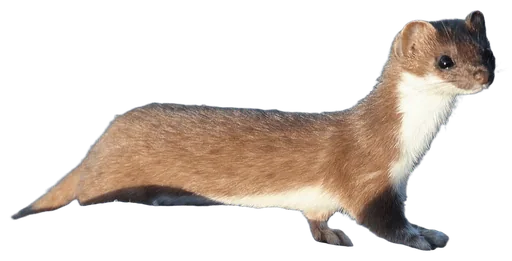
 L vs StoatWins · 58% · Slight edge
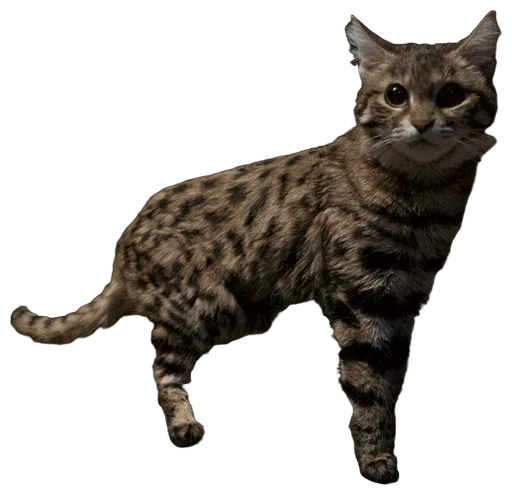
 W vs Black-footed CatLoses · 54% · Toss-up
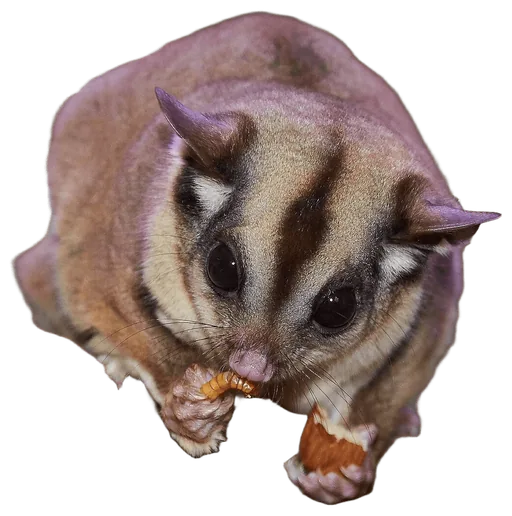
 L vs Sugar GliderWins · 61% · Slight edge
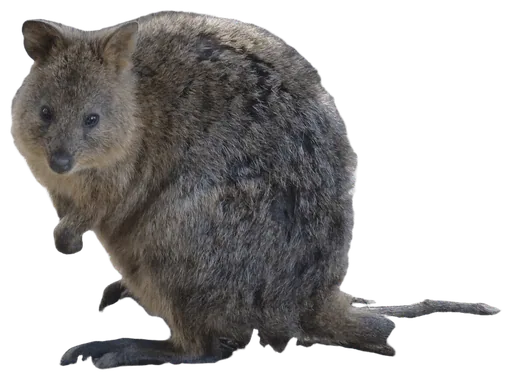
 W vs QuokkaLoses · 52% · Toss-up
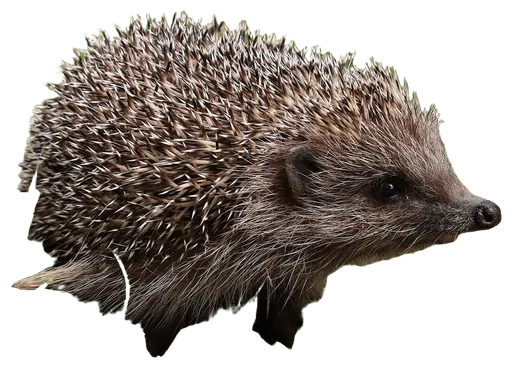
 L vs HedgehogWins · 55% · Toss-up
 W
Ferret battle analysis
The ferret is a good test of ABS's absolute-scale rule. Pound for pound, its elongated mustelid body is an effective predatory machine: it can thread through burrows, maintain functional gait mechanics while crouched, orient to prey with strong sensory systems, and commit to an instinctive anterior bite. None of that makes a 1.5 kg animal physically comparable to a fox, wolf or big cat. Its battle identity should therefore be built around maneuverability and situational terrain control rather than inflated Attack or Defense.
In a tunnel, the matchup changes sharply. A larger opponent may lose turning room while the ferret keeps useful movement mechanics and can exploit small openings. In open ground, that advantage collapses. The ferret has no armor, no long-range weapon, no defensible extreme sprint figure and no evidence for elite endurance. Its teeth remain dangerous to prey near its own scale, but every damaging action requires entering close range.
This produces a deliberately polarized ABS profile: very high Agility, respectable senses/tactics, moderate Special, and low absolute physical combat scores. That shape is more biologically faithful than the old placeholder profile and avoids converting mustelid reputation into fictitious force.
Habitat & range
The domestic ferret is a domesticated animal with worldwide captive distribution rather than a naturally bounded wild range. It lives principally in human-associated environments. Feral populations exist in some regions, most famously New Zealand, but the canonical ABS animal is the domestic form rather than a feral hybrid population.
Diet & hunting
Ferrets are obligate carnivores with rapid gastrointestinal transit and high feeding frequency. Historically, people used them for rabbit hunting and rodent control. Their body form and predatory behavior are specialized for pursuing vertebrate prey in burrows and cluttered cover.
Social life
Domestic ferrets can be social with conspecifics and commonly engage in wrestling, chasing and play. They are inquisitive and exploratory. Activity is naturally crepuscular but readily shifts with husbandry and human schedules.
Conservation
As a domesticated taxon, the ferret is not meaningfully evaluated as a threatened wild species. This must not be confused with the endangered black-footed ferret, Mustela nigripes.
Quick answers
How strong is a Ferret?
On the Animal Battle Stats scale, the Ferret has an attack rating of 17 and a power index of 38.8 out of 100, which ranks it #283 of 344 animals and puts it in D tier (Underdog). Its strongest stat is agility (89).
How much does a Ferret weigh?
A typical adult Ferret weighs about 1.5 kg (3 lb). Rated specimen: Healthy, intact, mature male (hob), approximately 1.5 kg.
How fast is a Ferret?
There is no reliable measured top speed for the Ferret, so we do not publish one. Its agility rating, which covers acceleration, reflexes and evasion, is 89 out of 100.
What does a Ferret eat?
Ferrets are obligate carnivores with rapid gastrointestinal transit and high feeding frequency. Historically, people used them for rabbit hunting and rodent control. Their body form and predatory behavior are specialized for pursuing vertebrate prey in burrows and cluttered cover.
Is the Ferret endangered?
The Ferret's conservation status is Domesticated. As a domesticated taxon, the ferret is not meaningfully evaluated as a threatened wild species. This must not be confused with the endangered black-footed ferret, Mustela nigripes.
What animals can beat a Ferret?
Among its closest rivals, the Aardwolf (60%), the Pallas's Cat (54%), the Black-footed Cat (54%), the Quokka (52%) would be favored against the Ferret. It would be favored against the Flying Fox, the Stoat, the Sugar Glider, the Hedgehog.
Researched 2026-09-27. Ratings are editorial judgments built from these sources; measurements describe a healthy adult male.
- ASM Mammal Diversity DatabaseTaxonomy
- ITISTaxonomy
- U.S. Fish & Wildlife ServiceTaxonomic conflict
- Animal Diversity WebDimensions, dentition, behavior, lifespan, diet
- Shump & Shump 1978, Lab Animal ScienceSex dimorphism, canonical mass
- MSD Veterinary Manual, updated July 2026Adult status, mass, lifespan
- Ferrets, Rabbits, and RodentsMass variation, lifespan
- Moritz et al., locomotion studyTunnel locomotion
- Apfelbach & Wester 1977Predation/tactics
- Apfelbach 1981Predatory mechanics
- Kavanagh & Kelly 1988Hearing
- Marks & Shaffery 1996Activity/rest
- Danyer et al. 2026Modern husbandry/activity
- Wikimedia Commons source candidateImage provenance
Photo: “Jake 0314.jpg” by Luciano Bernardi, CC BY-SA 3.0, background removed and cropped. Original
Suggest a correction