
Fennec Fox
Vulpes zerdaC tier · Capable136th of 163 mammals
Size & speed

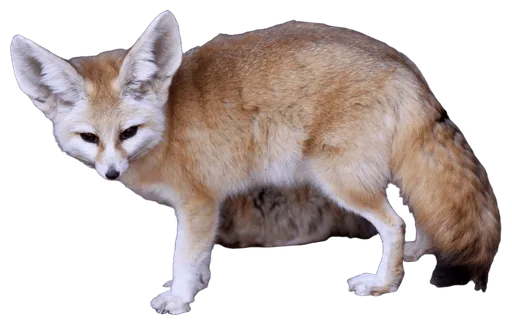
- Weight
- 1.5 kg3 lb
- Length
- 40 cm15.7 in
As heavy as 7.5 smartphones
Heavier than 24% of animalsAbout 1.3 rulers long
Bigger than 20% of animalsThe fennec fox is a tiny Saharan canid built around detection, evasion and desert survival rather than brute force. A roughly 1.5 kg adult male combines exceptional hearing, furred sand-gripping feet, rapid pouncing and water-conserving physiology. Its bite can dispatch small prey, but its absolute Attack and Defense are very low against the broader ABS roster. Its real strengths are Agility, Senses and desert-specialist abilities.
Detailed ratings
Research-backed ratings on one 0–100 scale for all 344 animals (updated 2026-09-27). How ratings work


Card No. 255 of 344. Every animal on Animal Battle Stats has one: its power, tier and archetype on the front; its six battle stats, abilities and signature move on the back.
Special abilities
Oversized pinnae and specialized hearing allow the fox to localize small prey moving beneath sand, enabling targeted digging and pouncing in darkness. This is acoustic localization, not literal sonar or echolocation.
Renal water-homeostasis specializations, nocturnal behavior and water obtained through food allow prolonged function without regular access to free drinking water, improving persistence in hot arid matchups.
Unique traits
Dense fur on the feet protects pads from hot substrate and improves movement on loose sand.
Disproportionately large ears contribute to heat exchange while also supporting acute hearing, a distinctive dual-use desert feature.
How it fights
Weapons
- The fennec's primary weapon is its small canid bite, supported by quick head movement and forepaw control/digging. Claws are useful for excavation and traction but are blunt, non-retractile canid claws rather than felid killing claws. Natural prey includes insects, rodents, lizards, birds and eggs. Smithsonian describes solitary nocturnal hunting and excavation with all four feet after prey is acoustically located beneath sand.
- At only about 1.5 kg, absolute damage output is tiny. A mouse, insect or small reptile is a realistic prey target; a medium mammal is a major mass mismatch. The fennec must not inherit high Attack because its hunting is effective relative to prey size.
Struggles vs
- Extremely low absolute mass and power.
- No armor or thick protective tissue.
- Small jaws and weak absolute weapon reach.
- No verified high-speed ceiling.
- Burrow advantage depends on diggable substrate and access time.
- Weight
- 1.5 kg3 lb
- Height
- 22 cm8.7 in
- Length
- 40 cm15.7 in
- Top speed
- No reliable measurement
- Bite force
- No reliable measurement
- Lifespan
- 10 years
- Home biome
- Desert
- Lifestyle
- Social, nocturnal
Rated specimen: Healthy mature adult male, 1.5 kg, 22.0 cm shoulder height, 40.0 cm head-body length.
Fun facts
- The fennec is among the smallest living canids, with adults around one kilogram to one and a half kilograms.
- Its ears can approach the length of a substantial fraction of its head-body length.
- Adults can jump roughly a meter from a standing start according to Smithsonian.
- The soles are heavily furred, functioning like biological protection against hot sand.
- Family life and solitary hunting coexist: fennecs can live in social groups but commonly forage alone.
- Recent genomics found desert-specialist foxes including fennecs show repeated genetic signatures related to renal water homeostasis.
Closest rivals by power. Tap one for the full breakdown, or pick any opponent.
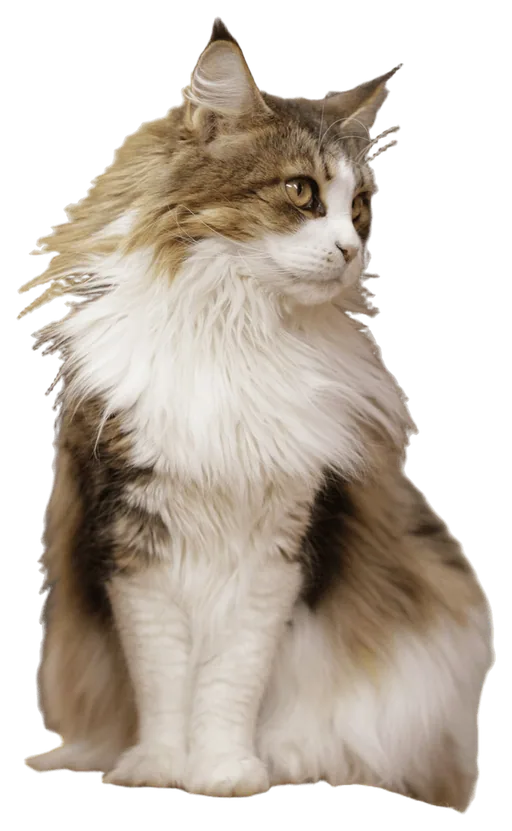
vs Red PandaLoses · 57% · Toss-up 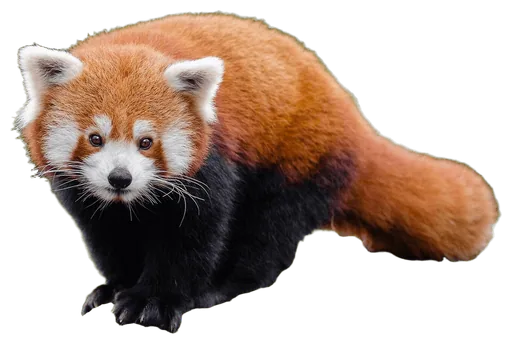 L vs Maine CoonLoses · 59% · Slight edge
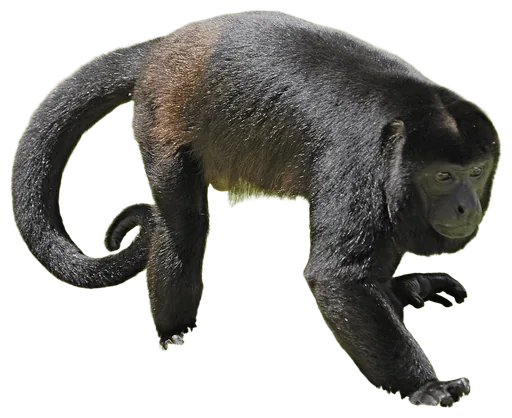
 L vs Howler MonkeyLoses · 59% · Slight edge
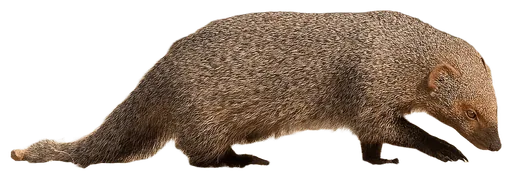
 L vs MongooseWins · 53% · Toss-up
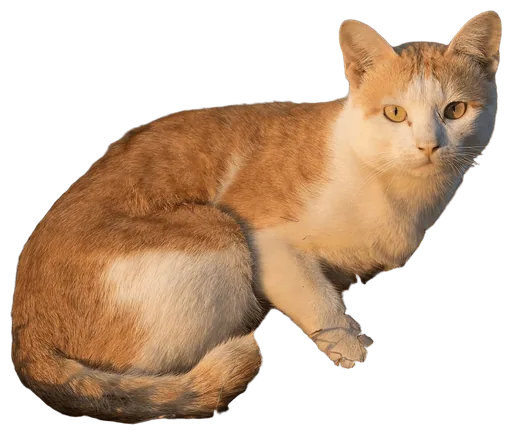
 W vs House CatLoses · 56% · Toss-up
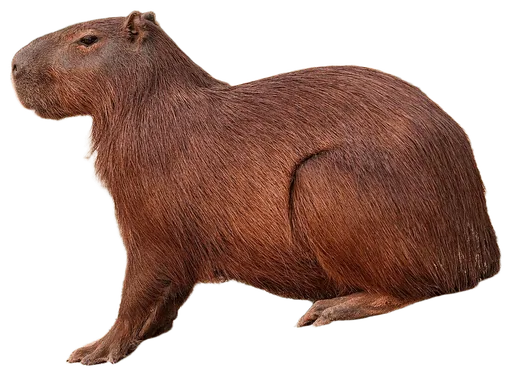
 L vs CapybaraLoses · 71% · Clear edge
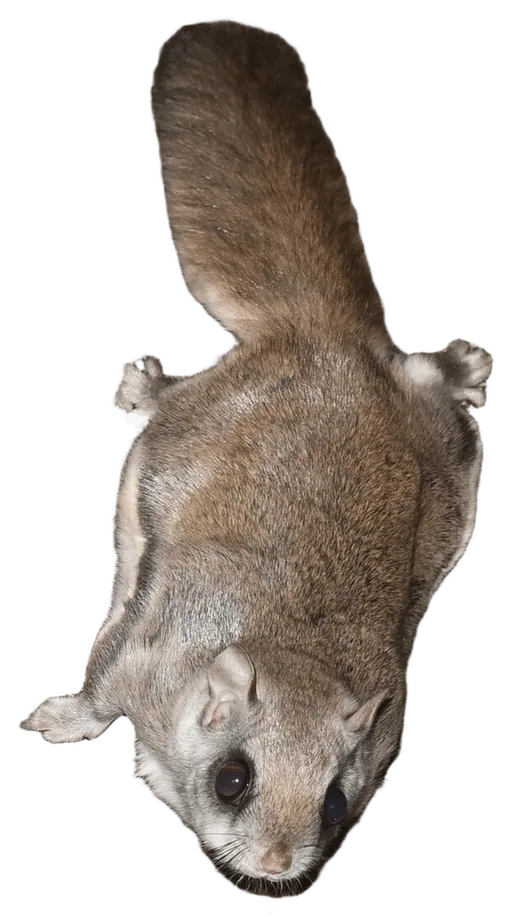
 L vs Flying SquirrelWins · 64% · Slight edge
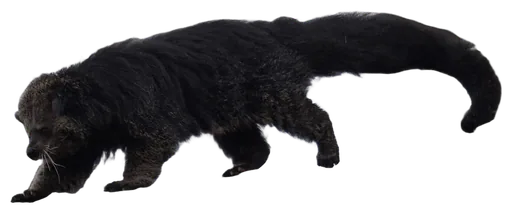
 W vs BinturongLoses · 62% · Slight edge
 L
Fennec Fox battle analysis
A fennec survives by knowing what is under the sand before it becomes visible. At night, the fox listens for rodents, reptiles and insects, approaches, then pounces or excavates with rapid fore- and hind-foot action. The same light frame that limits damage output makes direction changes and standing jumps highly effective. If danger escalates, concealment and a burrow are more valuable than trading blows.
Its oversized ears are the signature feature, but the desert package is broader. Pale fur reduces visual contrast, furred soles insulate the feet and improve traction, nocturnality avoids peak heat, and water-balance physiology reduces dependence on free water. Those traits justify a high Special rating, but none should leak into Raw Power or passive Defense. In an absolute battle model, the fennec remains a 1.5 kg animal. It can be biologically extraordinary and still be physically overwhelmed by most medium-sized roster animals.
Habitat & range
Fennecs inhabit sandy deserts and semi-deserts of North Africa, especially the Sahara, extending east toward northern Sinai. Smithsonian also describes the broader range toward Arabia, while the IUCN Canid Specialist Group account emphasizes northern Africa to northern Sinai. Sandy habitat with sparse grasses or scrub is important because vegetation can support den structure and provide food/water resources.
Diet & hunting
They are opportunistic omnivores. Documented foods include grasshoppers and locusts, other insects, small rodents, lizards, birds, eggs, roots, fruits and leaves. Hunting is primarily nocturnal and usually solitary even though animals live socially. Food may be cached for later use.
Social life
Family groups may contain a breeding pair, young and older offspring. Vocal communication is varied, and scent marking is important territorially. Smithsonian reports gestation around 50-53 days, maturity around 9-11 months, and males provisioning females during the early pup-rearing period. CITES' 2026 species review similarly summarizes social units of parents and offspring and maturity around 9 months to one year.
Conservation
The IUCN Canid Specialist Group reports V. zerda as Least Concern, based on the 2015 assessment and its broad Saharan distribution, while noting that information remains limited. CITES' 2026 documentation also records the species as Least Concern under that assessment. Trapping for exhibition/tourist sale and human disturbance are recognized pressures. Least Concern should not be interpreted as absence of local pressure.
Quick answers
How strong is a Fennec Fox?
On the Animal Battle Stats scale, the Fennec Fox has an attack rating of 15 and a power index of 42.7 out of 100, which ranks it #255 of 344 animals and puts it in C tier (Capable). Its strongest stat is agility (89).
How much does a Fennec Fox weigh?
A typical adult Fennec Fox weighs about 1.5 kg (3 lb). Rated specimen: healthy mature adult male, 1.5 kg, 22.0 cm shoulder height, 40.0 cm head-body length.
How fast is a Fennec Fox?
There is no reliable measured top speed for the Fennec Fox, so we do not publish one. Its agility rating, which covers acceleration, reflexes and evasion, is 89 out of 100.
What does a Fennec Fox eat?
They are opportunistic omnivores. Documented foods include grasshoppers and locusts, other insects, small rodents, lizards, birds, eggs, roots, fruits and leaves. Hunting is primarily nocturnal and usually solitary even though animals live socially. Food may be cached for later use.
Is the Fennec Fox endangered?
No. The Fennec Fox is listed as Least Concern. The IUCN Canid Specialist Group reports V. zerda as Least Concern, based on the 2015 assessment and its broad Saharan distribution, while noting that information remains limited. CITES' 2026 documentation also records the species as Least Concern under that assessment. Trapping for exhibition/tourist sale and human disturbance are recognized pressures. Least Concern should not be interpreted as ab
What animals can beat a Fennec Fox?
Among its closest rivals, the Red Panda (57%), the Maine Coon (59%), the Howler Monkey (59%), the House Cat (56%), the Capybara (71%), the Binturong (62%) would be favored against the Fennec Fox. It would be favored against the Mongoose, the Flying Squirrel.
Researched 2026-09-27. Ratings are editorial judgments built from these sources; measurements describe a healthy adult male.
- Smithsonian National Zoo, Fennec foxsize, ears, habitat, diet, reproduction, lifespan, heat/water physiology, jumping
- Animal Diversity Web, Vulpes zerdasex/size ranges, height, tail, behavior, lifespan, sociality
- Maloiy et al. 1982, Journal of Zoologythermoregulation/metabolism
- Rocha et al. 2023, Nature Ecology & Evolution / PubMeddesert physiology/genomics
- IUCN SSC Canid Specialist Grouptaxonomy, range, conservation
- CITES AC30 species document, 2026current trade/conservation context, breeding biology
- Wikimedia Commons, Drew Averyimage provenance
Photo: “Fennec Fox Vulpes zerda.jpg” by Drew Avery, CC BY 2.0, background removed and cropped. Original
Suggest a correction