

False Killer Whale
Pseudorca crassidens
 #11 of 344
  Ocean Pack Hunter Near Threatened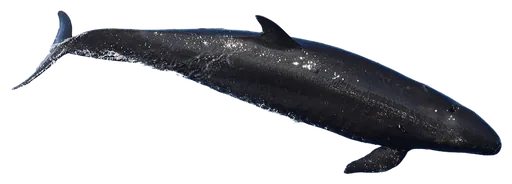
 Fight
FightPhoto: NOAA Photo Library · CC BY 2.0
The false killer whale is a 1.3-tonne, thick-toothed oceanic dolphin that hunts tuna and mahi-mahi at speed, shares its catch and has attacked sperm whales and humpbacks in groups. Fast, deep-diving and armed with biosonar, it is dangerous in a pack, but one animal is far smaller than the orca it resembles.
 Attack72
  Defense57
  Agility83
  Stamina82
  Intelligence88
  Special87
 Detailed ratings
Research-backed ratings on one 0–100 scale for all 344 animals (updated 2026-09-28). How ratings work
Special abilities
Ability 1Gain-Control SonarThe false killer whale echolocates and actively turns down its hearing of its own loud clicks while keeping faint echoes audible, so it can track prey in dark, deep water. In a battle it can find and follow an opponent without light.
 Ability 2Thick-Tooth Tear
Rows of thick conical teeth let it grip, shake and tear large, fast fish and bite at the bodies of whales. It is the main damage tool of a large, fast predator.
Unique traits
 TraitPrey-Sharing Clusters
False killer whales spread out in small groups across tens of kilometers, then converge when one catches prey, which is often shared among several animals.
TraitDeep-Water SprinterTagged Hawaiian animals dove to 1,424 m, and trained animals sprinted at 8 m/s, combining depth and speed in one large dolphin.
How it fights
Weapons
- The false killer whale is a large toothed predator with thick, conical teeth. It hunts big, fast fish such as mahi-mahi, wahoo and tuna (Wikipedia), and has been seen shaking prey until the head and guts come off and peeling fish with its teeth (ADW). It also attacks marine mammals: it takes smaller dolphins, has attacked sperm whales in the Galápagos (Palacios & Mate 1996), attacked a humpback calf, and in 2025 was reported hunting two humpback whales with a group of more than 50 (Wikipedia). NOAA notes it often leaps clear of the water when attacking prey.
 Struggles vs
- No armor; blubber and muscle only.
- A single animal is much smaller than the orca it resembles.
- Much of its power comes from the group, which is absent in a one-on-one matchup.
- Prone to mass strandings and heavily affected by fishing gear.
- Weight
- 1.3 t1.4 US tons
- Height
- No reliable measurement
- Length
- 5.5 m18 ft
- Top speed
- 29 km/h18 mph
- Bite force
- No reliable measurement
- Lifespan
- 58 years
- Home biome
- Ocean
- Lifestyle
- Social
Rated specimen: Healthy prime adult male, 550 cm long and 1,300 kg.
Fun facts
- The name comes from a skull that looks like an orca's, but it is a large dolphin.
- Crassidens means "thick-toothed".
- When one false killer whale catches a fish, others often gather round and share it.
- A tagged false killer whale dove to 1,424 m.
- Females can live decades after they stop reproducing, as in orcas.
- Over 800 false killer whales stranded together in Argentina in 1946.
Closest rivals by power. Tap one for the full breakdown, or pick any opponent.
vs HippopotamusLoses · 51% · Toss-up  L vs Polar BearLoses · 51% · Toss-up
  L vs Bowhead WhaleWins · 52% · Toss-up
  W vs Fin WhaleWins · 52% · Toss-up
  W vs RhinocerosWins · 53% · Toss-up
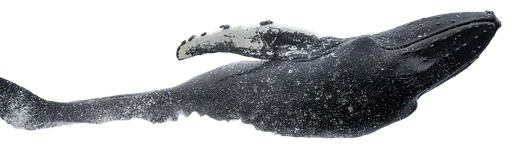
  W vs Humpback WhaleLoses · 53% · Toss-up
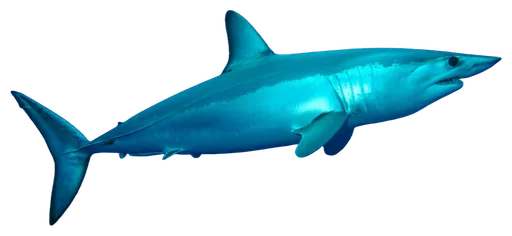
  L vs Mako SharkWins · 51% · Toss-up
  W vs Saltwater CrocodileWins · 51% · Toss-up
  W
W  Pick any opponent
 False Killer Whale battle analysis
The false killer whale looks like a slimmer, all-dark orca, and it hunts like a smaller one. A big male is about 5.5 m long and 1.3 tonnes, with thick conical teeth and a streamlined body that has been clocked at 8 m/s. It chases large, fast fish such as tuna and mahi-mahi, often leaping clear of the water at the moment of attack, and tears them apart with its teeth.
What makes it formidable is teamwork. False killer whales spread out in small groups across tens of kilometers of ocean, then converge when one finds prey, and the catch is often shared. Groups have attacked sperm whales in the Galápagos and have been reported hunting humpbacks. They echolocate, and experiments show they actively adjust their hearing while clicking so that faint echoes stay clear.
In a one-on-one battle the picture is more modest. A single false killer whale has no armor and is a fraction of an orca's size, and orcas prey on it. Its ratings therefore sit well above most marine mammals of its size in Attack, Agility and Intelligence, but clearly below the orca in every category.
Habitat & range
False killer whales live in tropical and subtropical oceans worldwide, generally in deep offshore waters over 3,300 feet (1,000 m) deep (NOAA). Some populations, such as the main Hawaiian Islands insular population, stay close to islands, rarely more than 70 km from shore.
Diet & hunting
They are top predators of large fish and squid, including mahi-mahi, wahoo and tuna (Wikipedia; NOAA), and sometimes attack other marine mammals, from smaller dolphins to sperm whales and humpbacks (Palacios & Mate 1996; Wikipedia). Around Hawaiʻi they dive mostly within the upper ocean but regularly go below 1,000 m, diving deeper by day and at full moon (Kratofil et al. 2026).
Social life
False killer whales are gregarious and form strong, long-term social bonds. They travel in small subgroups linked into larger clusters and often share captured prey (NOAA). Some individuals stay together for at least 15 years, and groups appear to be centered on females (Wikipedia).
Conservation
The species is listed as Near Threatened on the IUCN Red List (2018 assessment, as summarized by Wikipedia). In the US, only the main Hawaiian Islands insular population is listed as endangered under the Endangered Species Act; it numbers about 140 animals and has declined about 3.5% a year for at least a decade, with fishery interactions a leading threat (NOAA).
Quick answers
How strong is a False Killer Whale?
On the Animal Battle Stats scale, the False Killer Whale has an attack rating of 72 and a power index of 74 out of 100, which ranks it #11 of 344 animals and puts it in S tier (Apex). Its strongest stat is intelligence (88).
How much does a False Killer Whale weigh?
A typical adult False Killer Whale weighs about 1.3 t (1.4 US tons). Rated specimen: healthy prime adult male, 550 cm long and 1,300 kg.
How fast is a False Killer Whale?
The False Killer Whale's top speed is about 29 km/h (18 mph). Its agility rating is 83 out of 100.
What does a False Killer Whale eat?
They are top predators of large fish and squid, including mahi-mahi, wahoo and tuna (Wikipedia; NOAA), and sometimes attack other marine mammals, from smaller dolphins to sperm whales and humpbacks (Palacios & Mate 1996; Wikipedia). Around Hawaiʻi they dive mostly within the upper ocean but regularly go below 1,000 m, diving deeper by day and at full moon (Kratofil et al. 2026).
Is the False Killer Whale endangered?
The False Killer Whale's conservation status is Near Threatened. The species is listed as Near Threatened on the IUCN Red List (2018 assessment, as summarized by Wikipedia). In the US, only the main Hawaiian Islands insular population is listed as endangered under the Endangered Species Act; it numbers about 140 animals and has declined about 3.5% a year for at least a decade, with fishery interactions a leading threat (NOAA).
What animals can beat a False Killer Whale?
Among its closest rivals, the Hippopotamus (51%), the Polar Bear (51%), the Humpback Whale (53%) would be favored against the False Killer Whale. It would be favored against the Bowhead Whale, the Fin Whale, the Rhinoceros, the Mako Shark, the Saltwater Crocodile.
Researched 2026-09-28. Ratings are editorial judgments built from these sources; measurements describe a healthy adult male.
- NOAA Fisheries, False Killer Whale species pagesize, lifespan, social structure, prey sharing, diving, speed, status
- Animal Diversity Web, Pseudorca crassidensmass range, length, teeth, skull, lifespan, feeding
- Wikipedia, False killer whalemaximum mass, teeth count, prey, attacks on whales, strandings, IUCN status
- Kratofil et al. 2026, Movement Ecologydiving
- Rohr et al. 2002, Marine Mammal Sciencemaximum speed
- Nachtigall & Supin 2008, Journal of Experimental Biologyecholocation hearing
- Palacios & Mate 1996, Marine Mammal Scienceattacks on large whales
- Wikimedia Commons, false killer whale photoimage candidate
Photo: “Anim2620 (33910331754).jpg” by NOAA Photo Library, CC BY 2.0, background removed and cropped. Original
Suggest a correction