
Emperor Scorpion
Pandinus imperatorF tier · Snack24th of 30 bugs & spiders
Size & speed
- Weight
- 30 g1.1 oz
- Length
- 20 cm7.9 in
As heavy as 30 paperclips
Heavier than 6% of animalsAbout 2.3 credit cards long
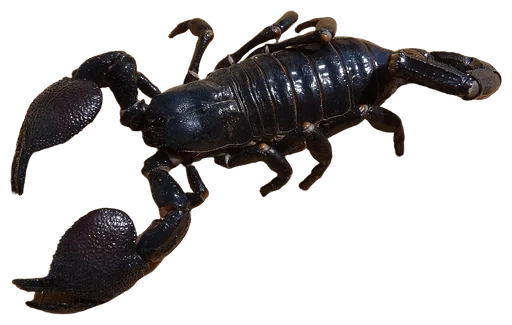
Bigger than 10% of animalsA giant by scorpion standards but tiny on the ABS roster, the emperor scorpion is a nocturnal West African grappler built around massive pincers, vibration sensing and a backup venomous sting. Its arsenal is excellent against insect-sized prey, while its 30 g body and mild venom keep absolute Attack and Defense low.
Detailed ratings
Research-backed ratings on one 0–100 scale for all 344 animals (updated 2026-09-27). How ratings work


Card No. 335 of 344. Every animal on Animal Battle Stats has one: its power, tier and archetype on the front; its six battle stats, abilities and signature move on the back.
Special abilities
Oversized pedipalps seize, pin and crush appropriately sized prey, letting the scorpion control a target before committing the stinger.
The metasoma can arc over the body to deliver ion-channel-active venom at close range; useful against small prey but not treated as a high-lethality large-vertebrate weapon.
Unique traits
Comb-like pectines and mechanosensory hairs provide substrate and vibration information that supports nocturnal prey detection despite poor eyesight.
The exoskeleton fluoresces blue-green under ultraviolet light; the phenomenon is genuine, while its biological function remains uncertain and is not assigned fictional offensive power.
How it fights
Weapons
- The emperor scorpion is a grappling predator. It seizes prey with oversized pedipalps, restrains and mechanically damages it with the chelae, and can bring the metasoma forward to sting when needed. For routine prey capture, authoritative zoo accounts emphasize the claws over the sting. This makes it mechanically stronger than its mild-venom reputation alone suggests, but its absolute 30 g scale sharply limits damage against larger opponents.
Struggles vs
- Open terrain exposes a slow, small-bodied animal to birds and other visual predators.
- Dry or thermally unsuitable conditions are physiologically unfavorable.
- Large opponents can overwhelm the exoskeleton and negate the chelae's limited reach.
- Venom is not potent enough to justify relying on a single sting against large vertebrates.
- Weight
- 30 g1.1 oz
- Height
- No reliable measurement
- Length
- 20 cm7.9 in
- Top speed
- No reliable measurement
- Bite force
- No reliable measurement
- Lifespan
- 6.5 years
- Home biome
- Jungle
- Lifestyle
- Social, nocturnal
Rated specimen: Healthy mature non-gravid female, 0.030 kg and 20.0 cm total length.
Fun facts
- P. imperator is among the world's largest and heaviest scorpions; San Diego Zoo reports individuals up to about 60 g.
- Its exoskeleton fluoresces blue-green under ultraviolet light, a broader scorpion phenomenon whose function remains debated.
- Females carry newborn scorplings on their backs.
- Adults usually rely more on their huge pincers than on venom when capturing prey.
- Pectines are comb-like sensory organs on the underside of the body and are generally larger in males.
- Despite the intimidating form, major zoo sources characterize the sting as relatively mild for healthy humans.
Closest rivals by power. Tap one for the full breakdown, or pick any opponent.
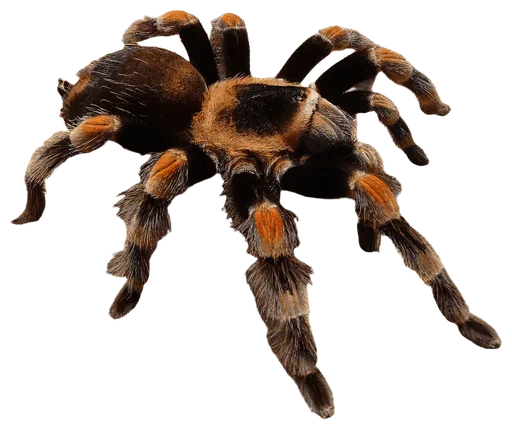
vs Bombardier BeetleWins · 85% · Decisive 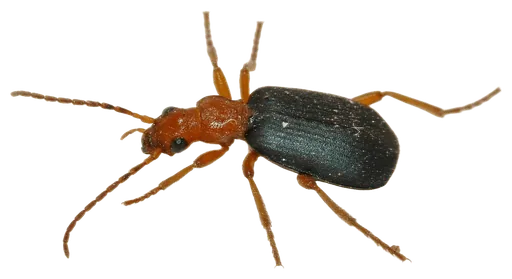 W vs Mexican Red-knee TarantulaWins · 51% · Toss-up
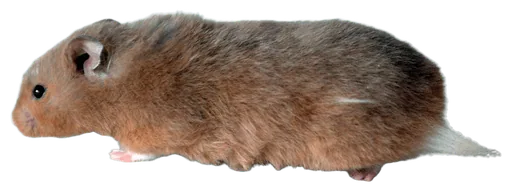
 W vs Syrian HamsterLoses · 60% · Slight edge
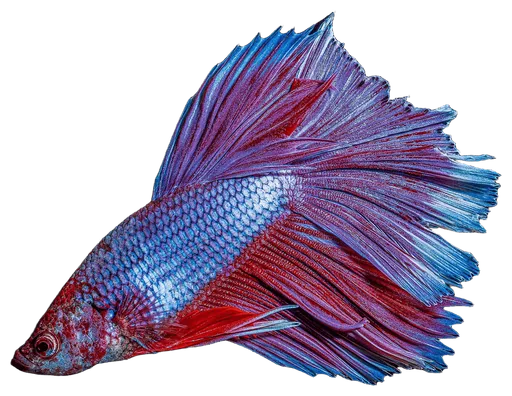
 L vs Betta FishWins · 67% · Slight edge
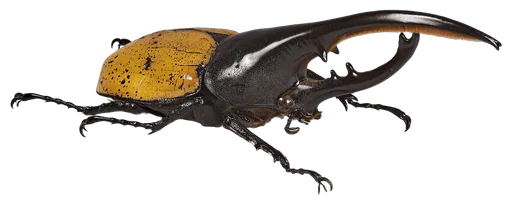
 W vs Hercules BeetleWins · 54% · Toss-up
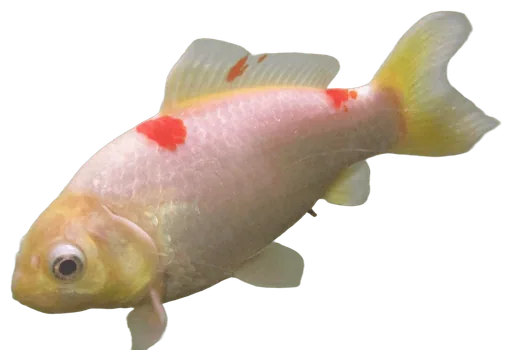
 W vs GoldfishLoses · 59% · Slight edge
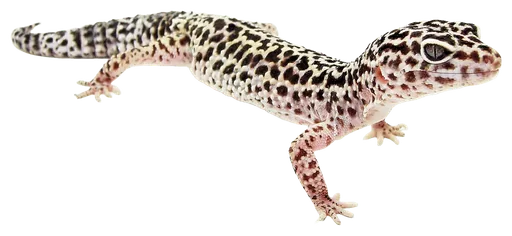
 L vs Leopard GeckoLoses · 55% · Toss-up
 L vs Guinea PigLoses · 67% · Slight edge
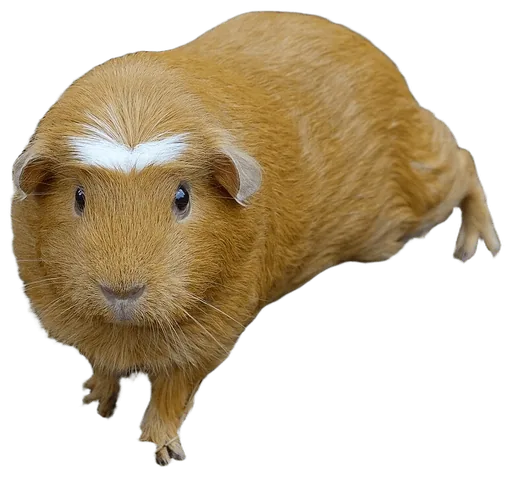 L
Emperor Scorpion battle analysis
The emperor scorpion is a useful test of ABS's absolute-scale discipline. On the forest floor it is heavily armed: two oversized chelae can seize and restrain prey, the tail can curl over the body to inject venom, and vibration-sensitive hairs plus pectines provide useful information in darkness. A small insect entering its working range faces a predator that can detect, grab, pin and sting without needing a high-speed chase.
That same package changes dramatically when the opponent is scaled up. A representative non-gravid adult female weighs only about 30 g. The exoskeleton that resists small prey does not become mammal-grade armor, and powerful-for-a-scorpion chelae do not become high absolute-force weapons. The venom is biologically sophisticated but institutionally characterized as mild in human terms. Accordingly, this report gives the species respectable miniature weaponry and a high Special score while keeping Raw Power, Attack, Defense and Size near the bottom of the full roster.
Habitat & range
Emperor scorpions inhabit humid West African forests and forest-floor microhabitats, sheltering under leaf litter, logs, rocks, stream-bank cover and termite structures. Distribution accounts include multiple West African countries. The species is terrestrial and primarily nocturnal.
Diet & hunting
Adults are carnivorous predators of ground-dwelling insects and other small animals. Termites are important prey in parts of the range. The ecological strategy is economical: remain concealed, detect nearby movement through substrate and sensory hairs, seize prey with the chelae, and reserve the sting for situations where it is useful.
Social life
Unlike many stereotypically solitary scorpions, ADW describes P. imperator as social and reports colonies of up to 15. Cannibalism occurs but is uncommon. This should be interpreted as unusual social tolerance, not pack hunting.
Conservation
International trade in P. imperator is regulated under CITES Appendix II. San Diego Zoo notes that permits are required for international movement under participating CITES systems because collection for trade has conservation implications. London Zoo describes over-harvesting for the pet trade as a threat. CITES Appendix II should not be mislabeled as an IUCN threat category.
Quick answers
How strong is an Emperor Scorpion?
On the Animal Battle Stats scale, the Emperor Scorpion has an attack rating of 13 and a power index of 26.5 out of 100, which ranks it #335 of 344 animals and puts it in F tier (Snack). Its strongest stat is special (76).
How much does an Emperor Scorpion weigh?
A typical adult Emperor Scorpion weighs about 30 g (1.1 oz). Rated specimen: healthy mature non-gravid female, 0.030 kg and 20.0 cm total length.
How fast is an Emperor Scorpion?
There is no reliable measured top speed for the Emperor Scorpion, so we do not publish one. Its agility rating, which covers acceleration, reflexes and evasion, is 42 out of 100.
What does an Emperor Scorpion eat?
Adults are carnivorous predators of ground-dwelling insects and other small animals. Termites are important prey in parts of the range. The ecological strategy is economical: remain concealed, detect nearby movement through substrate and sensory hairs, seize prey with the chelae, and reserve the sting for situations where it is useful.
What animals can beat an Emperor Scorpion?
Among its closest rivals, the Syrian Hamster (60%), the Goldfish (59%), the Leopard Gecko (55%), the Guinea Pig (67%) would be favored against the Emperor Scorpion. It would be favored against the Bombardier Beetle, the Mexican Red-knee Tarantula, the Betta Fish, the Hercules Beetle.
Researched 2026-09-27. Ratings are editorial judgments built from these sources; measurements describe a healthy adult female.
- Animal Diversity Web, Pandinus imperatortaxonomy, size, dimorphism, behavior, reproduction, longevity, habitat
- San Diego Zoo, Scorpionupper mass, fluorescence, CITES context
- London Zoo, Emperor scorpionlength, lifespan, venom, claws, sensory hairs, threats
- Oregon Zoo, Common emperor scorpiondiet, behavior, lifespan, defensive claws
- Alami et al., Pi1 toxin characterizationvenom molecular mechanism
- Smithsonian Institution, Emperor Scorpion objecttaxonomic confirmation and reusable museum metadata
- Wikimedia Commons, Emperor scorpion photographimage candidate
Photo: “Pandinus imperator 2009 G1.jpg” by George Chernilevsky, Public domain, background removed and cropped. Original
Suggest a correction