

Eclectus Parrot
Eclectus roratus
 #277 of 344
  Jungle Defender Least Concern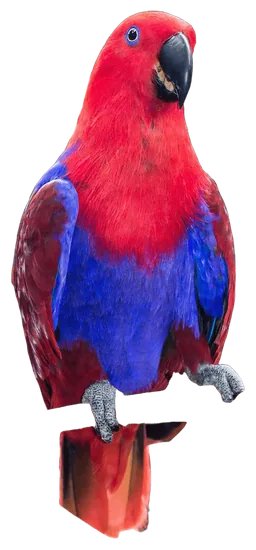
 Fight
FightPhoto: Crisco 1492 · CC BY-SA 4.0
The Eclectus Parrot is a stocky rainforest parrot from New Guinea, nearby islands and Cape York, famous because green males and red females look like different species. Females own the scarce nest hollows and will fight rivals to the death over them. In an absolute fight, though, it is a 0.45 kg bird with a hooked bill and no armor.
 Attack16
  Defense11
  Agility80
  Stamina62
  Intelligence78
  Special59
 Detailed ratings
Research-backed ratings on one 0–100 scale for all 344 animals (updated 2026-09-28). How ratings work
Special abilities
Ability 1Hollow DuelistA female that owns a good nest hollow stays with it for most of the year and fights rival females, sometimes to the death, to keep it.
 Ability 2Canopy Cloak
The male's emerald green plumage hides him from predators while he forages in the canopy, yet its ultraviolet sheen makes him stand out to eclectus females.
Unique traits
 TraitReversed Colour Pair
The most extreme colour difference of any parrot: red-and-blue females and green males, so different that they were once named as separate species.
TraitSex-Choosing MothersEclectus mothers can bias the sex of their chicks, and in poorer hollows they often remove male nestlings within three days of hatching.
How it fights
Weapons
- The bill is the only weapon. No force measurement exists, but eclectus parrots are mid-sized parrots with strongly hooked bills that open fruit, nuts and seeds. The key combat evidence is behavioral: females that own a good nest hollow stay in or near it for up to 11 months a year and fight off other females, sometimes to the death (Heinsohn 2008 as summarized on Wikipedia). This shows a willingness to fight hard over a resource, not an ability to kill larger animals.
 Struggles vs
- About 0.45 kg in absolute mass.
- No armor.
- Depends on rare large nest hollows.
- Low breeding success; females often fledge only one chick.
- Weight
- 450 g15.9 oz
- Height
- No reliable measurement
- Length
- 38 cm15 in
- Top speed
- No reliable measurement
- Bite force
- No reliable measurement
- Lifespan
- 20 years
- Home biome
- Jungle
- Lifestyle
- Social
Rated specimen: Healthy mature adult female, 0.45 kg, 38.0 cm total length.
Fun facts
- Male and female eclectus look so different that scientists once thought they were two species.
- Female eclectus parrots may fight to the death over a good nest hollow.
- A female can stay at her nest hollow for up to 11 months a year while males bring her food.
- Several males may cooperate to feed one female's chicks, something no other parrot is known to do.
- The male's green feathers reflect ultraviolet light that females can see.
- Eclectus mothers often remove newly hatched sons from poorer nest hollows.
Closest rivals by power. Tap one for the full breakdown, or pick any opponent.
vs KiwiWins · 50% · Toss-up  W vs FlamingoLoses · 51% · Toss-up
  L vs Yellow-naped AmazonLoses · 52% · Toss-up
  L vs MagpieLoses · 52% · Toss-up
  L vs Barn OwlWins · 52% · Toss-up
  W vs Black-footed CatLoses · 50% · Toss-up
  L vs Sugar GliderLoses · 50% · Toss-up
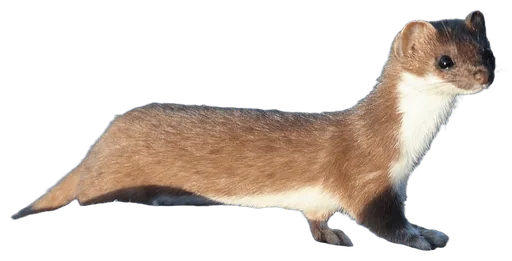
  L vs StoatWins · 50% · Toss-up
  W
W  Pick any opponent
 Eclectus Parrot battle analysis
The eclectus parrot turns the usual bird pattern upside down. The female is the brilliant one, red with blue or purple, and she is the one who fights. Good nest hollows high in emergent rainforest trees are rare, so a female that finds one stays with it for most of the year, displaying from the entrance and driving off rival females, sometimes fatally. Males, emerald green and camouflaged in the canopy, spend their time foraging and bringing food, often several of them to one female.
Long-term field work on Cape York showed how unusual this system is. Females mate with several males, groups of males cooperate to feed one brood, and mothers can control the sex of their chicks, often removing young sons from poorer hollows within days of hatching. The male's green plumage also reflects ultraviolet light, which makes him bright to females but hard for predators to see.
In an absolute matchup the eclectus is a mid-sized parrot of about 0.45 kg. The female's readiness to fight over a hollow gives it more ferocity than most parrots, but it has no measured bite, no armor and no talons. It is dangerous only to small rivals at its nest.
Habitat & range
Eclectus parrots live in lowland rainforest from the Moluccas and New Guinea to the Bismarck Archipelago, the Solomon Islands and the tip of Cape York Peninsula, Australia, where they are restricted to rainforest in the Iron and McIlwraith ranges (Legge et al. 2004). They stay mostly in the canopy and nest in emergent trees. They have been introduced to Palau, Singapore and the Goram Islands (ADW).
Diet & hunting
They feed mainly on fruit and fruit pulp, plus seeds, leaf buds, blossoms, nectar, figs and nuts (Wikipedia, citing Birds of the World). Their oesophagus and proventriculus are wide and stretchy, letting them take in large amounts of food quickly.
Social life
The breeding system is unusual for a parrot. Females mate with several males, and groups can include several males and several females. Multiple males cooperate to feed one female and her chicks. At Iron Range, Cape York, an estimated 538–596 breeding females shared the forest with 1,059–1,173 males (Legge et al. 2004).
Conservation
The Moluccan and Papuan eclectus are both listed as Least Concern by the IUCN, though some small island populations are rarer. The Australian population is small (around 540–600 breeding females at Iron Range) and depends on scarce large nest trees, so it is considered vulnerable to habitat loss (Legge et al. 2004).
Quick answers
How strong is an Eclectus Parrot?
On the Animal Battle Stats scale, the Eclectus Parrot has an attack rating of 16 and a power index of 40.1 out of 100, which ranks it #277 of 344 animals and puts it in D tier (Underdog). Its strongest stat is agility (80).
How much does an Eclectus Parrot weigh?
A typical adult Eclectus Parrot weighs about 450 g (15.9 oz). Rated specimen: healthy mature adult female, 0.45 kg, 38.0 cm total length.
How fast is an Eclectus Parrot?
There is no reliable measured top speed for the Eclectus Parrot, so we do not publish one. Its agility rating, which covers acceleration, reflexes and evasion, is 80 out of 100.
What does an Eclectus Parrot eat?
They feed mainly on fruit and fruit pulp, plus seeds, leaf buds, blossoms, nectar, figs and nuts (Wikipedia, citing Birds of the World). Their oesophagus and proventriculus are wide and stretchy, letting them take in large amounts of food quickly.
Is the Eclectus Parrot endangered?
No. The Eclectus Parrot is listed as Least Concern. The Moluccan and Papuan eclectus are both listed as Least Concern by the IUCN, though some small island populations are rarer. The Australian population is small (around 540–600 breeding females at Iron Range) and depends on scarce large nest trees, so it is considered vulnerable to habitat loss (Legge et al. 2004).
What animals can beat an Eclectus Parrot?
Among its closest rivals, the Flamingo (51%), the Yellow-naped Amazon (52%), the Magpie (52%), the Black-footed Cat (50%), the Sugar Glider (50%) would be favored against the Eclectus Parrot. It would be favored against the Kiwi, the Barn Owl, the Stoat.
Researched 2026-09-28. Ratings are editorial judgments built from these sources; measurements describe a healthy adult female.
- Wikipedia, Eclectus (genus)taxonomy split, length, dimorphism, diet, nesting, female fights, polyandry, sex bias, lifespan range
- Wikipedia, Moluccan eclectuslength, subspecies, longevity
- Animal Diversity Web, Eclectus roratusmass, dimorphism, nest dimensions, breeding, maturity
- Heinsohn 2008, Journal of Avian Medicine and Surgerybreeding system, colour function, sex control
- Heinsohn, Legge and Endler 2005, Scienceplumage colour
- Legge, Heinsohn and Garnett 2004, Wildlife ResearchAustralian population, habitat, sex ratio
- Heinsohn et al. 2011, Current Biologysex-specific removal of chicks
- Heinsohn et al. 2007, Animal Behaviourcooperative polyandry
- AnAge, Eclectus parrotlongevity, adult weight
- Wikimedia Commons, female eclectusimage candidate
Photo: “Eclectus parrot (Eclectus roratus) female, Gembira Loka Zoo, Yogyakarta, 2015-03-15 02.jpg” by Crisco 1492, CC BY-SA 4.0, background removed and cropped. Original
Suggest a correction