
Dragonfly
Anax juniusC tier · Capable5th of 30 bugs & spiders
Size & speed
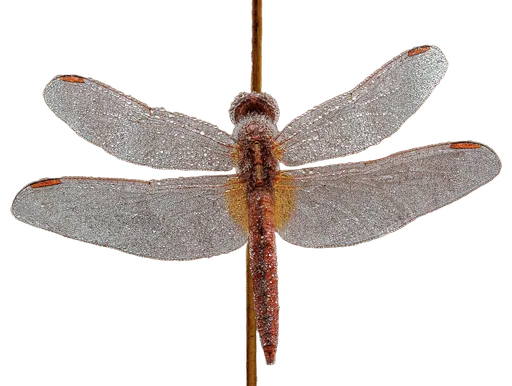
- Weight
- 1 g0 oz
- Length
- 7.6 cm3 in
As heavy as 1 paperclips
Heavier than 2% of animalsAbout 0.9 credit cards long
Bigger than 5% of animalsA one-gram aerial interceptor with elite vision and near-ceiling maneuverability, the common green darner wins by seeing tiny moving targets early, predicting their path, and vectoring into them with four independently controlled wings. Its continental migration gives it exceptional insect endurance, but its absolute attack and structural defense remain tiny against most of the ABS roster.
Detailed ratings
Research-backed ratings on one 0–100 scale for all 344 animals (updated 2026-09-27). How ratings work


Card No. 258 of 344. Every animal on Animal Battle Stats has one: its power, tier and archetype on the front; its six battle stats, abilities and signature move on the back.
Special abilities
Dragonfly prey capture uses interception geometry and predictive head/body control rather than simple tail-chasing, enabling precise attacks on moving aerial prey.
Independently controlled fore- and hindwings permit hovering, backward flight, sharp directional changes, and unusually precise three-dimensional repositioning.
Unique traits
A. junius has a specialized adult compound-eye architecture, including large dorsal ommatidia occupying roughly one third of the eye surface and viewing a narrow cross-dorsal region.
The species' annual cycle uses multiple generations to span continental-scale movements, with average inferred migration over 600 km and some individuals exceeding 2,500 km.
How it fights
Weapons
- The adult is an aerial insect predator. It approaches flying prey on an interception course, captures the target with its legs, and bites while airborne or perched. Its practical offense is therefore not raw force but precision delivery against insects and similarly tiny targets. Against vertebrate-scale opponents, the damage ceiling is negligible.
- Dragonfly interception research on other anisopteran species is relevant to the flight-control mechanism but is not silently treated as an *A. junius*-specific measurement. Motion-capture work in Plathemis lydia found predictive head rotations and steering consistent with internal models of both body and prey motion. Earlier pursuit experiments likewise found dragonflies steering toward prey interception points rather than simply chasing the prey's current location.
- Weight
- 1 g0 oz
- Height
- No reliable measurement
- Length
- 7.6 cm3 in
- Top speed
- No reliable measurement
- Bite force
- No reliable measurement
- Lifespan
- 0.1 years
- Home biome
- Wetlands
- Lifestyle
- Social
Rated specimen: Healthy mature adult male common green darner.
Fun facts
- Radio-tagged common green darners have been followed using aircraft and ground teams despite the insect's tiny body size.
- One telemetry study estimated a 122 km single-day movement for a green darner.
- Stable-isotope research reconstructed migration using chemistry preserved in dragonfly wings.
- The annual migratory cycle is multi-generational rather than one individual making the entire round trip.
- Adult dragonflies can hover and fly backward.
- The adult aerial predator and aquatic larva are both hunters but use radically different bodies and environments.
Closest rivals by power. Tap one for the full breakdown, or pick any opponent.
vs Coconut CrabLoses · 87% · Decisive  L vs Monarch ButterflyWins · 55% · Toss-up
 W vs NautilusLoses · 80% · Clear edge
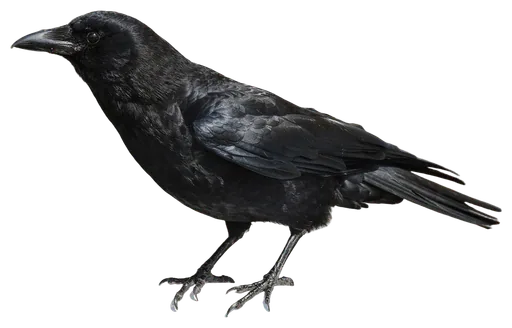
 L vs CrowLoses · 81% · Clear edge
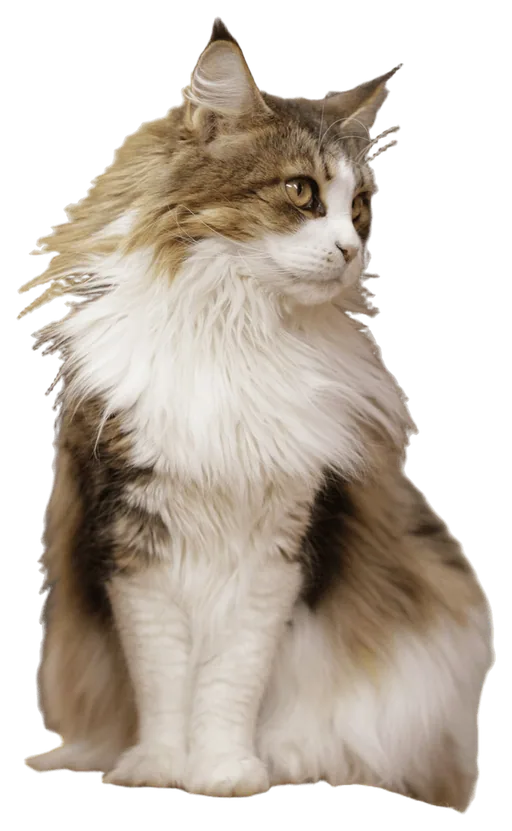
 L vs Maine CoonLoses · 89% · Decisive
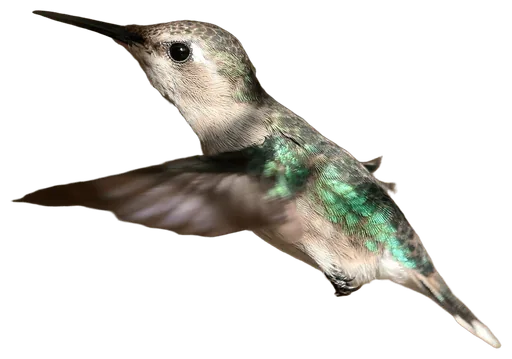
 L vs HummingbirdLoses · 58% · Slight edge
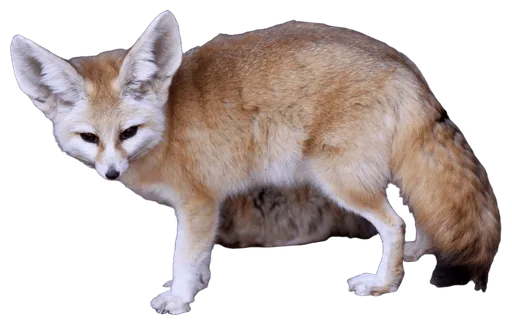
 L vs Fennec FoxLoses · 85% · Decisive
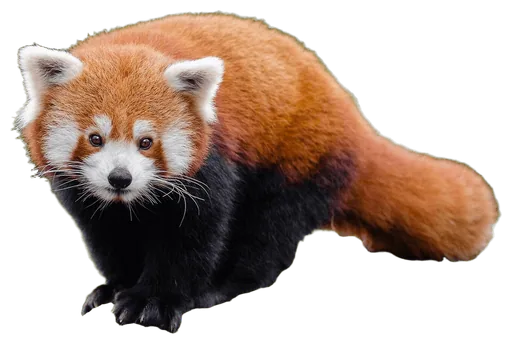
 L vs Red PandaLoses · 88% · Decisive
 L
Dragonfly battle analysis
The common green darner is a useful stress test for absolute ABS scaling. Relative to its size it is a spectacular predator, yet a one-gram insect cannot be allowed to inherit mammal-level Attack or Defense merely because it dominates mosquito-sized prey. Its real roster value lies elsewhere. Large compound eyes and specialized visual regions continuously extract target motion, while the flight system can hover, reverse, turn sharply, and steer toward interception points. Research on dragonfly interception shows that these maneuvers can include predictive control rather than only reflexive pursuit.
The species also has a second, very different claim to exceptional performance: migration. Radio telemetry has followed individual common green darners for days, and isotope work shows that the annual cycle spans hundreds to thousands of kilometers across generations. That supports high Stamina without pretending a migration day equals continuous combat output. In a matchup against tiny aerial prey, the darner is a precision hunter. Against larger animals, the same exquisite control mostly becomes an escape system because the animal lacks the mass, armor, and weapon scale to inflict serious damage.
Habitat & range
Common green darners occur broadly across North America and south into Central America, breeding around ponds, marshes, and slow or still freshwater. Migrants can appear far from breeding water, including urban areas.
Diet & hunting
Adults are generalist aerial predators of flying insects. Larvae are aquatic predators and can consume aquatic insects, tadpoles, and small fish. This ontogenetic shift means the species occupies two very different predatory niches across its life cycle.
Social life
Adults are not cooperative pack hunters. They may occur in aggregations or migratory movements, and males patrol breeding habitat. Reproduction occurs around freshwater; females insert eggs into aquatic vegetation, sometimes while paired in tandem with a male. The aquatic larva molts repeatedly before the winged adult emerges.
Conservation
The common green darner is widespread and is generally treated as Least Concern. Wetland quality remains ecologically important because reproduction depends on freshwater habitat.
Quick answers
How strong is a Dragonfly?
On the Animal Battle Stats scale, the Dragonfly has an attack rating of 8 and a power index of 42.4 out of 100, which ranks it #258 of 344 animals and puts it in C tier (Capable). Its strongest stat is agility (98).
How much does a Dragonfly weigh?
A typical adult Dragonfly weighs about 1 g (0 oz). Rated specimen: healthy mature adult male common green darner.
How fast is a Dragonfly?
There is no reliable measured top speed for the Dragonfly, so we do not publish one. Its agility rating, which covers acceleration, reflexes and evasion, is 98 out of 100.
What does a Dragonfly eat?
Adults are generalist aerial predators of flying insects. Larvae are aquatic predators and can consume aquatic insects, tadpoles, and small fish. This ontogenetic shift means the species occupies two very different predatory niches across its life cycle.
Is the Dragonfly endangered?
No. The Dragonfly is listed as Least Concern. The common green darner is widespread and is generally treated as Least Concern. Wetland quality remains ecologically important because reproduction depends on freshwater habitat.
What animals can beat a Dragonfly?
Among its closest rivals, the Coconut Crab (87%), the Nautilus (80%), the Crow (81%), the Maine Coon (89%), the Hummingbird (58%), the Fennec Fox (85%), the Red Panda (88%) would be favored against the Dragonfly. It would be favored against the Monarch Butterfly.
Researched 2026-09-27. Ratings are editorial judgments built from these sources; measurements describe a healthy adult male.
- U.S. National Park Service, Common Green Darnertaxon, adult dimensions, dimorphism
- University of Minnesota Entomologylength, diet, ecology
- Animal Diversity Web, Anax juniusadult lifespan, flight behavior
- Wikelski et al. 2006, Biology Letters / PMCmigration endurance
- Knight et al. 2019, Biology Letters / PubMedmigration maximum and speed caveat
- Hallworth et al. 2018, Biology Letters / PubMedannual cycle
- Smithsonian release on Hallworth et al.interpretable migration distance
- Sherk 1978, Journal of Experimental Zoologyadult eye specialization
- Mischiati et al. 2015, Naturepredictive interception mechanism
- Olberg et al. 2000 / PubMedinterception behavior
- Commons, William L. Farrimage candidate
Photo: “Crocothemis erythraea in Nepal.jpg” by Mildeep, CC BY-SA 4.0, background removed and cropped. Original
Suggest a correction