
Donkey
Equus africanus asinusB tier · Strong85th of 163 mammals
Size & speed

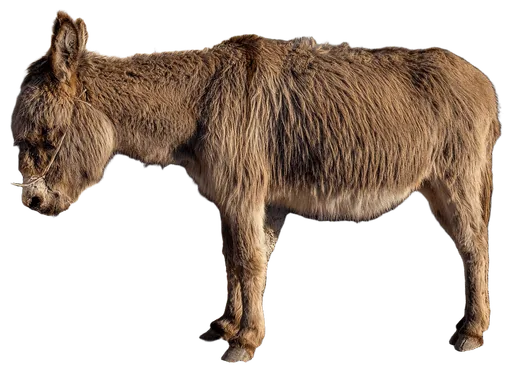
- Weight
- 150 kg331 lb
- Length
- 1.5 m4.9 ft
As heavy as 2.1 people
Heavier than 76% of animalsAbout as long as a person is tall
Bigger than 61% of animalsA tough, sure-footed desert equid whose dangerous hind-hoof counter, substantial body mass and exceptional water economy make it much more formidable than its placid reputation suggests.
Detailed ratings
Research-backed ratings on one 0–100 scale for all 344 animals (updated 2026-09-27). How ratings work


Card No. 135 of 344. Every animal on Animal Battle Stats has one: its power, tier and archetype on the front; its six battle stats, abilities and signature move on the back.
Special abilities
Powerful hindquarter-driven backward kicking makes the rear arc dangerous for predators that must close distance.
Exceptional water conservation plus rapid restoration after dehydration supports function in arid, resource-poor matchups.
Unique traits
Relatively small/narrow hooves provide secure footing in rough, rocky terrain.
Large mobile ears contribute to acoustic monitoring and heat-management morphology characteristic of the donkey.
How it fights
Weapons
- A donkey's decisive close-range weapon is its hindquarter-driven kick. The long limb provides reach and a hard hoof concentrates impact. It can kick backward rapidly when a threat enters the rear arc. Bites, foreleg strikes and trampling/stamping are secondary options. A 150 kg jack therefore has far more absolute striking power than medium canids even though it lacks carnivore cutting weapons.
- Weight
- 150 kg331 lb
- Height
- 1.1 m3.6 ft
- Length
- 1.5 m4.9 ft
- Top speed
- No reliable measurement
- Bite force
- No reliable measurement
- Lifespan
- 30 years
- Home biome
- Desert
- Lifestyle
- Social
Rated specimen: Healthy mature standard-size jack, 150.0 kg.
Fun facts
- Experimental donkeys can remember a hidden object's location for at least 90 seconds.
- After four days without water, studied donkeys restored baseline hydration status within roughly two hours after drinking.
- A Cameroon study of 205 adults found strong population variation and no simple universal male-larger pattern.
- Donkey hooves are narrower/smaller than typical horse hooves, suiting them to rough terrain.
- Domestic longevity can exceed 40 years, although that is not representative of every working population.
Closest rivals by power. Tap one for the full breakdown, or pick any opponent.
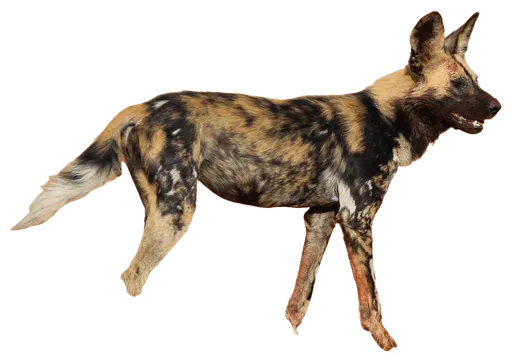
vs BonoboWins · 57% · Toss-up 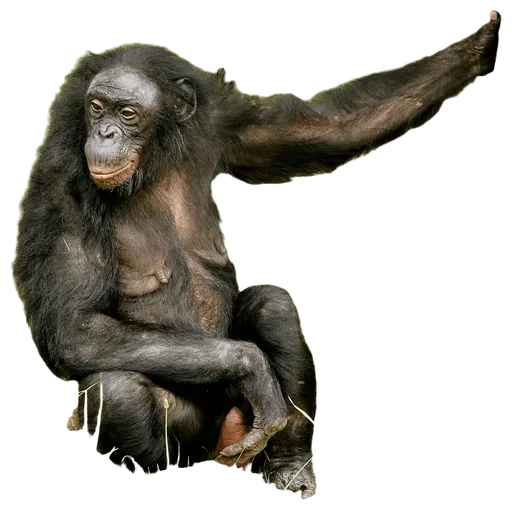 W vs African Wild DogWins · 60% · Slight edge
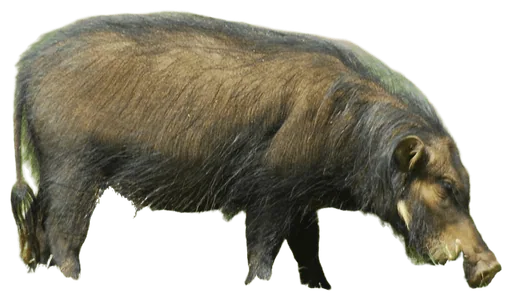
 W vs Giant Forest HogLoses · 52% · Toss-up
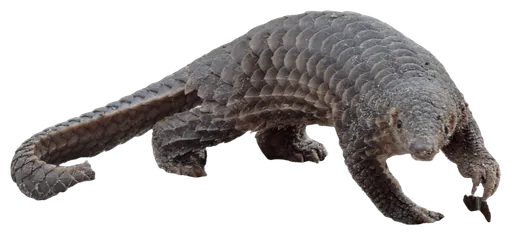
 L vs PangolinWins · 67% · Slight edge
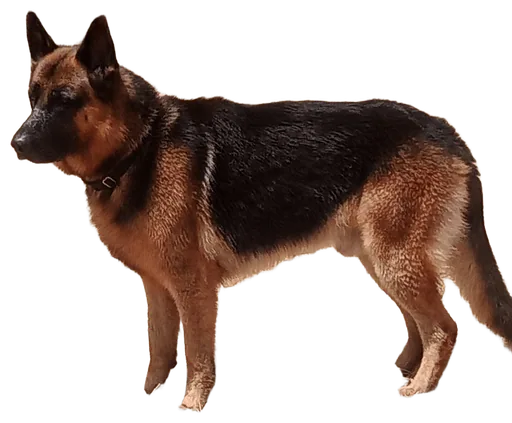
 W vs German ShepherdWins · 59% · Slight edge
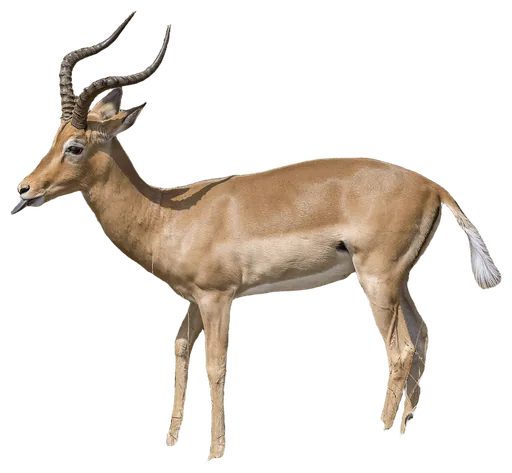
 W vs ImpalaWins · 55% · Toss-up
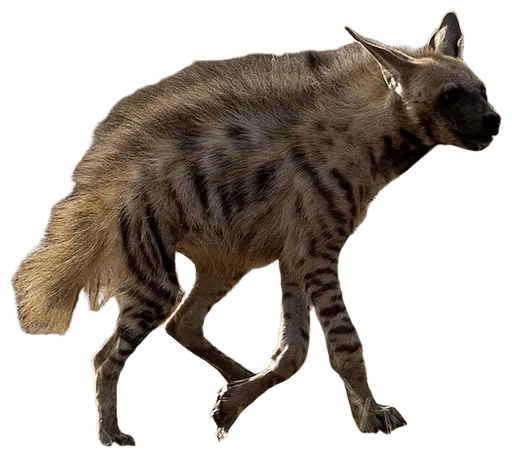
 W vs Striped HyenaWins · 57% · Toss-up
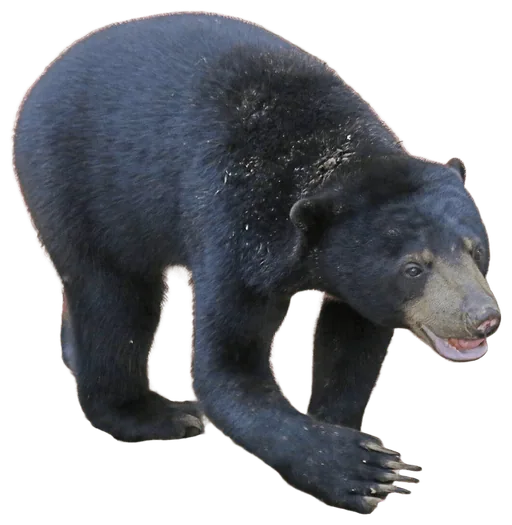
 W vs Sun BearWins · 56% · Toss-up
 W
Donkey battle analysis
The donkey is not a miniature horse with worse stats. It is a dryland equid built around caution, footing, resource efficiency and a punishing close-range counterattack. A representative jack gives away speed and specialized weaponry to many predators, but forcing entry into its rear arc risks a hard hoof strike backed by a 150 kg body. Its physiology is especially distinctive: controlled studies show impressive dehydration tolerance and rapid rehydration. Those traits justify high Stamina and meaningful Special scores without pretending they are armor or raw attack. Cognitively, donkeys demonstrate memory and problem-solving consistent with capable equids. Their battle identity is therefore a durable, terrain-aware counterfighter rather than a passive livestock animal.
Habitat & range
Domestic donkeys occur worldwide in farms, pastoral systems, drylands and feral populations. Their domestic origins and physiology are strongly associated with African arid environments.
Diet & hunting
Herbivorous grazer/browser. Donkeys can exploit coarse, relatively low-quality forage and have long served as working animals in resource-limited landscapes.
Social life
Flexible social organization depending on resource distribution and management. Males may be territorial; domestic management can create pairs, groups or solitary housing.
Conservation
The domestic donkey itself is not treated as a wild conservation unit in the same way as the critically endangered African wild ass from which it was bred. Feral populations can also create management and ecological conflicts where introduced.
Quick answers
How strong is a Donkey?
On the Animal Battle Stats scale, the Donkey has an attack rating of 48 and a power index of 53.3 out of 100, which ranks it #135 of 344 animals and puts it in B tier (Strong). Its strongest stat is stamina (77).
How much does a Donkey weigh?
A typical adult Donkey weighs about 150 kg (331 lb). Rated specimen: healthy mature standard-size jack, 150.0 kg.
How fast is a Donkey?
There is no reliable measured top speed for the Donkey, so we do not publish one. Its agility rating, which covers acceleration, reflexes and evasion, is 58 out of 100.
What does a Donkey eat?
Herbivorous grazer/browser. Donkeys can exploit coarse, relatively low-quality forage and have long served as working animals in resource-limited landscapes.
Is the Donkey endangered?
The Donkey's conservation status is Critically Endangered. The domestic donkey itself is not treated as a wild conservation unit in the same way as the critically endangered African wild ass from which it was bred. Feral populations can also create management and ecological conflicts where introduced.
What animals can beat a Donkey?
Among its closest rivals, the Giant Forest Hog (52%) would be favored against the Donkey. It would be favored against the Bonobo, the African Wild Dog, the Pangolin, the German Shepherd, the Impala, the Striped Hyena, the Sun Bear.
Researched 2026-09-27. Ratings are editorial judgments built from these sources; measurements describe a healthy adult.
- 1. Nguekeng et al., Phenotypic diversity of the domestic donkey in Cameroon205 adults; mass, withers, trunk dimensions and sex comparison. Confidence: high for sampled population; population-specific.
- 2. Phenotypic Characterisation of the Abruzzo Donkey (2026)sex-specific body weight and withers height in a large European breed. Confidence: high; breed-specific and much larger than Sahelian types.
- 3. Kabylie donkey morphometricspredominantly male sample, body measurements and equation-dependent mass estimates. Confidence: moderate-high; estimated rather than scale-measured mass caveat.
- 4. Animal Diversity Web, Equus asinusmorphology, territorial behavior, broad size and longevity context. Confidence: moderate; some values aggregate domestic/wild-ass context.
- 5. McLean, Pinto & Navas, Memory and cognition behavior in the miniature donkey (2024)12-donkey object permanence, 90-second memory and detour-task results. Confidence: high for experiment; miniature-breed/sample-size limitation.
- 6. Stimuli of thirst in donkeyssix feral donkeys, 19-hour deprivation response and higher thirst threshold than ponies. Confidence: high for experiment.
- 7. Kasirer-Izraeli et al., Kidney response to rapid rehydration in the donkeyfour-day dehydration, plasma changes and rapid rehydration. Confidence: high for studied animals.
- 8. PNAS, Domestication of the donkeyprime adult male Abydos asses and archaeological transport/loading evidence. Confidence: high for archaeological sample.
- 9. Wikimedia Commons, Equus asinus 001.JPGexact taxon photo, 4928x3264, CC0. Confidence: high for file identity/license; adulthood/sex/full-body remain unverified.
Photo: “Сарыбулак, осёл.jpg” by Nikolai Bulykin, CC BY-SA 4.0, background removed and cropped. Original
Suggest a correction