

Crowned Eagle
Stephanoaetus coronatus
 #148 of 273
  Forest Ambush Predator Near Threatened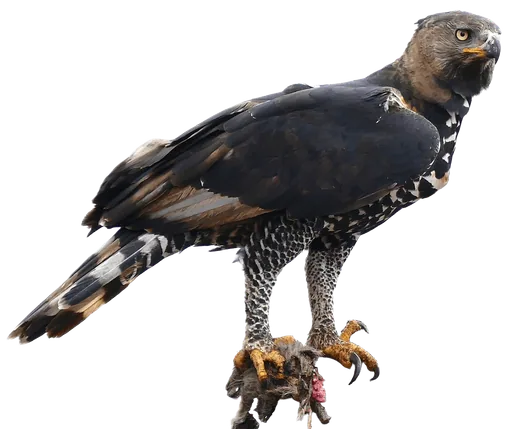
 Fight
FightPhoto: Bernard DUPONT from FRANCE · CC BY-SA 2.0
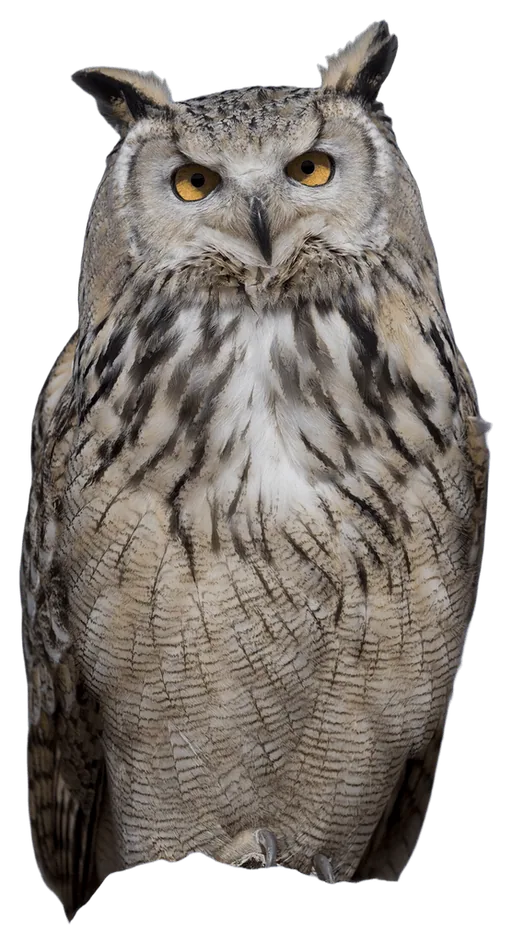
The Crowned Eagle is Africa's most powerful forest eagle. The canonical female weighs about 4 kg but has thick legs and massive talons that regularly kill monkeys and small antelope far heavier than herself. It attacks inside closed forest with short, broad wings, but its small absolute mass and lack of armor keep it far below large mammals in raw power and defense.
 Attack41
  Defense19
  Agility89
  Stamina57
  Intelligence66
  Special74
 Detailed ratings
Research-backed ratings on one 0–100 scale for all 273 animals (updated 2026-09-28). How ratings work
Special abilities
Ability 1Broad-Wing Forest StrikeShort, broad, rounded wings and a long tail let the eagle attack inside closed forest, where monkeys and duikers live, instead of needing open sky. This turns forest cover into a first-strike advantage.
 Ability 2Crushing Talon Grip
Thick legs and wide, heavy talons clamp and pierce prey until it stops moving, letting a 4 kg eagle kill monkeys and small antelope well above its own weight.
Unique traits
 TraitPrimate Hunter of Africa
In Ugandan rainforest, primates made up the great majority of prey remains, and eagles took adult males more often than expected.
TraitGreat Stick NestPairs reuse and enlarge the same nest for many years; nests can reach about 2.4 m across and 3 m deep and may pass to a new pair.
How it fights
Weapons
- The feet are the main weapon: thick legs, heavy toes and wide, strongly curved talons that crush and pierce. The hooked bill is used after the prey is controlled. Throughout its range, the main prey are monkeys, small antelope such as duikers and chevrotains, rock hyraxes, rodents and viverrids. Mammals make up most of the diet.
- Evidence of weapon power comes from long-term prey studies. In a 37-month study in Kibale National Park, Uganda, prey remains collected under the nests of two pairs were mostly primates. The eagles took adult and juvenile monkeys roughly in proportion to their abundance and took males more often than females, even though the males are the larger, better-armed sex. A related taphonomic study documented the damage the eagles leave on monkey skulls and skeletons. Popular and institutional summaries describe kills of antelope weighing several times the eagle's own mass, with bushbuck up to about 30 kg as an exceptional upper record. These are extremes, not the typical kill.
 Struggles vs
- Only about 4 kg in absolute mass.
- No armor; light avian skeleton.
- Short wings reduce open-country pursuit and soaring efficiency.
- Loses its advantage if grounded or caught by a large terrestrial grappler.
- Weight
- 4 kg9 lb
- Height
- No reliable measurement
- Length
- 90 cm35.4 in
- Top speed
- No reliable measurement
- Bite force
- No reliable measurement
- Lifespan
- 14 years
- Home biome
- Forest
- Lifestyle
- Mostly solitary
Rated specimen: Healthy mature adult female, 4.0 kg, 90.0 cm total length, about 1.7 m wingspan.
Fun facts
- In a 37-month Kibale study, primates made up the great majority of prey remains under two nests.
- The eagles took male monkeys more often than females, even though males are larger and more combative.
- Nests can grow to about 2.4 m across and 3 m deep after years of reuse.
- A single breeding cycle lasts roughly 500 days, so a pair raises at most one young every two years.
- A 4 kg female can kill antelope several times her weight; bushbuck up to about 30 kg are an exceptional record.
- Urban eagles in KwaZulu-Natal live mostly on rock hyraxes.
Closest rivals by power. Tap one for the full breakdown, or pick any opponent.
vs Eurasian Eagle-OwlLoses · 50% · Toss-up  L vs CondorWins · 51% · Toss-up
  W vs OspreyLoses · 51% · Toss-up
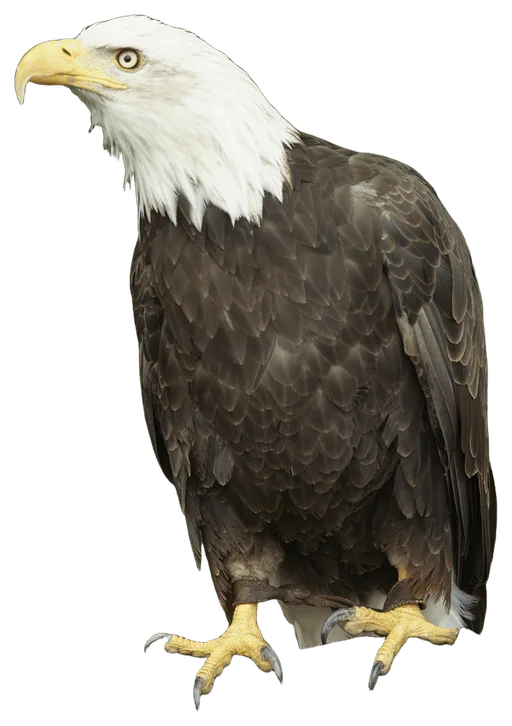
  L vs Bald EagleWins · 51% · Toss-up
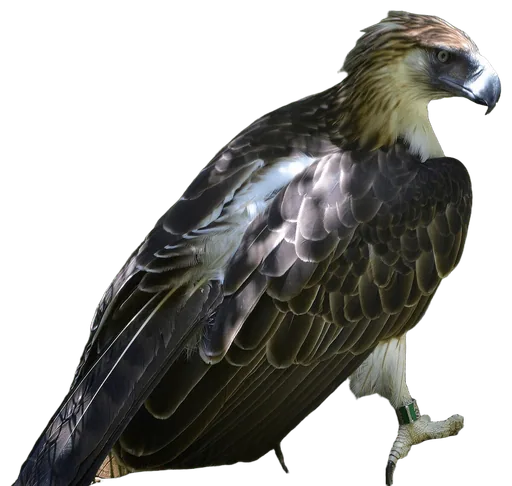
  W vs Philippine EagleLoses · 52% · Toss-up
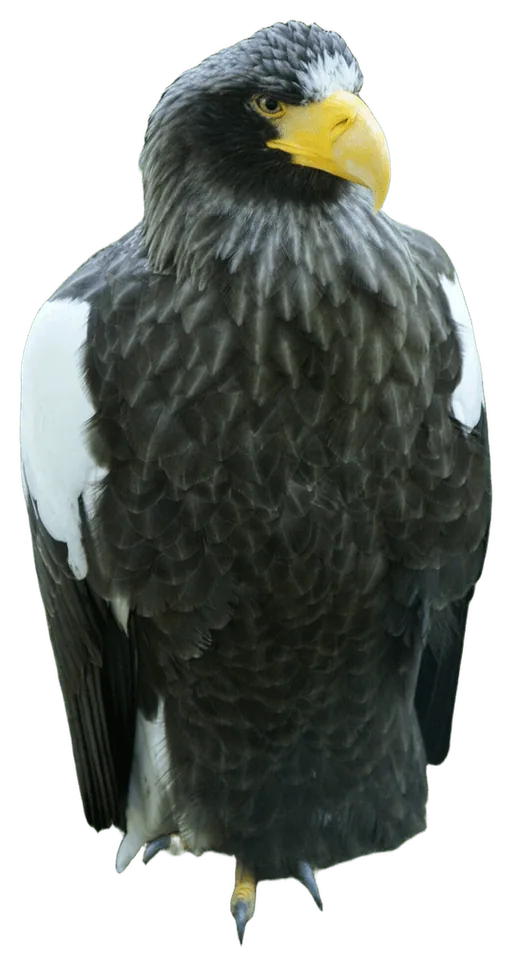
  L vs Steller's Sea EagleLoses · 52% · Toss-up
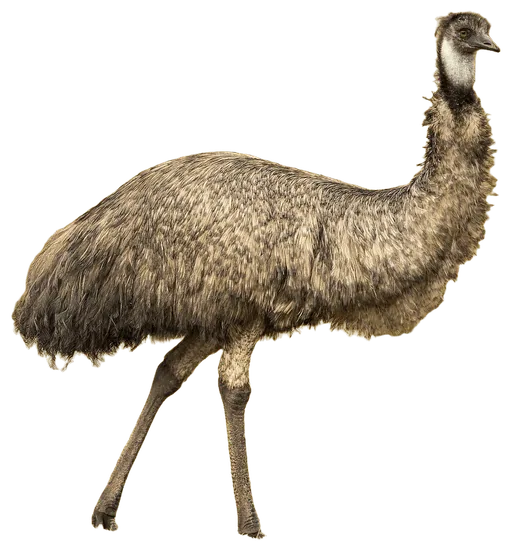
  L vs EmuLoses · 52% · Toss-up
  L vs Great Horned OwlWins · 52% · Toss-up
  W
W  Pick any opponent
 Crowned Eagle battle analysis
The crowned eagle packs an unusually heavy weapon system into a medium-sized raptor. At about 4 kg for the canonical female it is lighter than a golden eagle, yet its legs are thick, its toes heavy and its talons wide and strongly curved. It is built for one decisive move: a short forest attack onto a monkey or small antelope, followed by a crushing grip.
Field data support the reputation. Under two Ugandan nests over three years, primate remains dominated, and the eagles took adult male monkeys more often than expected, not just easy juveniles. Elsewhere the same bird lives on rock hyraxes, duikers and, in South African suburbs, the hyraxes and vervets of garden greenspace. That flexibility, together with selective choice of monkey prey, makes it a thoughtful predator for a raptor.
In an absolute matchup its limits are the limits of a 4 kg bird. It has no armor, a light skeleton and short wings built for forest attacks, not long chases. It wins by choosing the moment of contact inside cover. On open ground, or against a heavy grappler that survives the first strike, its advantages fade quickly.
Habitat & range
The crowned eagle occurs across sub-Saharan Africa in closed forest, riverine and gallery forest, dense woodland and wooded gorges. In southern Africa it is limited to eastern regions. A breeding population also lives in the wooded suburbs and greenspaces of Durban and Pietermaritzburg in KwaZulu-Natal, South Africa.
Diet & hunting
It is a mammal-focused apex predator. Main prey across the range are monkeys, small antelope (duikers, chevrotains, young bushbuck), rock hyraxes, rodents and viverrids. In equatorial rainforest, estimates put monkeys at roughly 25–90% of the diet; in savanna and forest-island habitats primates are taken less often and hyraxes and duikers more often. In urban KwaZulu-Natal, rock hyrax was the main prey, and vervet monkeys were more important where hyraxes were absent.
Social life
Adults live in territorial pairs, and no cooperative hunting was documented in the sources reviewed. The young depend on the parents for a long time after fledging.
Conservation
The species is listed as Near Threatened on the IUCN Red List, with a decreasing population estimated at roughly 5,000–50,000 mature individuals. The main threats are loss and fragmentation of African forest and the bushmeat trade. Urban populations face additional human-caused threats and conflicts, reviewed in a 2021 study of urban crowned eagles.
Quick answers
How strong is a Crowned Eagle?
On the Animal Battle Stats scale, the Crowned Eagle has an attack rating of 41 and a power index of 50.5 out of 100, which ranks it #148 of 273 animals and puts it in C tier (Capable). Its strongest stat is agility (89).
How much does a Crowned Eagle weigh?
A typical adult Crowned Eagle weighs about 4 kg (9 lb). Rated specimen: healthy mature adult female, 4.0 kg, 90.0 cm total length, about 1.7 m wingspan.
How fast is a Crowned Eagle?
There is no reliable measured top speed for the Crowned Eagle, so we do not publish one. Its agility rating, which covers acceleration, reflexes and evasion, is 89 out of 100.
What does a Crowned Eagle eat?
It is a mammal-focused apex predator. Main prey across the range are monkeys, small antelope (duikers, chevrotains, young bushbuck), rock hyraxes, rodents and viverrids. In equatorial rainforest, estimates put monkeys at roughly 25–90% of the diet; in savanna and forest-island habitats primates are taken less often and hyraxes and duikers more often. In urban KwaZulu-Natal, rock hyrax was the main prey, and vervet monkeys were more important where hyraxes were absent.
Is the Crowned Eagle endangered?
The Crowned Eagle's conservation status is Near Threatened. The species is listed as Near Threatened on the IUCN Red List, with a decreasing population estimated at roughly 5,000–50,000 mature individuals. The main threats are loss and fragmentation of African forest and the bushmeat trade. Urban populations face additional human-caused threats and conflicts, reviewed in a 2021 study of urban crowned eagles.
What animals can beat a Crowned Eagle?
Among its closest rivals, the Eurasian Eagle-Owl (50%), the Osprey (51%), the Philippine Eagle (52%), the Steller's Sea Eagle (52%), the Emu (52%) would be favored against the Crowned Eagle. It would be favored against the Condor, the Bald Eagle, the Great Horned Owl.
Researched 2026-09-28. Ratings are editorial judgments built from these sources; measurements describe a healthy adult female.
- The Peregrine Fund, Crowned Hawk-eaglelength, wingspan, mass, status, lifespan, nest building
- Mitani et al. 2001, Behavioral Ecology and Sociobiologydiet, prey selection, attack
- Sanders et al. 2003, taphonomy of crowned hawk-eagle predation on monkeysweapon damage
- McPherson et al., Urban Ecosystemsurban diet, prey switching
- McPherson et al. 2021, Frontiers in Ecology and Evolutionurban threats and conflict
- African Raptors, crowned eagle research in South Africatelemetry methods
- San Diego Zoo Wildlife Alliance, Crowned Eaglelifespan, nest, breeding cycle
- BirdLife DataZone factsheetstatus, population
- Biodiversity Explorer (Iziko Museums)range
- Crowned eagles in Ugandan rainforest, breeding and diet at a nestbreeding and diet context
- Attacks by crowned hawk eagles on monkeys in Zaireattack behavior
- Wikipedia, Crowned eaglesex-specific mass, hallux, tarsus, wing shape, diet range
- Commons, crowned eagle at Ndumoimage candidate
Photo: “Crowned Eagle (Stephanoaetus coronatus) with prey ... (29591438981).jpg” by Bernard DUPONT from FRANCE, CC BY-SA 2.0, background removed and cropped. Original
Suggest a correction