
Crow
Corvus brachyrhynchosC tier · Capable42nd of 55 birds
Size & speed

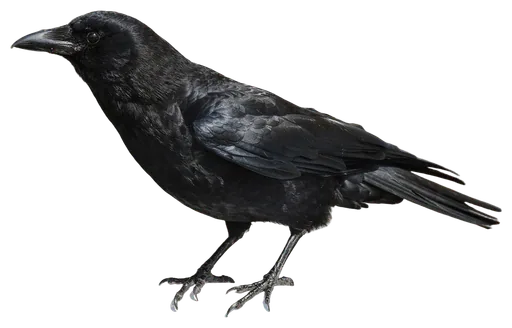
- Weight
- 500 g17.6 oz
- Length
- 48 cm18.9 in
As heavy as 2.5 smartphones
Heavier than 15% of animalsAbout 1.6 rulers long
Bigger than 22% of animalsThe American Crow is a half-kilogram generalist whose physical weapons are modest but whose cognition is elite. Its bill handles small prey, while flight, vigilance and mobbing keep it out of reach of larger enemies. Species-specific experiments show long-lasting recognition of dangerous humans, social transmission of threat information and flexible problem solving, making intelligence and tactics its defining battle advantages rather than raw force.
Detailed ratings
Research-backed ratings on one 0–100 scale for all 344 animals (updated 2026-09-27). How ratings work


Card No. 259 of 344. Every animal on Animal Battle Stats has one: its power, tier and archetype on the front; its six battle stats, abilities and signature move on the back.
Special abilities
American Crows learn and retain the identity of dangerous individual humans, discriminate threatening from neutral faces, and spread that information socially. In a matchup context this represents unusually durable opponent recognition and risk updating.
Alarm calls recruit other crows to harass larger predators. The mechanism converts social information into coordinated deterrence, while remaining distinct from individual physical power.
Unique traits
Experimental work shows threat knowledge can pass horizontally among adults and vertically from parents to young, allowing local danger information to persist and spread.
The species combines flexible omnivory, human-gaze sensitivity, novel-problem learning and exploitation of human-modified environments without requiring a specialized anatomical weapon.
How it fights
Weapons
- The bill is the primary weapon, backed by feet for bracing and grappling small targets. Crows kill insects, small vertebrates, eggs and nestlings, but are not raptorial birds: their feet lack eagle-like killing talons and their bill lacks the power and specialization of a large raptor. Against similar-sized opponents they can peck, jab, pull feathers, chase and harass. Against much larger animals, damage potential is low unless sensitive tissues such as eyes are exposed.
Struggles vs
- Forced enclosed ground combat removes the main defensive advantage
- Very low absolute mass and tissue depth
- No raptorial talons, armor, venom or heavy killing bite
- Aerial mobility does not guarantee meaningful damage against armored or large opponents
- Weight
- 500 g17.6 oz
- Height
- No reliable measurement
- Length
- 48 cm18.9 in
- Top speed
- No reliable measurement
- Bite force
- No reliable measurement
- Lifespan
- No reliable measurement
- Home biome
- Forest
- Lifestyle
- Social
Rated specimen: Healthy mature adult male, 0.50 kg, 48.0 cm total length, approximately 95.0 cm wingspan.
Fun facts
- Cornell's adult range spans 316–620 g, nearly a twofold mass difference.
- The USGS longevity database contains a female American Crow verified alive at 18 years 4 months.
- Experimental threat knowledge spread at least 1.2 km over five years from one study site.
- Crows can learn a dangerous human face without personally being trapped by observing other crows.
- Young crows can learn whom to scold from their parents.
- American Crow families may include offspring from multiple previous years that help raise younger siblings.
Closest rivals by power. Tap one for the full breakdown, or pick any opponent.
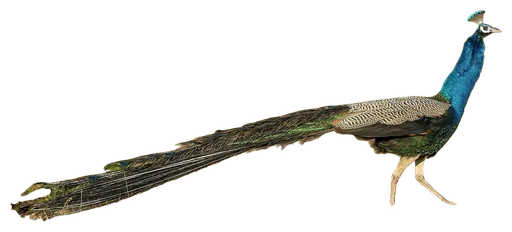
vs HummingbirdWins · 75% · Clear edge 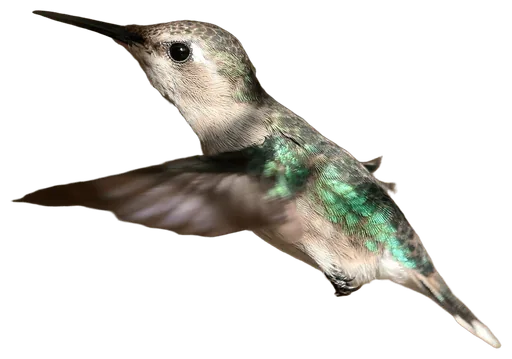 W vs PeacockLoses · 64% · Slight edge
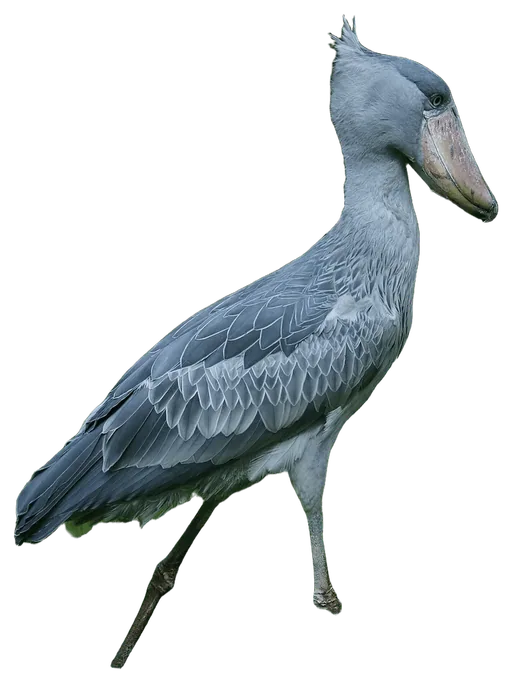
 L vs ShoebillLoses · 65% · Slight edge
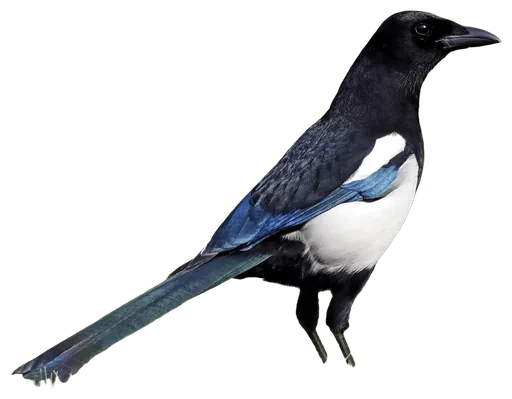
 L vs MagpieWins · 56% · Toss-up
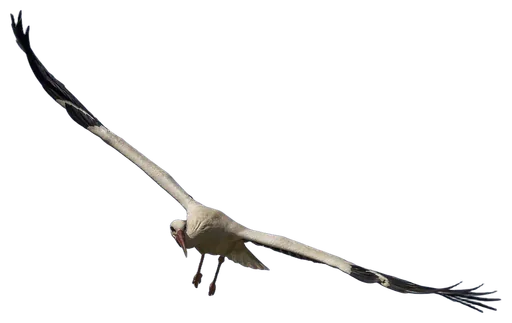
 W vs StorkLoses · 63% · Slight edge
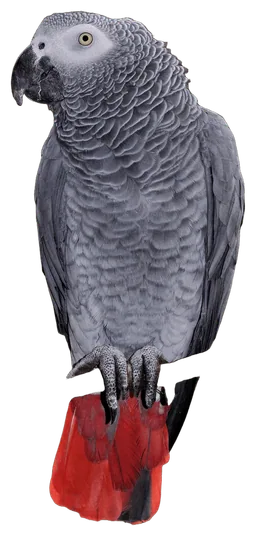
 L vs African Grey ParrotDraw · 50-50 · Dead even
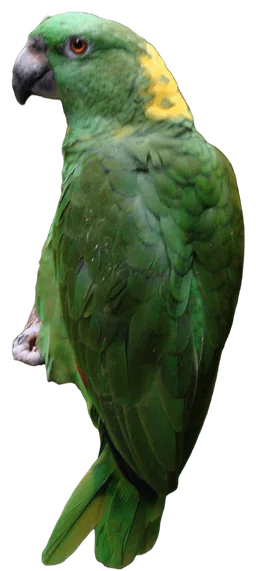
 D vs Yellow-naped AmazonWins · 52% · Toss-up
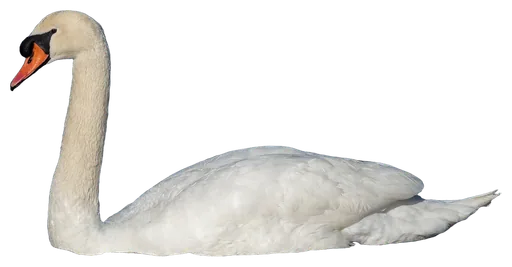
 W vs SwanLoses · 69% · Slight edge
 L
Crow battle analysis
The crow is an important ABS anti-inflation test because its strongest abilities are real but mostly informational. A 0.5 kg bird should never receive wolf-like Attack or mammal-like Defense simply because it is clever. Its bill can kill small prey and its feet help manipulate targets, yet Cornell's observation that the bill cannot even open intact gray-squirrel skin demonstrates the physical ceiling clearly.
Its defensive strategy is almost the opposite of armor. The crow survives by seeing danger early, leaving the attack line, gaining altitude and recruiting allies. That makes Agility strong while Defense stays very low. Mobbing is not extra damage: it is repeated, coordinated harassment that can make a predator abandon an area or expose itself to additional attackers.
The cognitive case is much stronger than generic claims that corvids are smart. American Crow experiments directly show individual recognition of dangerous human faces, memory lasting years, sensitivity to human gaze, horizontal and vertical social learning, and flexible acquisition of a novel string-pulling solution. These justify an elite Intelligence rating and unusually high Tactics on the full roster.
This produces a deliberately polarized profile: tiny absolute power and protection, excellent aerial maneuverability, solid general endurance, and near-top-tier behavioral intelligence. That separation preserves real biology instead of letting cognition leak into every score.
Habitat & range
American Crows occupy most of North America and thrive in open or semi-open landscapes with trees. Cornell lists farmland, pasture, landfills, city parks, golf courses, cemeteries, yards, vacant lots, roadsides, river and marsh edges, and beaches. They generally avoid extensive unbroken forest and deserts. Northern birds may migrate while many populations remain resident.
Diet & hunting
They are broad omnivores. Foods include grains, seeds, nuts, fruits, berries, insects, earthworms, fish, crayfish, mussels, young turtles, mice, eggs, nestlings, carrion and human refuse. Carrion is only part of the diet, and Cornell notes that the bill cannot open even gray-squirrel skin, so scavenging often depends on already accessible carcasses.
Social life
Family groups may persist year-round and include the breeding pair plus offspring from previous years. Young can help raise later broods. Outside breeding, very large communal roosts form. Sociality supports information transfer, predator mobbing and flexible exploitation of patchy foods.
Conservation
The species is currently widespread and classified as Least Concern in major bird-conservation summaries. Cornell describes it as numerous, though long-term survey trends have varied and West Nile virus has caused important local mortality. The report does not convert abundance into combat capability.
Quick answers
How strong is a Crow?
On the Animal Battle Stats scale, the Crow has an attack rating of 14 and a power index of 42.2 out of 100, which ranks it #259 of 344 animals and puts it in C tier (Capable). Its strongest stat is intelligence (96).
How much does a Crow weigh?
A typical adult Crow weighs about 500 g (17.6 oz). Rated specimen: Healthy mature adult male, 0.50 kg, 48.0 cm total length, approximately 95.0 cm wingspan.
How fast is a Crow?
There is no reliable measured top speed for the Crow, so we do not publish one. Its agility rating, which covers acceleration, reflexes and evasion, is 82 out of 100.
What does a Crow eat?
They are broad omnivores. Foods include grains, seeds, nuts, fruits, berries, insects, earthworms, fish, crayfish, mussels, young turtles, mice, eggs, nestlings, carrion and human refuse. Carrion is only part of the diet, and Cornell notes that the bill cannot open even gray-squirrel skin, so scavenging often depends on already accessible carcasses.
Is the Crow endangered?
No. The Crow is listed as Least Concern. The species is currently widespread and classified as Least Concern in major bird-conservation summaries. Cornell describes it as numerous, though long-term survey trends have varied and West Nile virus has caused important local mortality. The report does not convert abundance into combat capability.
What animals can beat a Crow?
Among its closest rivals, the Peacock (64%), the Shoebill (65%), the Stork (63%), the Swan (69%) would be favored against the Crow. It would be favored against the Hummingbird, the Magpie, the Yellow-naped Amazon. It is dead even with the African Grey Parrot: a draw.
Researched 2026-09-27. Ratings are editorial judgments built from these sources; measurements describe a healthy adult male.
- Cornell Lab, American Crow Identification40–53 cm length; 316–620 g mass; 85–100 cm wingspan; morphology; regional differences; adult behavior and mobbing
- Cornell Lab, American Crow Life HistoryHabitat, diet, family groups, cooperative breeding, roosting, mobbing, problem solving
- Cornell Lab, American Crow OverviewDelayed breeding, extended families, scavenging limitations
- USGS Bird Banding Laboratory Longevity RecordsVerified American Crow longevity record, female 18 y 4 mo alive
- Cornell, Marzluff & Pecoraro 2012, Proc. Royal Society BIndividual and social learning of dangerous human faces; horizontal and vertical transmission; spread ≥1.2 km over 5 y
- Marzluff et al. 2012, PNASNeural circuitry and discrimination of threatening/caring familiar human faces
- Clucas et al. 2013, EthologyWild crows respond sooner/more urgently to direct human gaze
- Pendergraft et al. 2020, Ethology27 wild-caught crows; string-pulling problem solving and social refinement of learned method
- Wikimedia Commons, TRinaud American CrowExact species, 5568×3712 source, author and CC BY 4.0 provenance
Photo: “2014-04-29 01 Northwestern crow (Corvus brachyrhynchos caurinus).jpg” by Gordon Leggett, CC BY-SA 4.0, background removed and cropped. Original
Suggest a correction