
Condor
Gymnogyps californianusC tier · Capable20th of 55 birds
Size & speed

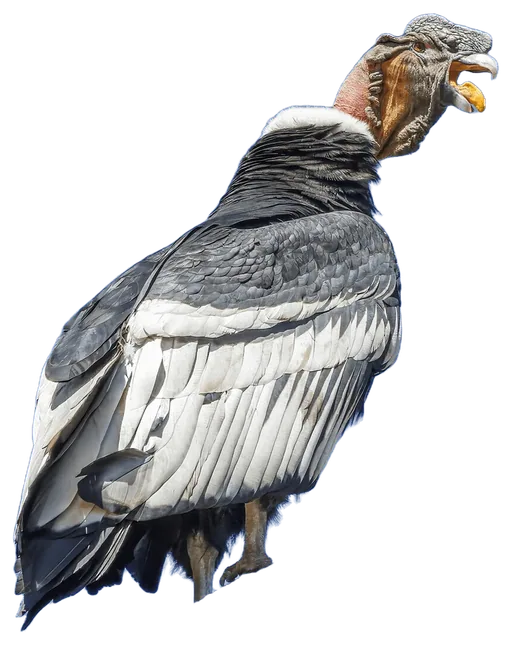
- Weight
- 10 kg22 lb
- Length
- 1.15 m3.8 ft
As heavy as 2.2 house cats
Heavier than 46% of animalsAbout 3.8 rulers long
Bigger than 52% of animalsThe California condor is North America's giant soaring scavenger, with a wingspan approaching 3 meters and the ability to travel extraordinary distances on rising air. Its hooked beak can tear tough mammal hide, but unlike an eagle it lacks killing talons and does not normally hunt live prey. Its real strengths are endurance, vision, aerial range and behavioral flexibility, while its lightly protected body and weak grappling equipment make grounded close combat a serious weakness.
Detailed ratings
Research-backed ratings on one 0–100 scale for all 344 animals (updated 2026-09-27). How ratings work


Card No. 187 of 344. Every animal on Animal Battle Stats has one: its power, tier and archetype on the front; its six battle stats, abilities and signature move on the back.
Special abilities
Broad wings exploit rising air and slope lift to cross enormous distances with little powered flapping, giving exceptional scouting range and aerial disengagement in suitable terrain.
Excellent vision and attention to other scavengers allow the condor to locate widely scattered food resources across open landscapes.
Unique traits
The California condor combines roughly 2.5-3.0 m wingspan with a 7-11 kg adult mass, making it the continent's largest flying land bird by wingspan/body scale.
Despite its size, its feet lack eagle-like killing talons, forcing almost all meaningful close-combat damage through the beak.
How it fights
Weapons
- The condor's only serious natural weapon is its hooked beak. It is well suited to opening carcasses and can penetrate tough mammalian hide. In a matchup it can peck, slash and tear exposed tissue, especially eyes, face and soft extremities. However, the bird is an obligate scavenger rather than a predator, and its feet lack the sharp grasping talons that make eagles much more effective aerial attackers. A condor should not be modeled as a giant eagle.
Struggles vs
- Ground starts and cramped spaces suppress the advantage of huge soaring wings.
- No raptorial talons for grappling or pinning.
- Bare head/neck and lightly protected avian body are vulnerable in close combat.
- Powered flight is more costly than soaring, especially during takeoff.
- Lead poisoning remains a major real-world mortality threat, though it is not a normal battle weakness.
- Weight
- 10 kg22 lb
- Height
- 1.05 m3.4 ft
- Length
- 1.15 m3.8 ft
- Top speed
- No reliable measurement
- Bite force
- No reliable measurement
- Lifespan
- 60 years
- Home biome
- Mountains
- Lifestyle
- Social
Rated specimen: Healthy mature adult male, 10.0 kg, about 105 cm standing height, with approximately 2.9 m wingspan.
Fun facts
- California condors can live up to about 60 years.
- They lack vocal cords and mainly hiss or grunt.
- GPS telemetry recorded one condor traveling 477 km in a single day and 415 km the next day.
- A condor may consume roughly 3-4 lb of carrion at one feeding and then go several days without feeding.
- Adults may spend long periods playing with feathers, sticks and grass, including tug-of-war and retrieval-like behavior.
- Their beak is strong enough to pierce horse hide, but their feet lack the sharp grasping talons of eagles.
Closest rivals by power. Tap one for the full breakdown, or pick any opponent.
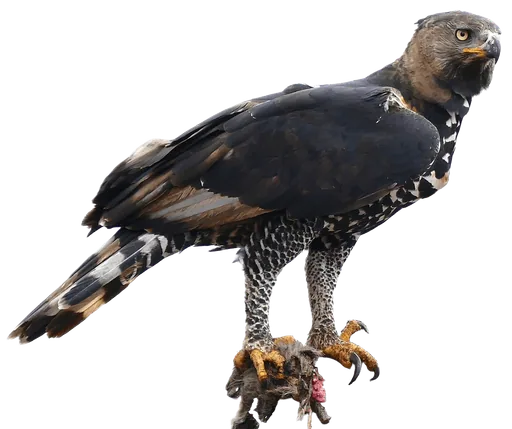
vs Bald EagleWins · 54% · Toss-up 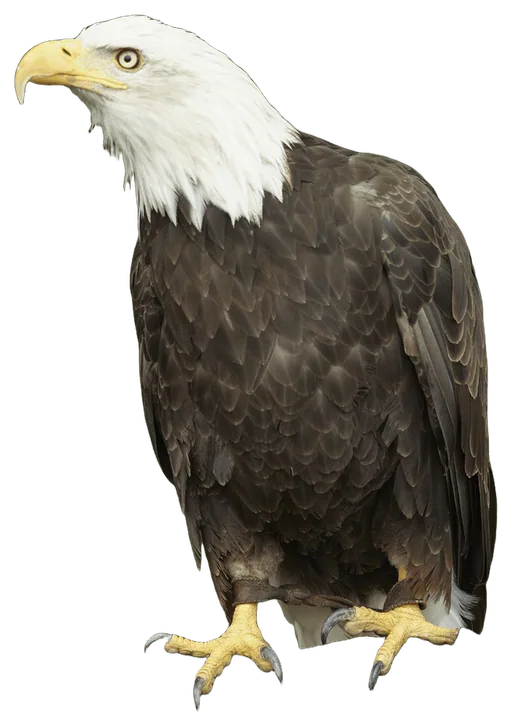 W vs Crowned EagleWins · 54% · Toss-up
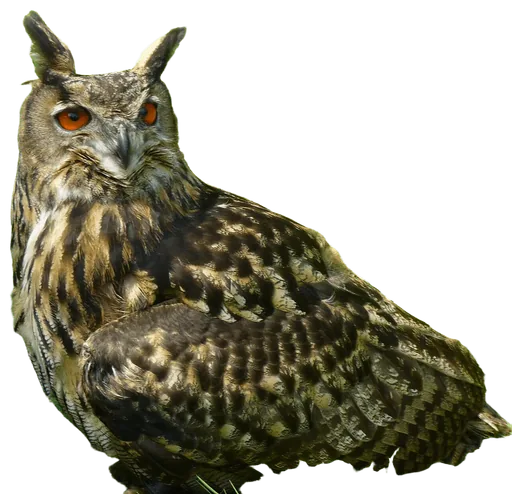
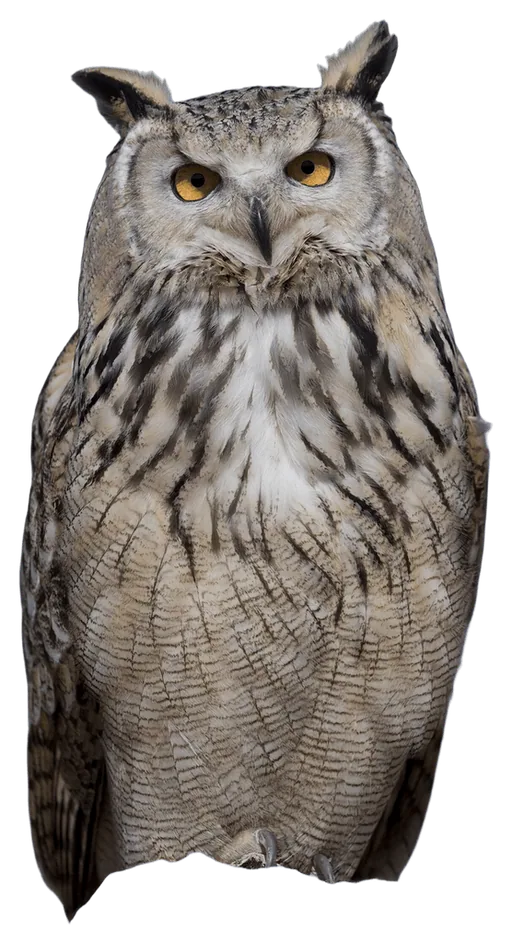
 W vs Eurasian Eagle-OwlWins · 56% · Toss-up
 W vs Great Horned OwlWins · 61% · Slight edge
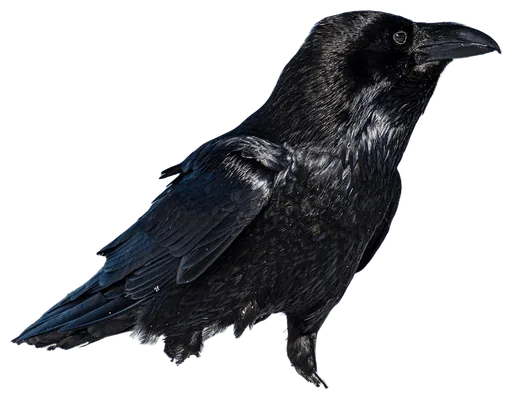
 W vs RavenWins · 63% · Slight edge
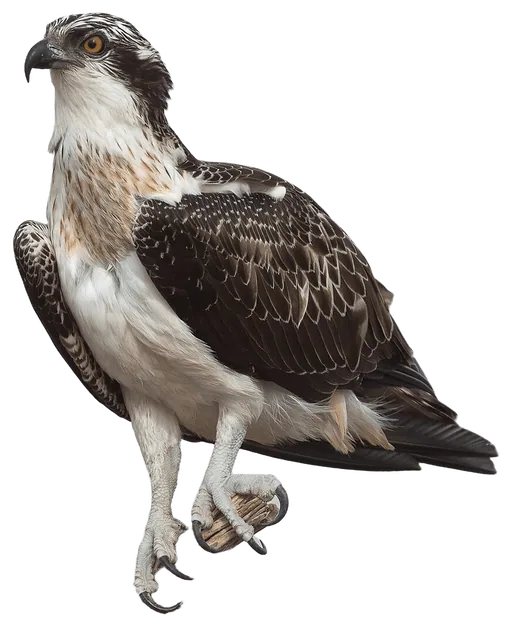
 W vs OspreyWins · 58% · Slight edge
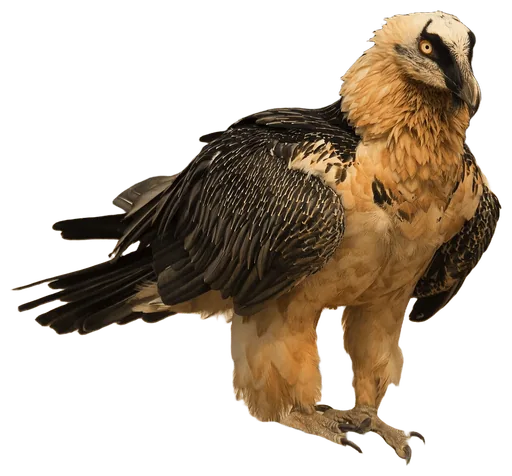
 W vs Bearded VultureWins · 55% · Toss-up
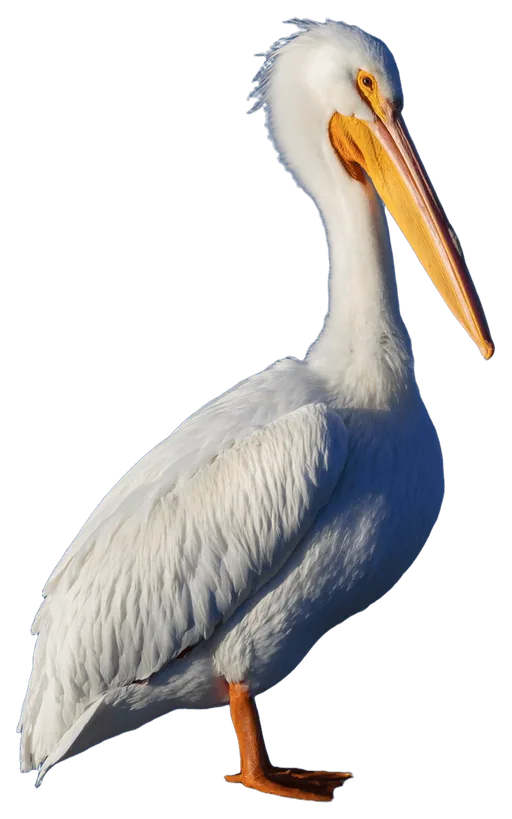
 W vs PelicanWins · 55% · Toss-up
 W
Condor battle analysis
A California condor wins space rather than wrestling matches. In mountain air it can turn a 10 kg body and nearly three-meter wing platform into an extraordinarily efficient search vehicle, ranging tens of kilometers on ordinary days and hundreds on exceptional ones. That mobility lets it discover unpredictable carcasses and avoid many terrestrial dangers without spending the energy that continuous flapping would demand.
Close up, the specialization becomes clearer. The beak is a genuine cutting tool capable of opening tough hide, but the feet reveal why a condor is not simply an oversized eagle. They lack the sharp grasping talons needed to seize, pin and puncture struggling prey. A grounded condor therefore has one dangerous end, the head and beak, attached to a large but lightly protected avian body. Its best battle strategy against many opponents is to maintain airspace, choose when to approach, and disengage rather than trade damage.
Its cognition also deserves more credit than the generic 'scavenger' label suggests. Condors manipulate objects, modify roost and nest surroundings, play, track social rank and learn across long juvenile dependency. Those abilities matter for flexible decision-making, but the evidence does not justify copying the extraordinary tool-cognition scores of crows or parrots. The resulting ABS profile is intentionally asymmetric: modest Attack and Defense, strong Agility and Intelligence, and exceptional Stamina driven by documented long-distance movement.
Habitat & range
Modern wild populations occupy parts of California, Arizona/Utah and Baja California, Mexico. The species favors rugged mountains, cliffs, open shrublands, grasslands and coastal areas where large carcasses are visible and terrain/thermals support soaring. USGS telemetry shows habitat use is tied both to terrestrial food visibility and meteorological conditions that make soaring possible.
Diet & hunting
The California condor is an obligate carrion eater. Major foods include deer, cattle and carcasses of marine mammals. It searches visually and often follows other scavenging birds. At carcasses, strict dominance hierarchies determine feeding priority.
Social life
Condors aggregate at carcasses, roosts and water sources. They show dominance relationships, play and object interaction. Pair bonds can persist over successive breeding seasons.
Conservation
The species remains one of North America's most intensively managed endangered birds. Its historical collapse culminated in removal of the last wild birds for captive breeding in 1987, followed by reintroductions. Lead ammunition exposure remains a major threat, alongside microtrash, power infrastructure and other anthropogenic hazards. Conservation status should be checked against the current IUCN/USFWS release when production migration occurs.
Quick answers
How strong is a Condor?
On the Animal Battle Stats scale, the Condor has an attack rating of 34 and a power index of 49.9 out of 100, which ranks it #187 of 344 animals and puts it in C tier (Capable). Its strongest stat is stamina (82).
How much does a Condor weigh?
A typical adult Condor weighs about 10 kg (22 lb). Rated specimen: healthy mature adult male, 10.0 kg, about 105 cm standing height, with approximately 2.9 m wingspan.
How fast is a Condor?
There is no reliable measured top speed for the Condor, so we do not publish one. Its agility rating, which covers acceleration, reflexes and evasion, is 70 out of 100.
What does a Condor eat?
The California condor is an obligate carrion eater. Major foods include deer, cattle and carcasses of marine mammals. It searches visually and often follows other scavenging birds. At carcasses, strict dominance hierarchies determine feeding priority.
Is the Condor endangered?
The Condor's conservation status is Endangered. The species remains one of North America's most intensively managed endangered birds. Its historical collapse culminated in removal of the last wild birds for captive breeding in 1987, followed by reintroductions. Lead ammunition exposure remains a major threat, alongside microtrash, power infrastructure and other anthropogenic hazards. Conservation status should be checked against the current IUC
What animals can beat a Condor?
The Condor is favored against all of its closest rivals, including the Bald Eagle, the Crowned Eagle, the Eurasian Eagle-Owl, the Great Horned Owl, the Raven, the Osprey, the Bearded Vulture, the Pelican.
Researched 2026-09-27. Ratings are editorial judgments built from these sources; measurements describe a healthy adult male.
- U.S. Fish & Wildlife Service, California CondorAdult size, sex dimorphism, beak, talons, feeding, behavior, reproduction
- San Diego Zoo Wildlife Alliance, California CondorWeight, wingspan, lifespan, maturity
- Hall et al. 2021 / USGS, Journal of Raptor ResearchDaily travel / endurance
- Rivers et al. 2014 / USGSHome range, sex/age movement
- Meretsky & Snyder 1992 / USGSHistorical movement/sociality
- Hall et al. 2019 / USGSGround foraging habitat
- USGS resource-selection studySoaring habitat mechanics
- Wikimedia Commons / California DFW adult flightImage adulthood, exact species, license, dimensions
- Wikimedia Commons / USFWS 2023 flightAlternate image exact species, license, dimensions
Photo: “Andean condor (Vultur gryphus) male Farellones.jpg” by Charles J. Sharp, CC BY-SA 4.0, background removed and cropped. Original
Suggest a correction