

Common Eland
Taurotragus oryx
 #62 of 341
  Savanna Bruiser Least Concern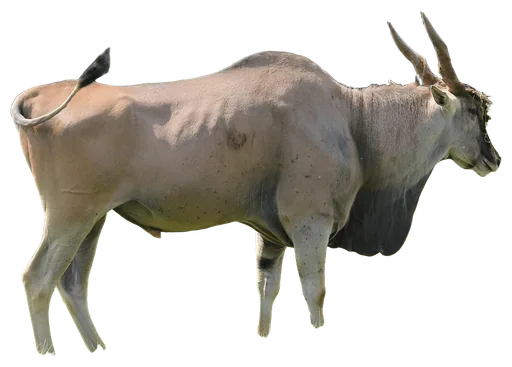
 Fight
FightPhoto: JMK · CC BY-SA 4.0
The common eland is Africa's giant savanna antelope, a 700 kg bull with thick spiral horns, a heavy dewlap and knees that click as it walks. Slow in a sprint but almost tireless at a trot and able to leap fences from a standstill, it wins by outlasting threats rather than fighting them.
 Attack65
  Defense57
  Agility54
  Stamina76
  Intelligence50
  Special58
 Detailed ratings
Research-backed ratings on one 0–100 scale for all 341 animals (updated 2026-09-28). How ratings work
Special abilities
Ability 1Endless TrotHolds a trot of about 22 km/h indefinitely and gets most of its water from food, outlasting pursuers rather than outrunning them.
 Ability 2Standing Leap
Despite weighing around 700 kg, it can clear fences of 1.5 m or more from a standstill when startled.
Unique traits
 TraitGiant Among Antelopes
Bulls commonly weigh 500–900 kg, far more than the kudu, sable, oryx or any other savanna antelope on the roster.
TraitClicking KneesBulls' knees make a loud click as they walk, and the pitch honestly reveals body size to rivals.
How it fights
Weapons
- The eland's weapons are thick, tightly spiralled horns on a body that can weigh 700 kg or more. Bulls fight by feeling out each other's horns and then pushing with all their strength, wrestling with locked horns and butting heads. Cows use their horns to defend calves from predators. Mass gives shoving and ramming power, but the eland's temperament is mild; it has been domesticated for meat and milk, and wild animals generally avoid conflict.
 Struggles vs
- Slow in a sprint and quick to tire at top speed.
- No armor; flanks and belly are soft.
- Mild temperament; usually flees rather than fights.
- Horns are wrestling tools rather than lethal stabbing weapons.
- Weight
- 700 kg1,543 lb
- Height
- 1.65 m5.4 ft
- Length
- 2.9 m9.5 ft
- Top speed
- 40 km/h25 mph
- Bite force
- No reliable measurement
- Lifespan
- 17.5 years
- Home biome
- Savanna
- Lifestyle
- Social
Rated specimen: Healthy mature bull of about 700 kg, 165 cm at the shoulder and 290 cm head-body length, with full horns, dewlap and forehead brush.
Fun facts
- The common eland is the slowest antelope in a sprint but can trot at about 22 km/h indefinitely.
- A bull's knee-click pitch tells rivals how big he is.
- Elands can clear a 1.5 m fence from a standing start.
- Eland milk carries 11–17% butterfat and, properly prepared, can keep for up to eight months.
- Female elands have longer horns than males; bulls' horns are thicker and more tightly twisted.
- A herd can number up to 500 animals.
Closest rivals by power. Tap one for the full breakdown, or pick any opponent.
vs OrangutanLoses · 50% · Toss-up  L vs Mountain GoatWins · 50% · Toss-up
  W vs MooseWins · 50% · Toss-up
  W vs LeopardWins · 50% · Toss-up
 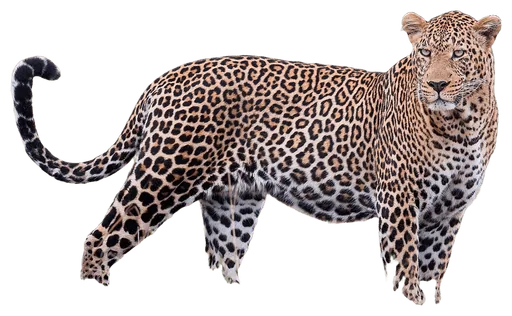 W vs Sloth BearWins · 51% · Toss-up
 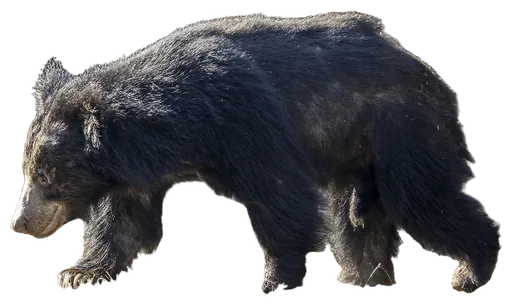 W vs Gray WolfWins · 51% · Toss-up
 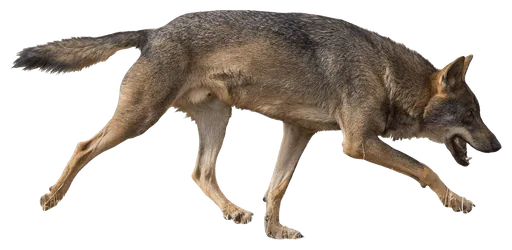 W vs Bactrian CamelWins · 51% · Toss-up
 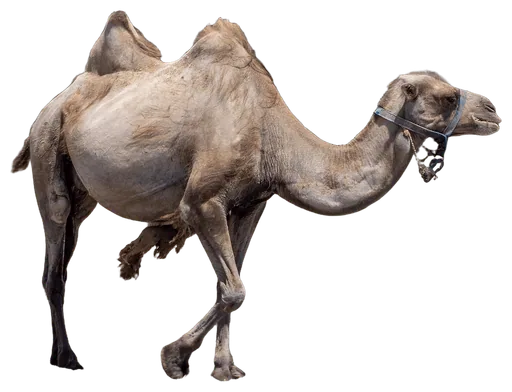 W vs African LionWins · 51% · Toss-up
  W
W  Pick any opponent
 Common Eland battle analysis
A mature eland bull is built like an ox: deep-chested, heavy-necked, with a pendulous dewlap, a dark tuft of hair on the forehead and short, thick horns wound in a tight spiral. He may weigh 700 kg or more, and as he walks his knees make a sharp click that carries across the savanna. Research on eland bulls shows that the pitch of that click tracks body size, so rivals can judge each other by sound before any contact.
For all that mass, the eland is a gentle animal. Herds drift nomadically across savanna and woodland, browsing and grazing, and bolt when startled. They are slow sprinters that tire at top speed, but they can trot for hours and live mostly on the water in their food. When cornered by a fence they simply jump it from a standstill, which is why eland farming needs very high fences.
On the ABS scale the eland is a heavyweight with a light fighting temperament. Its size and raw power put it above the kudu and sable antelope and level with the moose, while its placid nature, wrestling-style horns and slow sprint keep its Attack and Agility well below the Cape buffalo. Its standout rating is Stamina.
Habitat & range
East and Southern Africa, from Ethiopia and South Sudan to South Africa, including Kenya, Tanzania, Uganda, Zambia, Malawi, Mozambique, Zimbabwe, Botswana, Namibia and Angola. It uses savanna, woodland and open and montane grasslands with a wide variety of plants and avoids dense forest.
Diet & hunting
A mixed feeder that browses leaves, shoots and twigs and grazes grasses, shifting with the season. It uses its horns to break off branches out of reach and can live largely on the water in its food.
Social life
Nomadic herds of up to 500 animals with separate male, female and nursery groups; females have a linear hierarchy. Old bulls often wander alone or in small groups. Elands are not territorial.
Conservation
Least Concern on the IUCN Red List. The 2016 assessment estimated 90,000–110,000 mature individuals, about half in protected areas and 30% on private land, with stable or increasing populations in several countries. Numbers are slowly falling elsewhere through habitat loss and poaching for meat. It disappeared from Eswatini and Zimbabwe and has been reintroduced.
Quick answers
How strong is a Common Eland?
On the Animal Battle Stats scale, the Common Eland has an attack rating of 65 and a power index of 61 out of 100, which ranks it #62 of 341 animals and puts it in B tier (Strong). Its strongest stat is stamina (76).
How much does a Common Eland weigh?
A typical adult Common Eland weighs about 700 kg (1,543 lb). Rated specimen: healthy mature bull of about 700 kg, 165 cm at the shoulder and 290 cm head-body length, with full horns, dewlap and forehead brush.
How fast is a Common Eland?
The Common Eland's top speed is about 40 km/h (25 mph). Its agility rating is 54 out of 100.
What does a Common Eland eat?
A mixed feeder that browses leaves, shoots and twigs and grazes grasses, shifting with the season. It uses its horns to break off branches out of reach and can live largely on the water in its food.
Is the Common Eland endangered?
No. The Common Eland is listed as Least Concern. Least Concern on the IUCN Red List. The 2016 assessment estimated 90,000–110,000 mature individuals, about half in protected areas and 30% on private land, with stable or increasing populations in several countries. Numbers are slowly falling elsewhere through habitat loss and poaching for meat. It disappeared from Eswatini and Zimbabwe and has been reintroduced.
What animals can beat a Common Eland?
Among its closest rivals, the Orangutan (50%) would be favored against the Common Eland. It would be favored against the Mountain Goat, the Moose, the Leopard, the Sloth Bear, the Gray Wolf, the Bactrian Camel, the African Lion.
Researched 2026-09-28. Ratings are editorial judgments built from these sources; measurements describe a healthy adult male.
- Wikipedia, Common elandsize, horns, speed, jump, lifespan, herds, predators, conservation, farming
- Animal Diversity Web, Taurotragus oryxmass, fighting, predators, jumping, lifespan
- African Wildlife Foundation, Elandmass, trot, jump, lifespan
- Kruger Park guide, Elandold-bull mass, horn maximum, predators
- Bro-Jørgensen & Dabelsteen 2008, BMC Biologyknee-click signal, dewlap, aggression signals
- Cappelli et al. 2018, Journal of Anatomyhorn structure
- Dryland antelope heat responses, Ecology and Evolution 2024heat behavior, female mass
- Berry et al. 2025, Movement Ecologyactivity rhythm
- Eland temperament and social rank, Veterinary Research Communications 2024social rank, domestication context
Photo: “Pretoria-dieretuin, Taurotragus oryx oryx in wildkamp, a.jpg” by JMK, CC BY-SA 4.0, background removed and cropped. Original
Suggest a correction