

Common Death Adder
Acanthophis antarcticus
 #238 of 341
  Forest Ambush Predator Least Concern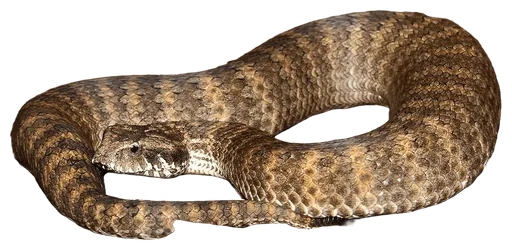
 Fight
FightPhoto: Luke Allen · CC BY 4.0
The common death adder is a short, thick Australian elapid that hides in leaf litter and twitches a grub-like tail tip to lure prey. Its fast strike delivers a potent cobra-like neurotoxin that can paralyze a person over several hours. At about 0.4 kg and 70 cm it is tiny, slow and fragile, so it wins only when prey comes to it.
 Attack55
  Defense14
  Agility54
  Stamina32
  Intelligence36
  Special94
 Detailed ratings
Research-backed ratings on one 0–100 scale for all 341 animals (updated 2026-09-28). How ratings work
Special abilities
Ability 1Grub-Tail LureIt lies hidden under leaves and wriggles its thin, pale tail tip like a grub or worm near its head. When prey comes to investigate, it strikes, injects venom and waits for the prey to die.
 Ability 2Nerve-Block Venom
A single long-chain three-finger neurotoxin makes up about 59% of the venom, blocking nerve-to-muscle signals, backed by presynaptic neurotoxins. In people, paralysis starts with drooping eyelids and can stop breathing hours after the bite.
Unique traits
 TraitViper-Shaped Elapid
With its broad triangular head, short thick body and ambush habits it looks and behaves like a viper, yet it is an elapid whose venom resembles a cobra's.
TraitStand-Its-Ground AmbusherInstead of fleeing, it relies on camouflage and stays put, which makes it more likely to be stepped on and bitten than faster, more nervous snakes.
How it fights
Weapons
- The primary weapon is a fast strike through relatively long, mobile front fangs, delivering a neurotoxic venom dominated by a single potent receptor-blocking toxin, backed by presynaptic neurotoxins. The secondary tool is the caudal lure: a thin, pale, grub-like tail tip that it twitches close to its head to draw prey within range.
 Struggles vs
- Tiny, unarmored body and very slow movement.
- Venom takes hours to paralyze large animals.
- Poisoned by eating cane toads; toads also eat young death adders.
- Poor ability to escape once found.
- Weight
- 400 g14.1 oz
- Height
- No reliable measurement
- Length
- 70 cm27.6 in
- Top speed
- No reliable measurement
- Bite force
- No reliable measurement
- Lifespan
- 9.3 years
- Home biome
- Forest
- Lifestyle
- Mostly solitary, nocturnal
Rated specimen: Healthy adult female, 0.4 kg and 70 cm total length.
Fun facts
- It wiggles a grub-like tail tip to lure prey within striking distance.
- It is not a true adder or viper but a relative of cobras and taipans.
- About 59% of its venom is a single neurotoxin.
- Before antivenom, about half or more of death adder bites were fatal.
- It may wait in the same spot for days until a meal passes.
- A litter can contain more than 30 young.
Closest rivals by power. Tap one for the full breakdown, or pick any opponent.
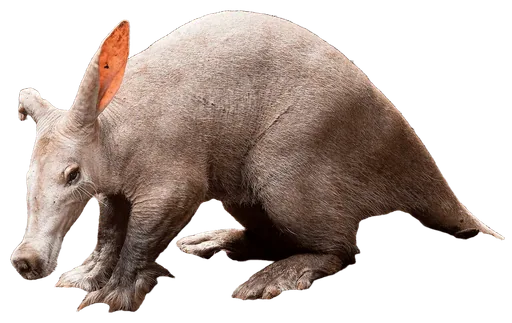
vs Saw-scaled ViperLoses · 50% · Toss-up 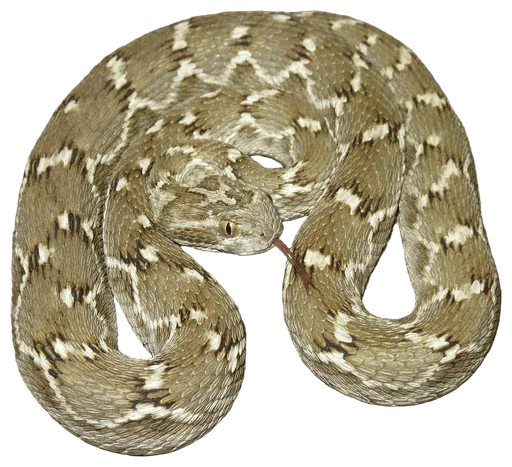 L vs AardvarkWins · 50% · Toss-up
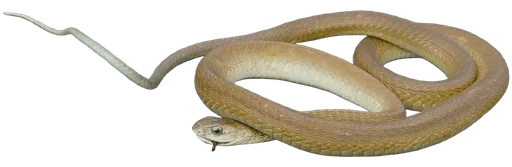
  W vs BoomslangLoses · 53% · Toss-up
  L vs Ring-tailed LemurLoses · 50% · Toss-up
  L vs SwanWins · 51% · Toss-up
  W vs CapybaraWins · 51% · Toss-up
  W vs Gaboon ViperLoses · 53% · Toss-up
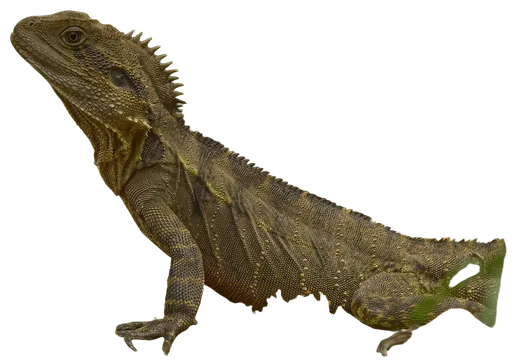
  L vs IguanaWins · 53% · Toss-up
  W
W  Pick any opponent
 Common Death Adder battle analysis
The common death adder looks like a viper and hunts like one, yet it belongs to the cobra family. It is short and wide, with a broad triangular head and a thin tail ending in a pale, grub-like tip. Hidden under leaves, it coils and waits, sometimes for days, twitching that tail tip near its head. When a lizard, frog, bird or mouse comes to investigate, the adder strikes, injects its venom and waits for its prey to die.
The venom is unusual among Australian snakes. Most Australian elapid venoms are rich in clotting toxins, but the death adder's is dominated by a single cobra-type neurotoxin that blocks the signal from nerve to muscle, backed by presynaptic neurotoxins. In people, the first signs are drooping eyelids and double vision, typically about four hours after the bite, and severe cases need breathing support. Before antivenom, about half or more of bites were fatal.
For battle ratings, the death adder is a pure ambush specialist. Its lure, camouflage and venom give it one of the roster's highest Special scores, but it is tiny, very slow and unarmored, and its venom takes hours to disable a large animal. It is dangerous to whatever walks up to it and nearly helpless against anything that sees it first.
Habitat & range
The common death adder occurs over much of eastern and coastal southern Australia, mainly Queensland, New South Wales and South Australia, and more sparsely in the Northern Territory and Western Australia. It is the only death adder in the Sydney region. Its status in Victoria is uncertain. It lives in forest, woodland, grassland and heath, hiding in loose leaf litter and debris.
Diet & hunting
It eats lizards, frogs, birds and small mammals, using a sit-and-wait strategy with its tail lure. It takes a broader range of prey, including fast skinks and warm-blooded animals, than most Australian elapids of similar size.
Social life
Solitary.
Conservation
Listed as Least Concern on the IUCN Red List (2018 assessment, as reported by Wikipedia). Habitat loss and the spread of cane toads are concerns: toads eat young death adders, and adults that eat toads are poisoned. Field data from northern Australia show the picture is complex; one population of the related northern death adder increased after toads arrived.
Quick answers
How strong is a Common Death Adder?
On the Animal Battle Stats scale, the Common Death Adder has an attack rating of 55 and a power index of 43.9 out of 100, which ranks it #238 of 341 animals and puts it in C tier (Capable). Its strongest stat is special (94).
How much does a Common Death Adder weigh?
A typical adult Common Death Adder weighs about 400 g (14.1 oz). Rated specimen: healthy adult female, 0.4 kg and 70 cm total length.
How fast is a Common Death Adder?
There is no reliable measured top speed for the Common Death Adder, so we do not publish one. Its agility rating, which covers acceleration, reflexes and evasion, is 54 out of 100.
What does a Common Death Adder eat?
It eats lizards, frogs, birds and small mammals, using a sit-and-wait strategy with its tail lure. It takes a broader range of prey, including fast skinks and warm-blooded animals, than most Australian elapids of similar size.
Is the Common Death Adder endangered?
No. The Common Death Adder is listed as Least Concern. Listed as Least Concern on the IUCN Red List (2018 assessment, as reported by Wikipedia). Habitat loss and the spread of cane toads are concerns: toads eat young death adders, and adults that eat toads are poisoned. Field data from northern Australia show the picture is complex; one population of the related northern death adder increased after toads arrived.
What animals can beat a Common Death Adder?
Among its closest rivals, the Saw-scaled Viper (50%), the Boomslang (53%), the Ring-tailed Lemur (50%), the Gaboon Viper (53%) would be favored against the Common Death Adder. It would be favored against the Aardvark, the Swan, the Capybara, the Iguana.
Researched 2026-09-28. Ratings are editorial judgments built from these sources; measurements describe a healthy adult female.
- Australian Museum, Common Death Adderidentity, habitat, range, diet, lure, litter size, fatality
- Wikipedia, Common death adderlength, range, habitat, cane toads, diet, litters, IUCN status
- Wikipedia, Acanthophisfangs, lure, venom yield and LD50, strike-speed claim
- Australian Reptile Park, Common Death Adderlength, lure, litters
- Shine, Spencer & Keogh 2014, PLoS One (PMC)size, dimorphism, body shape, diet, litter size
- Tasoulis et al. 2025, Toxins, venom proteomevenom composition
- Johnston et al. 2012, PLoS NTD, ASP-16clinical effects
- Pintor, Krockenberger & Seymour 2010, Toxiconvenom energetics
- Brown, Phillips & Shine 2011, Ecologycane toad context
- Allen et al. 2018, Royal Society Open Sciencereproduction
- Reptile Database, Acanthophis antarcticustaxonomy, distribution, reproduction
- AnAge, Acanthophis antarcticusmass, longevity
Photo: “A female death adder in Smoky Bay, South Australia.jpg” by Luke Allen, CC BY 4.0, background removed and cropped. Original
Suggest a correction