
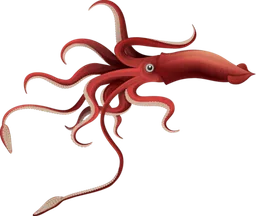
Colossal Squid
Mesonychoteuthis hamiltoniB tier · Strong1st of 30 bugs & spiders
Size & speed

- Weight
- 470 kg1,036 lb
- Length
- 4.2 m13.8 ft
As heavy as 6.7 people
Heavier than 89% of animals2.4× a person's height
Bigger than 91% of animalsThe colossal squid is the heaviest living invertebrate, a deep Southern Ocean ambush predator approaching half a tonne. Rather than chasing prey at extreme speed, it uses hooked tentacles and arms to seize animals at close range and draw them to a cutting beak. Its enormous 27-28 cm eyes are among the largest in nature and are specialized for the dim deep sea. Despite its fearsome anatomy, its soft body and very low-energy lifestyle keep its Defense and Stamina well below its Attack and Special ratings.
Detailed ratings
Research-backed ratings on one 0–100 scale for all 344 animals (updated 2026-09-27). How ratings work


Card No. 89 of 344. Every animal on Animal Battle Stats has one: its power, tier and archetype on the front; its six battle stats, abilities and signature move on the back.
Special abilities
The tentacular clubs carry rows of swivelling hooks plus suckers, allowing slippery fish to be caught and retained before being drawn into the arm crown and beak.
Approximately 27-28 cm eyes provide exceptional photon collection in deep water; published modeling supports long-range detection of very large approaching predators under mesopelagic conditions.
Unique traits
Directly documented specimens approach half a tonne, giving this squid an exceptional absolute size niche among living invertebrates.
Despite enormous size and fearsome capture anatomy, metabolic modeling supports an energy-conserving ambush lifestyle rather than a high-speed pursuit strategy.
How it fights
Weapons
- The colossal squid is a close-range ambush grappler. The long tentacles make first contact, with swivelling hooks and suckers securing slippery prey. The eight arms add fixed hooks and gripping surfaces, drawing prey toward the central beak. The beak then cuts tissue into ingestible pieces. This is a mechanically dangerous system at hundreds of kilograms body mass, but it is not evidence of high-speed pursuit or mammal-like striking power.
Struggles vs
- Warm water would disrupt its extreme cold-water physiology.
- On land it is effectively helpless because its body and locomotion are water-supported.
- Open-water opponents that remain outside tentacle reach can avoid its best weapon system.
- High-output prolonged pursuit is inconsistent with current metabolic evidence.
- Weight
- 470 kg1,036 lb
- Height
- No reliable measurement
- Length
- 4.2 m13.8 ft
- Top speed
- No reliable measurement
- Bite force
- No reliable measurement
- Lifespan
- 5.2 years
- Home biome
- Ocean
- Lifestyle
- Social
Rated specimen: Healthy mature adult female, 470.0 kg, using Te Papa's corrected estimate for the 2007 Ross Sea female as the best directly documented near-mature/adult-scale specimen rather than silently treating a hypothetical record animal as normal.
Fun facts
- The species was described in 1925 from arm material recovered from a sperm whale stomach.
- The 2007 Te Papa specimen's eye measured roughly 27-28 cm across.
- Its 2.5 m mantle alone is longer than the old site's entire 1.0 m placeholder body length.
- The 2007 animal remained attached to a hooked Antarctic toothfish while the longline was hauled upward.
- Its tentacular clubs use swivelling hooks, while its arms also carry hooks.
- Beaks recovered from sperm whales exceed the beak size of the famous near-half-tonne specimen, implying still larger individuals occur.
Closest rivals by power. Tap one for the full breakdown, or pick any opponent.
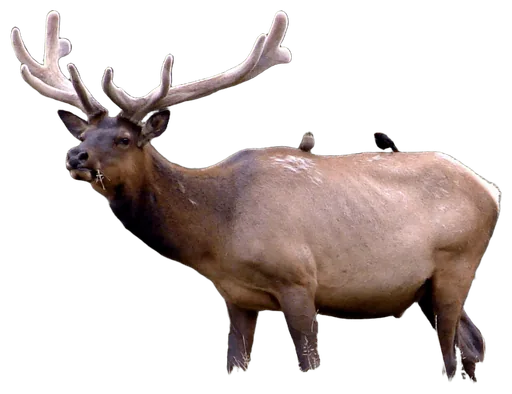
vs Arctic WolfWins · 64% · Slight edge 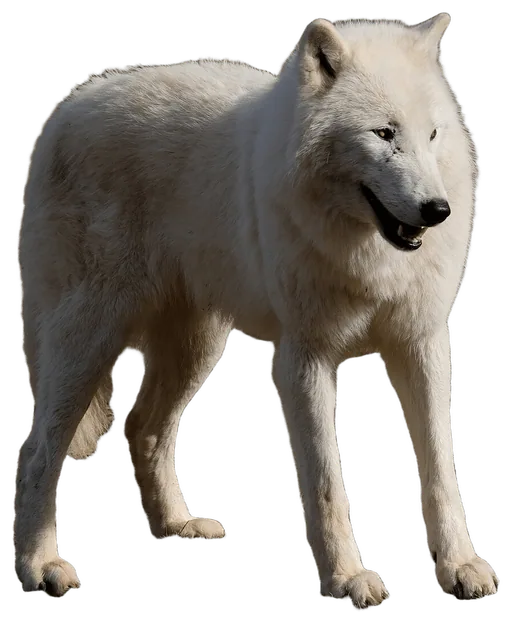 W vs ElkWins · 52% · Toss-up
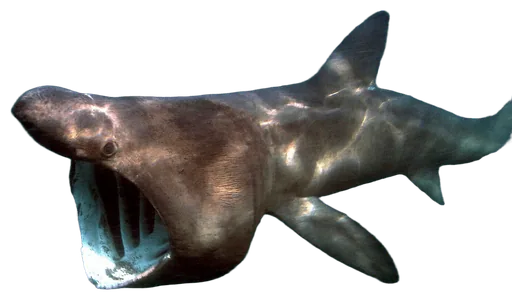
 W vs Basking SharkLoses · 62% · Slight edge
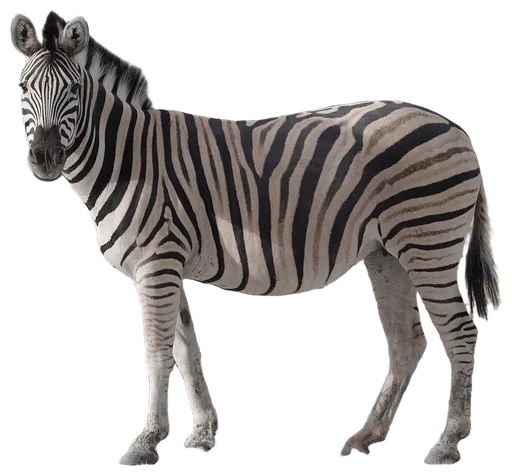
 L vs ZebraWins · 52% · Toss-up
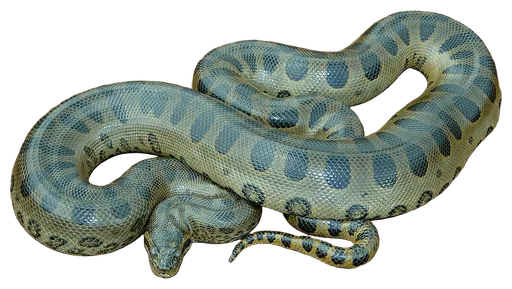
 W vs Green AnacondaWins · 63% · Slight edge
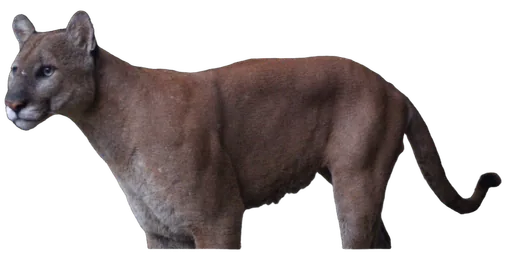
 W vs CougarWins · 60% · Slight edge
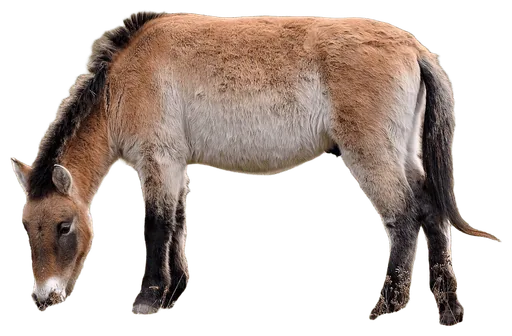
 W vs Wild HorseWins · 53% · Toss-up
 W vs Komodo DragonWins · 58% · Slight edge
 W
Colossal Squid battle analysis
Mesonychoteuthis hamiltoni is a case where reality is stranger than the usual sea-monster story. Its body can approach half a tonne, its mantle is measured in metres, and its tentacles carry swivelling hooks. Yet the best physiological work does not support a constantly charging super-predator. In the cold darkness of the Southern Ocean, energy is precious. The colossal squid appears built to wait, detect and suddenly secure prey that enters its capture envelope.
That makes it a dangerous specialist rather than an all-purpose aquatic heavyweight. A hooked grip on a fish can become catastrophic as more arms engage and the beak is brought into play. But the same animal has no shell, no bones and no thick dermal armor. Against a much larger toothed predator, especially a sperm whale, the squid's weapons are defensive liabilities as much as offensive tools: they can scar and grapple, but they do not erase the mass and bite advantage of the whale.
Its giant eyes illustrate the same specialization. They are extraordinary sensory organs, but they should not inflate cognition. Its low metabolic rate likewise should not be mislabeled as elite stamina. Keeping those distinctions intact is essential for roster-wide ABS calibration.
Habitat & range
The species is endemic to the Southern Ocean with a circumpolar distribution from Antarctic waters north toward the Sub-Antarctic Front. Small juveniles occur mainly from the surface to about 500 m, while later stages descend and adults occupy meso- and bathypelagic habitat, reaching roughly 2,000 m depth.
Diet & hunting
Evidence from captures, predator stomach contents and isotopes indicates a high trophic position. Prey include mesopelagic fishes, toothfish and other squid. It is itself eaten by sperm whales and other large predators, making it both a major deep-sea predator and important prey biomass.
Social life
Unknown. No robust evidence supports coordinated hunting, stable groups or territorial systems in adults.
Conservation
Population size and trend are poorly constrained because the animal is exceptionally difficult to observe and sample. Conservation interpretation should therefore emphasize data deficiency rather than implying abundance from its broad circumpolar range.
Quick answers
How strong is a Colossal Squid?
On the Animal Battle Stats scale, the Colossal Squid has an attack rating of 67 and a power index of 57.5 out of 100, which ranks it #89 of 344 animals and puts it in B tier (Strong). Its strongest stat is special (88).
How much does a Colossal Squid weigh?
A typical adult Colossal Squid weighs about 470 kg (1,036 lb). Rated specimen: healthy mature adult female, 470.0 kg, using Te Papa's corrected estimate for the 2007 Ross Sea female as the best directly documented near-mature/adult-scale specimen rather than silently treating a hypothetical record animal as normal.
How fast is a Colossal Squid?
There is no reliable measured top speed for the Colossal Squid, so we do not publish one. Its agility rating, which covers acceleration, reflexes and evasion, is 55 out of 100.
What does a Colossal Squid eat?
Evidence from captures, predator stomach contents and isotopes indicates a high trophic position. Prey include mesopelagic fishes, toothfish and other squid. It is itself eaten by sperm whales and other large predators, making it both a major deep-sea predator and important prey biomass.
What animals can beat a Colossal Squid?
Among its closest rivals, the Basking Shark (62%) would be favored against the Colossal Squid. It would be favored against the Arctic Wolf, the Elk, the Zebra, the Green Anaconda, the Cougar, the Wild Horse, the Komodo Dragon.
Researched 2026-09-27. Ratings are editorial judgments built from these sources; measurements describe a healthy adult female.
- Museum of New Zealand Te Papa, Colossal squid at Te Papataxonomy, specimen history, 2003/2007/2014 specimens, sex, 470/495 kg context, beaks
- Te Papa, How big is the colossal squid on display?4.2 m total length, 2.5 m mantle, 495 kg displayed weight, 42.5 mm beak, 49 mm whale-stomach beaks, shrinkage
- Te Papa, Body of the colossal squid2.5 m mantle, 982 mm width, muscular mantle/chromatophores
- Rosa et al. 2017, Polar Biology / British Antarctic Surveyrange, depth, 6 m upper length, 495 kg record, diet, trophic ecology, ambush interpretation
- Rosa & Seibel 2010, JMBAlow metabolic rate, modeled 45.1 kcal/day, 0.03 kg prey/day, sit-and-wait hypothesis
- Nilsson et al. 2012, Current Biology27-28 cm adult colossal-squid eye; visual modeling
- CEPH REF species accountrecent 5.2-year lifespan estimate and explicit daily-increment caveat
- Te Papa, 100th birthdayheaviest invertebrate, eye/hook context, >500 kg possibility