
Clouded Leopard
Neofelis nebulosaB tier · Strong70th of 163 mammals
Size & speed

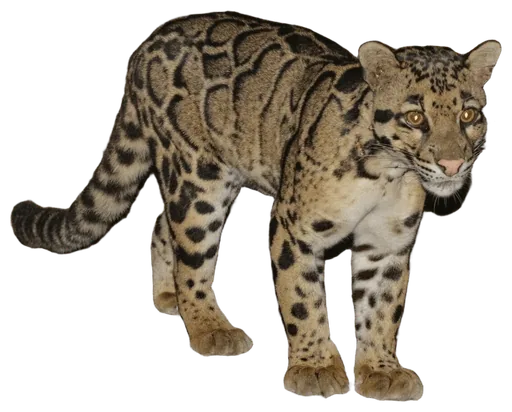
- Weight
- 22 kg49 lb
- Length
- 95 cm37.4 in
As heavy as 4.9 house cats
Heavier than 54% of animalsAbout 3.2 rulers long
Bigger than 43% of animalsA compact Asian forest cat with saber-like canines, a huge gape, gripping paws, mobile ankles and a tail built for balance. The clouded leopard combines dangerous close-range weaponry with exceptional canopy maneuverability, but its modest 22 kg body and lack of armor keep its absolute Attack and Defense far below the largest cats.
Detailed ratings
Research-backed ratings on one 0–100 scale for all 344 animals (updated 2026-09-27). How ratings work


Card No. 110 of 344. Every animal on Animal Battle Stats has one: its power, tier and archetype on the front; its six battle stats, abilities and signature move on the back.
Special abilities
Highly mobile ankles, large gripping paws and a long balancing tail permit controlled head-first descent and rapid vertical repositioning that most similarly sized terrestrial opponents cannot match.
Exceptionally elongated upper canines combined with an unusually wide gape create a deep-penetration bite system, especially once the forelimbs establish control.
Unique traits
The clouded leopard has the longest upper canines relative to body size among living felids, an extreme phenotype studied as a modern comparison for extinct saber-toothed cats.
Enlarged forefeet and specialized pads improve purchase on supports, helping the cat stabilize and maneuver on branches.
How it fights
Weapons
- The primary system is a felid bite-and-grapple package: very long upper canines, carnassials, retractile claws, strong forelimbs and large gripping paws. The extreme canine length increases penetration potential, while forelimb control helps establish a bite. Smithsonian notes an unusually wide gape of about 100 degrees and says sizeable prey can be taken using strong legs, large canines and extreme gape.
- This is a dangerous predator for its mass, but ABS uses absolute scaling. A 22 kg clouded leopard cannot inherit big-cat Attack merely because its teeth are proportionally extraordinary.
Struggles vs
- Low absolute mass versus large felids, bears, bovids and megafauna.
- No armor or unusual trauma resistance.
- Long canines require close engagement and are not ranged weapons.
- Burst/ambush build lacks evidence for elite sustained pursuit.
- Much wild behavior remains poorly sampled, increasing uncertainty.
- Weight
- 22 kg49 lb
- Height
- 35 cm13.8 in
- Length
- 95 cm37.4 in
- Top speed
- No reliable measurement
- Bite force
- No reliable measurement
- Lifespan
- 13 years
- Home biome
- Jungle
- Lifestyle
- Mostly solitary, nocturnal
Rated specimen: Healthy mature male, 22.0 kg, 95.0 cm head-body length, 35.0 cm shoulder height, with a long balancing tail considered separately from head-body length.
Fun facts
- The clouded leopard is not a true leopard in genus Panthera; it belongs to Neofelis.
- Its upper canines can reach 4 cm or more despite an adult male weighing only around 20–25 kg.
- Its tail can be nearly as long as its head and body combined.
- It can descend tree trunks head-first using unusually mobile ankles and gripping feet.
- Bornean and Sumatran clouded leopards were recognized as the separate species Neofelis diardi.
- Telemetry suggests activity is not simply nocturnal and may peak in morning and evening periods.
Closest rivals by power. Tap one for the full breakdown, or pick any opponent.
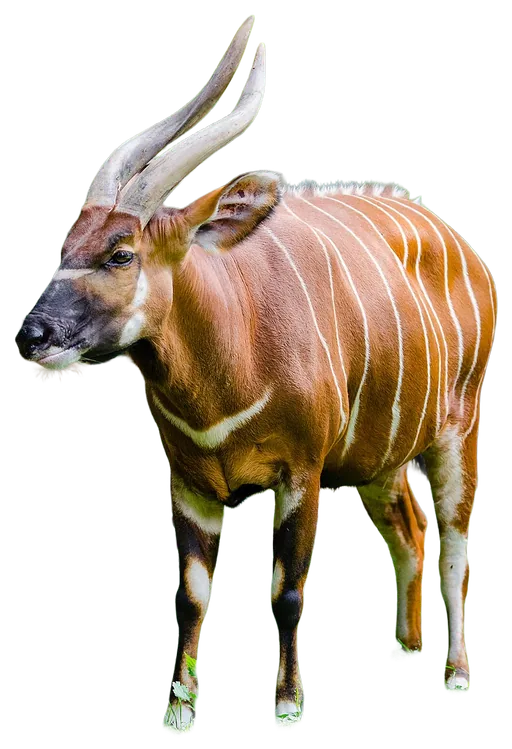
vs OtterWins · 53% · Toss-up 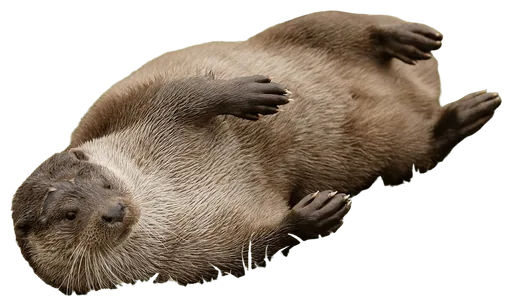 W vs BongoLoses · 65% · Slight edge
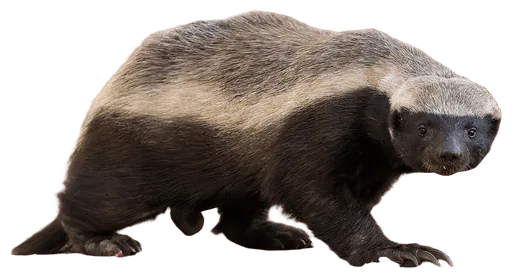
 L vs Honey BadgerWins · 53% · Toss-up
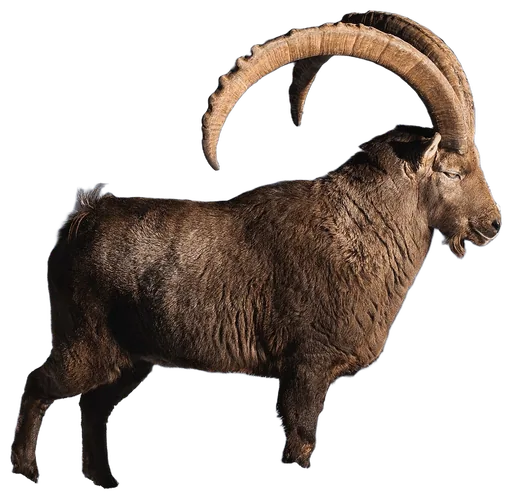
 W vs IbexLoses · 58% · Slight edge
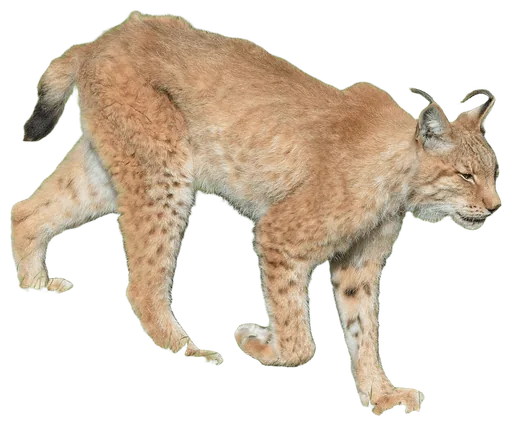
 L vs LynxLoses · 51% · Toss-up
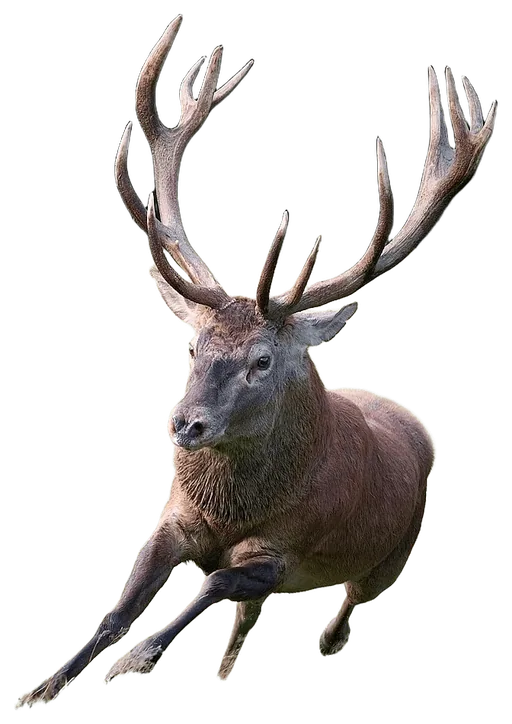
 L vs Red DeerLoses · 63% · Slight edge
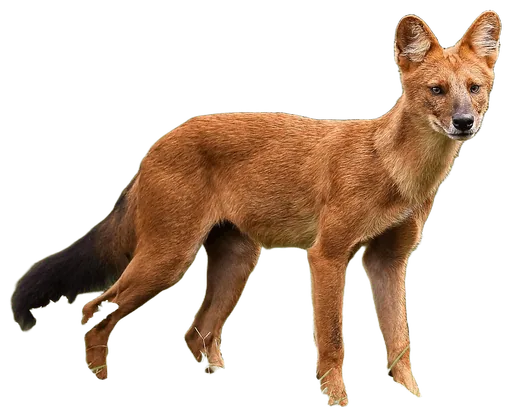
 L vs DholeDraw · 50-50 · Dead even
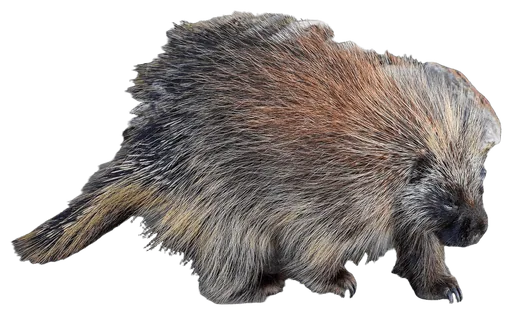
 D vs PorcupineWins · 53% · Toss-up
 W
Clouded Leopard battle analysis
The clouded leopard is built around control rather than mass. Its body is low and robust, its feet unusually large, and its tail nearly body-length. In trees, that package lets it grip narrow supports, rotate the hind feet through steep descents and keep balance while changing levels. At the front end sits one of the strangest skulls among living cats: a long, low head carrying upper canines that are enormous relative to the animal's body.
Those traits make it dangerous in exactly the situations its forest habitat creates. Cover shortens approach distance, branches create escape and attack routes, and forelimb control can bring the long canines into play. But the same animal remains only about 22 kg. Against a leopard, lion, bear or large ungulate, proportional specialization cannot erase the absolute mass gap. That distinction is central to its ABS calibration: elite Agility and high Special, moderate Attack, low Defense.
Habitat & range
Mainland clouded leopards occupy forests across southern Asia, including the Himalayan foothill region through parts of South and Southeast Asia and southern China. Habitat modelling identifies forest loss and fragmentation as major conservation problems. The Sunda clouded leopard of Borneo and Sumatra is a separate species and is excluded from this profile.
Diet & hunting
Carnivorous and opportunistic. Recorded prey includes primates, ungulates, rodents and birds. The evidence base is thinner than popular summaries imply. A 2017 review found no targeted diet study and only seven radio-collared animals in the literature it reviewed.
Social life
Generally solitary outside mating and mother-young associations. Smithsonian reports sexual maturity around two years, gestation 85–93 days, and litters of one to five, usually two or three. Cubs become independent around 1.5–2 years.
Conservation
The species is listed as Vulnerable. Major threats include deforestation/fragmentation and illegal hunting/trafficking for pelts, teeth and bones. Conservation modelling emphasizes maintaining connected forest habitat.
Quick answers
How strong is a Clouded Leopard?
On the Animal Battle Stats scale, the Clouded Leopard has an attack rating of 49 and a power index of 55.3 out of 100, which ranks it #110 of 344 animals and puts it in B tier (Strong). Its strongest stat is agility (94).
How much does a Clouded Leopard weigh?
A typical adult Clouded Leopard weighs about 22 kg (49 lb). Rated specimen: healthy mature male, 22.0 kg, 95.0 cm head-body length, 35.0 cm shoulder height, with a long balancing tail considered separately from head-body length.
How fast is a Clouded Leopard?
There is no reliable measured top speed for the Clouded Leopard, so we do not publish one. Its agility rating, which covers acceleration, reflexes and evasion, is 94 out of 100.
What does a Clouded Leopard eat?
Carnivorous and opportunistic. Recorded prey includes primates, ungulates, rodents and birds. The evidence base is thinner than popular summaries imply. A 2017 review found no targeted diet study and only seven radio-collared animals in the literature it reviewed.
Is the Clouded Leopard endangered?
The Clouded Leopard's conservation status is Vulnerable. The species is listed as Vulnerable. Major threats include deforestation/fragmentation and illegal hunting/trafficking for pelts, teeth and bones. Conservation modelling emphasizes maintaining connected forest habitat.
What animals can beat a Clouded Leopard?
Among its closest rivals, the Bongo (65%), the Ibex (58%), the Lynx (51%), the Red Deer (63%) would be favored against the Clouded Leopard. It would be favored against the Otter, the Honey Badger, the Porcupine. It is dead even with the Dhole: a draw.
Researched 2026-09-27. Ratings are editorial judgments built from these sources; measurements describe a healthy adult male.
- San Diego Zoo Wildlife AllianceSize, dimorphism, tail, lifespan, biology
- Smithsonian National ZooDiet, gape, life history, lifespan, conservation
- Animal Diversity WebMorphology, canines, mass, locomotion, lifespan
- Harano 2018, Journal of Evolutionary BiologyCanine morphology
- Hubbard et al. 2009, Anatomical RecordPaw structure, canines
- Carlon & Hubbard 2012, Anatomical RecordHindlimb anatomy, dimensions
- Hartstone-Rose et al. 2012, Anatomical RecordBite-force estimate
- Slater & Van Valkenburgh 2009, JEBSkull mechanics
- Chiang & Allen 2017 reviewEcology, telemetry, diet uncertainty
- US Forest Service / Macdonald et al. 2019Habitat/conservation
- Wikimedia Commons / Ian DugdaleImage candidate
Photo: “Neofelis nebulosa male in Kaeng Krachan National Park, Thailand.jpg” by Ian Dugdale, CC BY 4.0, background removed and cropped. Original
Suggest a correction