
Chimpanzee
Pan troglodytesB tier · Strong62nd of 163 mammals
Size & speed

- Weight
- 46 kg101 lb
- Height
- 1.2 m3.9 ft
About as heavy as a person
Heavier than 62% of animalsAbout 4 rulers tall
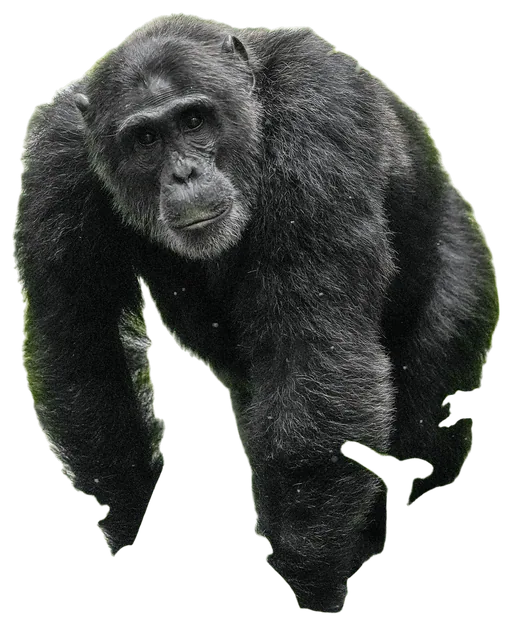
Bigger than 53% of animalsThe common chimpanzee (Pan troglodytes) is a medium-sized great ape whose main battle advantages are explosive strength, grasping control, climbing and elite nonhuman tactical intelligence. A representative mature male is about 46 kg. Chimpanzees can bite, grapple and improvise tools, and wild males participate in coordinated territorial aggression, but they have no armor and are far less powerful in absolute terms than gorillas, bears or large cats.
Detailed ratings
Research-backed ratings on one 0–100 scale for all 344 animals (updated 2026-09-27). How ratings work


Card No. 99 of 344. Every animal on Animal Battle Stats has one: its power, tier and archetype on the front; its six battle stats, abilities and signature move on the back.
Special abilities
Chimpanzees can select, modify and deploy natural objects as tools. Fongoli chimpanzees made hunting tools through multi-step modification and used them to stab into prey cavities. In a matchup, environmental objects can extend reach or probing ability, but no pre-made weapon is assumed.
Long arms, grasping hands and feet, climbing skill and route flexibility allow rapid three-dimensional repositioning in trees and complex structures, creating escape and attack angles unavailable to many terrestrial opponents.
Unique traits
Chimpanzees track dominance, alliances and numerical advantage. Long-term field data on intercommunity violence show attackers frequently exploit overwhelming numerical asymmetry. In solo ABS this improves tactical reasoning, not body count.
Roughly 67% fast-twitch MHC II fibers and modeled ~1.35x human-sized muscle dynamic force/power give explosive performance without the fictional many-times-human strength misconception.
How it fights
Weapons
- Chimpanzees combine hands, long powerful arms, jaws/canines and whole-body leverage. Their hands are not claws, but they can seize, pull, strike, drag and manipulate an opponent while the mouth delivers bites. This combination makes their close-range mechanics more flexible than those of many similarly sized mammals.
- The jaw is a meaningful weapon because the canines can puncture and tear. Comparative primate research finds male primate canines are weapon-relevant and structurally strong, but the absence of a reliable PSI measurement prevents false precision. Damage potential should be represented through weapon quality and behavior, not an invented pressure number.
Struggles vs
- Moderate absolute body mass on a roster containing large cats, bears, bovids and megafauna.
- Thin soft-tissue protection and no armor.
- Natural weapons are dangerous but not comparable to large felid claws plus killing bite, crocodilian jaws, horns or tusks.
- Burst-biased musculature and ordinary daily ranging do not support elite Stamina.
- Much of its movement advantage is strongest in structurally complex habitat.
- Weight
- 46 kg101 lb
- Height
- 1.2 m3.9 ft
- Length
- 80 cm31.5 in
- Top speed
- No reliable measurement
- Bite force
- No reliable measurement
- Lifespan
- 33 years
- Home biome
- Jungle
- Lifestyle
- Social
Rated specimen: Healthy mature wild adult male, approximately 46.0 kg, representing a normal robust male rather than an exceptional captive or record individual.
Fun facts
- The best modern muscle study does not support the folklore that chimpanzees are five or ten times stronger than humans. It supports a much smaller but real mass-specific advantage.
- Fongoli chimpanzees have been documented making pointed hunting tools through multiple construction steps and using them against bushbabies in tree cavities.
- Long-term comparative research compiled 152 observed, inferred or suspected chimpanzee killings, with males overwhelmingly represented among attackers.
- Chimpanzee communities have local tool traditions. A behavior common at one site may be absent at another despite similar raw materials.
- A Smithsonian male P. t. verus specimen in the national collection is recorded at exactly 46 kg, matching this report's canonical mass.
- Wild chimpanzees commonly travel several kilometers in a day, while some populations may travel up to around 10 km depending on ecology.
Closest rivals by power. Tap one for the full breakdown, or pick any opponent.
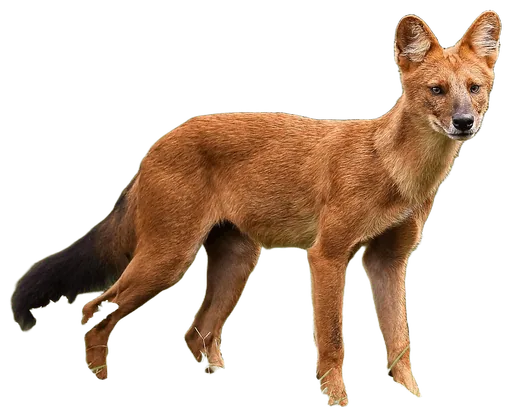
vs WolverineWins · 56% · Toss-up 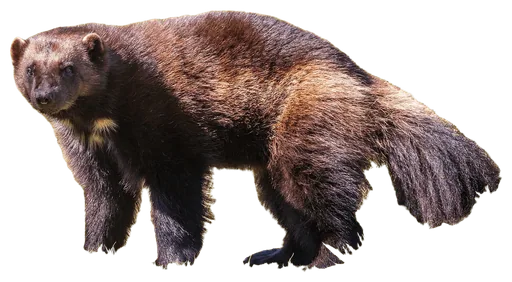 W vs DholeWins · 56% · Toss-up
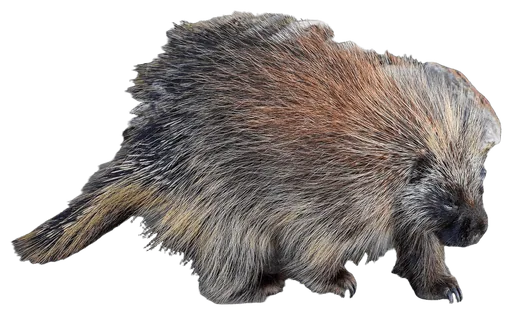
 W vs PorcupineWins · 59% · Slight edge
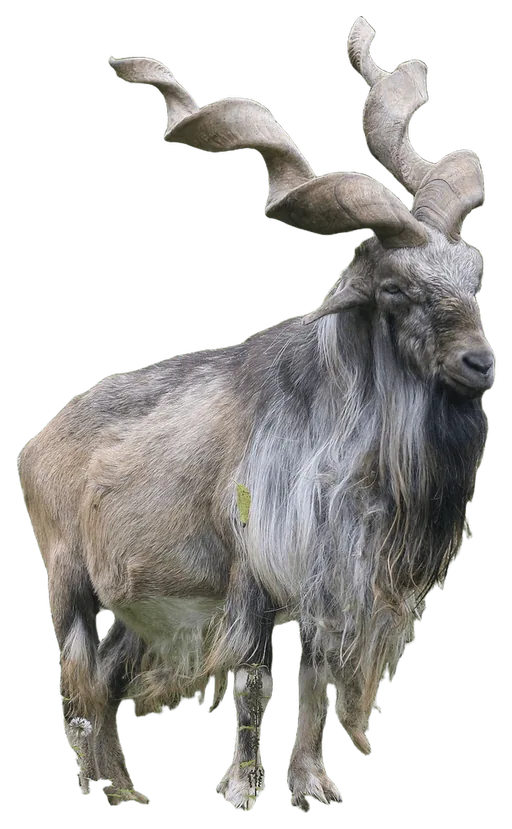
 W vs MarkhorLoses · 55% · Toss-up
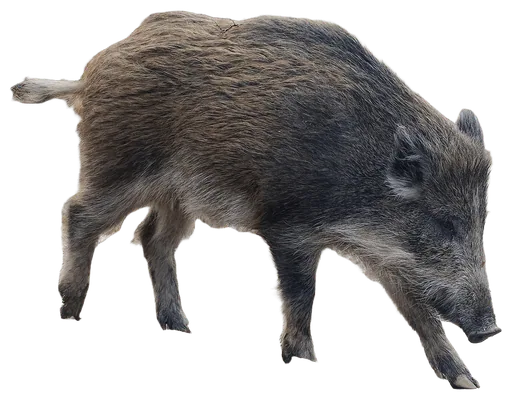
 L vs Wild BoarLoses · 55% · Toss-up
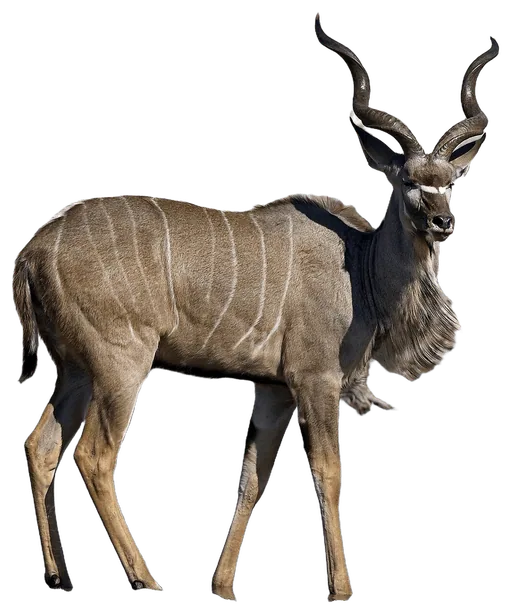
 L vs KuduLoses · 60% · Slight edge
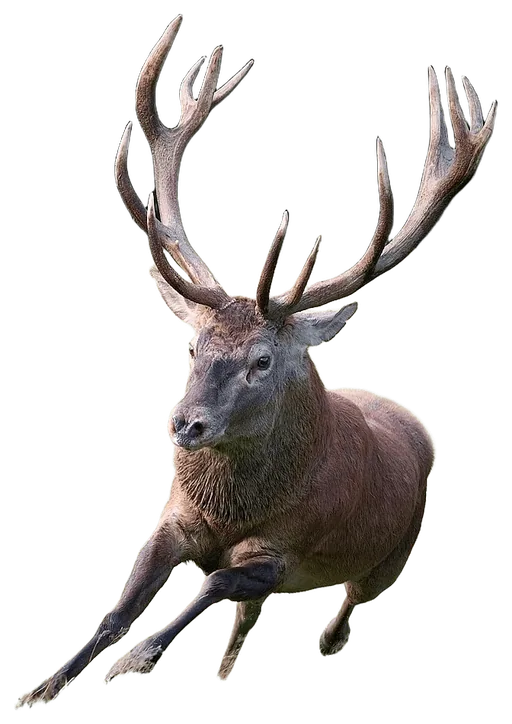
 L vs Red DeerLoses · 57% · Toss-up
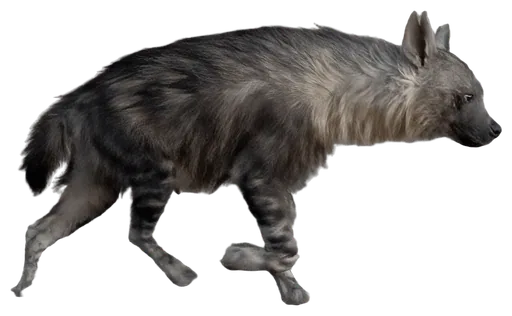
 L vs Brown HyenaDraw · 50-50 · Dead even
 D
Chimpanzee battle analysis
The chimpanzee's danger is best understood as integration rather than a single extreme weapon. At roughly 46 kg, a representative adult male is not especially large on the ABS roster. It lacks claws, horns, armor and the crushing jaws of heavyweight predators. What it does have is a rare combination of explosive muscle, grasping limbs, mobile shoulders, dangerous canines and a brain capable of adjusting behavior to circumstances.
Modern biomechanics corrects one of the species' most persistent misconceptions. Chimpanzees are not several times stronger than humans in every sense. Direct muscle research instead indicates a meaningful but much more modest mass-specific advantage, driven in part by a high fast-twitch fiber fraction. That distinction matters for roster-wide scaling. A chimp can be extraordinarily powerful for a 46 kg primate while still remaining far below a gorilla or megafaunal mammal in absolute force.
Its greatest separation from similarly sized animals comes from cognition. Wild chimpanzees do not merely repeat one instinctive hunting sequence. They learn local traditions, manufacture tools, alter tactics according to context and navigate complex alliance networks. Fongoli tool-assisted hunting shows that object manipulation can cross into weapon-like use. Long-term aggression data show that chimpanzees also understand, or at minimum behaviorally exploit, numerical advantage in lethal territorial encounters.
Those strengths have clear limits. A standard one-on-one matchup cannot grant a chimp seven allies merely because coalitionary attacks occur in nature. Nor should a stick somehow appear in an empty arena. Against a much larger predator, intelligence and grasping control may improve survival choices but do not erase the opponent's mass, claws or killing bite. Chimpanzee Defense is therefore deliberately low relative to its Intelligence.
The result is a distinctive ABS profile: elite cognition and high agility, moderate absolute offense, weak structural defense, and substantial environment dependence. In forest structure it can climb, reposition and exploit objects. On bare ground against a larger specialized killer, many of those advantages narrow quickly.
Habitat & range
Chimpanzees occupy a broad ecological spectrum across equatorial Africa, including tropical and montane rainforest, swamp forest, woodland, forest-savanna mosaics and relatively dry savanna. Populations occur from West Africa through Central Africa to western East Africa. Habitat fragmentation has divided many populations and increased human contact.
Diet & hunting
They are flexible omnivores with diets dominated by fruit and other plant material but supplemented by leaves, seeds, insects, honey and vertebrate meat. Their ecological flexibility is partly behavioral. Different communities use different tools and techniques for extracting foods, which means local culture can materially alter foraging niches.
Social life
Chimpanzees live in fission-fusion communities. The full community can contain many individuals, but daily parties split and recombine according to food, mating opportunities, social relationships and patrol behavior. Male relationships, dominance and alliances are especially important in territorial competition. Females may range more independently, particularly with dependent young.
Conservation
Pan troglodytes is threatened across its range by habitat loss and fragmentation, hunting, disease and human-wildlife conflict. Production migration should confirm the current IUCN assessment and assessment date directly before publishing a conservation field because status records can be revised.
Quick answers
How strong is a Chimpanzee?
On the Animal Battle Stats scale, the Chimpanzee has an attack rating of 46 and a power index of 56.1 out of 100, which ranks it #99 of 344 animals and puts it in B tier (Strong). Its strongest stat is intelligence (96).
How much does a Chimpanzee weigh?
A typical adult Chimpanzee weighs about 46 kg (101 lb). Rated specimen: healthy mature wild adult male, approximately 46.0 kg, representing a normal robust male rather than an exceptional captive or record individual.
How fast is a Chimpanzee?
There is no reliable measured top speed for the Chimpanzee, so we do not publish one. Its agility rating, which covers acceleration, reflexes and evasion, is 83 out of 100.
What does a Chimpanzee eat?
They are flexible omnivores with diets dominated by fruit and other plant material but supplemented by leaves, seeds, insects, honey and vertebrate meat. Their ecological flexibility is partly behavioral. Different communities use different tools and techniques for extracting foods, which means local culture can materially alter foraging niches.
What animals can beat a Chimpanzee?
Among its closest rivals, the Markhor (55%), the Wild Boar (55%), the Kudu (60%), the Red Deer (57%) would be favored against the Chimpanzee. It would be favored against the Wolverine, the Dhole, the Porcupine. It is dead even with the Brown Hyena: a draw.
Researched 2026-09-27. Ratings are editorial judgments built from these sources; measurements describe a healthy adult male.
- Animal Diversity Web, Pan troglodytesTaxonomy, dimensions, dimorphism, morphology
- Smithsonian NMNH P. t. verus specimenCanonical mass anchor, sex, taxon
- O'Neill et al. 2017, PNAS/PubMedMuscle mechanics
- Wilson et al. 2014, NatureLethal aggression and coalition context
- Pruetz & Bertolani 2007, Current Biology/PubMedHunting tool manufacture/use
- Yale / Journal of Human Evolution demographic studyWild lifespan
- Great-ape welfare synthesis (2026)Ranging/endurance context
- Plavcan & Ruff 2008Canine weapon function/comparative strength
- Laird et al. 2025, AJBABite-force uncertainty
- Commons, Hans HillewaertImage candidate
- Commons, Kumasi ZooImage alternative
- Commons, Gombe adult maleImage alternative / behavioral context
Photo: “016 Alpha male chimpanzee walking at Kibale forest National Park Photo by Giles Laurent.jpg” by Giles Laurent, CC BY-SA 4.0, background removed and cropped. Original
Suggest a correction