
Cheetah
Acinonyx jubatusC tier · Capable94th of 163 mammals
Size & speed

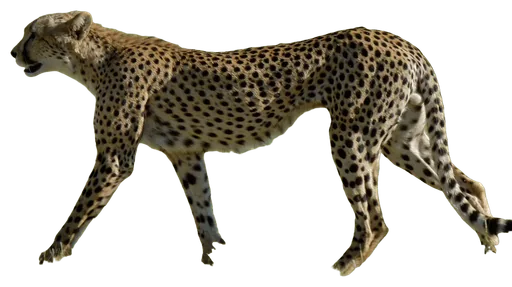
- Weight
- 46 kg101 lb
- Length
- 1.3 m4.3 ft
- Top speed
- 93 km/h58 mph
About as heavy as a person
Heavier than 62% of animalsAbout 4.3 rulers long
Bigger than 56% of animals2.1× Usain Bolt's top speed
Faster than 99% of animalsThe cheetah is a 46 kg pursuit-specialist felid whose real superpower is not simply top speed. Instrumented wild hunts show extreme acceleration, braking and lateral maneuvering, letting it track evasive prey before finishing with a throat bite. That locomotor specialization comes with tradeoffs: compared with power-built big cats, the cheetah has a lighter frame, less robust grappling equipment and poor prospects in prolonged close combat. In ABS terms it is a near-ceiling Agility specialist, not a near-ceiling all-around fighter.
Detailed ratings
Research-backed ratings on one 0–100 scale for all 344 animals (updated 2026-09-27). How ratings work


Card No. 166 of 344. Every animal on Animal Battle Stats has one: its power, tier and archetype on the front; its six battle stats, abilities and signature move on the back.
Special abilities
The integrated spine, limb and traction system produces extraordinary acceleration, braking and lateral force, allowing the cheetah to rapidly change velocity and pursuit angle rather than merely run fast in a straight line.
The long mobile tail and body control stabilize aggressive high-speed turns, helping the cat track prey through evasive direction changes.
Unique traits
Weakly retractile, relatively blunt claws remain exposed enough to improve grip during sprinting, trading some classic felid grappling specialization for running traction.
Enlarged nasal passages and a lightweight, short-faced skull reflect the unusual respiratory and mass-saving compromises of a felid specialized for extreme pursuit speed.
How it fights
Weapons
- Primary weapon: the jaws and canine teeth, used for a sustained throat or neck bite after prey has been caught and destabilized.
- Secondary weapons: forepaws, dewclaws and body momentum during the chase. The paws can hook or strike at fleeing prey, but the cheetah is not built for the heavy forelimb grappling characteristic of lions, leopards or jaguars.
Struggles vs
- Light, speed-specialized frame has limited absolute durability for a predator of its height.
- Less robust skull, jaw apparatus and forequarters than similarly sized power-oriented felids.
- Weakly retractile claws are excellent traction tools but weaker grappling hooks than typical felid claws.
- High-output sprinting is brief rather than endurance-based.
- A stationary close-range brawl wastes much of its defining advantage.
- Weight
- 46 kg101 lb
- Height
- 80 cm31.5 in
- Length
- 1.3 m4.3 ft
- Top speed
- 93 km/h58 mph
- Bite force
- No reliable measurement
- Lifespan
- 8 years
- Home biome
- Savanna
- Lifestyle
- Mostly solitary
Rated specimen: Healthy fully mature adult male, approximately 46.0 kg, 80.0 cm shoulder height, 130.0 cm head-body length, plus a long 60-84 cm balancing tail.
Fun facts
- The best-known wild instrumentation study recorded 367 runs from five adult cheetahs rather than estimating speed from a vehicle or anecdote.
- The same study showed that the fastest run was not the whole story: lateral acceleration and braking were central to successful hunting.
- Cheetahs cannot roar like Panthera cats; Smithsonian documents chirps, purrs, growls, hisses and distinctive stutter vocalizations.
- Individual chirps can differ enough that cheetahs may recognize one another acoustically.
- Male coalitions are often composed of brothers and can persist as long-term social units.
- The claws are only weakly retractile, a rare felid condition that improves traction.
Closest rivals by power. Tap one for the full breakdown, or pick any opponent.
vs PlatypusWins · 68% · Slight edge 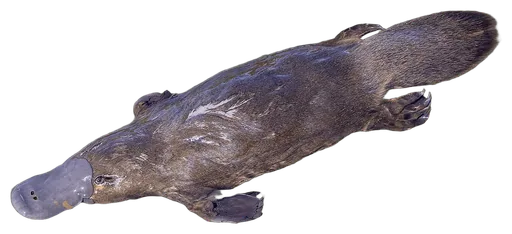 W vs FossaWins · 60% · Slight edge
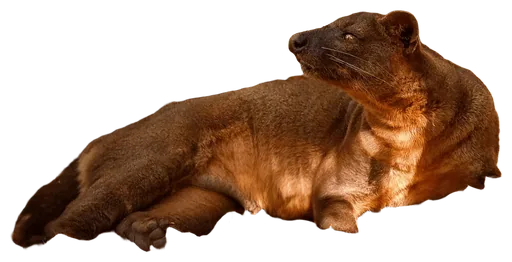 W vs Japanese MacaqueWins · 58% · Slight edge
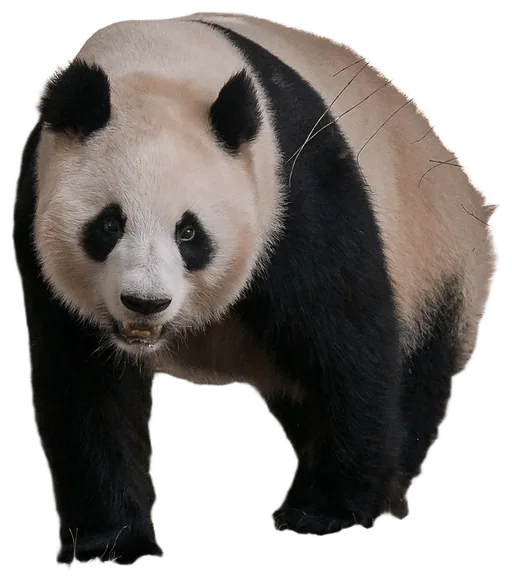
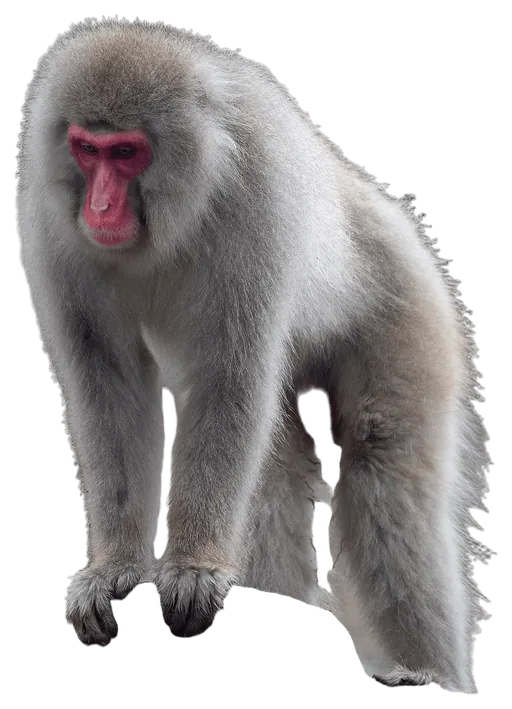 W vs Giant PandaLoses · 55% · Toss-up
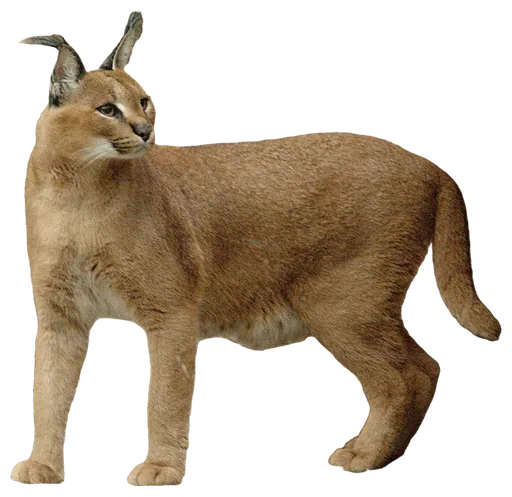
 L vs CaracalWins · 56% · Toss-up
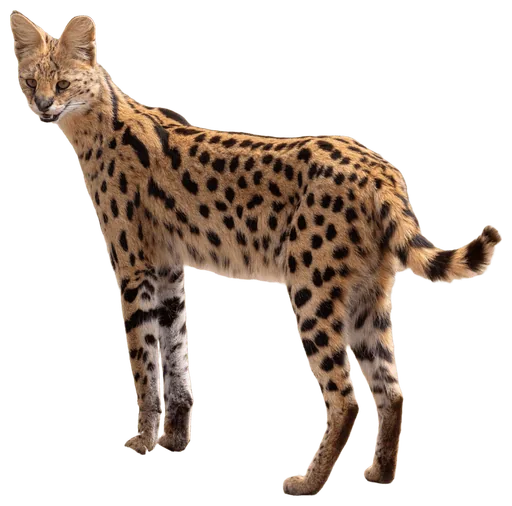
 W vs ServalWins · 57% · Toss-up
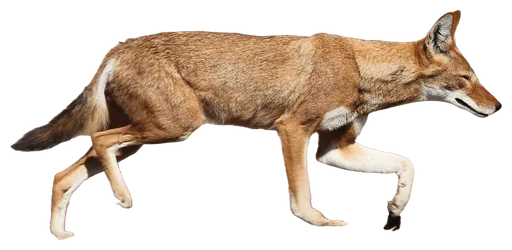
 W vs Ethiopian WolfWins · 57% · Toss-up
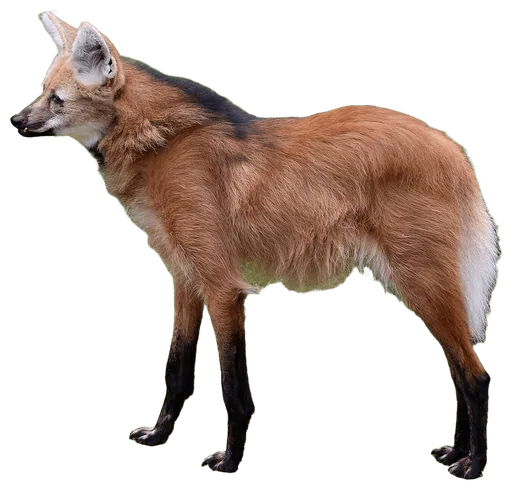
 W vs Maned WolfWins · 55% · Toss-up
 W
Cheetah battle analysis
A cheetah fight begins before contact. Where a lion or jaguar can impose itself through mass, skull strength and forelimb control, the cheetah tries to solve the matchup geometrically. It creates separation, accelerates, chooses an angle, brakes, redirects and attacks an opponent's balance. Its anatomy is organized around this sequence. Long legs lengthen the stride, the flexible back adds range of motion, exposed claws grip the surface, and the tail helps manage the violent changes in direction that real prey force upon a pursuer.
The 2013 wild-cheetah work is especially useful for battle-stat design because it corrects the cartoon version of the animal. Cheetahs did not simply hit one headline maximum and win by running straight. Most hunting occurred below maximum speed. What separated the predator was the ability to generate and shed velocity rapidly while turning hard enough to remain connected to evasive prey. That is why Agility deserves a higher placement than a simplistic speed-to-stat conversion would imply.
But specialization creates limits. A cheetah that cannot build speed, that is forced into a clinch, or that must absorb repeated heavy impacts loses much of what makes it exceptional. The same lightness that assists acceleration means less mass behind a strike and less tissue to absorb trauma. Its claws are useful for traction and prey destabilization but not equivalent to the heavy grappling arsenal of a leopard. Its throat bite is a proven killing mechanism on prey, yet it is not evidence for an invented high PSI value.
Against small and medium cursorial opponents on open ground, this package is terrifying. Against a heavily armored animal or a much larger grappling predator, the cheetah's best biological decision is often to disengage. ABS should preserve both truths at once: this is one of the most extraordinary terrestrial movers ever measured, and it is still a roughly 46 kg cat living in a world with hyenas, lions, bears, bovids and megafauna.
Habitat & range
Cheetahs occupy savannas, grasslands, shrublands, dry woodlands and semi-desert environments. They are not restricted to treeless plains. Effective habitat must provide prey, enough visibility or vantage structure for detection, and sufficient space for pursuit and avoidance of dominant carnivores.
The modern species survives mainly in fragmented populations in sub-Saharan Africa, with a tiny remnant Asiatic population in Iran. Many populations occur outside formally protected areas, increasing exposure to livestock conflict, habitat fragmentation and prey depletion.
Diet & hunting
Cheetahs are obligate carnivores specializing largely on small to medium ungulates, supplemented by smaller vertebrates. Their ecological niche is defined by speed and by competition with larger carnivores. A successful kill does not guarantee possession; kleptoparasitism by stronger competitors can erase the energetic payoff of a chase.
Social life
Females are usually solitary except when raising cubs. Adult males may be solitary but commonly form coalitions, often with brothers, that defend territories and cooperate. This sex difference is one of the most distinctive features of cheetah social ecology.
Conservation
Cheetahs face habitat loss and fragmentation, prey depletion, conflict with livestock owners, illegal trade and low-density population challenges. Conservation is complicated by the fact that substantial portions of the remaining range lie outside protected areas. USGS-supported work in north-central Namibia, for example, documented cheetahs in human-used conservancy landscapes and emphasized the importance of nonprotected areas.
Quick answers
How strong is a Cheetah?
On the Animal Battle Stats scale, the Cheetah has an attack rating of 41 and a power index of 51 out of 100, which ranks it #166 of 344 animals and puts it in C tier (Capable). Its strongest stat is agility (97).
How much does a Cheetah weigh?
A typical adult Cheetah weighs about 46 kg (101 lb). Rated specimen: healthy fully mature adult male, approximately 46.0 kg, 80.0 cm shoulder height, 130.0 cm head-body length, plus a long 60-84 cm balancing tail.
How fast is a Cheetah?
The Cheetah's top speed is about 93 km/h (58 mph). Its agility rating is 97 out of 100.
What does a Cheetah eat?
Cheetahs are obligate carnivores specializing largely on small to medium ungulates, supplemented by smaller vertebrates. Their ecological niche is defined by speed and by competition with larger carnivores. A successful kill does not guarantee possession; kleptoparasitism by stronger competitors can erase the energetic payoff of a chase.
What animals can beat a Cheetah?
Among its closest rivals, the Giant Panda (55%) would be favored against the Cheetah. It would be favored against the Platypus, the Fossa, the Japanese Macaque, the Caracal, the Serval, the Ethiopian Wolf, the Maned Wolf.
Researched 2026-09-27. Ratings are editorial judgments built from these sources; measurements describe a healthy adult male.
- Wilson et al., Nature 2013 / RVC summaryspeed, acceleration, maneuverability
- Hudson et al., Journal of Anatomy 2011hindlimb functional anatomy
- Marker & Dickman, Journal of Mammalogy 2003morphology, dimorphism, population/method uncertainty
- Cheetah Conservation Fund copy of Marker/Dickman abstractmorphology/growth
- Animal Diversity Webdimensions, claws, morphology
- Smithsonian National Zoolifespan, vocalization, behavior
- San Diego Zoodimensions, sex difference, life history
- Smithsonian male mortality releasemale lifespan context
- USGS / Fabiano et al. 2020conservation, nonprotected landscapes
- Wikimedia Commons, Bernard DUPONTimage provenance
Photo: “Cheetah Male (Acinonyx jubatus) (6856968798).jpg” by Bernard DUPONT from FRANCE, CC BY-SA 2.0, background removed and cropped. Original
Suggest a correction