
Chameleon
Chamaeleo chamaeleonD tier · Underdog34th of 39 reptiles
Size & speed
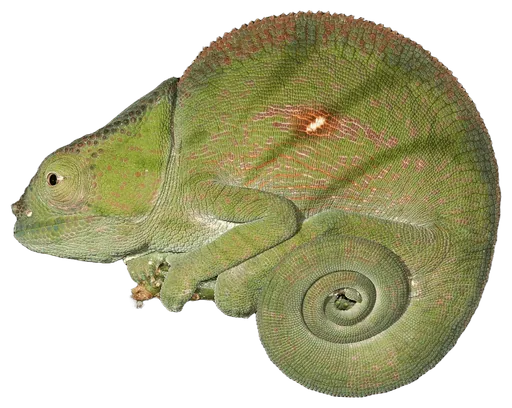
- Weight
- 45 g1.6 oz
- Length
- 28 cm11 in
As heavy as 45 paperclips
Heavier than 7% of animalsAbout 3.3 credit cards long
Bigger than 14% of animalsA tiny Mediterranean arboreal ambush specialist whose combat value comes from extraordinary vision, branch control, dynamic coloration and a ballistic sticky tongue. Against insect-sized prey it is a precision hunter; against most of the ABS roster its tens-of-grams body and lack of armor impose a severe absolute-power ceiling.
Detailed ratings
Research-backed ratings on one 0–100 scale for all 344 animals (updated 2026-09-27). How ratings work


Card No. 314 of 344. Every animal on Animal Battle Stats has one: its power, tier and archetype on the front; its six battle stats, abilities and signature move on the back.
Special abilities
Elastic-energy storage launches a sticky prey-capture tongue rapidly and with relatively little performance loss across cooler temperatures, giving the chameleon a ranged capture mechanism against appropriately sized targets.
Eyes can scan disconjugately and experimentally track separate targets monocularly, then converge into binocular prey tracking for precise strike guidance.
Unique traits
Zygodactyl feet plus the prehensile tail create exceptional anchoring and balance on narrow vegetation.
Rapid color-state changes support communication, threat display, physiological state signaling and context-dependent concealment; this is not treated as perfect invisibility.
How it fights
Weapons
- The chameleon's main specialized strike is its ballistic tongue. It is superb for insects and other small prey but is not a high-energy weapon against similarly sized robust vertebrates. Once contact becomes physical, the animal can gape and bite, but jaw damage remains limited by a body mass measured in tens of grams.
Struggles vs
- Open ground: very poor escape speed and little cover.
- Cold: whole-body locomotor performance remains ectotherm-limited even though tongue projection is comparatively buffered.
- Large opponents: tiny absolute mass, no armor, and limited damaging power.
- Aerial or highly mobile predators: slow whole-body repositioning makes detection especially dangerous.
- Weight
- 45 g1.6 oz
- Height
- No reliable measurement
- Length
- 28 cm11 in
- Top speed
- No reliable measurement
- Bite force
- No reliable measurement
- Lifespan
- 3.6 years
- Home biome
- Jungle
- Lifestyle
- Social
Rated specimen: Healthy mature female, non-gravid, approximately 45 g and 14 cm snout-vent length (SVL).
Fun facts
- C. chamaeleon can simultaneously track two moving targets monocularly, but its eyes are coordinated by context rather than functioning as two completely independent cameras.
- The tongue's elastic launch mechanism loses far less performance in cooler conditions than the muscle-powered retraction phase.
- Adults are chiefly arboreal while juveniles can be more terrestrial.
- Female reproductive investment can be enormous: relative clutch mass around 60-70% was reported in southern Spain.
- The species reaches sexual maturity at roughly one year.
Closest rivals by power. Tap one for the full breakdown, or pick any opponent.
vs Corn SnakeLoses · 62% · Slight edge 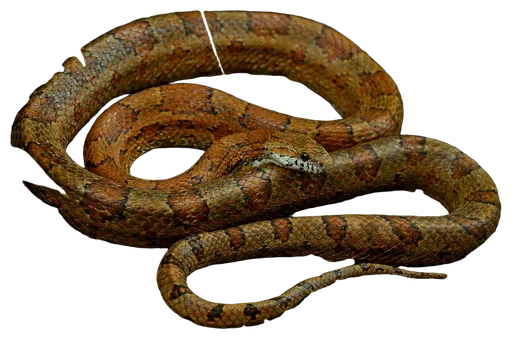 L vs Red-eared SliderLoses · 68% · Slight edge
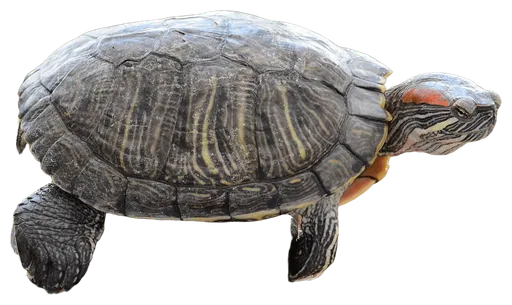 L vs Ball PythonLoses · 71% · Clear edge
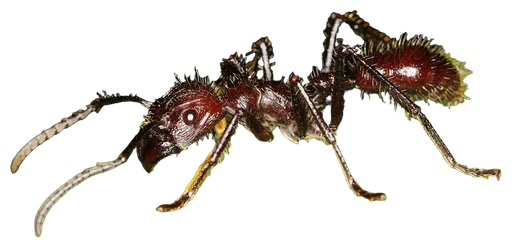
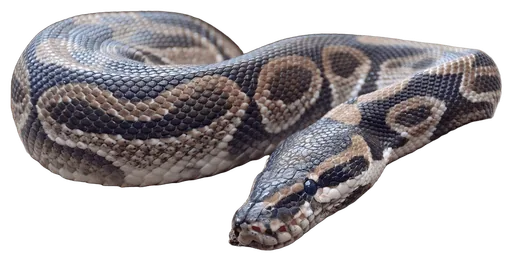 L vs Bullet AntWins · 67% · Slight edge
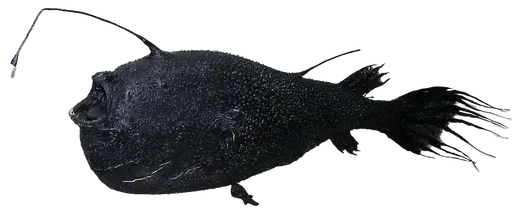
 W vs AnglerfishLoses · 51% · Toss-up
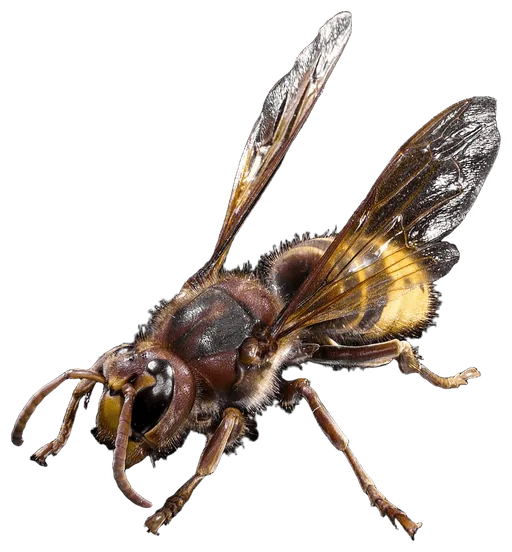
 L vs HornetWins · 71% · Clear edge
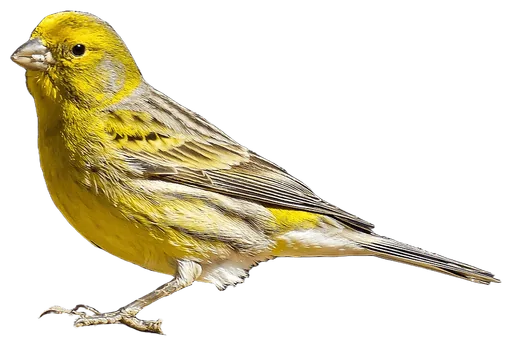
 W vs CanaryWins · 56% · Toss-up
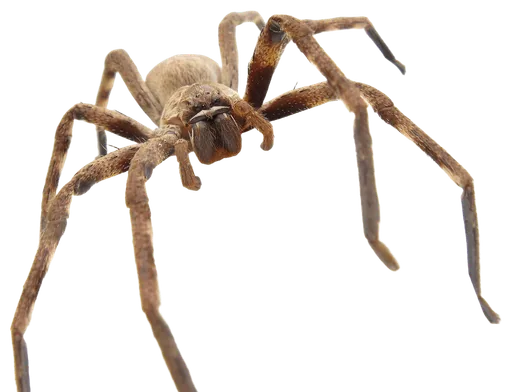
 W vs Huntsman SpiderLoses · 57% · Toss-up
 L
Chameleon battle analysis
The common chameleon wins by controlling information and distance on a miniature scale. It moves slowly through vegetation, locking branches with split gripping feet and using its prehensile tail as an anchor while its eyes survey different portions of the scene. Once prey is selected, visual behavior changes: the eyes converge, the head stabilizes the target and an elastic mechanism launches the tongue before ordinary muscle contraction alone could match the strike's performance. This makes the animal far more capable than its walking speed suggests when the target is an insect.
That specialization must not be confused with general battle power. At roughly 45 g, a representative female has almost no mass-based protection against medium or large roster animals. The tongue is a capture tool, not a spear, and color change is not invisibility. Its best ABS categories are therefore Senses, Abilities, Special and vegetation-specific maneuverability, while Attack, Defense, Size and Raw Power remain close to the absolute roster floor.
Habitat & range
The common chameleon occurs around the Mediterranean and adjacent southwest Asian/north African regions, occupying scrub, woodland edges, orchards, gardens and other vegetated habitats. Adults are primarily arboreal.
Diet & hunting
Primarily an insect/arthropod predator using sit-and-wait stalking and ballistic tongue capture. Its low-energy hunting strategy fits a slow-moving ectotherm: scan widely, approach cautiously, fix the prey binocularly, fire the tongue, then retract and swallow.
Social life
Mostly solitary and strongly territorial outside reproduction. Color displays, posture and threat behavior communicate state and reduce the need for costly physical fights.
Conservation
Conservation status should be resolved against the current IUCN species assessment before production migration because regional populations and legal protections vary. This report does not invent a global status where a current authoritative record was not retrieved in-run.
Quick answers
How strong is a Chameleon?
On the Animal Battle Stats scale, the Chameleon has an attack rating of 12 and a power index of 32.3 out of 100, which ranks it #314 of 344 animals and puts it in D tier (Underdog). Its strongest stat is special (88).
How much does a Chameleon weigh?
A typical adult Chameleon weighs about 45 g (1.6 oz). Rated specimen: healthy mature female, non-gravid, approximately 45 g and 14 cm snout-vent length (SVL).
How fast is a Chameleon?
There is no reliable measured top speed for the Chameleon, so we do not publish one. Its agility rating, which covers acceleration, reflexes and evasion, is 65 out of 100.
What does a Chameleon eat?
Primarily an insect/arthropod predator using sit-and-wait stalking and ballistic tongue capture. Its low-energy hunting strategy fits a slow-moving ectotherm: scan widely, approach cautiously, fix the prey binocularly, fire the tongue, then retract and swallow.
What animals can beat a Chameleon?
Among its closest rivals, the Corn Snake (62%), the Red-eared Slider (68%), the Ball Python (71%), the Anglerfish (51%), the Huntsman Spider (57%) would be favored against the Chameleon. It would be favored against the Bullet Ant, the Hornet, the Canary.
Researched 2026-09-27. Ratings are editorial judgments built from these sources; measurements describe a healthy adult female.
- Animal Diversity Web, Chamaeleo chamaeleonadult mass, size, behavior, reproduction, longevity, tongue/eyes
- Cuadrado, Journal of Zoologymating behavior, female-size importance
- Díaz-Paniagua et al., Herpetological Journalreproduction/environmental variation
- Anderson & Deban, PNAStongue biomechanics
- Ketter Katz et al., Journal of Experimental Biology / PubMedvisual tracking
- Wild-caught common-chameleon hematology studypopulation mass/SVL variation
- MoroccoHerps species accountadult mass range, life-history context
- Wikimedia Commons, Benny Trappimage provenance
Photo: “Parson's chameleon (Calumma parsonii cristifer) female Andasibe 2.jpg” by Charles J. Sharp, CC BY-SA 4.0, background removed and cropped. Original
Suggest a correction