
Cassowary
Casuarius casuariusB tier · Strong3rd of 55 birds
Size & speed

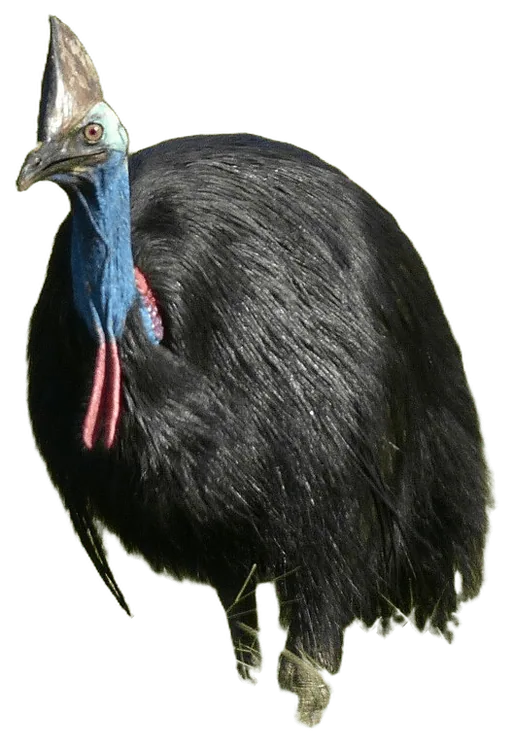
- Weight
- 65 kg143 lb
- Height
- 1.65 m5.4 ft
- Top speed
- 48 km/h30 mph
About as heavy as a person
Heavier than 68% of animalsAbout as tall as a person is tall
Bigger than 66% of animalsFaster than Usain Bolt (44.7 km/h)
Faster than 53% of animalsThe southern cassowary is a 60-plus-kilogram rainforest ratite whose main weapon is a powerful kick armed with a dagger-like inner toe claw. Females are the larger sex. It combines fast short sprints, strong jumping and swimming with an experimentally verified heat-radiating casque. Its dangerous reputation has a real basis, but empirical attack data show that serious injuries are uncommon and many human conflicts follow deliberate feeding or defensive situations.
Detailed ratings
Research-backed ratings on one 0–100 scale for all 344 animals (updated 2026-09-27). How ratings work


Card No. 114 of 344. Every animal on Animal Battle Stats has one: its power, tier and archetype on the front; its six battle stats, abilities and signature move on the back.
Special abilities
A powerful leap or kick delivers the enlarged inner-toe claw, approximately 12.7 cm in institutional accounts, producing a combined blunt-impact and puncture/laceration threat.
The vascularized casque actively changes heat exchange with ambient temperature, functioning as a controllable radiator that helps a large dark-plumaged bird manage tropical heat.
Unique traits
Females are consistently larger than males and socially dominant in institutional accounts, reversing the male-biased canonical combat choice common in many roster mammals.
The mostly frugivorous bird swallows and transports large seeds across its range; Queensland records more than 238 plant species in its diet, making the cassowary an unusually important large-bodied seed disperser.
How it fights
Weapons
- The cassowary is a leg-driven fighter. Its main attack couples a 60+ kg body with long, muscular legs and a roughly 12.7 cm inner-toe claw. A defensive bird can charge, leap and kick feet-first. The claw changes a kick from blunt impact into a puncture/laceration threat. The bill can peck, and the body can push or collide, but these are secondary.
Struggles vs
- Torso and neck lack true armor.
- Main weapon requires close range and favorable leg positioning.
- Sprint ability is burst-oriented rather than pursuit-endurance specialized.
- No strong bite weapon or grasping forelimbs.
- Reputation for indiscriminate aggression is exaggerated; most wild birds prefer avoidance unless conditioned, cornered or defending resources/young.
- Weight
- 65 kg143 lb
- Height
- 1.65 m5.4 ft
- Length
- No reliable measurement
- Top speed
- 48 km/h30 mph
- Bite force
- No reliable measurement
- Lifespan
- 19 years
- Home biome
- Jungle
- Lifestyle
- Mostly solitary
Rated specimen: Healthy fully mature adult female, 65.0 kg, approximately 165.0 cm standing height.
Fun facts
- The southern cassowary is one of the world's heaviest living birds, and females outweigh males.
- The male, not the female, incubates eggs and raises the chicks for months.
- Infrared experiments demonstrated that the casque is a real adjustable thermal radiator rather than merely a decorative helmet.
- Cassowary calls include extremely low-frequency booms near the lower edge of human hearing.
- Queensland has recorded more than 238 plant species in the southern cassowary diet.
- Cassowaries can swim despite being strongly terrestrial flightless birds.
Closest rivals by power. Tap one for the full breakdown, or pick any opponent.
vs Secretary BirdWins · 66% · Slight edge  W vs Peregrine FalconWins · 73% · Clear edge
 W vs Snowy OwlWins · 70% · Clear edge
 W vs GyrfalconWins · 72% · Clear edge
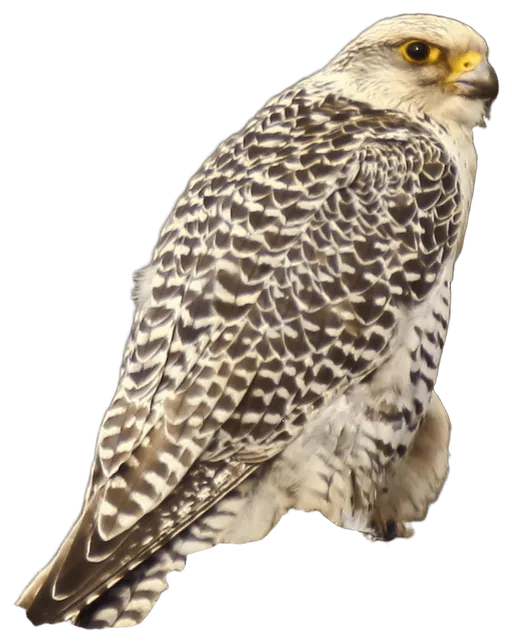 W vs Martial EagleWins · 67% · Slight edge
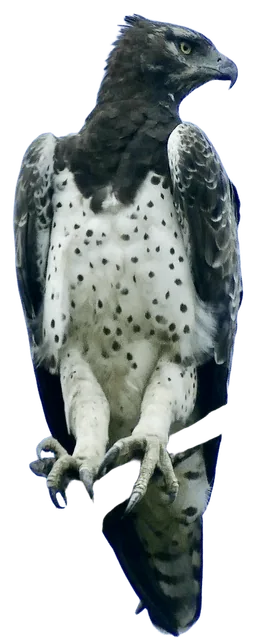 W vs Black MambaWins · 71% · Clear edge
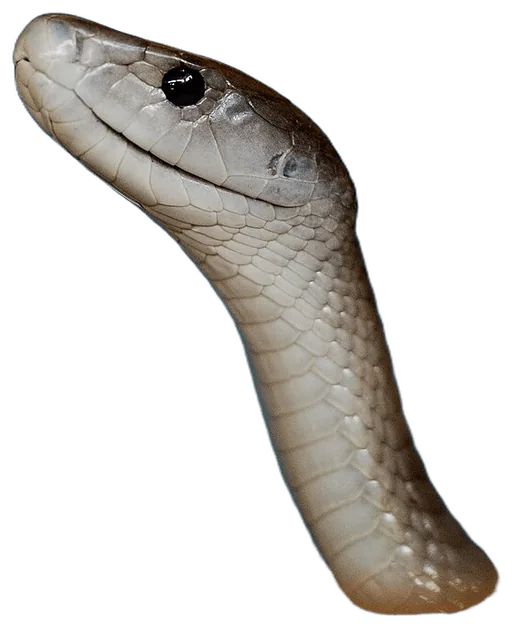 W vs Golden EagleWins · 67% · Slight edge
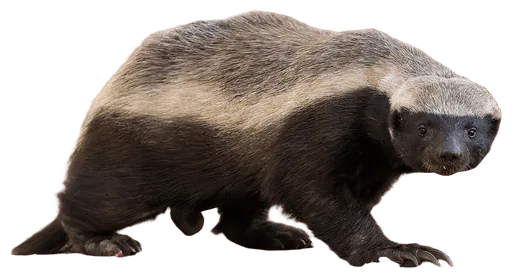
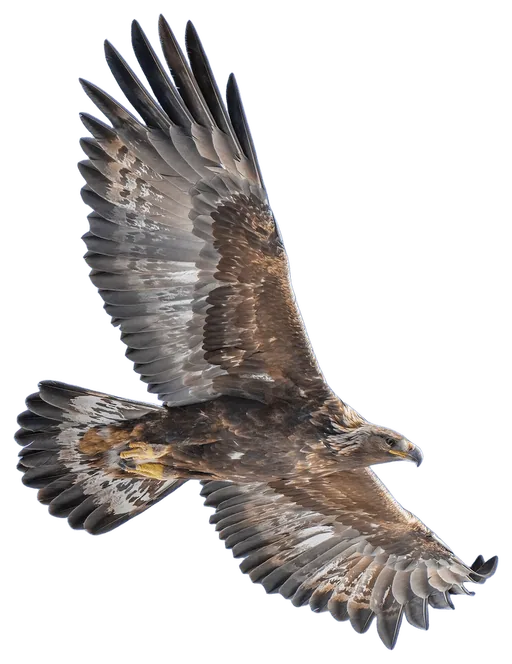 W vs Honey BadgerWins · 59% · Slight edge
 W
Cassowary battle analysis
A southern cassowary is built less like a predatory bird and more like a compact terrestrial runner with a knife attached to each foot. Its body is deep and heavy, its wings are tiny and useless for flight, and nearly all meaningful combat mechanics originate in the hindquarters. When threatened, it can rapidly close distance, jump and drive the feet toward an opponent. The long inner claw can turn a kick into a penetrating slash, giving the bird much more damage potential than an ordinary 65 kg herbivore or frugivore might suggest.
That weapon should not erase the animal's limits. Cassowaries are primarily fruit eaters and do not routinely subdue large prey. They have no armored torso, grappling forelimbs or specialized killing bite. If a kick fails to stop a large predator and the opponent gains control of the neck or body, the cassowary's matchup deteriorates quickly. This is why its Attack belongs above similarly sized poorly armed animals but well below Cape buffalo and true megafaunal weapon systems.
Its strangest feature is not actually the claw. Thermal imaging shows that the casque can alter heat exchange, radiating more heat when conditions are hot and conserving heat when cool. This gives the bird a rare, experimentally verified physiological mechanism suitable for Special, while avoiding the older unsupported claim that the casque is simply a battering helmet. Combined with low-frequency communication, seed-dispersal ecology and unusual female-biased size, the southern cassowary is biologically distinctive without needing exaggerated folklore.
Habitat & range
Southern cassowaries inhabit tropical rainforest and associated lowland forest, forest edge, riverbank, mangrove, grassland/savanna mosaics and some plantations across New Guinea, northeastern Queensland and nearby Indonesian islands. Dense forest remains the core habitat.
Diet & hunting
Fruit dominates the diet. Queensland records more than 238 plant species, while Smithsonian emphasizes the species' major seed-dispersal role. Cassowaries also consume fungi, insects, snails and occasional small vertebrate/carrion material. Large droppings can contain hundreds or thousands of seeds, distributing both seeds and fertilizer away from parent plants.
Social life
Adults are usually solitary outside breeding. Female home ranges may overlap several male ranges. San Diego Zoo describes females as dominant to males. Queensland reports home-range size varying approximately 0.52-2.35 km² with season and food availability.
Conservation
Smithsonian and current Queensland material describe the global species as Least Concern, while emphasizing serious regional pressure and a declining Australian population. Habitat fragmentation, road strikes, dogs, feral pigs, hunting/poaching and development are major threats. Older zoo pages may display outdated Vulnerable language, so global status should be checked against the current IUCN assessment at production-migration time.
Quick answers
How strong is a Cassowary?
On the Animal Battle Stats scale, the Cassowary has an attack rating of 57 and a power index of 54.9 out of 100, which ranks it #114 of 344 animals and puts it in B tier (Strong). Its strongest stat is agility (73).
How much does a Cassowary weigh?
A typical adult Cassowary weighs about 65 kg (143 lb). Rated specimen: Healthy fully mature adult female, 65.0 kg, approximately 165.0 cm standing height.
How fast is a Cassowary?
The Cassowary's top speed is about 48 km/h (30 mph). Its agility rating is 73 out of 100.
What does a Cassowary eat?
Fruit dominates the diet. Queensland records more than 238 plant species, while Smithsonian emphasizes the species' major seed-dispersal role. Cassowaries also consume fungi, insects, snails and occasional small vertebrate/carrion material. Large droppings can contain hundreds or thousands of seeds, distributing both seeds and fertilizer away from parent plants.
Is the Cassowary endangered?
No. The Cassowary is listed as Least Concern. Smithsonian and current Queensland material describe the global species as Least Concern, while emphasizing serious regional pressure and a declining Australian population. Habitat fragmentation, road strikes, dogs, feral pigs, hunting/poaching and development are major threats. Older zoo pages may display outdated Vulnerable language, so global status should be checked against the current IUCN as
What animals can beat a Cassowary?
The Cassowary is favored against all of its closest rivals, including the Secretary Bird, the Peregrine Falcon, the Snowy Owl, the Gyrfalcon, the Martial Eagle, the Black Mamba, the Golden Eagle, the Honey Badger.
Researched 2026-09-27. Ratings are editorial judgments built from these sources; measurements describe a healthy adult female.
- Smithsonian National Zoo, Southern cassowaryTaxon, size, lifespan, claw, ecology, reproduction
- San Diego Zoo Wildlife AllianceSize, speed, locomotion, diet, sex roles
- Eastick et al. 2019, Scientific ReportsCasque anatomy/function, size context
- Kofron 1999, Journal of ZoologyCombat behavior, injury risk, aggression context
- Queensland Government, Southern cassowaryDiet, home range, threats, human safety
- Eastick et al. 2026, Scientific ReportsEmerging sensory/display biology
- Wikimedia Commons, SummerdroughtImage provenance
Photo: “Casuarius casuarius (6547872533).jpg” by Donald Hobern from Copenhagen, Denmark, CC BY 2.0, background removed and cropped. Original
Suggest a correction