
Caracal
Caracal caracalC tier · Capable99th of 163 mammals
Size & speed

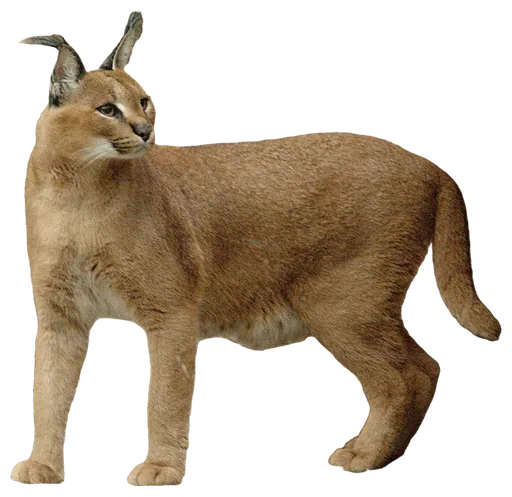
- Weight
- 17 kg37 lb
- Length
- 85 cm33.5 in
As heavy as 3.8 house cats
Heavier than 52% of animalsAbout 2.8 rulers long
Bigger than 39% of animalsThe caracal is a 15-20 kg ambush cat whose defining advantage is explosive three-dimensional athleticism. Long muscular hind limbs launch it into airborne prey, while retractile claws and relatively large canines let it grapple animals unusually heavy for its size. It is lightly protected and far from a heavyweight on the absolute roster, but among small and medium terrestrial predators its acceleration, vertical reach and control are exceptional.
Detailed ratings
Research-backed ratings on one 0–100 scale for all 344 animals (updated 2026-09-27). How ratings work


Card No. 172 of 344. Every animal on Animal Battle Stats has one: its power, tier and archetype on the front; its six battle stats, abilities and signature move on the back.
Special abilities
Powerful hind limbs launch the caracal vertically from near-standstill, allowing it to intercept and swat birds in flight or attack above an opponent's expected strike plane.
Retractile claws secure struggling prey while relatively large canines and jaw geometry drive a close-range killing bite, enabling prey capture above the cat's own mass.
Unique traits
Tall mobile ears, conspicuous black tufts and large auditory bullae accompany exceptionally hearing-focused prey localization.
Skull architecture and hunting behavior are unusually well suited to controlling vertebrate prey approaching or exceeding twice the caracal's own mass.
How it fights
Weapons
- The caracal's primary killing system is classic small-felid grappling plus a canine bite. It stalks to short range, accelerates rapidly, seizes with the forelimbs and claws, and delivers a penetrating bite. Its relatively large canines, robust skull and strong jaw architecture are consistent with tackling prey unusually large for a cat of this body size. Hind limbs add explosive launch power and enable airborne paw strikes against birds.
Struggles vs
- Only about 17 kg in the canonical specimen.
- No armor or unusual trauma resistance.
- Killing bite requires close grappling contact.
- Burst athleticism is stronger than prolonged pursuit endurance.
- Larger felids, canids and hoofed animals can overwhelm it through mass, reach or durability.
- Weight
- 17 kg37 lb
- Height
- 45 cm17.7 in
- Length
- 85 cm33.5 in
- Top speed
- No reliable measurement
- Bite force
- No reliable measurement
- Lifespan
- 12 years
- Home biome
- Desert
- Lifestyle
- Mostly solitary, nocturnal
Rated specimen: Healthy fully mature adult male, 17.0 kg, approximately 85.0 cm head-body length, 45.0 cm shoulder height, plus roughly 25-30 cm tail.
Fun facts
- The name “caracal” derives from a Turkish expression meaning “black ear.”
- Adult upper canines have been measured around 18.4 mm, with reports up to roughly 20 mm.
- In one South African telemetry study, males used home ranges several times larger than females.
- Caracals can knock birds from the air with explosive vertical leaps and paw strikes.
- They can kill prey substantially heavier than themselves despite being only a medium-sized cat.
- They have only about 30 permanent teeth, fewer than many familiar carnivorans.
Closest rivals by power. Tap one for the full breakdown, or pick any opponent.
vs Japanese MacaqueWins · 52% · Toss-up 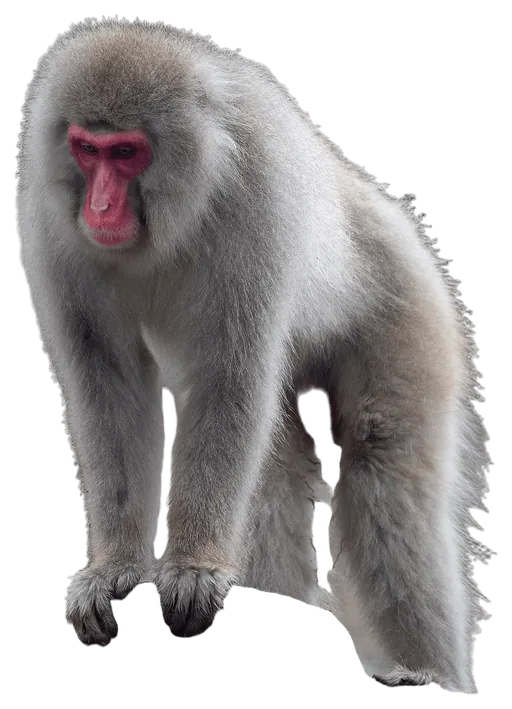 W vs Giant PandaLoses · 61% · Slight edge
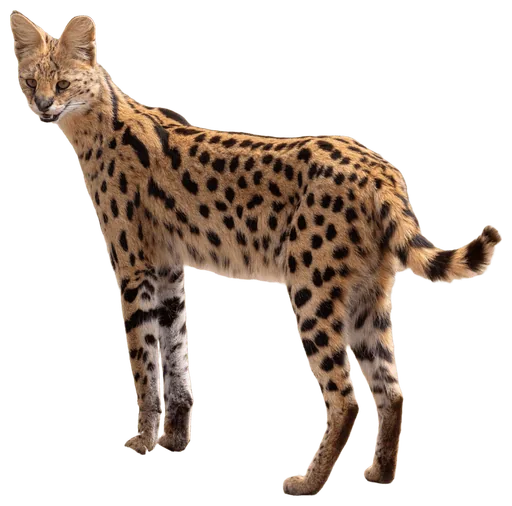
 L vs ServalWins · 51% · Toss-up
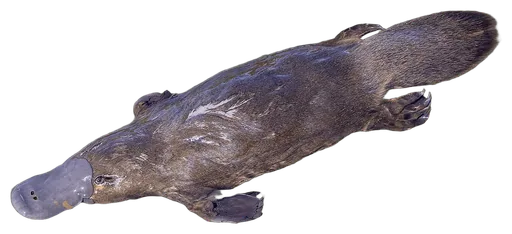
 W vs PlatypusWins · 63% · Slight edge
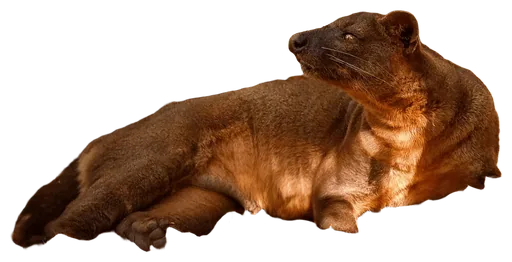
 W vs FossaWins · 54% · Toss-up
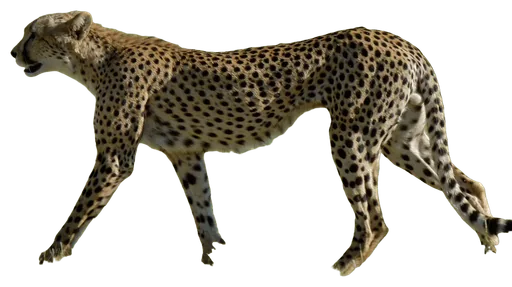
 W vs CheetahLoses · 56% · Toss-up
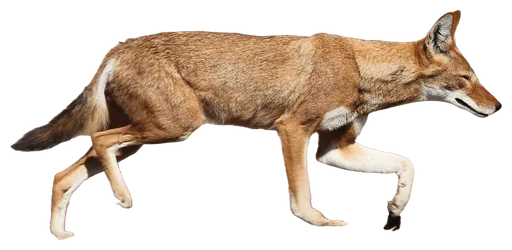
 L vs Ethiopian WolfWins · 51% · Toss-up
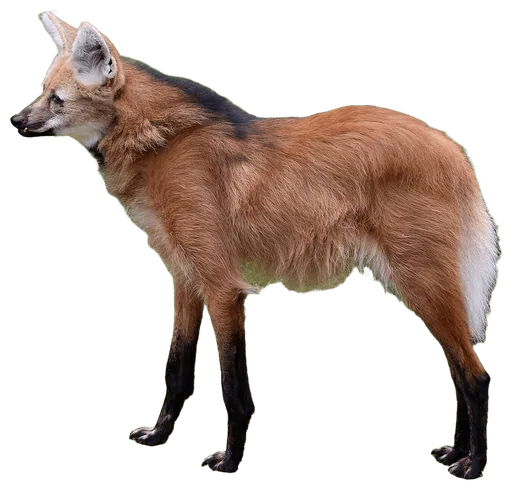
 W vs Maned WolfLoses · 51% · Toss-up
 L
Caracal battle analysis
A caracal wins by making the first second of a fight matter. Its tawny coat hides a compact predator whose rear half is built like a spring. From concealment it can accelerate, launch upward, rotate through the strike and bring forepaws and claws onto a target before following with a canine bite. That same system lets it perform the behavior for which it is famous: intercepting birds that have already taken flight.
The animal's skull supports the strategy. Large canines, a thick mandible, a tall coronoid process and strong jaw-muscle attachment produce a serious close-range killing apparatus for a cat of only a few tens of kilograms. Field and review literature show that this is not merely anatomical potential: caracals take diverse vertebrate prey and can kill animals near or above twice their own mass.
Absolute scaling prevents that proportional excellence from becoming fantasy. A 17 kg caracal cannot trade impacts with a wolf-sized or big-cat predator as though body mass were irrelevant, and it has no armor to survive a clean heavy hit. Its best matchups reward initiative, cover and maneuver. Its worst force it into a static contest against an opponent too large to control. In ABS terms, the caracal is therefore an elite Agility specialist with efficient but mass-limited Attack, low direct Defense, and a distinctive vertical hunting package.
Habitat & range
Caracals occur broadly across Africa and through the Middle East into Central/Southwest Asia and western India. They occupy savannas, shrublands, dry woodland, rocky hills and semi-arid habitats, generally avoiding the most barren sandy desert and dense tropical forest. Cover remains important for stalking and denning.
Diet & hunting
The caracal is an obligate carnivore and opportunistic mesopredator. Rodents, hares, hyraxes, birds and small antelope are common prey categories, with reptiles and other vertebrates taken regionally. Diet shifts with prey availability and human land use. Remains may be cached in dense cover or trees.
Social life
Adults are mainly solitary. Home ranges can overlap, particularly male ranges with those of females. A South African telemetry study found male home ranges around 26.9 km² versus 7.39 km² for females in the sampled arid shrub system, illustrating sex differences that should not be generalized as universal territory sizes.
Conservation
The species is globally Least Concern, but status is much poorer in portions of Asia and North Africa. Habitat loss, fragmentation, road mortality and persecution for livestock predation are important regional threats. CITES treatment differs geographically, with Asian populations under stricter controls than most African populations.
Quick answers
How strong is a Caracal?
On the Animal Battle Stats scale, the Caracal has an attack rating of 44 and a power index of 50.7 out of 100, which ranks it #172 of 344 animals and puts it in C tier (Capable). Its strongest stat is agility (90).
How much does a Caracal weigh?
A typical adult Caracal weighs about 17 kg (37 lb). Rated specimen: Healthy fully mature adult male, 17.0 kg, approximately 85.0 cm head-body length, 45.0 cm shoulder height, plus roughly 25-30 cm tail.
How fast is a Caracal?
There is no reliable measured top speed for the Caracal, so we do not publish one. Its agility rating, which covers acceleration, reflexes and evasion, is 90 out of 100.
What does a Caracal eat?
The caracal is an obligate carnivore and opportunistic mesopredator. Rodents, hares, hyraxes, birds and small antelope are common prey categories, with reptiles and other vertebrates taken regionally. Diet shifts with prey availability and human land use. Remains may be cached in dense cover or trees.
Is the Caracal endangered?
No. The Caracal is listed as Least Concern. The species is globally Least Concern, but status is much poorer in portions of Asia and North Africa. Habitat loss, fragmentation, road mortality and persecution for livestock predation are important regional threats. CITES treatment differs geographically, with Asian populations under stricter controls than most African populations.
What animals can beat a Caracal?
Among its closest rivals, the Giant Panda (61%), the Cheetah (56%), the Maned Wolf (51%) would be favored against the Caracal. It would be favored against the Japanese Macaque, the Serval, the Platypus, the Fossa, the Ethiopian Wolf.
Researched 2026-09-27. Ratings are editorial judgments built from these sources; measurements describe a healthy adult male.
- Mammalian Species, Caracal caracal (2020)Taxonomy, dentition, canine dimensions, skull mechanics, prey size, hunting ecology
- Mammalian Species PDFSame morphology details with accessible text
- Animal Diversity WebAdult dimensions, dimorphism, reproduction, behavior
- Smithsonian National ZooLifespan, diet, jumping/climbing, activity, social structure
- Avenant & Nel, African Journal of EcologyHome range, activity, sex differences, temperature effects
- Parchizadeh et al., Ecology and Evolution (2023)Diet breadth and prey-size context
- IUCN Cat Specialist GroupDistribution, diet, threats, regional conservation
- Wikimedia Commons, dconvertiniImage identity, dimensions, creator/license
Photo: “Caracl (01), Paris, décembre 2013.jpg” by Habib M'henni, CC BY-SA 3.0, background removed and cropped. Original
Suggest a correction